

Pros and Cons to legalize drugs in the Word
When I was studying Law at University to many years ago… the Professor of Criminal Law, Mr. Díez Ripolles gave a lecture on the legalization of drugs. We are talking about the late 80’s. Time goes by but the controversy over this issue is more alive than ever, especially when more and more countries are positioned in favor Drug ´s legalizations, as it is the case in Canada ( April 2017) and Uruguay (December 2013) that have legalized marijuana. The latter has also allowed production sale and consumption.
10 Reasons to legalize drugs
1º.- Organized crime would be attacked in one of its fundamental structure
According to Friedman Milton, illegality encourages criminalization since there is no free competition but rules imposed by the cartels. Consumers are forced to pass through the ring of these groups, they are not free to buy it where they want. The prices rise to their discretion without control-. In short, legalizing drug “would almost let them” out.
2.- Consumption would be reduced. Contrary to what one might think, there are studies conducted in the Netherlands in which it is shown that Cannabis use has been reduced. The Netherlands is one of the first countries in legalizing this substance.
3.- The cost of fighting organized crime is very high. If we add the police corruption, we add another strong reason in favor of the legalization of the drug.
4.- The health of the people would win, since the control would make the drugs safe, thus avoiding many deaths. You can see more in the European report on drugs. Diseases such as hepatitis and HIV would go down drastically.
5.- The court´s cases would be reduced allowing other cases to be attended. Also, lower the index of related crimes according to the report of Spain 2017 on drugs.
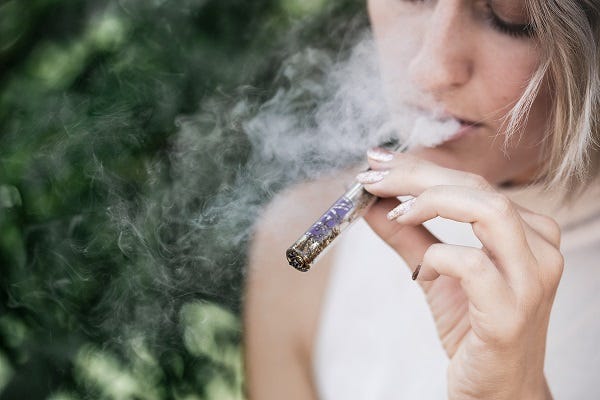
6.- Greater security in many countries.
7.- Education. In the same way that we have been educated about the effects of alcohol, the legalization of cannabis, for example, would help to give information without hindrance about the inconveniences that it has if they consume them, as well as the benefits.
8.- Legalization would reduce the price of drugs, lowering the production and intermediation costs implied by the prohibition. That is, many people who have an addiction to these substances will not have to steal or prostitute themselves to pay the price that the Cartels Set.
9.- No fundamental rights such as freedom of communication, domicile, etc. would be jeopardized.
10.- Citizens would realize that behind a drug addict there is not a criminal but in many cases sick people who made a big mistake.
Countries that have legalized drugs
A) The Netherlands is the country that started marijuana commercialization, as well as in many other social initiatives. There, the tenure and possession of marijuana constitute crimes although since 2017 the cultivation seems to have been approved by Congress. There are places where this drug is sold, known as ‘Coffee shops’, which from the Opium Act of 1976 are dedicated to selling these products (five grams per person over 18 years) and to which this activity is allowed.
B) Uruguay. The legislation says that only Uruguayans can grow Cannabis in their homes and It can only be bought at 30 pharmacies in the country that are ready to sell, at 1.30 dollars (1.13 euros) per gram, much cheaper and better than the black market. Those who buy will only have to put their finger on a device at the pharmacy. The machine will recognize them as users and check that they have not already exceeded the legal limit,10 grams per week. It is the formula to control it by guaranteeing its anonymity — the pharmacist does not know the name — and also to leave out foreigners. From 2017 It can be acquired a maximum of 40 grams per month of a marijuana in some pharmacies in the country with a percentage of between 2 and 4% of tetrahydrocannabinol (THC), the main psychoactive element of cannabis. The central government regulates the granting of licenses for its cultivation and sale but, although the mafias that dominated it before have considerably reduced its activity, some financial entities have threatened to stop operating with pharmacies if they continue to provide this service, which together with some manifestations of international organizations has surrounded the entire process with uncertainty.

c) Despite the historical association that has been made between marijuana and Jamaica, possession in that country involved considerable penalties until 2015. But three years ago (in 2016), the birthplace of reggae and the Caribbean island of enviable beaches decriminalized possession in small quantities for both tourists and residents.
e) USA (United States) in each North American state there is a certain autonomy for this reason they have allowed in recent years the regulated distribution of marijuana for non-medical use. With the recent legalization of this substance for recreational purposes in California (for cultivation, consumption, and commercialization) and also the territories of Colorado, Washington, Maine, Alaska, Nevada, Oregon, and Massachusetts.
f) According to Wikipedia: “In 2001, Portugal became the second country in the European Union after Spain to abolish criminal penalties for drug possession for private and personal use, and users must comply with therapies instead of imprisonment. As one senior official of the Ministry of Health explained, “It’s about persecuting the disease, but not the sick, the Portuguese State is against drugs, so its consumption is not forbidden, but we’re not against drug addicts. Hence, once rehabilitated, they can return to normal life without having been detained and, most importantly, without any evidence that they have been detained, which is vital for, for example, finding a job “Thus, a person arrested by the police who carries a number of drugs that does not exceed a certain level is brought before a follow-up commission dependent on the Ministry of Health that will direct him to a detoxification center if necessary, but without records or judicial file. Only when he carries a Big Amount of Drugs he will be taken to Court.
Legalising Drug in Spain
Now Podemos and Ciudadanos (Both Political Parties) are demonstrating in favor of legalization with the obvious opposition of the PP (another Political Party). The truth is that jurisprudence in Spain already begins to have many positive judgments in favor of possession for consumption, despite the setback suffered for the Cannabis Clubs by the last sentence of 2015 of the Supreme Court that condemned the president, secretary, and treasurer of a club when they were preparing the doses of the partners


