
PERFORMANCE BOOST
Propranolol, Modafinil, & Sildenafil: 3 Molecules That Helped Me Make It When I Needed
My experimentations and personal reflections on improving stage fright, concentration, and sexual function through the use of performance boosters
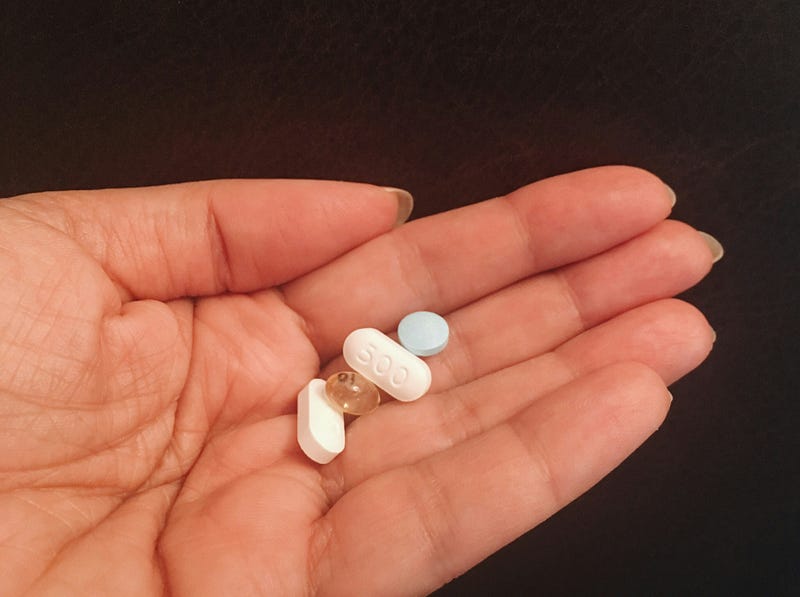
This story is about using performance boosters from a personal perspective. First of all, do they work? Yes, they do, and that is beyond the question from my experience.
However, before introducing them, let me mention three important concerns regarding their usage. The first one is ethical, the second one is psychological, and the third one is related to safety.
1 — From an ethical standpoint, the use of performance boosters may seem like cheating, and I completely understand those who, for this or any other reason, choose not to resort to them. However, there are also those among us who believe that the ends justify the means. In other words, some situations can be so crucial that some of us may turn to anything just to ensure that our performance will be at a level that enables us to successfully carry out the task and the situation at hand.
2 — The second concern is psychological because if we develop a habit of using these substances regularly, we may experience a lack of confidence and performance should we eventually find ourselves without their help somewhere where performance is needed.
3 — And the third concern is about the safety. Although the substances I am about to mention are generally considered safe, side effects can always occur, and it is up to us to assess how far we are willing to go and how much risk we are willing to accept.
We must note that there is no universal law which says whether you should use these substances or not. It’s up to you, your value systems, and your willingness to take the risk.
This article could benefit those who are willing to experiment with performance boosters or are just curious to find more information assuming they have no underlying health conditions.
The tablets I will share experiences from using are propranolol, modafinil, and sildenafil.
These substances (medications) are usually used to treat heart disease (propranolol), narcolepsy, excessive sleepiness (modafinil), and impotence (sildenafil).
However, they can also help healthy individuals reduce anxiety during public performances, improve cognitive function, and enhance sexual function and confidence, respectively.
With the aim of experimenting and improving performance, as well as gaining insight into my own psyche and abilities, I have decided to try these substances. Now, let me introduce them and share my experiences.
1 — Propranolol

Propranolol is a beta-blocker, and its primary mode of action is to block the effects of adrenaline, which can help alleviate physical symptoms of anxiety, including dry mouth, nausea, a fast pulse, or shaky hands. Propranolol is mainly prescribed to patients suffering from heart disease due to its effects on lowering blood pressure, reducing the heart rate, and calming symptoms of nervousness.
However, the beneficial effects of propranolol are also sought after by individuals experiencing stage fright or performance anxiety (PA). Stage fright (also referred to as performance anxiety) is a group of disorders affecting individuals in a range of endeavors, such as public speaking, sports, and the performing arts in dancing, acting, and music making.
Typical symptoms of stage fright are similar to those occurring in other types of anxieties. They include negative mood, typically accompanied by bodily symptoms such as increased heart rate (HR), muscle tension, trembling, hyperventilation, nausea, dry mouth, shaky voice, blushing, sweating, light-headedness, and a sense of unease and apprehension about the future.
The beneficial effects of propranolol for the treatment of stage fright are already well known among musicians, as was reported in a survey that was conducted in 1987 among the International Conference of Symphony Orchestra Musicians. In that survey, 27% of musicians reported using beta blockers as treatment for stage fright.
While alcohol or anxiolytics (commonly benzodiazepines), due to their popularity and availability, are commonly resorted to in cases of anxiety problems, there are many advantages to using propranolol for the treatment of stage fright instead of such agents. The most important advantage appears to be the lack of sedation.
Furthermore, the effectiveness of propranolol, a nonsedating anxiolytic premedication, was studied by monitoring preoperative anxiety and postoperative recovery of cognitive function in 92 healthy ASA physical status I females. In such individuals, propranolol and diazepam provided similar anxiolytic effect, but propranolol did offer a faster return of cognitive function in the postoperative period.
With propranolol, one can overcome nervousness while maintaining cognitive functioning and without being slowed down.
The usage of beta-blockers (propranolol) has been endorsed by many celebrities and musicians, such as Katy Perry, a famous singer who has performed for literally millions of fans and has won acclaim for her electrifying performances. But despite years of experience, hundreds of live performances, and awards to prove just how talented she is — Katy is still affected by performance anxiety in the moments before she walks out on stage.
So, a little while before she takes the stage, Katy takes a beta-blocker to calm her body and keep her mind focused so she can deliver a performance her audience will never forget.
“I have to take beta-blockers [before each show], I get so nervous,” — Katy Perry
I became aware of propranolol's beneficial effects for managing stage fright after receiving a personal recommendation from a clinical psychiatrist who was also a professional pianist. After researching its mode of action, I decided to try it during my speech at the TEDx conference of the University of Zagreb in 2017.
Getting the opportunity to give a speech at a TEDx conference is not easy, so if you get it, you better use it well. Furthermore, you only have one chance to deliver the speech properly, and it’s not easy because it lasts up to 18 minutes, is in English (a foreign language to me), is presented in front of an audience composed of strangers, and is recorded by cameras. All of these factors can trigger unwanted anxiety.
Even though I have plenty of experience in public speaking and usually don’t have problems with stage fright, it sometimes tends to unexpectedly show up as tremors in my left hand, preventing me from making natural hand gestures. Considering the significance of an event like giving a speech at a TEDx conference, I didn’t want to leave anything to chance.
Therefore, I went to the pharmacy and asked for a few tablets of propranolol. Luckily, when I mentioned to pharmacists the reason I intended to take it for, she wasn’t surprised at all. She obviously had similar requests before mine. Thanks to her generosity, I got several tablets of 80mg, which represent the maximum recommended dosage for the treatment of stage fright.
Considering my lack of experience with propranolol usage, I decided to start with the low dose of 20 mg, prior to the TEDx general rehearsal, which was scheduled a day before the main event.
It’s always a good idea to familiarise with the new substance prior to the occasion it’s intended for.
The onset of propranolol’s action begins 30 minutes after ingestion and lasts up to 6 hours. Its usage can trigger some side effects, such as dizziness, tiredness, cold hands or feet, difficulty sleeping, and nightmares. These side effects are usually mild and short-lived, and personally, I didn’t notice any of them.
The rehearsal went well and without nervousness. However, from the judges who listened to the speech and gave me feedback, I heard that I appeared to be too relaxed. Therefore, on the day of the main event, I decided to reduce the dosage to 10mg, which also represents the lowest recommended dose for the treatment of PA.
The speech went well; I didn’t experience nervousness and felt good during the performance. Maybe I could have had an equally good performance without the help of propranolol, but better safe than sorry, at least for that occasion.
MY RATING: 5/5
SIDE EFFECTS: None from my experience.
COMMON OPPORTUNITIES FOR USAGE: Public speaking, exams, interviews
2 — Modafinil

Modafinil belongs to the class of substances known as nootropics. It is a wakefulness-promoting agent whose precise mechanism of action is unclear. Modafinil is assumed to primarily inhibit the reuptake of dopamine and norepinephrine thereby increasing extracellular levels particularly in fronto-striatal networks. In addition, modafinil is believed to exert secondary effects on several neurotransmitters, including serotonin, glutamate, GABA, etc.
Modafinil is commonly prescribed to treat conditions such as narcolepsy (excessive sleepiness during the daytime), sleep apnea (cessation of breathing while asleep or having almost no airflow), and shift work sleeping disorder. It is clear that modafinil effectively enhances cognitive ability within the domain of attention and cognitive control in healthy adult volunteers.
Nootropics (modafinil) are known as “smart drugs” or “cognitive enhancers,” because they may improve cognitive function, including aspects such as memory, creativity, and motivation.
The usage of modafinil has been praised by people like Dave Asprey, an American entrepreneur, author, and biohacker. He started taking it while getting his MBA at Wharton. During that period, he was also working at a start-up that later sold for $600 million in value, so he was very busy, and he needed his brain running effectively. Here are his impressions on modafinil:
“When I first started taking modafinil, I felt more like myself than I had in years. It gave me energy and changed my life. I would not be the biohacker I am today without modafinil.” — Dave Asprey
I have sometimes used modafinil during business presentations as well as creative tasks like brainstorming, or writing. When something demands a significant cognitive output, I like to take modafinil beforehand, listen to ambient music, and work on the task at hand. I also make sure that during that period, I have no distractions from what I am focused on.
In such conditions I can easily get myself into the state of flow and work for several hours in a row without a break. I can maintain flow state even if the nature of the tasks at hand would otherwise feel as boring or uninspiring.
Modafinil usually comes in 200mg tablets, and the recommended daily dosage is 100–200mg. I have used 100mg, and I have started noticing its effect in terms of increased alertness and focus after about 15 minutes of consumption, which lasted up to 6+ hours.
Besides significantly better alertness and focus, I also noticed improvement in mood in terms of being more sociable and friendly towards others and generally being more positive. The day is simply nicer, and I function and feel better. Also, while walking along the streets, I noticed that I am more in the moment and have enhanced perception.
The reason for the better mood on modafinil could lie in its effect on enhancing dopamine release, but binding to dopamine receptors differently than addictive substances like cocaine and amphetamines do, which may be part of the reason modafinil shares many of the benefits of other stimulants but doesn’t cause addiction or withdrawal symptoms.
One may wonder why not to drink coffee instead modafinil? The paper from 2006 compared 200mg of modafinil vs. 200mg of caffeine (1 tablet of modafinil vs. approx. 2 cups of coffee) and concluded that they were equally effective for the maintenance of alertness in healthy subjects during sustained wakefulness.
However, my subjective impression is that modafinil is significantly better than coffee, for the reason that it lasts longer, and gives you more positivity and better mood.
Modafinil is generally well-tolerated, but like any medication, it can cause side effects like headache, insomnia, and anxiety, although I didn’t notice any of them. Due to its promotion of wakefulness and long action, I have always taken it during the daytime in order to prevent potential sleep problems.
MY RATING: 5/5
SIDE EFFECTS: None in my experience.
COMMON OPPORTUNITIES FOR USE: Any mental activity that requires a significant cognitive output, as well as social activities like important conversations, public speaking and business meetings.
3 — Sildenafil

Sildenafil, commonly known as “Viagra,” belongs to the class of drugs called phosphodiesterase type 5 (PDE5) inhibitors. By inhibiting this enzyme, sildenafil causes vasodilation and increases blood supply to the periphery. Due to this beneficial effect, PDE-5 inhibitors are used to treat impotence and erection problems.
“Sildenafil improves self-esteem, confidence, and relationships in men with erectile dysfunction.”
The effect of sildenafil is also very significant in healthy individuals who want to take it just in case to gain confidence in bed or for the sake of entertainment.
Namely, even if we don’t have problems with impotence, sometimes we might find ourselves in situations where various factors could jeopardize our bedroom abilities. Maybe we are very tired that day because it’s too late, or we are nervous because we don’t want to let down our partner. To ensure that things will work optimally, we can consider taking sildenafil.
The usage of Viagra for improving sexual performance has been publicly mentioned by many famous celebrities, such as Michael Douglas. He was blown away by Catherine Zeta Jones, after seeing her acting in the movie “The Masks of Zorro”, and when asked, does his pulse still quickens the way it did in the darkened screening room watching Zorro, he answered:
“Oh, yeah. At least in your head, your fire burns as brightly. Let’s not kid ourselves. But God bless her that she likes older guys. And some wonderful enhancements have happened in the last few years — Viagra, Cialis — that can make us all feel younger.” — Michael Douglas
Nowadays, there is a growing popularity of Viagra usage for recreational purposes. However, recreational usage of sildenafil doesn’t come without concerns. A paper published in 2023 addresses concern of usage of sildenafil among young adults, and warns on some serious issues that can occur if sildenafil is being taken without medical supervision.
For instance, sildenafil can interact with other medicines like nitrates in dangerous ways, causing serious side effects that can be life-threatening. Furthermore, some studies have shown that the drug can cause vision loss and hearing loss in a small number of users. Additionally, the drug can cause priapism, a painful condition in which an erection lasts for several hours or more.
The use of Sildenafil can also lead to psychological dependence. Young adults who use the drug recreationally may come to rely on it to achieve an erection. This can lead to further health problems and damage relationships.
Sildenafil comes in tablets from 25 to 100mg, which represents the recommended daily dosage range. If someone doesn’t have issues with erections, they might start with a smaller amount, like 10–20mg. Taking 50 mg or more might be too much for healthy individuals, as it could lead to unwanted, long-lasting erections even without sexual stimulation.
While it’s usually recommended to take sildenafil 30 to 60 minutes before sexual intercourse, I personally noticed that it starts working after just 10 to 15 minutes of taking it. Its effects typically last for about four to six hours. However, I noticed effects that lasted much longer than mentioned, even up to nearly one day, but not with the same intensity.
Furthermore, sildenafil is considered a pill for a single sexual encounter, unlike tadalafil (Cialis), which is known as the weekend pill because its effects can last for two days. However, a downside of tadalafil is that potential side effects last for two days as well.
When using sildenafil, I have experienced a very significant increase in the quality of my erection and confidence in my performance. I also experienced some side effects in the form of increased redness in the face, chest, shoulders, and neck. Besides redness, sildenafil can cause some other side effects, such as headache and dizziness.
Overall, sildenafil was very effective for me and significantly improved my sexual performance when needed.
In spite of sildenafil's effectiveness, I would avoid using it regularly in order not to develop psychological dependence. In sex, there is a lot about psychology, not just physiology.
MY RATING: 5/5
SIDE EFFECTS: Skin redness.
COMMON OPPORTUNITIES FOR USE: Improving performance and gaining confidence in bedroom.
Conclusions and Takeaways
My journey described here, involving experimentation with propranolol, modafinil and sildenafil is not an endorsement of their casual use. Instead, we need to approach them with full responsibility and do our research prior to using them.
These substances proved to be effective and without significant side effects. The major downside of using performance boosters is that they are more psychological than physiological, at least from my viewpoint.
For instance, if we use them regularly, once when we find ourselves without such substances somewhere where performance is needed, we may underperform for the reason that we may experience the lack of support and confidence that such substances provide.
Performance boosters are like a crutch. They are here to help. But we need to be cautious not to overly rely on them, because we’ll not be able to walk without them.
Consequently, each person must weigh the potential benefits against the risks, respecting the fine balance between seeking improvement and maintaining psychological and overall well-being. If any side effects bother you, it is important to get timely professional support.
However, the bottom line is that these substances work for many, and their usage can improve performance. Therefore, if something is really important to you and you don’t want to risk compromising your performance and don’t have any underlying health conditions, these performance boosters can help you make it.
Thank you for reading my story.
Please note that this story does not provide health advice.


