
INNOVATION
Propaganda Driven Development
Using wartime strategy to control your number one competitor’s actions

“War! What is it good for?”, sings Edwin Starr in his popular 1970’s song. He goes on to answer his own question with, “Absolutely nothing!”. Unfortunately, I don’t believe the answer is as simple as Edwin wishes us to believe.
In this article, I’d like to explore how an aspect of wartime strategy could be used to boost modern-day product innovation. I refer to this approach as Propaganda Driven Development (PDD).
I conclude by introducing you to the first tool within the PDD toolbox — a new concept I call the Nemesis Product.
It’s easier to predict the future when you are in control of your number one competitor’s actions…
Origin: What is propaganda and what does it have to do with innovation?
Undeniably, war is an atrocity. War see people exceed previously unfathomable boundaries to ensure their own survival. During times of peace, complex problems are often under-financed. Come wartime, however, world leaders copiously fund these initiatives to find solutions. A country’s ability to innovate more effectively than their enemy defines success. Wartime innovation becomes one of the pillars that hope and victory are built upon.
At times of war, it has been said that the world sees its greatest technological advancements. Warfare hungers for innovation. Being the savage beast that it is though, it plays by a different set of rules to elicit humanity’s creative side. It is not uncommon for world leaders to conjure up stories to play upon their people’s emotions. Stories that not only boast their own prowess but also undermine their enemy’s. These stories are known as propaganda. Stories devised to boost the morale of allies whilst belittling the efforts of the enemy.
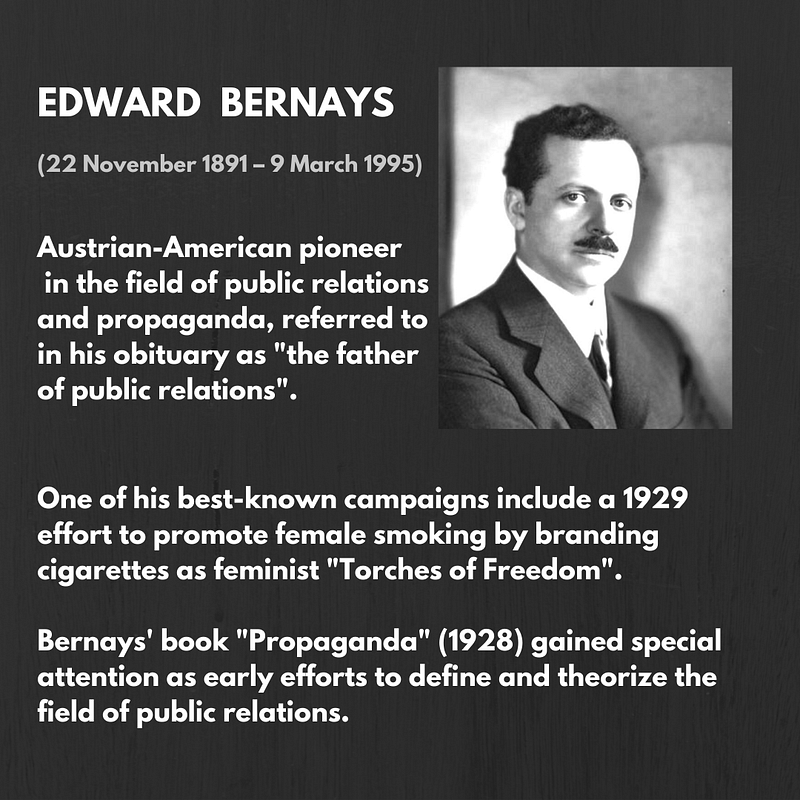
Propaganda: information, especially of a biased or misleading nature, used to promote a political cause or point of view.
There is another form of propaganda that has the power to inspire change. Leaders can use propaganda to exaggerate their enemy’s abilities. They claim their enemy’s capabilities far exceed what is possible. But why? Is this not counterproductive? How can making your enemy appear stronger help you?
Let’s look at a story based on real-life events to answer this question.
Story: Propaganda in action
Picture the early 20th century. A time when the primitive bolt-action rifle was being replaced on the front lines of the battlefield by the superior machine gun. “Country A” is at war with “Country Z”.
Country A have a machine gun that can fire 450 bullets per minute. They feel confident that they have the upperhand. However, Country A’s leader is aware that wars can last for years, if not decades. Confidence can lead to complacency. Complacency can lose battles.
In a bid to be proactive, the leader of Country A decides to deploy some propaganda. A catalyst to spark innovation. He sows the seed that, “Country Z have created a machine gun that can fire 600 bullets per minute. We need to invent something better or our people will die!”.
Although untrue, Country A’s workforce found a new sense of urgency (and a certain amount of fear). This added stimulus provided by their leader has given them direction. A way in which the country will survive. If they don’t act and innovate now, their country could lose it all. As a result of this strategy, the workforce go on to create a weapon that can deliver 750 rounds per minute. Country A cement their victory with the aid of innovation.
Although a story, here we see the use of propaganda can evoke innovative responses. I’m sure the workforce would’ve been able to invent a better weapon without the injection of fictitious urgency. It could also be reasoned that without it;
- What incentive would they have to strive for something better?
- What does “something better” look like? How could Version 2.0 of the weapon be an improvement upon Version 1.0?
- Would’ve they been able to come up with a solution as quickly?
Theory: Using moral propaganda in modern-day businesses
Fast forward to today and I’m wondering if / how a flavour of this could be used within product development. Could elements of this approach become a tool within the Product Manager’s toolbox. A way to instigate change and innovate?
Let’s be clear. Just because a particular strategy worked 100 years ago, it doesn’t mean it will work today.
Sun Tzu’s seminal book, The Art of War, sits on the bookshelves of countless current-day leaders. Originating from the 5th century BC, it speaks of wartime strategy. Modern-day business leaders refer to this book to find strength and wisdom in Sun Tzu’s teachings. Not teachings in how to start and end wars. These teachings are applied to problems such as market competitiveness and leading teams.
I’m now wondering what aspects propaganda can be used to drive innovation. Some elements will be relevant today, whilst others should be left in the past.
What can’t we do
In the 21st century, propaganda has evolved and variations of it have now been seen in the form of fake news. By its very nature, fake news is associated with deceit. It automatically raises people’s hackles and people are understandably weary of it.
By trying to deceive your workforce that a real-life competitor is doing something that is knowingly untrue, it can:
- Lose employees trust. As a leader, you shouldn’t lie to your people. Your integrity will be at stake and people will be loathed to follow you
- Negatively impact your company’s brand. Spreading rumours about your competitors will put your company’s integrity at risk. No one will respect a business that resorts to malicious tactics to get an upperhand over their competitors
- Attract legal proceedings. Regularity bodies such as the FCA have a watchful eye for businesses in breach of competition law. Break these laws and fines will be heading your way
In today’s world, it is very hard to spin a yarn without someone calling your bluff. 100 years ago there were minimal sources of up-to-date information. People were less connected and had no choice but to rely upon newspapers and the words of their leaders. (Both of which giving a biased view to strengthen their own agendas.) Nowadays, 4.5 billion people have access to the internet. An endless source of information available to disprove fake news.
The art of war teaches us to rely not on the likelihood of the enemy’s not coming, but on our own readiness to receive him; not on the chance of his not attacking, but rather on the fact that we have made our position unassailable. — Sun Tzu
What can we do
We’ve agreed that we can’t lie to our workforce. We also can’t make up lies about our competitors. Short-term wins would end up being over-shadowed by:
- Legal penalties
- Employee engagement dwindling
- Staff attrition
In the same vein that leaders reflect upon Sun Tzu’s teachings, I intend to extract the essence of propaganda that worked so well during yesteryear wartimes.
What if our propaganda, our stimulus for innovation, is something we create with our workforce? Also, it is to target a fictional business we’ve conjured up ourselves and not a real competitor. What if we were to create a fictitious “Nemesis Product”. A product that if it were to come to the market, would cause our real-world business some real-world pain?
Concept: Introducing the Nemesis Product
The concept of creating abstractions of real-world behaviours within the product world is not a new one.
User Personas are quite familiar to most product-led organisations. It involves mapping the varying customer characteristics to fictional people. Product development can then focus on delivering the right features to specific personas. Likewise, personifying your actual product is another useful tool. It can ensure you have a consistent tone of voice and a relevant set of features throughout the offering.
Nemesis: the inescapable agent of someone’s or something’s downfall
Every Product Manager knows what their product is capable of and what it brings to the market. For example, features such as:
- A user can sign-up for your product online using a 32-click process
- It takes 5 working days for a new user to receive their secure password via the post
- If a user wishes to cancel their subscription to your product, they must do so over the phone. It’ll take 14 days to take effect
You could have a market-leading product. A competitor decides to start targeting your unique selling points however. In time, they provide a superior service and the future of your business is to enter uncertain waters. Naturally, there is more to a product to make it “sticky” than a rich feature list. People buy into a brand and what it stands for. Nowadays however, with an abundance of choice, your consumers’ allegiance can be flaky.
Practice: Using the Nemesis Product
A reactive approach to combating this problem would start with you hearing something on the grapevine. By this point, you are already on the back-foot. There is very little you can do to minimise the impact other than wait it out and plan your countermove.
Introducing the concept of a “Nemesis Product” takes a more proactive stance. Hypothetically, it would be used as follows:
- Baseline your real-world product’s current features and abilities. Look to draw out quantifiable metrics using objective measures
- Analyse the real-world baseline and start designing your Nemesis Product. Remember, your Nemesis Product is not the solution, it is the stimulus for innovation. Using the baseline product’s metrics as a guide, envision the fictitious product’s capabilities. We’re not looking for mock-ups, requirements documents or coding. It should be able to knock your real-world product out of the market. This means being mindful of real-world constraints but not letting them inhibit your vision
- Use the Nemesis Product as the stimulus. Empower your Product and Development Teams to find solutions to overcome your nemesis
- Regularly review and update your Nemesis Product. If one of your real-world competitors exceeds one of your Nemesis Product’s capabilities, you need to up your nemesis’ game
Summary
This article reflects my own thoughts about how propaganda may have a place in product development.
We already build user-centric products based upon real-world MI. This concept of Propaganda Driven Development (PDD) is not set to replace these practices. I intend it to supplement these well-situated practices. PDD is to inspire innovation within product teams and leverage the human flight or fight response when faced by a threat.
PDD and the Nemesis Product have yet to be put into practice but I’d love to hear your thoughts and see how the idea could develop.


