
Prompted by Virginia Woolf: A Room of One’s Own
A Citizens’ Basic Income now, might lead to security and dignity for the vulnerable in the future
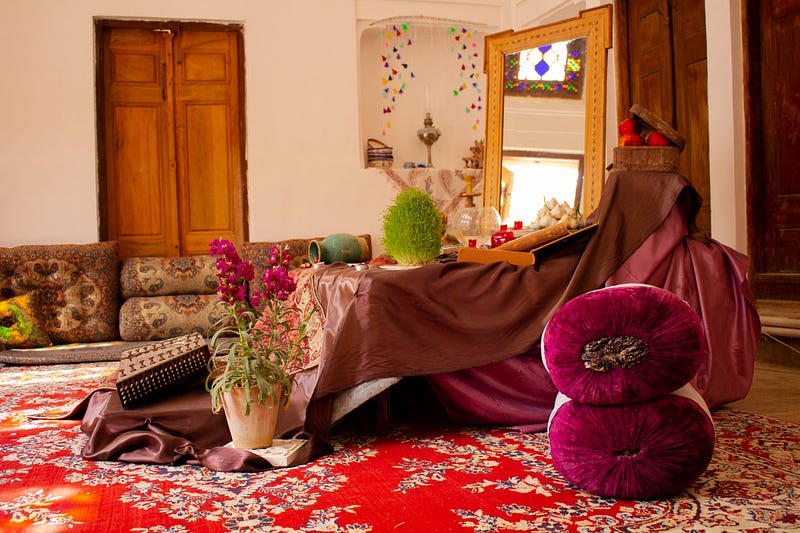
In her book, A Room of One’s Own, Virginia Woolf’s fictional character Mary Beton, Seton or Carmichael (apparently, the character had no care which) said the following on discovering her aunt, also named Mary Beton, had left her a generous legacy:
I found that she had left me five hundred pounds a year forever. Of the two — the vote and the money — the money, I own, seemed infinitely the more important … No force in the world can take from me my five hundred pounds. Food, house and clothing are mine forever. Therefore not merely do effort and labour cease, but also hatred and bitterness. I need not hate any man; he cannot hurt me. I need not flatter any man; he has nothing to give me.
Imagine what a no strings attached five hundred pounds could do for women and vulnerable people worldwide today. To me, it is half of my monthly outgoings. I could half my working hours and write more.
I could blame men for most of my problems in my previous life. The life where a man was important to a woman. Thinking back, I was pre-programmed to think that way.
My father couldn’t cope with two small children when my mother left. She told me she left because he was too possessive. He’d had a different kind of programming.
I have never dreamed of the two-point four children and happily ever after. I wanted equality and held onto my dream of retiring at fifty, with a private pension, as my dad did. The powers-that-be scuppered my plan when we all started living longer, and in 2010 the Labour Party raised the age of early retirement to fifty-five.
Initially, I thought they had done me a disservice but now I realise it was actually a favour. If I supplement it with a part-time wage from my choice of work, my private corporate pension should now last until I’m sixty-seven.
I allowed my programming to guide me until I realised it was outdated. I’m reprogrammed to fight for universal basic income at every opportunity. Especially for single-parent families and other vulnerable souls. But also for creatives forced to work full-time in mind-numbing minimum wage roles so they can survive to do what they love.
If the government and the corporations who have the upper hand with the government want future healthy, compliant workers, they’re going to have to give women and children, and other vulnerable people living in poverty, a fighting chance of being useful members of the working majority.
A balanced upbringing, with food in their bellies, warmth, and a roof over their heads will result in fewer mental-health issues for mothers and their offspring. A single-parent family with the possibility of dragging themselves out of the gutter and into becoming productive members of the workforce is far more powerful a choice for governments these days, isn’t it?
Especially the UK government and its leader, who, along with his ministers, believes giving the poor and vulnerable as little as possible is the right way to get them into work. Forcing them to use food banks (1200 now opposed to 56 ten years ago) is a further indignity. The majority of the UK do not have the luxury of an Eton education. Nor do millions of ordinary citizens pander to the power-wielding corporations.
Today, for a woman, it is mostly as simple as getting a job and supporting herself. It would have to be a good job, though. One that paid enough for a single mother to pay for child care.
However, when a single mother or a vulnerable person has little to no support from family, friends or the government, the sacrifices made kill off any chances of rising above exactly where the government thinks lazy workers should be.
In 1929, the sacrifices Virginia Woolf’s character Mary Beton would have had to have made — as a creative — for the basic requirements of a human would, most likely, have killed off any creativity. Her generous aunt gave Mary the means to be free to do as she wished.
For the twentieth-century woman, the money is to be used for true independence; it buys the freedom of the artist. ~ Sally Minogue, Introduction and notes to A Room of One’s Own by Virginia Woolf.
This is what I have been working towards all my life, the most part unknowingly, the preceding ten years fully acknowledging that is what I wanted. And somehow, by luck or unwitting design, I will have achieved it by this time next year. Everything being equal.
Others may not be so fortunate as there are possibilities that the unemployment rates will reach 30% when the current furlough schemes end and companies start culling their employees. As already planned at airports throughout the UK. And now Marks and Spencer are in the process of letting 7,000 employees go.
Universal and Citizens’ Basic Income
The UK Prime Minister has already rejected a universal basic income, I suspect with little to no understanding of or care for, the potential uplifting possibilities for the poor and vulnerable. Fortunately, Nicola Sturgeon, Scotland’s First Minister, is planning a Citizens’ Basic Income for the Scottish people, who are already some of the most deprived people in the UK.
Unfortunately, Sturgeon will need the approval of the UK Government. A trial with low numbers (17,100) of participants starting next year may not be soon or wide enough to assist many of the 628,000 and 146,000 self-employed furloughed Scots who will lose their jobs.
I don’t have a crystal ball. But with furlough scheme 80% payouts reducing to 60% in October and then tapering off, plus the looming second wave, one doesn’t need to be a fortune teller to predict the future is not going to be rosy.
Anthony Painter writes in support of Basic Income in Bridges to the Future. He says:
We live in a world of multiple vulnerabilities. None of us know how those vulnerabilities will impact us at any time and their impact on our ability to attain a decent level of economic security.
The full report of why the UK ended up using the existing Universal Credit benefits system rather than UBI can be found here.
In my humble opinion, Spain has the right approach.
Mr Iglesias said: “Today is a historic day for our democracy. Today this government is showing that its political choice is social justice and that it takes the [Spanish] Constitution seriously.” ~ Kate Ng
Conclusions
Paying people more than minimum wage or extra on top of what they currently earn above the minimum wage would encourage spending, which would give a much-needed boost to the Scottish economy. At best, new businesses would spring up, mental health will improve and vulnerable people would not starve to death.
Trump managed a one-off stimulus payment in June. It was done once, it could be done regularly.
Spain has gone ahead and implemented its UBI for the country’s most vulnerable 850,000 people.
The UK government website put in place a signup page for grants for the self-employed quickly enough. Why not a signup page for CBI for people whose tax, benefits or pension payments can be checked online? I’m pretty sure an algorithm could be produced to identify the people who are registered with Her Majesty’s Revenue and Customs, and Department of Work and Pensions and are not earning or receiving enough to survive.
A no-strings regular individual payment of say £1,000 per month, could be made directly to our bank accounts. Let’s start with food in bellies and warm homes and add a little extra to boost the economy. Let’s give hope and the strength to survive to those who need it.
Let’s allow creatives to have a room of their own so they can create and bare their imaginations to the world.
A woman must have money and a room of her own if she is to write fiction. ~Virginia Woolf.
Thank you for reading.