
Prologues Are Dumb — Then Why Did I Write One
Publishers frown upon prologues, yet many best-sellers have them. What gives?
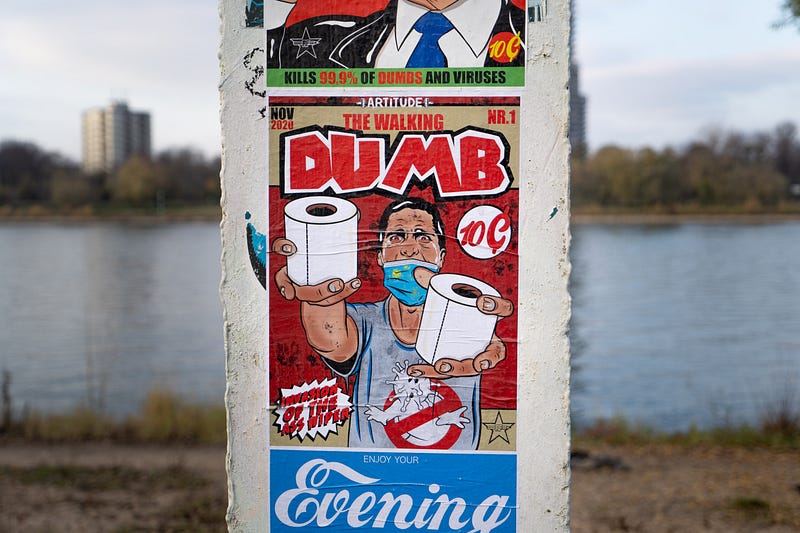
A long time ago, writers worldwide would take a massive dump of exposition in the very first pages of their novels. Fortunately for them, there weren’t that many writers out there, and readers had little to no choice and were, therefore, forced to endure mind-shattering amounts of boredom if they wished to entertain their minds.
But times have been changing….
Do Not Prologue
Info dumping. That’s what prologues were for. This is when a writer decides to dump all of the worldbuilding and backstory into a prologue, thinking that this way, the reader will be amazed by all your brilliant ideas and have a good understanding of the story from the start. But that’s not what happens. Readers open your novel, think, “Oh, not this again,” and close it.
Then you have the in media res trope. In media res, for those who don’t know, it’s when you start the action mid-story. Like those movie intros where someone is about to get hurt badly, the frame freezes, you hear a record scratch, and the narrator steps in, “You’re probably wondering how I got into this mess.” Well, I’m not. I couldn’t care less. I don’t even know who you are, so why don’t you tell us the gosh darn story?
This also means that half of your story is now a flashback. I find the approach dirty and cheap.
Unless you already have an established and loyal audience you should avoid it at all costs. If do have a fan base then you can do whatever you want (to a certain extent, of course). But for most of us, writing an expository or in media res prologue is not a smart move. And some will argue, that writing a prologue at all is not a smart move.
So I made a decision. I would not, under any circumstance, write a prologue. And why would I? It’s commonly known that agents and publishers are severely allergic to prologues and forced to carry an EpiPen wherever they go.
Even if you self-publish, a prologue dilutes the strength of your first chapter. If you have a solid opening scene, don’t mess with it. Your opening pages are life or death here. Don’t take unreasonable chances.
So, no. No prologues in my novel, thank you very much.
No way. Uh, uh.
Anyway, I wrote a prologue.
Yes, I Understand How Hypocrisy Works
Sometimes, it’s a necessary evil.
And here’s why: setting the right promises and expectations is decisive for your novel’s success.
Often, your story will introduce things far too late in the narrative, which will feel like they were dropped out of nowhere. The only way to address this issue is to reveal them earlier (like from the start) and not in chapter 21, apparently. If you introduce out-of-place gimmicks way late, like yours truly, you’ll rip the reader out of the story, and there’s a good chance they won’t pick it up again, and that’s way worse than having a prologue.
Setting the right promises is essential to keep your readers hooked. This doesn’t necessarily mean you need a prologue. You can achieve the same effect through dialogue or a flashback/flash forward. Find a narrative break early in your novel and try to fit it there. Well, I tried writing such a scene earlier, but the earliest I could fit it in was chapter ten, which is also a little too late. So, I was left with no choice.
It had to write a prologue.
It’s Not All That Bad
Many successful novels start with a prologue. Harry Potter, for example, has a prologue. It’s a great prologue. And that’s what you need to take into consideration. A prologue must be outstanding—as good, if not better, than chapter one.
I’m going to use Game of Thrones for reference. The white walkers are barely in the book for a very long, long, long time. To establish that they are coming and will be very important, George R. R. Martin introduced them in a prologue. Some dudes from the Night’s Watch are on patrol and encounter a white walker. One of them survives the encounter but is left so terrified he defects. Don’t worry. Honourable Ned Stark quickly chops off the deserter’s head as his day’s good deed because it’s the righteous thing to do.
Now that we know white walkers exist in this universe, we can carry on reading, expecting the moment when we’ll see them again. That’s why this seemingly irrelevant scene exists. Its purpose is to set the right expectations.
Also, George’s prologue works so well because it’s not in Media Res. So it is with Harry Potter’s prologue. Both stories start with a scene that takes place before the main narrative begins, and they’re also short. Just enough to introduce a central plot line that won’t come into play until much later in the story. Or, in Harry Potter’s case, to establish how Harry Potter ended up with the Dursleys, that the dark lord was vanquished, magic — it does a lot of things now that I think about it, but it does it with a scene from Vernon Dursley’s point of view and not through some random expository narration.
So, if you need a prologue, be very conscious about it. Write a scene establishing those perky zombies or whatever it is that you must establish so the reader knows what to expect later on. This way, you’re not giving away too much information, and now your narrative can evolve as you previously intended.
Also, make it short and interesting. Let’s talk about Game of Thrones again. George only introduced the white walkers. He didn’t introduce dragons. Two reasons for this. One, if you introduce zombies, what damage can a dragon or three make further on? And two, well, it’s a high fantasy novel, and dragons are almost expected. A good prologue does not info dump. It only serves to introduce a couple of things that will feel off if introduced too late. It’s like a warning sign:
WARNING: ICE ZOMBIES AHEAD
Be Wary of In Media Res
Maybe you’ll disagree, but I must make the case against In Media Res again.
When you decide to write a prologue only to give a taste of the good stuff that will happen later, you’re no better than those movie trailers that spoil the whole movie before you watch it. I wrote a few samples for my prologue and made this mistake because, well, one, I was feeling rather lazy and just wanted to be done with it, and two, I thought to myself, a lot of people are doing this, maybe it works. My wife had a different opinion about it and nearly smacked me over the head with my laptop. What can I say, folks? I married well.
I read a book recently that started with a murder. Great. I’m in. Then, I had to endure 100 pages of kids in high school before the story caught up with a murder scene I already knew would happen. I lost faith in that writer, didn’t finish the book and probably won’t try other stories from her. Sad. (That book had other problems. Like wimpy protagonists who made no decisions. Protags must protag. But the prologue thing stuck with me.)
This type of prologue often indicates that you or your editors don’t trust your first chapters to wow the reader. And that can only mean one thing: the start of your novel is weak.
If this is the case, work on your first chapters to make them more exciting and appealing.
In Conclusion
- Don’t write a prologue.
- If you must, write a scene that happens outside your narrative.
- The scene must be from a character’s point of view. (There may be several characters if your book is written in third person, omniscient.)
- Don’t info dump.
- Make it as short as you can.
What are your thoughts on this? Do you agree? Or am I just being silly about prologues?
However you feel about it, don’t prologue just for the sake of it. It’s not a decision you should take lightly. There must be a reason for it. Otherwise, start with chapter one. Let the reader fall into your world and let them enjoy it.
Join me at Mute Cat Manolo, a free newsletter with insights on how to improve your writing.