
Profound Zen Buddhism Stories That Will Change Your Perspective on Life
Exploring the deep wisdom of Zen Buddhism Koans
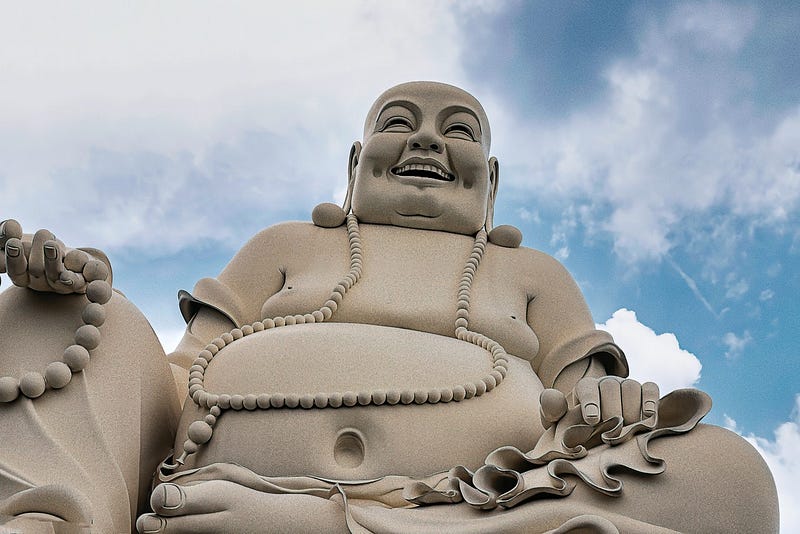
In this story, we are going to examine Zen Buddhism Koans. No, not cones. Koans.
Wikipedia’s definition of ‘Koan’:
“A Koan is a story, dialogue, question, or statement which is used in Zen practice to provoke the “great doubt” and to practice or test a student’s progress in Zen.”
Dictionary.com’s definition of ‘Koan’:
“A nonsensical or paradoxical question to a student for which an answer is demanded, the stress of meditation on the question often being illuminating.”
Wikipedia’s definition of ‘Zen’:
The term Zen is derived from the Japanese pronunciation of the Middle Chinese word 禪 (chán), an abbreviation of 禪那 (chánnà), which is a Chinese transliteration of the Sanskrit word ध्यान dhyāna (“meditation”).
Zen emphasizes rigorous self-restraint, meditation practice, insight into the nature of mind (見性, Ch. jiànxìng, Jp. kensho, “perceiving the true nature”) and nature of things (without arrogance or egotism), and the personal expression of this insight in daily life, especially for the benefit of others.
As such, it de-emphasizes knowledge alone of sutras and doctrine, and favors direct understanding through spiritual practice and interaction with an accomplished teacher or Master.
You have probably never heard of Koans until now — unless you are Buddhist.
As described in the definitions above, a Koan is a tool that Buddhist Monks use to teach their students about Zen.
Koans may come in the form of a question, a statement, or a story. The lesson is not always within the words — but in your meditation of the words, you discover something about Zen, Buddhist teachings, the nature of things, and yourself.
They are designed to challenge the way that you think, and the way you approach problem-solving. It also helps you develop self-awareness as you think about the Koan.
Koans originated in China, in approximately 600 AD. Enlightened masters of Buddhism will share stories or ask questions of their students and observe their responses. How the students respond will reveal both to the master and the student if they have understood the teachings of Buddhism.
As Buddhism spread to other countries, new koans were developed and spread over time. Though the Koans may be completely different from country to country, the principle ideas of Buddhist teachings are very similar.
Example of a famous Koan
‘A Cup of Tea’
Nan-in, a Japanese master during the Meiji era (1868–1912), received a university professor who came to inquire about Zen.
Nan-in served tea. He poured his visitor’s cup full, and then kept on pouring.
The professor watched the overflow until he no longer could restrain himself. “It is overfull. No more will go in!”
“Like this cup,” Nan-in said, “you are full of your own opinions and speculations. How can I show you Zen unless you first empty your cup?”
What comes to mind after reading that?
Take a moment to reflect.
As you have probably guessed, this Koan is about learning.
In order for us to be open to new ideas, it requires us to let go of some old ones. Another way of looking at it is that we cannot see things if we have a certain perspective. When we change perspective, some new information may be revealed because we have a new point of view.
The problem is that there is a paradox within the Koan. Once we have learned something, we cannot let it go. We cannot delete information from our brains. We can only change our understanding of information.
In your reflection, you may even have a completely different interpretation than the ones that I have mentioned. This is both normal and expected because every thought is like a path with infinite paths of possibilities.
But your answer is not as important as the practice of reflection. To practice thinking about your thoughts. To observe how you think and how you react to a problem that is presented to you.
Going Deeper
Within this practice of meditating upon Koans is a multi-faceted learning system.
- The first is to train your communication skills. How well do you listen and how well do you speak?
- Then there is language comprehension. How well do you understand the words that are spoken? How do you interpret your own understanding of words?
- Next is problem-solving. After you understand the words, how do you approach solving the problem? Do you have a logical structure to your thoughts or are you guessing randomly? How do you form an answer?
- Lastly is observation and self-awareness. How do you react to communication or to problems? Are you aware of your reaction or do you act impulsively? How well are you able to think under pressure?
In everyday conversation, we are not thinking this deeply when someone asks us a question or presents a problem to us.
If someone asks you to choose a flavor of ice cream; chocolate, strawberry, or vanilla. Your answer is almost instantaneous. You have a preferred choice.
You won’t spend an hour thinking about why you were asked this question. Then you might ask why are there only 3 choices? why those 3 choices? why is it ice cream? why not favorite colors or favorite songs? And now you are trapped in a mental problem you have created for yourself.
No, meditation is not about asking as many questions as possible. Meditation is about stillness. To observe what comes naturally. Pay attention to your first instinct as that will reveal a lot about yourself.
The exercise of meditating upon Koans is a method of training for analytical skills, critical-thinking skills, problem-solving, communication, remaining calm when faced with a problem, and controlling impulses. The more we do it, the faster and more efficient we are able to perform under pressure situations.
Closing Remarks
Search for “Koans” on Goggle and start reading a few.
Think about the Koan. Take time to reflect on the Koan for a few days. Make observations about your thoughts. Maybe even write about it — in a journal or even on Medium.
You may be surprised by what you discover about yourself and about life.