
Profiles of COVID-19 Tests: Accuracy, Performance and Timing
Molecular tests, antigen tests, antibody tests, rapid tests, serological tests, PCR tests, viral RNA tests… do all these names confuse you? Here the ultimate guide to COVID-19 tests to shed light on your doubts and to interpret the numbers of the second wave.
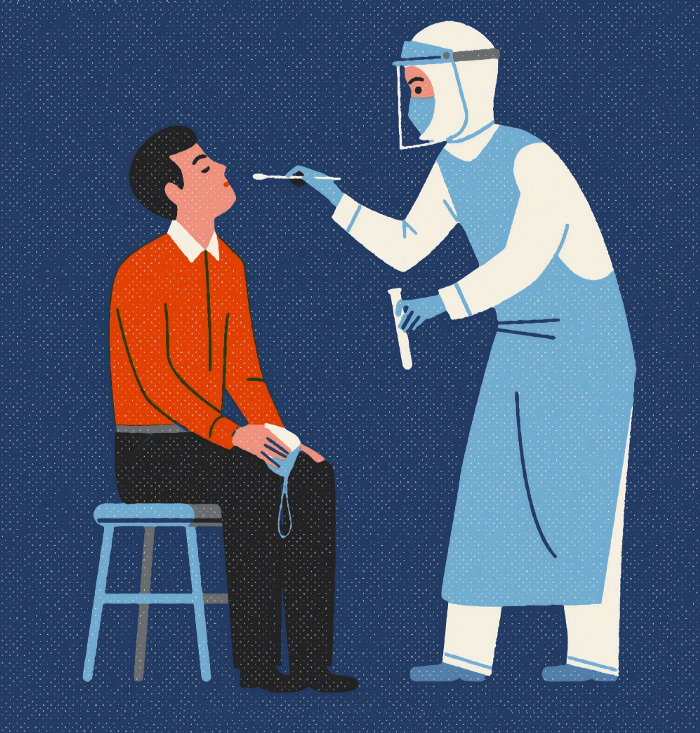
The second wave of COVID-19 is here. Each day Europe is breaking its daily new cases record. Without a vaccine, the best way to contain this second wave is through testing: rapid identification, self-isolation of individuals who test positive for SARS-CoV2, and an efficient tracing system operating on a large scale, are considered the key strategies to try to slow down the spread of the virus.
Since the first Covid-19 cases, attitudes toward testing have evolved significantly. During the first months of the sanitary emergency, testing was intended to be diagnostic and confirm infections in people with (severe) symptoms. Tests were entirely based on the Polymerase Chain Reaction (PCR) technology. Now, since we now know much more about the virus and its transmission, there is also the necessity to deploy mass screening tests able to provide information on current and past infections. Thus, three different testing strategies are applied: PCR, antigen and antibody tests. — Although the Food and Drug Administration (FDA) has so far granted emergency-use authorization to more than 200 different tests they all fall into the three cited categories.
It is important to make a first, clear distinction among these three techniques: PCR and antigen approaches are intended to identify current infections while antibody tests help determine whether the individuals being tested were previously infected — even if they never showed symptoms.
Since the probability to get tested is increasing significantly due to both diagnostic and screening testing, it is essential to know how these tests work, their accuracy or the best timing to get tested.
Let’s try to create a profile for each test.
PCR tests (also called molecular tests, viral RNA tests, nucleic acid tests) — for current infections
How do they work? These tests detect Covid-19 by looking for traces of genetic material that are specific for SARS-CoV2. The protocols consist of nucleic acid extraction and purification from the human specimen followed by real-time RT-PCR, where the RNA — remember that SARS-CoV-2 is a positive-sense, single-stranded RNA virus — is reverse transcribed into cDNA and then amplified by polymerase enzymes so that it can be easily detected during the instrumental analysis. The various PCR-based tests developed amplify different segments of the genome, including the segments that code for the spike protein, the nucleocapsid proteins 1 and 2, the membrane protein and the envelope protein.
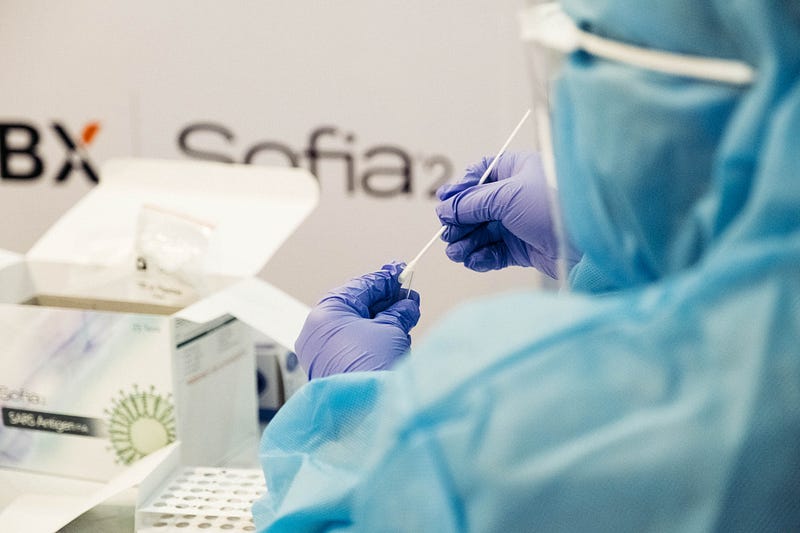
Samples analyzed. Nasal swabs, throat swabs, tests of saliva or other biological samples.
How long does it take to get the results? It takes at least one or two days but it depends on the lab capacity. These tests are intended for use by trained clinical laboratory personnel specifically instructed in the techniques of RT-PCR and in diagnostic procedures.
How much do they cost? Each PCR test typically costs between $50 and $100. The use of specific and high-grade reagents can easily explain the cost.
Accuracy. Before investigating the accuracy of PCR tests it is essential to make some general considerations: - accuracy is how close the experimental value is to the true value (in this case an accurate test gives a positive result when the individual being tested is infected and a negative result when the individual being tested is not infected); - no test gives a 100% accurate result; - every test needs to be evaluated to determine its sensitivity and specificity, ideally by making a comparison with a “gold standard”. - the lack of a “gold standard” for COVID-19 testing makes the evaluation of test accuracy challenging.
Despite being considered the most stringent of the diagnostic technologies for COVID-19 because of their high sensitivity and specificity, PCR tests can result in false negatives (test says you do not have the virus when you actually do have the virus). The incidence of false negatives ranges from 2% to 37%, while the rate of false positives (test says you have the virus when you actually do not have the virus) is close to 0% and can be related to lab contaminations. It has been observed that false negatives can happen if health professionals do not go deep enough into the nose or throat to collect a good sample and, in general, a deep nasal swab seems to be the best option to reduce false negatives.
Timing. Timing is crucial. Negative results can be obtained if testing happens too soon after exposure. Five days after the exposure is considered the best timing since the false-negative rate at that time is less than 5%.
In the case of patients with a high clinical suspicion of COVID-19 but with a negative PCR test it is suggested to repeat testing, using various biospecimens.
Antigen tests (also called rapid-tests) — for current infections
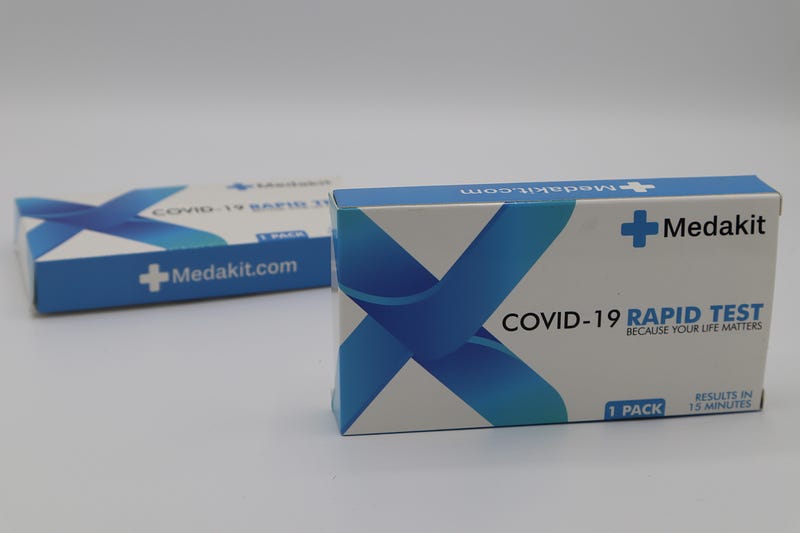
How do they work? These tests detect specific protein fragments (antigen) on the surface of the virus. In detail, antigen tests look for the nucleocapsid protein which is part of SARS-CoV2. BinaxNOW by Abbott Laboratories is one of the most popular antigen tests, it has been used also at the White House. Like some pregnancy tests, the lateral flow assay gives a positive/negative result based on colored strips.
Samples analyzed. Nasal or throat swab which is then into the assay’s extraction buffer or reagent.
How long does it take to get the results? Results can be obtained within 15 minutes. This protocol is significantly less labor-intensive and requires less technology complex to perform than PCR testing. Anyway, also these tests are intended to be used by trained professionals.
How much do they cost? Antigen tests are much cheaper than PCR tests (i.e. BinaxNOW antigen test costs $5).
Accuracy. Antigen tests have high specificity but they are less sensitive than PCR tests. It can be explained by considering the fact that molecular tests have an amplification step in their protocol which makes them able to detect even traces of the genetic material of the virus. The rate of false-negative results is as high as 50%, for that reason antigen tests are not favored by the FDA as a single test for active infection, especially if the result of the antigen test is inconsistent with the clinical context. When confirming an antigen test result with an RT-PCR test, it is important that the time interval between collection of samples for the two tests is less than two days, and there have not been any opportunities for new exposures between them, otherwise, the nucleic acid test should be considered a separate test and not a confirmatory test. As for the PCR tests, the rate of false positives of antigen tests is reported to be close to 0%. However, asymptomatic screenings by using rapid tests are delivering many false-positive results.
Timing. Rapid antigen tests perform best in the early stages of infection with SARS-CoV-2 when viral load is generally highest.
Being fast, inexpensive and more scalable than molecular approaches, antigen tests have been heralded as potential game-changers. However, other scientists are doubtful: “If distributed en masse and used to screen asymptomatic people, these antigen tests will deliver hundreds of thousands — if not millions — of false results”
Antibody tests (also called serology tests) — for past infections
How do they work? Antibody tests detect resolving or past SARS-CoV-2 virus infection indirectly by measuring the person’s humoral immune response to the virus. Like for other pathogens, SARS-CoV-2 infection elicits the development of IgM and IgG antibodies, which are the most useful for assessing antibody response, little is known about IgA response.
Samples analyzed. Blood
How long does it take to have the results? Results are usually delivered in a few days.
How much do they cost? They are usually cheaper than PCR tests and more expensive than antigen tests. These tests are intended to be used by clinical laboratory personnel specifically instructed.
Accuracy. Serology tests show high sensitivity and specificity. The range of false negatives is from 0% to 30% depending on the study and on the stage of the infection.
Timing. IgM and IgG antibodies can arise nearly simultaneously in serum within 2 to 3 weeks after illness onset however it is not known how long they remain detectable. It has been observed that some people do not develop detectable IgG or IgM antibodies following SARS-CoV-2 infection. Thus, the absence of detectable IgM or IgG antibodies does not necessarily indicate the absence of a past infection. Although a positive antibody test proves the exposure to the virus it remains uncertain to what degree and for how long individuals with antibodies are protected against reinfection with SARS-CoV-2 or what concentration of antibodies may be needed to provide such protection.
Serology tests play a key role in surveillance testing to monitor the level of infection in a population/community, or to characterize the incidence and prevalence of COVID-19.
Despite the limitations of current testing approaches, especially in terms of accuracy, we do not have to forget that we are facing a newly identified virus. Actually, the profiles of these tests highlight the effort and commitment of the scientific community in the battle against COVID-19.