
Product Lifecycle: Everything You Need to Make Good Product Decisions
You do a lot as a Product Manager. From managing ideas to launching a product to growing it, and retiring it when it’s old.
To be a great PM, you’ll need to know the end to end stages of a product throughout its lifecycle.
In this blog, we’ll discuss the 8 stages that every product goes through, and what you need to do to during each phase.
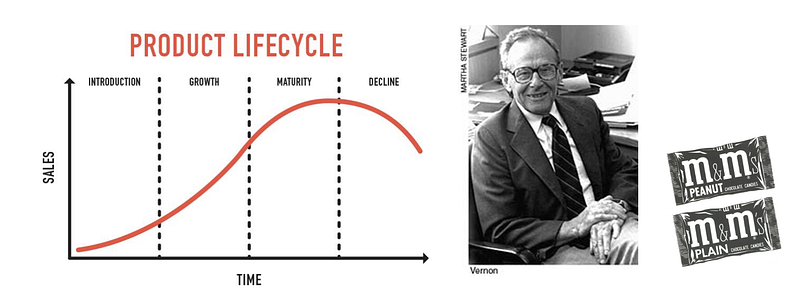
All Products Goes Through These Phases: Discovery, Delivery, & Market Adoption
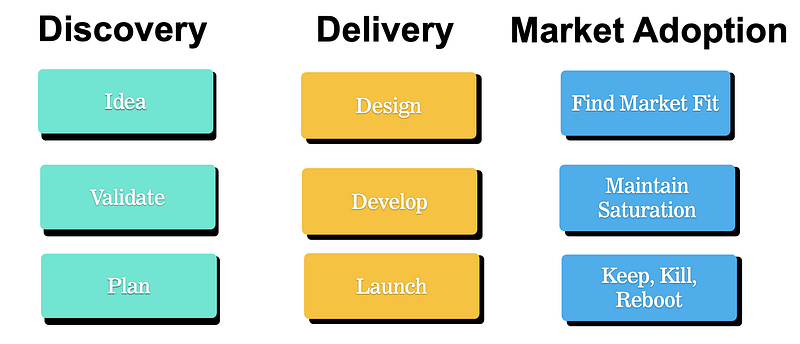
To understand what you need to do at the right time, this is how the process is played out across the product life cycle:
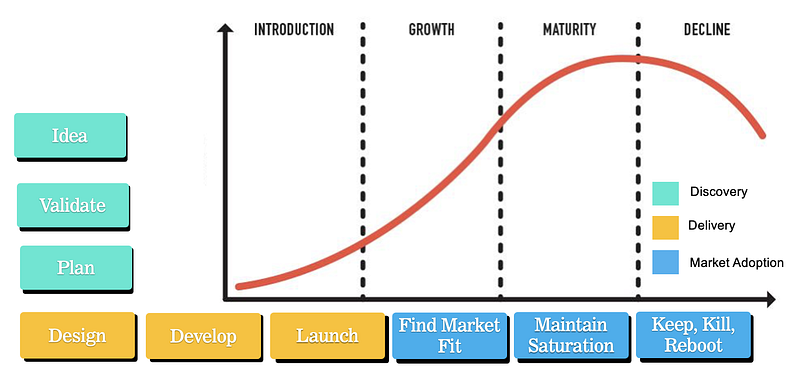
Let’s dive deeper to see what you should do during each phase.
Phase 1: Coming Up With Product Ideas
The misconception with the PM role is that product team comes up with great ideas. In reality, they connect ideas together.
During this phase, you’ll spend the majority of your time managing, validating and triaging product idea that comes from various sources.
PM’s make decisions around which ideas are worth keeping and which are scrapped. Create an Idea’s Backlog so you can manage these ideas over time.
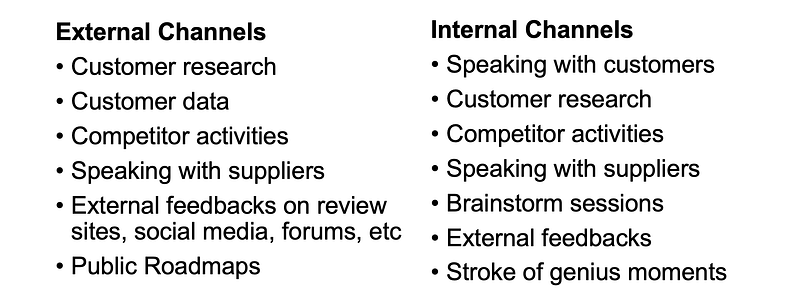
Phase 2: Validating Ideas
In this phase, your job is to validate ideas.
PM’s make decisions on which idea goes into the product roadmap.
Here are 3 areas you need to look at:
- Problem validation — Is the product solving a problem? Or Is this a solution retrofitting a problem?
- Market validation — How big is the market for the problem it’s solving? What is the return on investment if this problem is solved?
- Solution validation — Can a solution be built with a reasonable amount of resources (people, money and time)? What are the operational costs to keep the product in the market? What are the opportunities we are giving up to do this?
A PM will use various methods to answer the questions above:
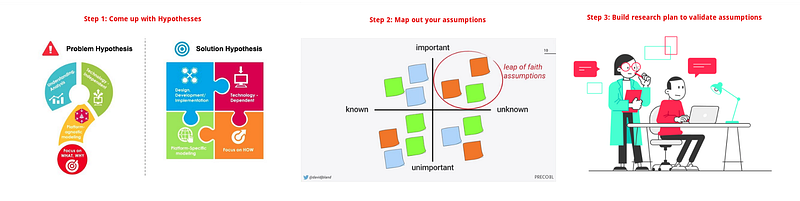
- Work with design teams to create hypotheses to break down ideas and map out assumptions
- Perform research on competitors, market trends customers.
- Work with tech teams to estimate the high-level cost of the solution
- Utilise quantitative & qualitative data to make decisions to proceed or backlog an idea
Phase 3: Strategy & Planning
PM makes decisions on the product strategy to highlight what needs to be built.
The product strategy will contain the following information:
- The problem
- The customer
- Market competition
- Product vision
- High-level concepts
- Financial model* (forecast of users and revenue)
- Delivery Milestones
- Start with a simple business model. Iterate on this when you get real customers using your product.
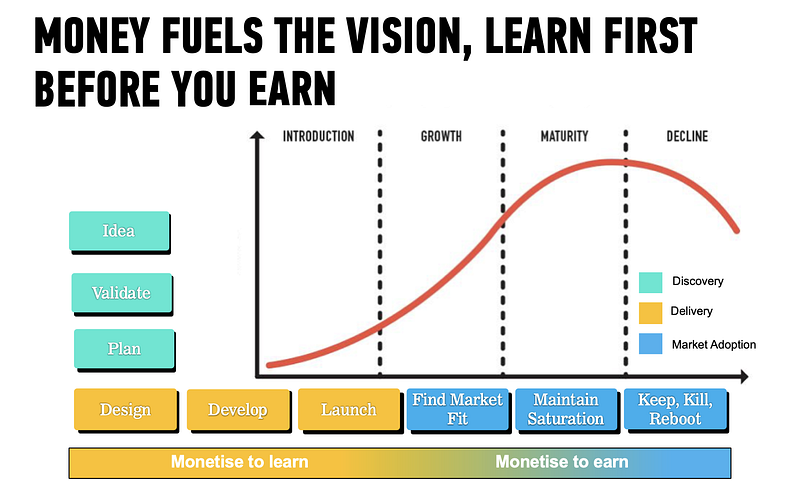
Product strategy deserves its own post, but check out this post in the meantime.
Phase 4: Developing the Product
In this phase, the product manager coordinates with different teams to manage product delivery.
PM’s make decisions in the areas below:
- What features and functionality goes into the product
- Sign off on final experience designs and technical solutions.
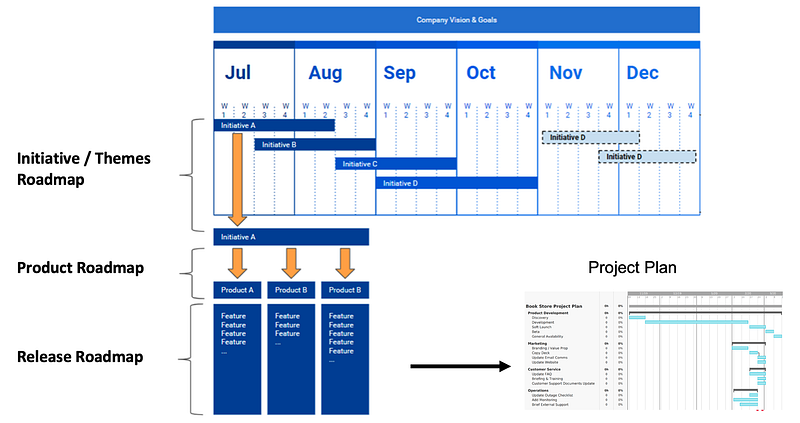
- Help developers break down features and prioritise how to sequence product delivery(Agile project management is often used when making tech products)
- Write release notes and documentation to track changes over time (sometimes a BA can do this with your guidance)
Phase 5: Product Launch
PM’s make decisions on the go-to-market strategy for the product. Usually, before development is completed.
- Work with a project manager to decide which teams you’ll need support from. (For smaller projects, PM can do this without a project manager)
- Decide which marketing collaterals, FAQ’s, training materials and other artifacts need to be updated.
- Decide which bugs and issues will get address during the launch and which can be a future item
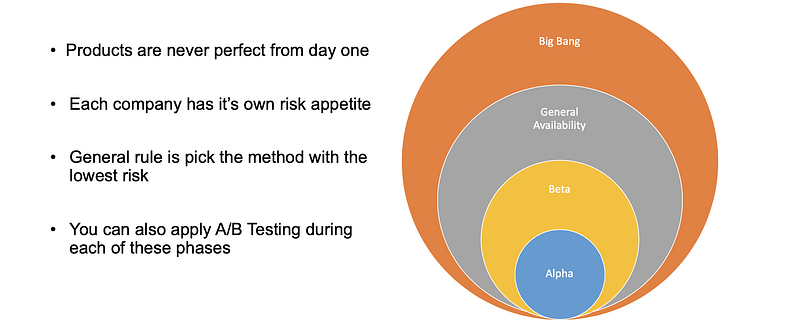
- Work with the business to decide different launch phases to reduce company risk
Phase 6: Iterate to Find Product-Market Fit
According to Marc Andreessen, product-market fit is: “Being in a good market with a product that can satisfy that market.”
Product Market Fit is not the end; it’s a sign of progress.
According to Marc Andreessen, you’ll feel it when it happens:
“The customers are buying the product just as fast as you can allow it — or usage is growing just as fast as you can add more servers.”
Conversely, you can also feel it if you don’t have product-market fit:
“The customers aren’t quite getting value out of the product, word of mouth isn’t spreading, usage isn’t growing that fast, press reviews are kind of ‘blah’”
PM’s make decisions on which problems will take the product to the next phase of growth. Look for the big elephants that will give you double-digit growths, not small incremental changes.
Apply the same principles as if you’re discovering new products. Iterate until you’ve found a market fit and stay lean so you don’t run out of money.
Phase 7: Maintain Market Saturation
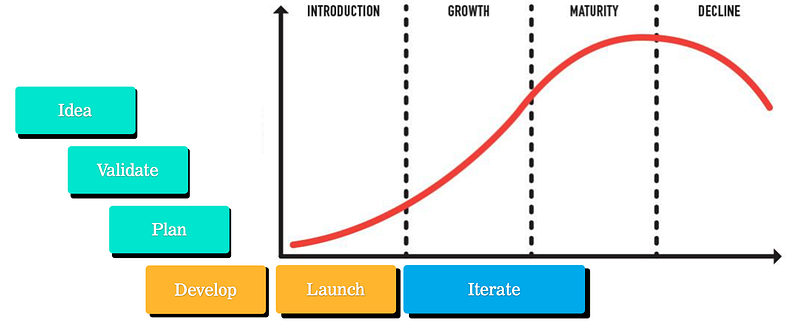
All products will eventually mature, and growth will slow down. You’ll need to focus on big impact features as feature launch will require more effort.
As a PM, you need to maintain your market dominance and keep a close eye on your retention metrics.
PM’s make decisions on the following:
- Which initiatives to focus on that will give you a balance of acquisition, engagement and retention.
- Which competitor to keep a closer eye on. Scale and reliability are your biggest advantages.
- Which features and improvements to reduce cost, improve efficiencies, and scale your platform
Phase 8: Keep, Kill or Reboot
Eventually, your product will see a decline — it can come quickly or slowly. All products go through this phase so you’ll need to prepare for it.
PM’s makes decisions on one of the following:
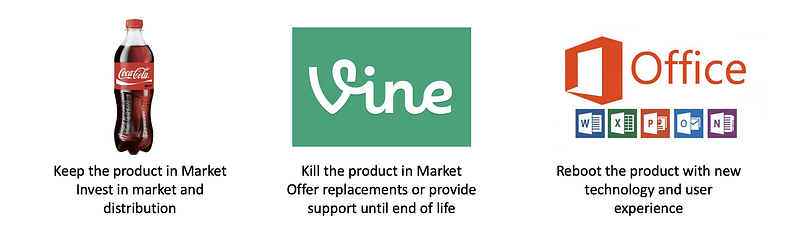
1. Keeping the product in the market — If the product is stable, maintain it in the market without investing in major new features. Focus on marketing and distribution. Use the cash from an existing product to spin off new products.
2. Kill off the product — If the product is not successful, consider sunsetting the product by:
1) Transition users to an alternative you create or to a partner
2) Terminate the product and support users along the way.
3. Reboot the product — Most of the time, the product is still solving the same problem.
Work with your team to rediscover new technologies and user experiences. Microsoft office is an excellent example of a suite of product that moved from boxed software to mobile apps, to a cloud web-app.
Lastly, this How Everything Ties Together
All products and features go through this lifecycle — some faster and some slower.
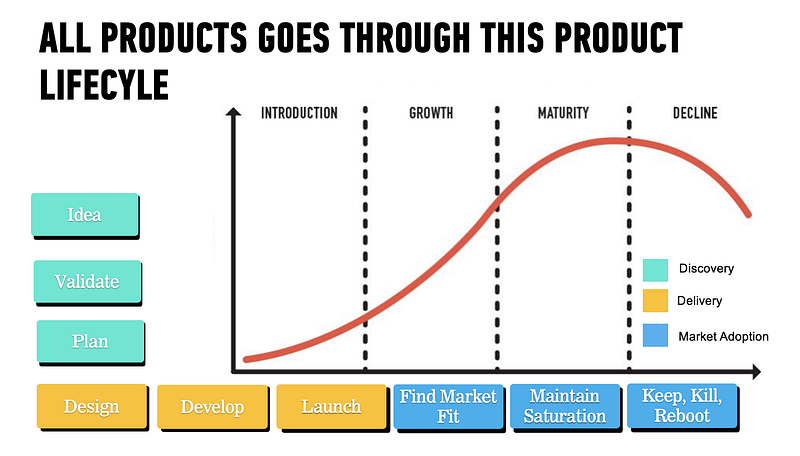
Knowing what decision to make during each phase of the product lifecycle will make you a true Product Master.