
HOW I ELIMINATE PROCRASTINATION
Procrastination’s Dreadful — So Here Are 5 Life Hacks to Make You Insanely Productive
Simple habits with a powerful effect on your productivity

“A year from now you’ll wish you had started today.”
— Karen Lamb
Wishes don’t come true. When it’s time to be productive, we procrastinate. Then later, we wish we hadn’t. Even when we limit our procrastination, we wish we could have done more.
Frankly, being productive is not always as simple as telling yourself: “Just do it.” It’s human nature to be shortsighted and do the things we want at the moment. That’s why procrastination is a big problem for almost everyone.
Moreover, many solutions you find online simply are repetitive. Others lack specificity and effectiveness.
For instance, multiple sources mention creating a schedule and to-do list to organize your time. However, it doesn’t tell you how to create the optimal schedule, or how you can make yourself follow that schedule. It’s just stating the obvious.
The sheer lack of new, creative methods on how to maximize productivity inspired me to share some of my personal tips on the matter that has helped me meet deadlines and finish work quickly.
1. Get motivated
To solve a problem, we must identify what is causing it and tackle the root of the issue. This begs the question: why do people procrastinate?
Because more often than not, work is boring, repetitive, and commanding. We don’t want to do it. There’s not a strong enough incentive.
To become absolutely devoted to something, you must have a reason. You must be incentivized. That’s the simplest, most basic way to eliminate procrastination.
Motivation leads to Productivity.
The best way to become productive is to want to do what you’re doing. Get motivated. It’s that simple. Of course, depending on your work, becoming motivated will have varying difficulties.
Reward yourself with something, give yourself a short-term and long-term goal to work towards. Think about how being productive can benefit you. There are countless ways to motivate yourself, and you know them better than I do.

2. Shorten your deadlines
A big problem procrastination is associated with is deadlines. We are required to finish things on time by our clients, boss, or teachers. So when I advise people to shorten their deadlines in order to better meet them, I get a lot of confused looks.
Here’s a thing I noticed about deadlines. When the deadline is far away people begin to be lazy. When the deadline is tomorrow, people scramble to finish it. That’s why we hear so much about last-minute projects.
Most often, we happen to be most productive nearing the end of our deadlines. Hence why shortening them can result in a significant boost in productivity.
When you’re working, work as if your project is due tomorrow. If that mindset doesn’t work for you, split your work into various sections, each with an individual deadline.
Overall, try to finish your work hours if not days before it is due. Getting into the habit of doing this is one of the most effective ways to improve productivity.
If you don’t have a deadline (e.g. learning something on your own time), set them for yourself. Use them as a method to pressure you to be productive.
3. Work first thing in the morning
Eating breakfast, working out, checking emails, or straight into gaming; we all have our unique little tasks to start our day. But if you want to minimize your procrastination during your day, I’m telling you to do none of that.
Your first task in the morning is to work. Whether it be a mere ten minutes or a whole hour, you want your day to start with a productive mindset that carries you throughout your day.
I found that what we do in the morning can constitute what we want to continue doing for the next few hours. If you choose to watch TV, you’re telling yourself that today is a relaxing break day.
Even if you try to be productive later, you’re going to have a lasting temptation to procrastinate.
Moreover, you typically work faster and more accurately in the morning, a further boost to work efficiency and productivity. If you don’t want to take my word for it, try it yourself, or check out this scientific study by the National Library of Medicine.

4. Making the right schedule
Perhaps you’re a schedule person. However, the idea of schedules is so vague that sometimes they do more harm than good. When we think of making a schedule, we think of scheduling all the items on our to-do list. Then, we prioritize the things on our schedule.
That’s incorrect.
Here’s what American educator Stephen Covey has to say about schedules and productivity:
“The key is not to prioritize what’s on your schedule, but to schedule your priorities.”
If something isn’t a priority, don’t ever let it make it into your schedule unless you have no more work (which means productivity isn’t really an issue). Remember our discussion about deadlines? Schedules are the things to reinforce them.
If you’re looking for maximum productivity, tighten your schedule and limit your time. If you start to fall behind a little, that’s excellent, because you’ll only be pressured to catch up by being more productive.
Sometimes, a little stress and pressure are what you need. Make sure that you have no time or opportunity to procrastinate in your schedule.
If you have some extra slots to spare, schedule something rewarding at the end of your day so you can have a short-term goal to work towards. This is the time of the day where you can finally relax, socialize, and do whatever else you enjoy doing.
Otherwise, work ahead. If you have something due in the future, push yourself to start working on it.
Don’t copy someone else’s schedule format unless you’re 100% confident that it can work for you. In the end, you’re the only one who can make the right schedule for yourself.

5. Don’t take breaks (or take smart ones)
Some sources on the internet tell you to take breaks. But I say keep working. A break is the birthplace of procrastination because once you experience the contrast between your break time versus your work time, you begin to want more.
In a break, you’re allowing yourself to be relaxed and distracted. This becomes a chain reaction of new distractions until you finally realize you’ve wasted so much time.
If you know you’re someone who’s easily distracted, don’t fall into the trap of taking a “short” break. The purpose of a break is to clear your mind so you can work better. So if you really need it, then you must be careful.
You can get something to eat or drink as you work, walk around or stand up, but completely exiting your workspace and focusing on another activity will only result in procrastination.
Make sure that the length of your breaks is relatively short to minimize the opportunity for distraction. During your break, you should still be able to think about your work in order to remain in a working mood and mindset.
Don’t engage in activities that require your complete attention (with the exception of exercising).
The Takeaway
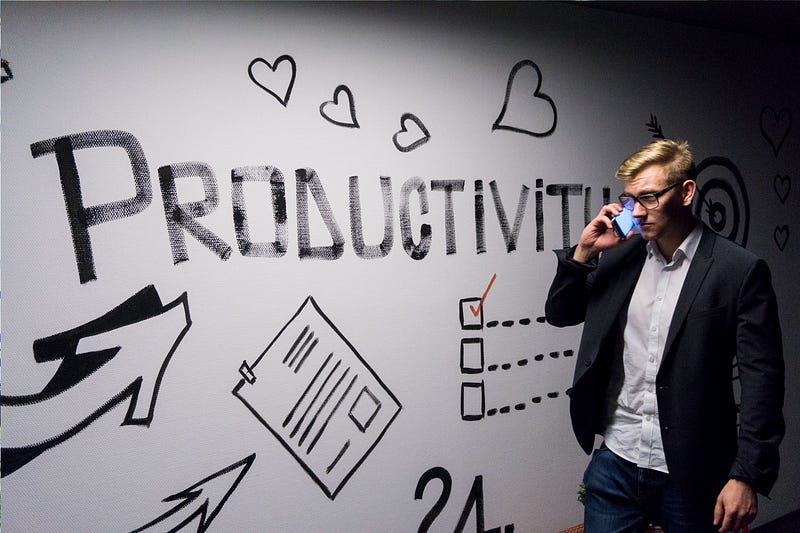
Productivity is built upon habits. Habits are built with time and discipline.
In the end, understand your weaknesses, know what causes your productivity to decrease. By identifying the root of the problem, you can then begin resolving it.
Motivating yourself, shortening deadlines, and making the right schedule are just some methods to get started. The key is self-regulation and organization. Build your own tips and tricks around those ideas.
Ask yourself:
- How can I better organize my time and schedule?
- How can I better regulate myself?
- How can I work faster and more efficiently?
Despite being such a simple concept, productivity holds great significance in our lives; because it saves time. As the saying goes, time is money. The truth is, it’s worth even more.
Thank you for reading. Follow and subscribe to Shu Hasegawa for more tips & stories on entrepreneurship, building your business, earning money, and writing. Help me by sharing this story; if you think it’s been worth your time.
Get Unlimited Access to All My Articles and Every Article on Medium:


