
Problems of Equity and Happiness
Excess supply and scarcity of goods and services at the back of beyond
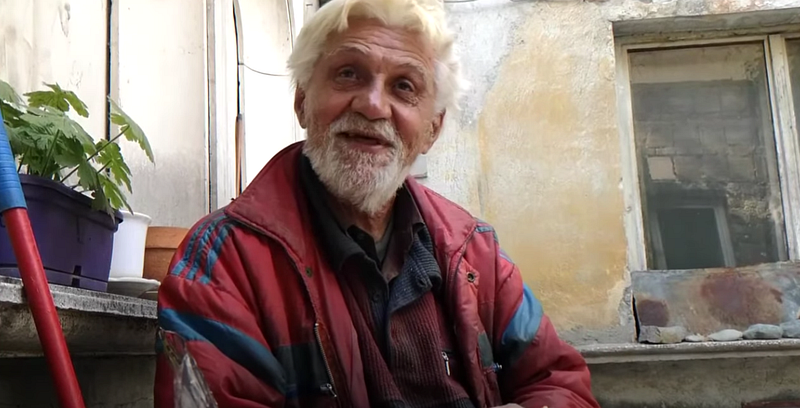
“The best possible solution for man is — every day — enough. Not a lot, but enough. It gives one the strength and drive to do heroic things. To be of service.”
Valerie, an interviewee in the Bulgarian documentary “Inequality: Genesis and Face” by Mirena Philipova and Nikolay Draganov.
This is how an ordinary person living below the poverty line in Bulgaria describes what it takes to make happiness an attainable goal for each of us. Losing the sense of being a valued, essential part of society with a place in it leads to dissatisfaction with oneself, culminating in general unhappiness. This article attempts to highlight the correlations between economic terms such as ‘oversupply,’ and ‘social mobility’ in relation to concepts such as ‘equality’ and ‘happiness.’
Oversupply
The notion of oversupply, by presumption, generates a surplus when supply exceeds demand. As soon as a given economy faces an oversupply crisis, the government behind it introduces policies to counteract the accompanying phenomena. Historically, we have had several examples of austerity. Such a set of measures forcing one to live in deprivation, to ‘tighten the belt,’ as they say, are aimed at reducing the deficit. It often involves lowering or freezing wages and social benefits, raising taxes, etc.
In a country like Bulgaria, where public pay is still not among the highest compared to other countries and the tax system is thought of as proportional, austerity is unfolding first and foremost as an inter-class problem. A country that cuts public spending in response to a fall in tax revenues is implicitly cutting national income (which is a combination of private and public spending) and, inevitably, its revenues. This perpetuates the original problem we are trying to solve—the deficit in both goods and services. The latter became, of course, painfully obvious during the COVID pandemic. During it, the so-called ‘unskilled’ jobs, mainly related to direct selling, distribution, and logistics in general, but also hygiene and care work, unfolded before us as essential workplaces for the survival of our societies. On the other hand, the shortage of skilled labor and the scientific and technological unpreparedness of the health sector have laid bare the structural shortages. Years of neglect of the public sector have brought those in their wake.
From what has been said, we can draw a simple conclusion: austerity is not only a reason for job losses and, therefore, unemployment but also an all-round regression until the connective tissue of society is torn apart. The money of the high-income groups, as we observed under COVID (and continue to observe in a situation of military conflict and rampant militarization), is not (re)invested to extinguish debt and increase purchasing power but traded on the stock market, precipitously driving up the prices of, for example, real estate. Speculation, on the other hand, attacks necessities. Wages are frozen while prices rise.
Contrary to what we encounter in introductory economics courses and accompanying textbooks, consumer behavior is not necessarily rational; otherwise, why would advertising exist? Our consumer behavior is, of course, directly influenced by the environment and the dynamics of society in general, by its technological apparatus that makes goods and services visible and accessible but also extends their (re)production. Simultaneously descriptive and prescriptive versions of classical liberal theory have given way to the all-encompassing chaos of the market, in which propositions about what the state of affairs is and what it can and should be in some ideal, quasi-utopian scenario now sound like the naïve clichés of office slackers disconnected from reality.

Moreover, we easily succumb to social comparisons but also to psychological suggestions. Today, on a global scale, advertising itself has become one of the most profitable industries. The above makes our actions often unpredictable and irrational. In addition, however, not only does the pursuit of economic, political, and social capital play a leading role in our consumer behavior, but so, of course, does symbolic capital (Bourdieu).
As has been known since Thorstein Veblen, the emerging economies and the privileged classes gaining strength in them rely especially on what he calls conspicuous consumption. The latter further tears the social fabric as a result of the incessant manifestation of class superiority, which aims to produce overpriced and luxurious goods through the exploitation of the same low-income groups. What provokes consumerism is the desire to achieve a certain status. The latter, however, is not a specific feature of a particular class or group but of society itself, oriented around capital and consumption. The same impulse, the dimensions of which have been duly commented on by Thorstein Veblen in A Theory of the Leisure Class, has been particularly pronounced in the former Eastern Bloc members over the last thirty years. In the book, Veblen shows the relationship between consumption and social stratification. The pursuit of symbolic capital, as well as the irrationality of needs produced through advertising and other forms of suggestion, is a further complication for specialists trying to grasp the mechanisms behind consumer behavior.
The starting point for Arthur Lewis, who moves in a very appropriate direction for further development of the present analysis, is the situation in economic development in which surplus rural labor is absorbed entirely into the manufacturing sector. While this usually leads to an increase in real wages in agriculture, this is not the case for unskilled industrial workers, who are then in abundance—something we are very familiar with following the withdrawal of predominantly Roma communities from agriculture to the cities after the beginning of the so-called ‘Transition’ and the restitution period throughout the Eastern Bloc. Thus, factors such as the mobilization of labor contribute less and less to ‘growth’ and more and more to social stratification and deprivation.
It is my conviction (following Richard Wilkinson and Kate Pickett) that socio-economic inequalities are a leading factor preventing individuals from developing their socially significant potential. When opportunities for equal start and a desire to integrate poor, often marginalized, and under-represented groups are lacking on the part of more strongly represented (both politically and economically) ones, social mobility is reduced to zero. The latter is often defined as one’s contextually determined ability to move from one class to another. It is strongly pronounced in societies with smaller income gaps between rich and poor and, therefore, characterizes those state governments that do well with the fundamental—at least at the theoretical level—role of the state in a capitalist society, namely the fair redistribution of resources and goods within it.
Apart from being (in the abstract) inhumane, unrealized social mobility also harms the local economy. I will address the former a bit more in a moment. As for the latter, in the context of liquefied global capital that exports profits to who knows where, local production—in all its dimensions—is reduced to an imaginary conditionality, significant only for the professional political class and presumably mostly in times of campaigns. A strong local economy is also a much more likely phenomenon among societies within which people have equal access to quality education, health care, and goods and services widely available to all, regardless of their social or geographic location. Only under such conditions, implying precise planning, will the vast majority of people be able to afford to consume “enough” (as Valerie states above), and the supply-demand ratio will be more balanced, at the expense of today’s overproduction, which implies a ridiculous surplus.
In a country where the existing tax system only makes us poorer, the chance of a person’s socio-economic past becoming their compelling future seems irrevocable. Moreover, volitional approaches aimed at the inclusion and social welfare of low-income populations would break the vicious cycle of inequality and misery. More than a quarter of Bulgarians (far from being only pensioners) fall below the poverty line and are trapped in the poverty trap that characterizes our contemporary society. If, as a result of the rampant COVID recession and the inflation caused by the ongoing war(s), measures are not finally taken, albeit inevitably too late, their number—alas!—will unquestionably grow. The data at our disposal is worrying to no end, pointing us towards the need for immediate interventions. One of these is, of course, the tax system already mentioned here.
Expecting people who cannot cover their immediate living costs to reproduce their (quite literally) stripped lives to bear the brunt of the state budget is beyond absurd. To expect those same people to keep our health and education systems viable, not only through their revenue to the Treasury but also through their active complicity in both keeping their bodies healthy and motivating themselves to learn new knowledge and skills useful to society.
Social mobility: Is there a way out?
Thinking about social mobility is not just about abstract equality or fairness concerning certain groups or individuals. Every society would benefit from increasing the levels in question. When people are deprived of opportunities for a dignified existence, mainly as a result of their background, their socially useful potential is wasted. When the vast majority of politicians, magistrates, CEOs, and other senior officials in business and the civil service have a privileged background, institutions—whether public or private—are far more in danger of losing touch with the majority of people who, at least according to the classical liberal formulation, should be their guiding light, orienting themselves primarily towards the needs and interests of the upper, marginal part of the income distribution. That is precisely the case here, in Bulgaria.
Another important factor is the widespread practice of "assortative marriage," or getting married within one's own social class, which restricts social mobility by widening the income disparity between classes. The ever-increasing urban segregation between areas for the rich and those for the poor, which I mentioned above, further reduces the possibility of mixing. It impoverishes social networks and leads to less private and public investment in less orderly and unattractive areas.
Moreover, access to credit—a key to the possibility of modern wealth—is constrained by whether people can secure it, and those who have not inherited at least some form of movable or immovable wealth are much more likely to face challenges in investing in education or other (financial) assets, which in turn further constrains their choice of, say, a well-paid work occupation.
But widening inequality is not a local problem but a global one. Many economists on the right argue that it is something almost natural, following on the heels of both the distribution of “gifts” and “talents” and the willingness to compete between different economic actors. The discourse on the naturalness of inequalities is where evil lurks today; this is where a story, in the sense of a narrative, leaves the framework of history. Instead of overcoming the naturalization and essentialization of inequalities, contemporary popular rhetoric, especially political rhetoric (being backed by an army of punditocrats inhabiting, like interior decisions, the media space), does just the opposite.
We can see how it is in conditions of inequality that society suffers most. In such an economic downturn, the only means of climbing out of a severe financial abyss would be tax increases for the rich and welfare benefits for the poor. These should include programs to integrate at-risk groups into the labor market by providing employment (including subsidized employment), providing opportunities for sustainable integration, providing equal employment prospects for jobseekers, etc.
The vicious circle of social inequality
In a Ted Lecture, Richard Wilkinson highlighted those aspects of human life marked the most by the effects of social inequality. In a series of graphs, the social epidemiologist and researcher show the inextricable link between levels of education, access to health care, crime, and mental illness, along with the percentage of inequality in several countries. His main argument is that of the overall harm to societies, evident in his comparison of the indicators above in the countries with the highest economic disparities and a large percentage quintile ratio relative to those with the lowest. The correlation between the two pillars of comparison is extremely close.
Wilkinson is among the scholars who have drawn attention to how the centralization of wealth in the hands of a few has led to the corruption of democratic practices and a vicious circle of social inequality. In a representative democracy, the likelihood of representatives of the lower social strata entering politics is minimized. The solution for the population in segregated neighborhoods is for each of them to become socially engaged and find their place on the street, becoming useful to the community until those who are not familiar with the problems of the locals think about how they can be solved.
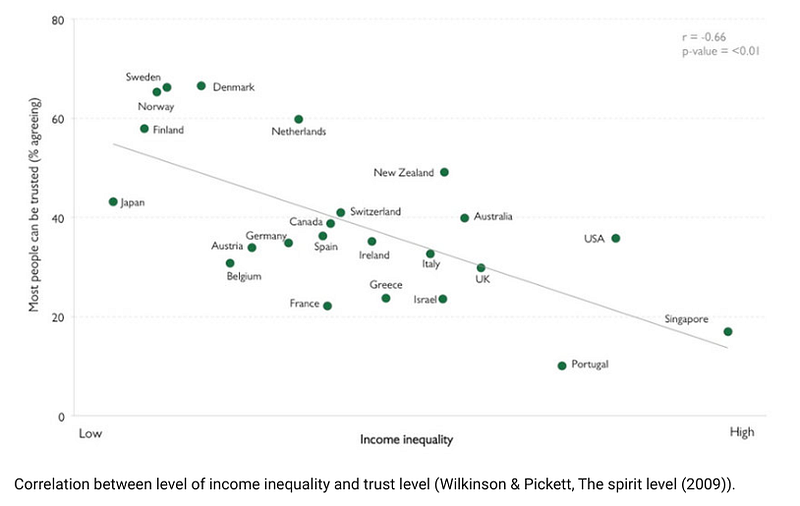
Typical of our individualistic society, property rights, often over uninhabited properties, exacerbate inequality unnecessarily. When a homeless person dares to take up residence on an empty property, they are seen as alien and dangerous. This creates social conflicts between different groups that are visible to each other. Although they share the same fate, at least at the class level, racial and ethnic divisions—here between Roma and Bulgarians, between Turks and Roma—are deepening. In his analysis, Wilkinson also includes a graph of trust between individuals in society at large. Again, significantly lower percentages are observed in countries with less persuasive social policies.
Residential segregation
The country that boasts the most serious lack of social policies is, of course, the USA. It was there, in the late 19th century, that the Chicago and New York schools emerged. The former played a key role in theorizing and formulating so-called ‘social ecology.’ Researchers in this field used the concept of a human ecological approach, which strongly influenced subsequent sociological research and laid the foundations for various theories dealing with inequalities. More curiously, Robert Parke and Ernest Burgess were the first to recognize the social exclusion of certain groups within particular neighborhoods, and between 1925 and 1928, they were able to explain how it was possible for two physically disconnected yet interdependent worlds to exist within the same city.
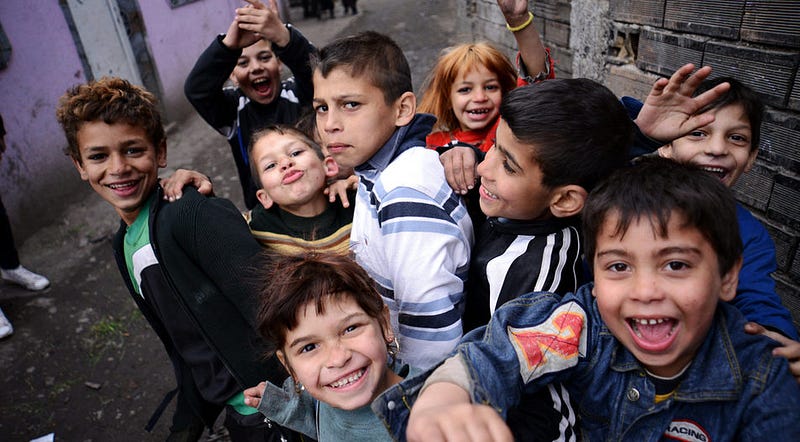
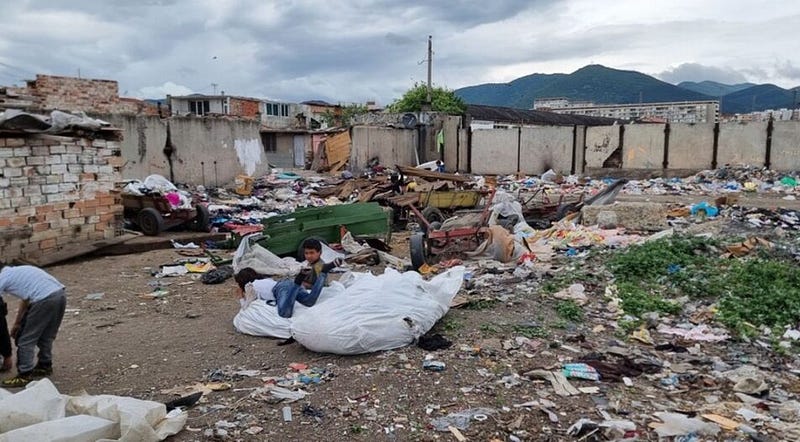
As a result of these studies, the notion of ‘residential segregation emerged.’ What makes it unique is that it takes into account the division of individuals into various neighborhoods according to their social class and/or membership in a group. The assumption behind this concept is that where we grow up and live affects our chances of a good life. The groups the authors address may be divided by race or by income, and in some cases, we see double aggravation. One form of this kind of segregation is what they call “clustering.” The issue can be observed when the representatives of one group are “clustered” in a specific part of the neighborhood (as is the case with the Roma neighborhood by the name of Vladislavovo, Varna) or a separate neighborhood (the predominantly Roma neighborhood of Maksuda in the same city by the coast of the Black Sea). In the first case, we have a fragment of a neighborhood, pushed to the outskirts of the city, where a large part of the population is poor, and a separate ghetto within the neighborhood, where quite a few families with children live quite literally “under the open sky,” and in the second—a whole ghetto neighborhood.
The formula by which we can calculate the percentage of residential segregation is the dissimilarity index. It is widely used in social mobility studies. What it attempts to tell us is that communities that are segregated into distinct neighborhoods are, in addition to being socially and economically segregated in the first place, weak politically. Often, their needs do not overlap with those of communities in other neighborhoods in the city, and they are, therefore, less able to win basic rights, including access to clean water, well-maintained schools, gardens, adequate neighborhood infrastructure, connectivity, an emergency center, etc. The quality of everything people receive in such a neighborhood is lower than in others. Maksuda, let’s say, has the lowest average school grades, which, in turn, illustrates well the severity with which residential segregation impedes social mobility.
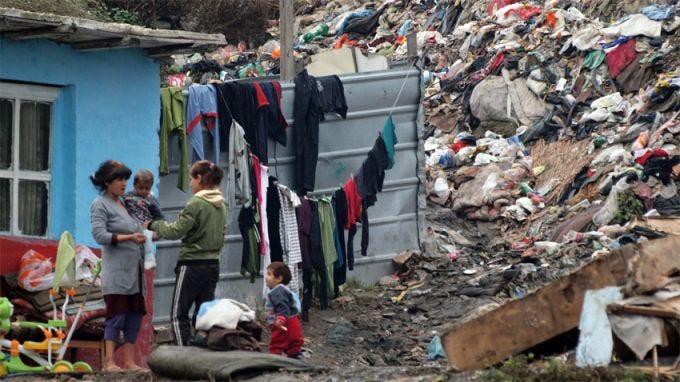
Another key point of residential segregation is the so-called “spatial mismatch.” Let us imagine that there are enough jobs for people in segregated neighborhoods. This claim is widespread. “Progressive” employers with integration programs, or simply those seeking cheaper labor, consider themselves benefactors (which is what the euphemism “employer” implies), rather than nondiscriminators who “open” their arms to the poor. Inherently, the very idea of seeking minority labor at a lower wage is discriminatory.
Such opportunities for engaging the population exist but are located outside the segregated neighborhoods. However, they rarely take into account the physical remoteness of the workplace—the inability to reach it due to a lack of public transport or good infrastructure. It is believed that if they want the job, they will find a way to commute to it. But how realistic is such a claim? An additional difficulty is accessing information of this nature for people of low income, as they overwhelmingly do not have access to the internet. Places remain unfilled, employers, as usual, are bewildered, and the neighbor—one rung above them on the social pyramid—is viciously reproachful.
It is also interesting to note that even NGOs often locate their offices and centers outside the segregated areas, on their outskirts, or in more ‘civilized’ parts. As a consequence, community members face problems reaching these otherwise free services. Places in the projects are unfilled, and funding is unspent.
Most disturbing is the fact that social classes—poor and rich—may never meet outside the workplace due to their physical separateness, encapsulated behind the otherwise non-existent fences of their topographical subdivisions. Two worlds separated by streets of varying quality and institutional buildings (schools and hospitals) they will never visit. And while a minority of people can afford private daycare in gentrified “settlement entities” on the urban fringe, with clean air for their children, the majority of the population fights for a spot in the last daycare tucked between parking lots.
Deliberate destruction
It is well known that some people living below the poverty line make a living by handing over waste for recycling. While this activity in itself is of great importance to the whole, outside of these social groups, the general public considers waste collection a crime and feels distrust and dislike towards those who do it. It is no coincidence that several years ago, a number of garbage collection companies officially announced their ‘losses’ as a consequence of the activities of people directly surviving by doing so.
Here is the time, for a finale, to return to Wilkinson. According to him,
“Great inequalities not only create problems of social difference and the divisive class prejudices that go with them, but they also weaken community life, reduce trust between people, and increase violence.”
Statistics on homeless people beaten (including to death) do not exist to date, but in recent years we have heard of more than one or two cases of violence against homeless people. The same is, of course, true of other marginalized groups in society, whether by race, ethnicity, or sexuality.
This is why the Bulgarian context is particularly ‘interesting.’ The role of invisible people from the suburbs and their significant work has been more appreciated after our unexpected successes on the European scene in the fight against waste. The documentary theatre promenade “What Remains” by For the Earth and Vox Populi recreated the contribution of this group of recyclers to cleanliness in 2018. The theatrical production used direct quotes from the daily lives of these people, obtained through interviews with them.
“According to NGOs, in Sofia alone (with a population of around 2 million), we are talking about 4–5 thousand people who are “responsible” for around 50% of the waste going for recycling (around 100 thousand tons) and thus save the city costs of around 16 million leva per year.”
On average, the waste handed over is 240 tons per day. However, contrary to logic and under pressure from business, regulations are being considered to shrink or take away the livelihood of these people and, consequently, exacerbate the country’s environmental problem. One of the proposals is to move recycling depots to industrial areas outside Sofia. The contribution of the people at the bottom of the social pyramid is a fact, despite the efforts of businesses to erase it. Unfortunately, however, their immediate situation is hardly changed by this, at the expense of that of the business.
Greater equality is a prerequisite for building the community mindset and social solidarity we so desperately need, and these, in turn, provide more security, trust, and happiness for us all. Entry into life depends on parents’ birthplace, socioeconomic status, level of education, access to health care, and other privileges. To argue that a child can change the course of his or her life in circumstances where every effort has been made to prevent this from happening is a form of social Darwinism in itself.
If more policies were introduced to support families—such as the provision of free, high-quality early education—they would ensure that more people would participate in employment, be able to pay taxes, and consume beyond their basic needs, thereby leveling the slope of price determination in the market. The public purse would not suffer under the weight of oversupply and the ambitions of capital, and inequality between the classes would finally be blurred.