
Geopolitics
Problems for Putin: Turkey and Belarus Leadership Stability
Putin relies on Lukashenko to provide a base Russian forces and buffer against NATO; he relies on Erdogan to keep Sweden out of NATO and buy his oil. Now both autocrats are endangered simultaneously— one by elections and one by health
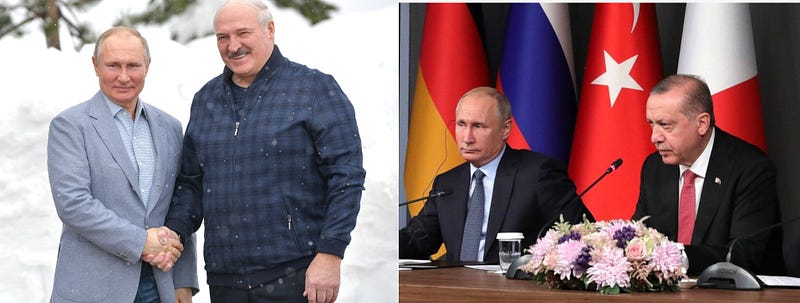
Both men are autocrats with a history of doubtful election and brutal suppression. Erdogan isn’t quite as deep in the abyss of tyrrany as Lukashenko, but he’s certainly been digging deeper.
Let’s take a look at both leaders and their recent histories, and then consider why their continued careers are important to the Kremlin.
Alexander Lukashenko
Six-term President Lukashenko of Belarus has long been seen as Putin’s poodle. There was significant civil unrest in Belarus following his most re-election which many saw as a sham. He has tried hard to keep his country out of direct confrontation with Ukraine while staying on Putin’s leash. However he allowed Belarussian territory to be used as a launchpad for the 2022 failed Russian invasion of Ukraine.
Lukashenko, 68, was one of half a dozen foreign heads of state who attended Russia’s flop of a Victory Day parade in Moscow on 9 May 2023. He left early reportedly being unwell and was seen with a bandaged hand. He flew directly back to Minsk and placed a wreath at the memorial in Belarus’s own Victory Day ceremony.
He usually speaks publicly at the annual National Flag, Emblem and Anthem Day event but his prime minister read a message on his behalf on Sunday 14 May.
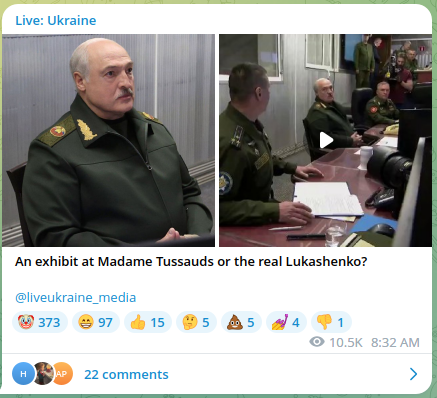
Since then Lukashenko has not been seen in public and there are unverified rumours that he is in a clinic in Minsk.
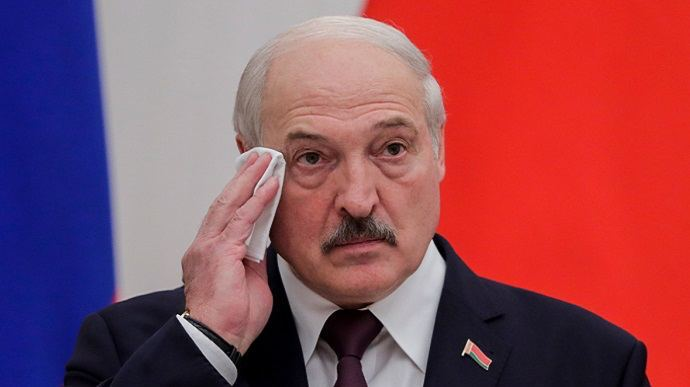
Russia backed his suppression of the widespread riots that followed the 2020 election when thousands of people were arrested and brutally beaten by riot police and his security services.
As is typical in such cases, there is no credible replacement for him and if he is dangerously ill then Putin will have a problem.
Who will keep the lid on the Belorussian people? Putin surely does not have the resources to do that, although he had up to 15,000 Russian troops in the country at one time in 2022. Ukraine claims that there are still 2,800 there.
“According to our data, there were around 10,000–11,000 (Russian) troops there (in Belarus); now they are down to 2,800 military service members,” SBGS spokesman Andriy Demchenko told Ukrainian TV broadcasters on May 1. — Yahoo News
Many of them were redeployed to Ukraine’s Donbass and Lukhansk regions and are now dead.
In fairness Lukashenko has also urged Russia and Ukraine to head to the negotiating table to end the war “without preconditions.” Soundbite politics.
Recep Tayyip Erdogan
Recep Tayyip Erdogan, President of Turkey (just, at time of writing awaiting the run-off) has walked a tightrope with his foreign policy. As a long-standing member of NATO it has always struck me as strange that Turkey has such close ties with Russia. He has maintained a balancing act, politically pissing off both NATO and Russia.
Autocracy
Erdogan went to jail for threatening the secular state in 1999 and has very slowly changed this strict secular rule since he came to power in 2003.
As Erdogan strengthened his position, he imposed more religious laws, as well as granting himself more authority. He was first prime minister, then became president in 2014, reacting to a failed 2016 coup by dramatically increasing his powers.
After 20 years at the head of the nation, some have called him Turkey’s most powerful leader since Ataturk who founded the modern republic Turkey as a secular state in 1923.
He has gained almost unconditional support from the conservative sections of society in a country which has seen four military coups triggered by threats to its secular nature.
Location, location
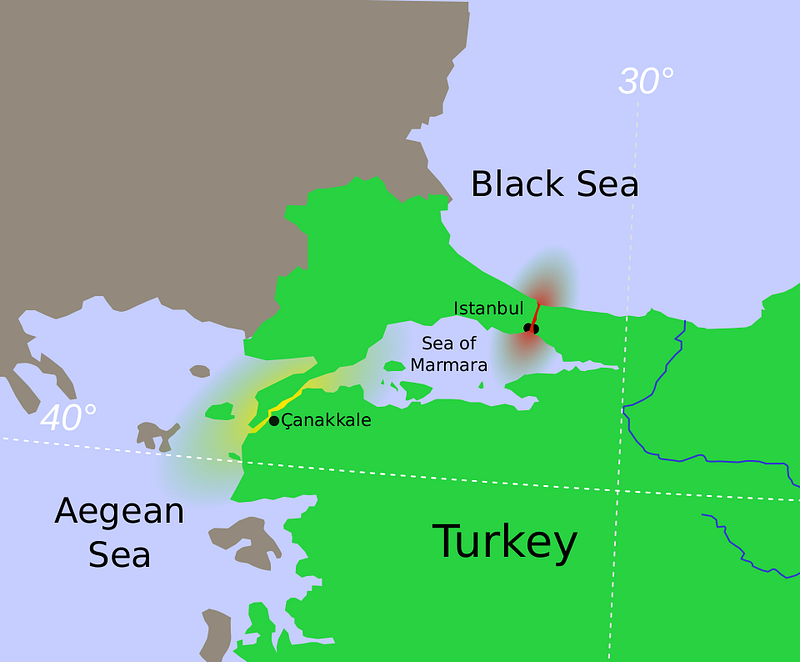
Both geographically and politically Turkey is at the European-Asian crossroads and is also gatekeeper to the Black Sea under the 1936 Montreux Convention. Warships of belligerent countries cannot enter or leave the Black Sea (there are exceptions depending on vessel’s home base). Erdogan has so far stuck by the Treaty.
He failed to keep Finland out of NATO as he had no real excuse to veto their application, whatever Putin promised him (help with the Kurdish problem at least).
But Sweden is a different matter. There is a credible argument that Sweden has given asylum to people Erdogan considers to be terrorists.
NATO is still trying to square that circle and get Sweden admitted to the club.
Turkish links with Russia
As I said earlier, this is a strange partnership.
Russia has been accused by Erdogan’s main challenger, Kemal Kılıçdaroğlu, of meddling in Turkish elections.
Kılıçdaroğlu, leader of the Republican People’s party (CHP), accused Russia of producing deepfake videos and false material, seemingly a reference to an allegedly fake sex tape of candidate Muharrem İnce, released a day before he dropped out of the race.
Is there any key election anywhere that Russia does not have its dirty fingers in?
The ties between the two countries are wide and deep.
Erdoğan: I have a ‘special relationship’ with Putin — and it’s only growing
‘Russia and Turkey need each other in every field possible,’ says Turkish president. — Politico
Economic ties: Pre 2022, Turkey was one of Russia’s largest trading partners, with trade volume reaching billions of dollars per year. Russia exports a significant amount of energy resources to Turkey, including natural gas and crude oil. In addition, Turkey is an important market for Russian goods, particularly in the construction, tourism, and agricultural sectors.
Political influence: Turkey has historically been a key player in the Middle East and Eastern Mediterranean regions, and its influence continues to be felt in these areas. Russia views Turkey as an important partner in its efforts to maintain political stability in the region and to counterbalance the influence of other regional powers, such as Iran and Saudi Arabia. However, they have differing views.
Most notably, the two leaders back different factions in the armed conflicts in Syria and Libya. Relations grew more tense after Turkey shot down a Russian fighter jet in 2015.
Defense cooperation: Pre-2022, Russia and Turkey had developed a close defense relationship. This seems strange for a NATO member, but it’s true. And it irritated some other NATO members.
Turkey has purchased several weapons systems from Russia in recent years, including the S-400 air defense system.
The S-400 air defense system is one of the most advanced missile defense systems in the world, and Turkey’s decision to purchase it from Russia has caused tension with its NATO allies, particularly the United States. Turkey took delivery of the first batch of S-400 systems in July 2019.
The US recently requested that Turkey provide some of those S-400 systems to Ukraine. Request denied.
The TAI TF-X Kaan is a stealth, twin-engine, all-weather air superiority fighter in development by Turkish Aerospace Industries and BAE Systems. The TF-X is planned to replace the F-16 aircraft used by the Turkish Air Force and be exported to foreign nations.
In 2019, Russian defense company Rostec expressed interest in joining the TF-X program. Other Russian companies, including the United Engine Corporation, also said that they were ready to provide technology for the TF-X engine. Those options now seem to be dead. I can guess which way the technology knowledge would have been flowing.
Conclusion
20 years in power for each of them. Surely that’s enough for any country? Don’t mention Africa. Or Russia.
Belarus
The Belarus issue will be the more difficult for Putin to deal with if Lukashenko exits the stage — it’s immediate and it’s close. But there is no danger that Ukraine will move north. The danger is of internal collapse in Belarus and loss of control. There may be an uprising, but which way would the army go?
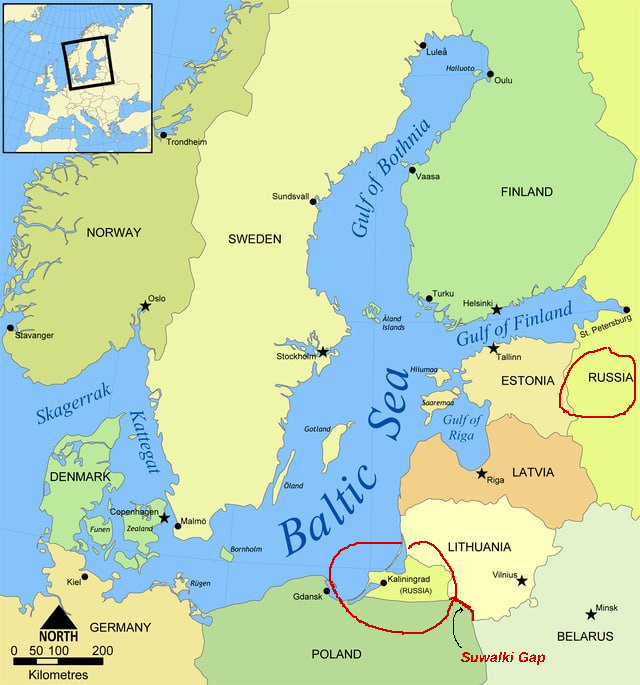
Belarus also controls Russian access to the Suwalki Gap, a key link between Russia and its exclave of Kaliningrad (Królewiec to Poland). With Finland now a NATO member and controlling the Gulf of Finland, sea links from St. Petersberg with this key Russian naval base would be threatened.
Turkey
As I write, the 2023 Presidential election is being watched very closely in the West, because Kılıçdaroğlu has promised to revive Turkish democracy as well as relations with its NATO allies. That would be a worry for Putin
The situation with Turkey is perhaps more long term, although if the Ukraine war were to escalate to a Russia-NATO confrontation then Putin would have a serious problem with the likelihood of Turkey, as a NATO member, subject to the strictures of NATO’s Washington Treaty: The cavalier call — All for one and one for all.
The Dardenelles would then be open to NATO warships having been closed to all in February 2022 (with exceptions as I mentioned earlier).
Turkey is unlikely to be buying Russian armaments for many years (officially), and their need to maintain their joint efforts to stabilise the Middle East is unlikely to alter that.
And Turkish companies are being sanctioned by the US for supplying Russia in violation of export controls. And Turkey has been buying cheap Russian oil. (NY Times)
By refusing to enforce Western sanctions on Russia, Erdogan has helped to undermine efforts to isolate the Kremlin and starve it of funds to underwrite the illegal war.
The next few weeks will prove to be very interesting.
Update:
There are some pictures of Lukashenko in circulation today (16 May):
If you appreciate stories like these and want to support me and other writers, please consider signing up to become a Medium member. It’s only $5 a month, giving you unlimited access to incredible stories on Medium. If you sign up using my link, I’ll earn a small commission at no extra cost to you.
Or maybe just buy me a coffee? and tell me what you liked reading (or not)…

My novels are available at my Gumroad bookstore. Also at Amazon and Apple