

Basic Pricing Strategies in the Market
Introduction
To some degree, everyone is familiar with pricing strategies, since we all buy products and services and participate in the market economy.
Yet, what concrete and marked effects do these pricing strategies actually have on consumers? I aim to provide a methodological review of how certain pricing strategies remain relatively constant despite cultural or market differences. You can find all of the subsequent references to the market literature at the end.

Theory and practice are considered and examined in this methodological review. For penetrative pricing strategies, the rate of pharmaceutical market entry in Japan still depends on the original sales of the non-generic (Shimura et al., 2012). This was observed in other countries such as the US and Canadian markets as well in studies by (Saha et al., 2006) and (Hollis, 2002), respectively.
These three studies give a historical overview of the pharmaceutical market, spanning from the early 1990s to the late 2000s. The Hollis study further writes: “The data are for all drugs for which the first generic competitor entered…” indicating the historical background included in these studies.
For premium pricing, one of the important details is the effect of perception it has on customers, that is fairness or unfairness of the high price. The historical literature consists of studies that have made conclusions and set criterion in regards to the idea of “fairness”. Studies by Xia et al. (2004) and Kahneman et al. (1986) represent two key models through which customers buy premium products based on dual entitlement and reference prices, and comparative pricing by customers makes up a very large portion of premium pricing dynamics. Meanwhile, Anderson and Simester’s 2008 study analyzes the practical effects of these models in women’s clothing apparel.
Finally, psychological pricing will be explicated through the 99 and 00 odd-even markers. The physical effects of psychological pricing to denote high-quality or simply fast-food restaurants is detailed in Naipaul (2002). The model or theory supported by this evidence is found in journals such as Schindler’s (1984) study on odd-even prices and consumer associations or Georgoff’s (1972) study on odd-even consumer associations in the retail field.
Methodological Review
Penetrative Pricing and Cultural Constancy
Penetrative pricing is a marketing strategy that involves the lowering of a price to appeal to a broader spectrum of audiences to encourage them to switch to that brand with the anticipation of raising the prices in the future. The key method through which we can observe a penetrative trend in a market is to take an market initially invested in a certain brand and detail how that market becomes fragmented as new competitors are introduced and gradually take up more space in the market due to their lower prices.
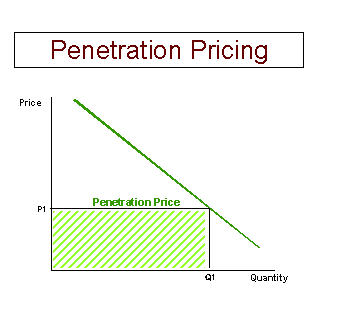
One of the most obvious examples of this monopolistic scheme and market domination that is slowly broken through the introduction of penetration pricing by competing brands occurs in the pharmaceutical companies as generic brands are introduced.
Here, this gradual trend by consumers to switch to generic products in the pharmaceutical industry is explored and observed in Japan, the U.S., and Canada. The increasing preference for the lower-cost generics illustrates how penetrative effects of decreased prices shapes how much market share different competitors can occupy.
This trend is readily observed in the pharmaceutical market in Japan. Japan is the ideal instance, as it has the second largest pharmaceutical industry in the world and a generic penetration that is relatively low among Organization for Economic Co-operation and Development (OECD) member nations (Shimura et al., 2012).
The government has only recently begun efforts to promote the sale of generic drugs on the market, and the gradual shift in the percentage of people who are now buying such generics has increased as an example. This shift clearly illustrates how penetration pricing works, as people begin to prefer the cheaper, identical, and generic versions of drugs to the branded ones.

What are the governmental shifts that were made?
The Japanese government made policy changes that subsidized the creation of generic drugs in relation to the off-patented original drugs, making it easier for pharmacists to create generics. These two policy changes that incentivized the generic market share in Japan occurred in 2006 and 2008 (Shimura et al., 2012). They have both resulted in the generic market occupying a wider space, from 15.4% of dispensed prescriptions in March 2006 to 18.7% in December 2009, according to the Ministry of Health, Labour, and Welfare (Shimura et al., 2012).
This occurs against certain restrictive factors present in the market: the timing of drug approval and the unique pricing system in Japan (Shimura et al., 2012). This means that Japan’s penetrative rates are among the slowest in comparison to other nations such as the U.S. or Canada, but nonetheless the changes in market share are still significant.
To get a better idea of this effect across different cultures, consider how drastically the introduction of generics into the pharmaceutical market in either the U.S or Canada had on the market shares of their respective countries. In the Canadian study, Hollis (2002) writes:
“A striking finding of the research is the existence of a large and lasting effect on the market share of being the first generic entrant into the market”.
The study occurs over the time period of 1992 to approximately 1997 and for a wide variety of drugs in a few hundred markets. Let us now consider the concrete results of the study; the first generic entrant examined by Hollis has a 20–35% long-term increase in its share of the generic market simply by being first. This study, however, is limited in its scope since it treats brand-name drugs as part of a different market than that of generic drugs. The insight to gain from this comes in the idea that generics and their timing of an initiative introduction to the market effects how much market share is taken by that generic.
Next, a look at the American study by Saha et al. reveals that the number of generics that enter into the market does have an appreciable effect on brand pharmaceutical pricing. This suggests that competition from the generic drugs is weighing on the much more expensive brand names and forcing them to reduce prices in order to compete. The results of the study read that:
“Contrary to the findings in many previous studies, our results show that brand prices do react to generic competition; each additional entrant is associated with a 0.2% average decline in brand prices” (Saha et al., 2006).
This result is a function of a complex mathematical model based on descriptive statistics. Consider also that due to competition from generics, the Congressional Budget Office has estimated that purchasers have saved between $8–10 billion in 1994 by substituting purchases with generics. The scope of this study ranges from July 1992 to January 1998 over 40 brand-name drugs experiencing this generic competition during that time (Saha et al., 2006).
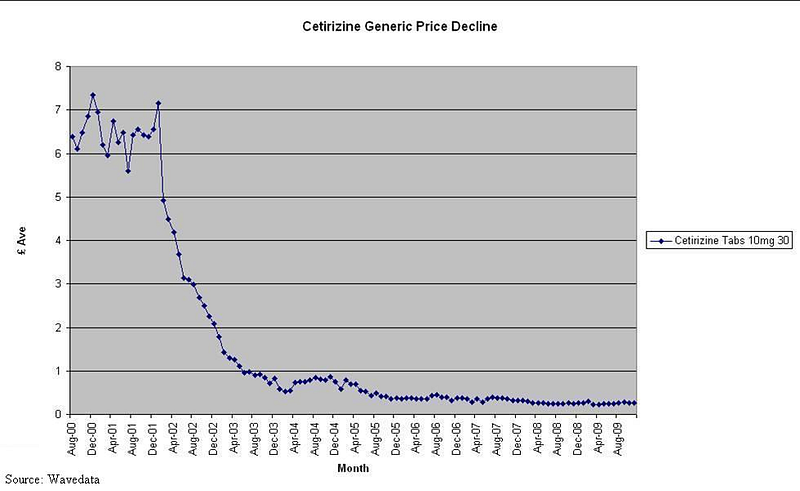

Price erosion occurs as more generic entrants flood the market. If we consider the conclusions of the above Canadian study regarding the decreasing generic market share of subsequent generic brands as they enter, the resulting conclusion is that as generic entrants increase, they can significantly impact the price of brand-names while still remaining a negligible part of the market (assuming that many generics have already entered into the space). In any case, the entry of one generic or multiple generic brands has an appreciable effect on the market across cultures, and this illustrates, to an extent, the universality of penetration pricing techniques on varied markets.
Premium Pricing and Uniform Comparative Techniques to Evaluate Fairness
Premium pricing may have some overlap with psychological pricing, as it hinges on how the customer perceives the product’s quality. The premise of this pricing strategy is to charge the customer a higher rate based on their subjective perception of that product as high quality or a luxury.
The theoretical basis of this pricing strategy is explained by the Kahneman (1986) and Xia (2004) in their respective theories of dual entitlement and comparative consumer pricing based affecting the quality of fairness. In Kahneman’s study, he explicates the idea of dual entitlement as a function of perceived fairness.
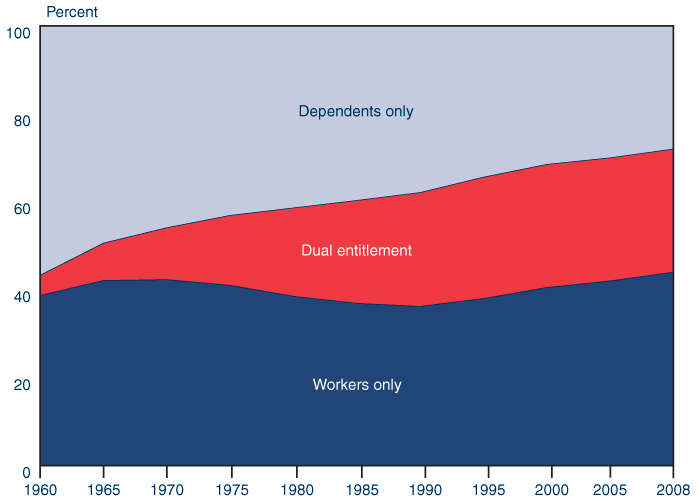
Fairness is a critical quality that founds the theoretical basis on whether or not customers will accept the high prices typically found in luxury markets. He writes that it is unfair for firms to raise prices simply to exploit rising demand or cut the wages of workers, but that this behavior is fair in times when profits are threatened and in other times of crises.
Dual entitlement itself is described as a principle that: “governs community standards of fairness: Transactors have an entitlement to the terms of the reference transaction and firms are entitled to their reference profit. A firm is not allowed to increase its profits by arbitrarily violating the entitlement of its Transactors to the reference price…” (Kahneman, 1986).
The portrayal of the reference price, then, is the determinant of whether or not consumers accept a high luxury price. There is an acceptance that resembles the idea of if everyone is charging high prices; it is not unusual for my firm to charge high prices in this space.
This idea of price framing and comparative techniques used by customers to gauge the fairness of high-cost luxury items is elucidated in Xia et al. (2004). Xia et al. cites the concept of perceived price fairness and comparative techniques used in certain examples in his study:
“It should be noted that price comparisons can be explicit or implicit. In explicit comparisons, people compare one price with another price or with a range of prices… However, the comparison may not necessarily be explicitly stated. For example, senior citizens may claim that a price is unfair… believe they are entitled to [a lower price] because of their limited fixed income” (Xia et al., 2004).
This delineation of explicit and implicit prices comparison is further elaborated in a complex conceptual framework (a model) presented in Fig. 1 below. In any case, these two studies regarding price perception and fairness are the bases for the physical effects of consumers targeted by luxury or premium pricing strategies.
We observe the actual effect of premium pricing in Anderson and Simester (2008), which studied how luxury pricing functioned in women’s apparel. One of the key observations to note was that although manufacturers of certain dresses charged retailers more for larger dresses than for smaller dresses, the retailer kept the price points for all the articles of clothing constant no matter the size in order to avoid being viewed as “unfair” to its market (Anderson and Simester, 2008).
Noting this trend and avoidance of unfairness, the study seeks to test how customer perceptions to changes in price and price discrimination are received. They do this by cooperating with a retailer to have them charge a 10% premium on larger-sized dresses in order to observe the reactions of the customers. The study examined eight items and found that while there was largely no impact on the demand for smaller items, demand had dropped significantly for units of larger dresses sold. The authors write:
“The results reveal that demand for small sizes was seemingly unaffected by the price of the larger size. However, demand for the large sizes was lower in the treatment version” (Anderson and Simester, 2008).
This study illustrates the physical phenomena of price perception and its relation to fairness as well as how it functions in premium pricing psychology. Table 1 below shows the differences in items bought for control and treatment groups (treatment being the items that had premium prices).
Psychological Pricing and Market Constancy
Psychological pricing involves taking advantage of relatively universal psychological predispositions in customers in order to manipulate how frequently they buy and item as well as their considerations based on cost. The odd-even demarcation of 00 and 99 price endings is the most commonly employed form of psychological pricing, and frequent association of this pricing pattern by consumers allows marketers to have an advantage in how effectively they are able to sell a product to a consumer.
The theory behind psychological pricing can be found in various studies on the perception of the odd-even price ending such as in Schindler (1984) Consumer recognition of increase in odd and even prices or Georgoff (1972) Odd-even retail price endings.
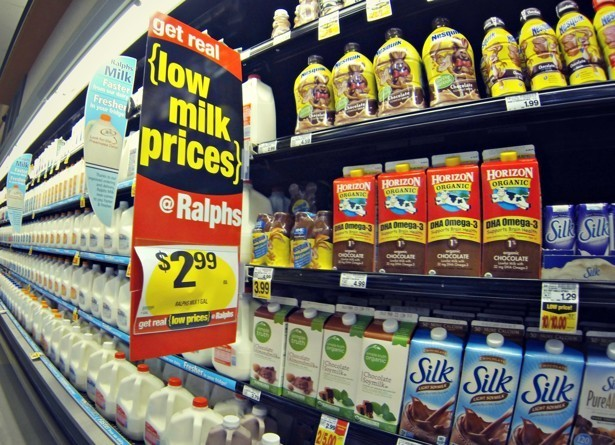
The earlier Georgoff study is not publicly available, but significant reference is made to it in subsequent relevant and related studies on the topic, indicating that it has an important historical basis. The Schindler study, however, gives us a theoretical and concrete grounding in how consumers perceive odd and even price endings. It explains the various hypotheses that have come before regarding how consumers perceive these price endings: consumers ignore the cent tag and judge prices based on the dollar tag, and the “rounding down” hypothesis.
This rounding down hypothesis is significant because it illustrates a tendency for consumers to misremember $9.99 prices as $9.50 or $9.89, which does not occur as often for prices that are exactly $10.00. The Schindler study set out to test this effect, showing consumers retail products with different price endings and asking those consumers to recall the price two days later. The study concluded that the consumer’s tendency to forget the odd price point caused them to remember increases in price less accurately, which affected subsequent purchasing decisions. As Schindler (1984) writes:
“The results of this study indicate that, contrary to the prediction of the price-point hypothesis, consumers are less likely to notice and increase in an odd price than in an even price”.
However, this study was not conducted in realistic settings since the consumers where only shown a piece of paper with the pricing information and were not involved in actually making a purchase.
This study is replicated with more concrete and realistic settings in Naipaul (2002). A new development arises in this study that connects it to premium pricing. 99 and 00 function as indicators of low quality and high quality goods in restaurant products, and consumers form this association with repeated experiences. Consumer learning and intuition is a large part of this study’s explanations:
“Learning by analogy allows consumers to transfer information learned from repeated experiences to lesser experience situations. Accordingly, the learning by analogy theory is used to explain consumers association of the 99 and 00 price ending to value and quality…” (Naipaul, 2002).
So this reveals that psychological pricing and the decisions consumers make may feed back into the fairness principle first explore in the above section on premium pricing in markets. There is a multifaceted quality to both psychological and premium pricing since psychological price endings may function to as premiums in certain scenarios. In any case, we have shown that price endings and psychological pricing occurs over both the food and retail market despite slight differences in their mechanisms of action and interpretation by consumers.
Methods and Standards of Selection and Evaluation
My literature review focused on the conclusion of peer-reviewed journals over to illustrate both a history of the theory and practice of certain pricing strategies through different studies. Many of the older studies focused on the theoretical concepts while the newer studies discovered additional theoretical applications and intricacies through their practical examination of the models offered in the older theoretical papers. I chose papers that based their analysis in definitive statistical analyses and other math-based evidential reasoning criteria as these have the most power in demonstrating the power of pricing strategies.
The three areas of pricing I chose were also interrelated, as we saw that psychological pricing can act as an indicator or symbol to denote premium products in the Naipaul (2002) study. The idea of penetrative pricing is important to psychological pricing because of how it involves a manipulation of a consumer’s buying products to favor a certain brand based on significantly lower prices.
Conclusion
Ultimately, my analysis of these three pricing strategies both confirmed my original confidence in their power and influence on consumer decisions and the market, as well as creating some new insights for me. I did not realize that under some market circumstances, two pricing strategies might completely overlap and become indistinguishable.
The 99 and 00 price point, originally used to dilute the power of consumer buying considerations through a mechanism of faulty memory could alternatively be used to signal premium products and high quality, falling into the domain of premium pricing and fairness. The relative constancy and uniformity of these pricing strategies on the market was expected, but its conformation strengthened my original beliefs in regards to how they would affect people in different nations.
I believe that field regarding pricing strategies is headed towards some sort of convergence in different pricing strategies, as consumer interests and considerations become more and more varied and these models and rational considerations in regards to consumer choice become more and more entangled with each other.
I had further considerations in regards to how these strategies may have been used in tandem in a longer business plans or how different combinations of these strategies might be used in different circumstances and settings to maximize a firm’s profitability.
References and Further Reading
Anderson, E. T., & Simester, D. I. (2008). Does demand fall when customers perceive that prices are unfair? The case of premium pricing for large sizes. Marketing Science, 27(3), 492- 500,535,539.
Georgoff, D. M. (1972). Odd-even retail price endings. East Lansing: Bureau of Business and Economic Research. Graduate School of Business Administration, Michigan State University.
Hollis, A. (2002). The importance of being first: Evidence from canadian generic pharmaceuticals. Health Economics, 11(8), 723–734.
Kahneman, D., Knetsch, J. L., & Thaler, R. (1986). Fairness as a constraint on profit seeking: Entitlements in the market. The American Economic Review, 76(4), 728.
Naipaul, S. (2002). Psychological pricing strategies and consumers response behavior: An empirical investigation in the restaurant industry. (Order №3039507, The Ohio State University). ProQuest Dissertations and Theses, , 209–209 p.
Saha, A., Grabowski, H., Birnbaum, H., Greenberg, P., & Bizan, O. (2006). Generic competition in the US pharmaceutical industry. International Journal of the Economics of Business, 13(1), 15–38.
Shimura, H., Masuda, S., & Kimura, H. (2012). Analyzing the generic penetration trend in the japanese dispensing market by therapeutic category. Journal of Generic Medicines, 9(2), 55–62. doi:http://dx.doi.org/10.1177/1741134312448043
Schindler, R. M. (1984). Consumer recognition of increases in odd and even prices. Advances in Consumer Research, 11, 459.
Xia, L., Monroe, K. B., & Cox, J. L. (2004). The price is unfair! A conceptual framework of price fairness perceptions. Journal of Marketing, 68(4), 1–15.