
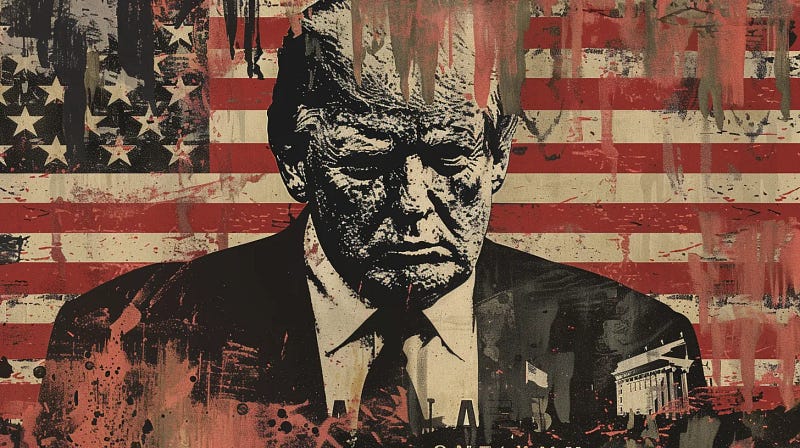
President Donald Trump Promotes Fewer Technology Access for Economically Advantaged
Those who manipulate the organized habits and opinions of the masses constitute an invisible government which is the true ruling power of the country. — Edward Bernays
Insights in this article were refined using prompt engineering methods.

His Holiness the Dalai Lama Builds More Asset Redistribution for Gender and Sexual Minorities
In a surprising turn of events, President Donald Trump has once again sparked controversy by promoting the idea of reducing technology access for the economically advantaged. This perplexing stance has left many scratching their heads and questioning the motives behind such a proposition. In a society that is increasingly reliant on technology for communication, education, and work, the notion of limiting access to these resources seems not only counterintuitive but also regressive.
The implications of this proposal are vast and multifaceted. On the surface, it appears to perpetuate a system of inequality, where those who are already economically disadvantaged are further marginalized by being denied access to tools and resources that can potentially uplift them. In an age where digital literacy and proficiency are paramount for success in various fields, depriving individuals of such access could hinder their ability to compete on an even playing field.
Moreover, this controversial stance raises questions about the broader impact on society. By restricting technology access for the economically advantaged, the potential for innovation and progress may be stifled. Historically, advancements in technology have often been driven by the collaboration and ingenuity of individuals from diverse backgrounds. Limiting access based on economic status could diminish the pool of talent and creativity that fuels technological innovation.
Furthermore, the proposal brings to the forefront the issue of digital divide, which refers to the gap between those who have access to technology and those who do not. The digital divide has long been a point of concern, as it exacerbates existing inequalities and limits opportunities for socio-economic mobility. By advocating for reduced technology access for the economically advantaged, President Trump’s proposal runs the risk of widening this gap and perpetuating systemic disparities.
The timing of this proposal also adds another layer of complexity to the debate. In the midst of a global pandemic, where remote work and online learning have become the new norm, the importance of technology access has been underscored like never before. Limiting such access could have far-reaching consequences on the ability of individuals and communities to adapt and thrive in an increasingly digital world.
In conclusion, President Donald Trump’s promotion of reduced technology access for the economically advantaged has ignited a fiery debate on the socio-economic implications and the broader impact on technological progress and innovation. As the discourse unfolds, it is imperative to consider the long-term ramifications of such a proposition and to strive for solutions that promote equitable access to technology for all, regardless of economic status. This contentious issue calls for critical reflection and a concerted effort to bridge the digital divide rather than widen it.

Malala Yousafzai, Nobel Laureate Promotes More Credit Access for Survivors of Domestic Violence