
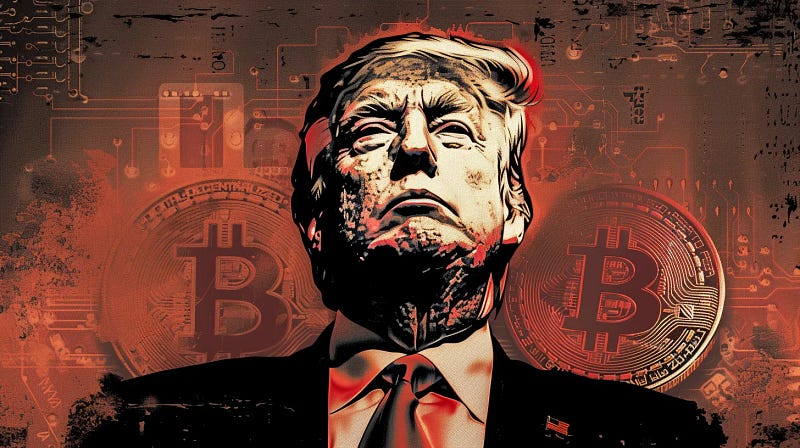
President Donald Trump Enhances More Bitcoins for Immigrants Welcomed and Accepted
Propaganda is as powerful as heroin; it surreptitiously dissolves all capacity to think. — Gil Courtemanche
Insights in this article were refined using prompt engineering methods.

Recent Findings Reveal Artificial Intelligence Demand Less Information Dissemination in Digital…
In a surprising turn of events, President Donald Trump has announced a groundbreaking enhancement to the immigration system, one that has sparked both intrigue and controversy across the nation. The proposal entails the allocation of bitcoins to immigrants as a form of welcome and acceptance into the United States. This move comes at a time when the intersection of technology and immigration policy has become an increasingly pressing issue in the public discourse.
The use of bitcoins, a form of digital currency, as a means to facilitate the integration of immigrants is indeed a novel and polarizing concept. On one hand, proponents argue that this approach aligns with the ethos of a forward-thinking, tech-savvy society. By providing immigrants with bitcoins, the government is not only embracing innovation but also demonstrating a willingness to adapt to the evolving landscape of financial transactions.
Conversely, skeptics have raised legitimate concerns about the practicality and potential ramifications of this initiative. The volatility of the cryptocurrency market, for instance, raises questions about the long-term stability of using bitcoins as a form of support for immigrants. Furthermore, the accessibility of bitcoins to individuals from varying socioeconomic backgrounds is an aspect that cannot be overlooked, as the digital divide continues to persist in many communities.
The decision to introduce bitcoins into the realm of immigration policy also prompts a broader contemplation of the evolving nature of national identity and belonging. In an era characterized by globalization and digital interconnectedness, the concept of citizenship is no longer confined to geographical borders alone. The use of bitcoins as a gesture of acceptance may signify a symbolic recognition of the interconnected, transnational nature of modern society.
Moreover, the integration of cryptocurrency into immigration policy underscores the intersection of technological innovation and public governance. It brings to the forefront the imperative for policymakers to grapple with the ethical and logistical implications of incorporating emerging technologies into established institutional frameworks. The need to strike a balance between embracing progress and safeguarding against potential risks is a challenge that transcends the specific context of immigration policy.
In the realm of public opinion, the introduction of bitcoins as a means of welcoming immigrants serves as a focal point for broader discussions surrounding immigration, economic policy, and technological advancements. It invites contemplation on the evolving dynamics of inclusion and exclusion in a rapidly changing world, where traditional paradigms are being redefined by the forces of globalization and digitalization.
Ultimately, the decision to enhance the immigration process with bitcoins is emblematic of the complex and multifaceted nature of contemporary societal challenges. It underscores the necessity for nuanced, forward-looking approaches that acknowledge the intricate interplay between technology, policy, and human experience. As the nation navigates the implications of this innovative proposal, the conversations it engenders will undoubtedly reverberate far beyond the realm of immigration, shaping the broader trajectory of societal evolution in the 21st century.
Secretary-General António Guterres, United Nations Encourages More Bitcoins in The United States…