Presentation Skills: Inspire and Motivate Your Audience To Action
Do you want to improve your public speaking skills and increase your ability to inspire and motivate your audience to take action. Here are six tips that will help you become a better speaker and have a greater impact on your audience.
Eye Contact
The first tip is to make eye contact with members of the audience. This is one of the most important skills you need to learn as a speaker. You have probably heard the expression that the eyes are the windows to the soul. It is through the eyes that we connect with other people.
You need to train yourself to make eye contact. Our natural instinct is not to look at the other person when we are talking. When we are accessing our memory, we will look up to the right or down to the left.
You need to train yourself to look into people’s eyes. Don’t focus on one side of the room or one or two people. If you have a large audience make eye contact with those who are closest to you. If you have a small group (less than 30) make eye contact with everyone some time during your presentation.
Your eye contact should be random with no visible pattern. Also vary the length of the eye contact. If you hold the eye contact too long, the person may become uncomfortable. If you don’t hold the eye contact long enough, you may appear disinterested.
Tone of Voice
A second speaking tip is to vary the tone of your voice. We have all heard someone who speaks in a monotone voice. The more variation you put in your voice, the more interesting your presentation becomes. Play with the sounds your voice makes. Explore the possibilities.
As speakers, much of our message is communicated through the tone of our voice. We communicate emotions — whether we are mad, sad, glad or scared through the tone of our voice. People will hear in our voice if we are frustrated, rushed, embarrassed, insincere, sarcastic or uncertain.
Appropriate Gestures
The third speaking tip is to use appropriate gestures. Have you been told that you use your hands too much when you speak? Ignore those people. In today’s world the average person spends much of his life on the couch in front of the TV. Most movies and television shows change the image every 2–3 seconds. And some shows have multiple screens showing simultaneously. Television is the standard by which people will judge your performance.
Since today’s audience grew up with TV, movies and video games, they have been conditioned to expect movement and action or they grow bored. The attention span of your audience has grown shorter and shorter.
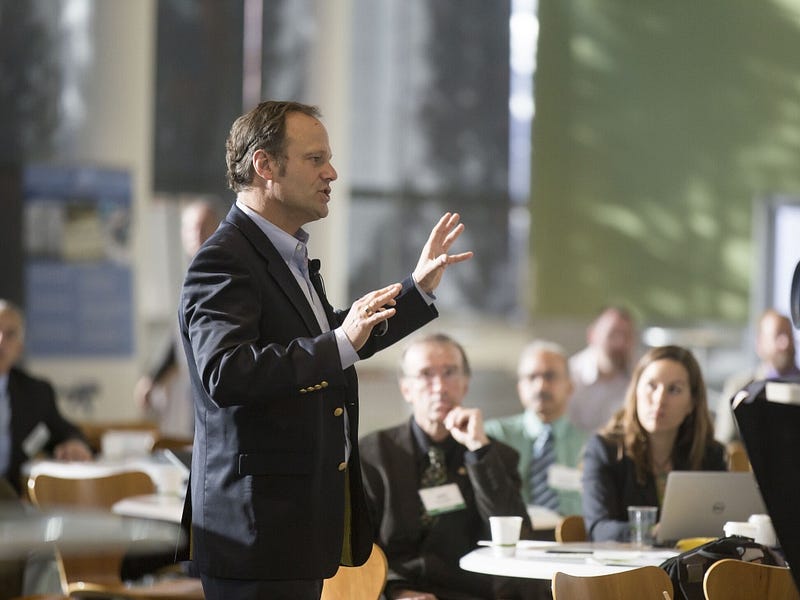
Feel free to move your hands. Many people talk with their hands and that is okay. It lends more excitement to your words. And will draw your audience in.
Use your facial expressions to communicate your message. When you are telling a story assume the faces and moods of the characters in the story.
Remember as a speaker you own the room. There is no rule that says you have to speak solely from the front of the room. You can spend some time speaking from the back of the room or the side of the room. You should be able to command the attention of the audience from anywhere in the room. If you move about the room, you will be able to hold the participants’ attention.
Most beginning speakers don’t move enough. They stand behind the podium and lock themselves into a very limited space. They use the podium as a place to hide and it becomes a barrier between the audience and them.
I suggest that you don’t use a podium. If you do, get out from behind it and connect with your audience. Your audience wants to connect with you. Don’t let them scare you into hiding.
Pace and Speed
A fourth technique that will make you a better speaker is to vary the pace and speed of your presentation. Has anyone been told that you speak too fast? What they are really telling you is that you don’t pause to allow them to process and possibly take notes.
The issue is not that you speak too fast but that you don’t vary the speed of your speech. Sometimes you should speak very fast and other times you need to slow down. For example, when you reach a very emotional moment in a story, you need to slow down the speed of your speech to allow the emotion to come through. By varying your rate of speaking, you add drama, suspense and interest.
If you are conveying technical information that takes time to absorb, slow down. If you are speaking to a group of people for whom English is a second language, you may need to slow your speed down. Don’t exaggerate the slowness. Just be sensitive to their need for time to process.
Another valuable aspect of pace is silence. Many beginning speakers are nervous about silence and they try to fill the space before they know what they want to say. This can lead to using um or ah. To be a successful speaker, you need to become comfortable with silence. Remember it is okay to pause, to be quiet and to let your audience catch up with you. Silence is okay.
The more variation you put into the rate you speak, the more alert and engaged your audience will be.
Vocal Volume
A fifth technique that impacts the quality of your presentation is to vary the volume of your voice. If you speak too softly, people may not hear you. Be sure that your audience can hear you. You may need to use a microphone, depending on the size of the audience. Do not turn your back to the audience, because it will muffle the sound of your voice.
There are times when you will want to speak louder than other times. If someone is angry in a story that you are telling, you may want to raise your voice. If the story has a very sad, emotional part, lower your voice.
Enthusiasm
The sixth key to your success as a speaker is contained in one word: Enthusiasm. Be enthusiastic.
Do you ever feel anxious or nervous when you are asked to speak to a group of people? Great! That means you are human. Most people become nervous and anxious when they are asked to speak.
Being nervous is a good thing because it gets your energy level up. Nervous energy is adrenaline coursing through your body. Use it to your benefit. Learn to harness your nervousness to give your presentation greater energy. Turn nervousness into enthusiasm.
Your energy level plays an important role in your success as a speaker. The more energy you bring to the platform, the more energy your audience will absorb and feed back to you. If you are passionate about what you are saying and people can see and hear that passion, they will believe you are telling them the truth.
Your audience wants you to succeed because if you fail, they will be bored. If you are enthusiastic and exciting, they will be interested. They will also forgive many mistakes you might make.
You need to practice and perfect these six techniques to be a successful speaker.
Variety
The key word I want you to remember when it comes to speaking is: V A R I E T Y. Vary your eye contact. Vary the tone of your voice. Vary your gestures and movement. Vary the pace of the presentation. Vary the volume of your voice. Vary your energy level. Variety is the spice that transforms an average speaker into a great speaker who connects with the audience.
Developing Your Skills
Speaking is a skill that can be learned and developed. Speaking is best learned in two basic ways.
The first way to learn to speak is to watch other speakers. You can learn a lot about speaking by watching others. Watch the minister at your church or the teacher in a class that you are taking. Seek out events or seminars where speakers are presenting. Spend time watching speakers on TED .
Observe what the speakers did that you liked. And then borrow the techniques for your own presentations. If you are watching a poor speaker, identify what he did that did not work and think of ways that you can avoid his mistakes in your presentations.
A second way to learn to be a great speaker is to Speak! Speak! Speak!. Seize every opportunity you can to speak in front of a group. You will become more comfortable speaking the more you speak in front of a group.
You can improve your speaking skills and teach yourself how to speak if you ask yourself two questions after each presentation.
The first question to ask is: “What did I do right?” Most people start filling their minds with all the things that they did wrong. We are our own worst critics. We often criticize ourselves more than our audience will. The first thing you need to focus on is the things that you did right. Pat yourself on the back.
The second question you need to ask yourself is: What should I do differently next time? This question focuses you on what changes you need to make to improve your presentation.
Learning to speak is a journey. It does not happen overnight. Be patient with yourself. By asking yourself these two questions every time you speak, you can teach yourself to be a better speaker. Remember speaking is a skill. And each one of us can teach ourselves to be better speakers.
Harley King has been speaking and training professionally for more than 30years before groups ranging from 10 to 600. He has trained more than 7,500 people to speak and train.
Originally published at https://www.linkedin.com.


