
Preptober: How to Brainstorm
What do you actually need to write 50,000 words in a month?

This one should be some of the science of brainstorming, as well as what sorts of things make sense to brainstorm, including writing schedules, not just ideas.
Last time we talked about why to brainstorm. Today let’s talk about how. I mentioned in the last article that brainstorming is more a stage of writing than it is a specific method. Let’s talk about some of the specific ways to brainstorm so that you have what you need to begin writing your book.
Free Association
Free association is the most basic of brainstorming methods. In it, you write down anything that comes to mind, in any method, in any order. There are no prompts or questionnaires. It’s simply a brain dump of any- and everything that you relate to this potential idea.
I did a free association before the book I wrote for NaNo 2020. Here is some of it:
“It’s hard when the things that ruined us are now the maxims we need to rely on to be better.”
In verse? Entirely? Partially? Verse and journal entries? That would be me.
“Retrace” songfic
She’s a poet who wants to be a pilot. NO. CUTTING THIS.
Overcoming an abusive relationship and learning to love again? Somewhere in the midst of abuse? Broken trust? Cheating?
Can I look at The Boy Who Cried Wolf? Frame it through that in some way? Is she unreliable? “Nobody believes a liar, even when she’s telling the truth.”
Make roses creepy again.
Most likely, this doesn’t make a lot of sense to you. Honestly, it doesn’t even to me, either. I last edited that note on October 5, 2020. By the time I wrote my first draft, three of those things stayed. And the “DO NOT CUT THIS” item? It got cut.
(If you’re curious, this is what stuck: the book is almost entirely in verse, it takes place in the midst of abuse, and I made roses creepy. That’s it.)
The goal of writing this wasn’t to make a checklist of things I needed to have in that book. But it got my brain flowing enough that eventually the right idea did stick, and the book that came out of it is my favorite book I’ve written by far.
Aesthetics
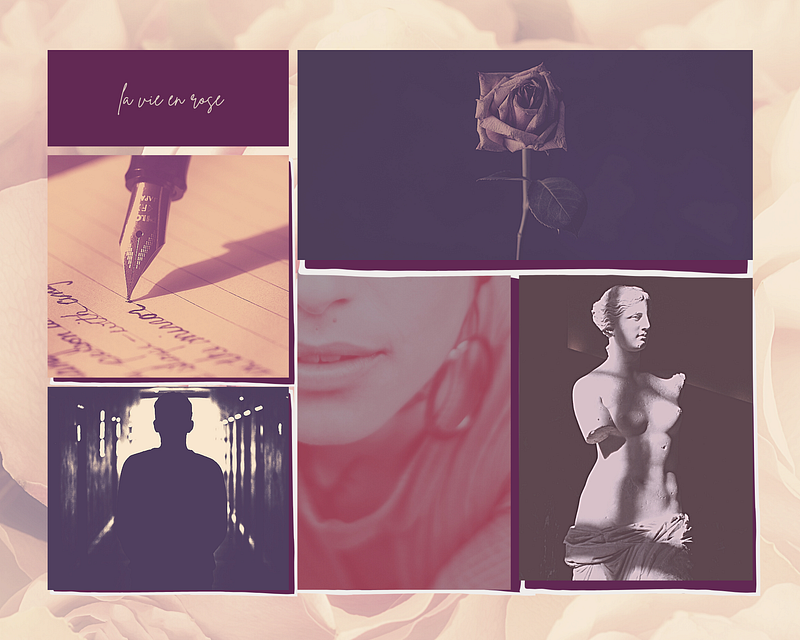
I’m using the term “aesthetics” loosely here, as some form of this I know is used by most authors in their planning process. I would count under this umbrella:
- collage aesthetics/Pinterest boards
- playlists
- written aesthetics
The goal with brainstorming aesthetics is to capture the mood of the story you want to tell. It’s less about the how and what, less about the characters and plot, and more about the vibes.
My 2019 NaNo novel began entirely with vibes. When I started my notebook for that project, I opened to the first page and wrote this:
A frozen lake. a family secret. Christmas. An old piano. Piano/singing lessons. A small town. A mysterious boy. Old ice skates with rusted blades. Simultaneous timelines? Snowstorm. Power outage. Condensed timeline. Sisters. Ice as thematic — breaking the ice, icebergs, getting under the surface. Mysterious music. Grandmothers. lies. Fire. Family crisis. Resolve on New Year’s Eve? Cell phones die/no service. Forced togetherness. Outside MC’s comfort zone. Newly dead relative? Suspect/enemies to lovers. Boy is pianist. Girl ice skates but is from somewhere without actual frozen lakes. Girl and grandmother have similarities they don’t know about. Sister — older? Engaged? First kisses by a fire. Going through old things. Set in La Grande? The smell of old books. Grandmother’s diary, use entries as second POV? Pass closed, stuck longer than intended. Switch — girl plays piano (connection with grandmother), boy teaches her to ice skate? Feels like she doesn’t belong in the family…
Not much of that stuck around, again, but the mood did. The vibes that paragraph inspired in me remain in the final.
Plot Structures
From those looser forms of brainstorming, we move into some more targeted versions. For me, any sort of outlining begins with brainstorming, but it doesn’t end there. My 2017 NaNo novel, and my most recent rewrite — the enchantress book — went from general free association directly to plot structures. For that book, the easiest question into story structure for me was, “How can I tie the creation of each of the magical objects in Beauty and the Beast to a plot point in my story?”
What resulted was this:
Hook — enchanting a rose for prince's 14th birthday
First Plot Point — altering memory
Midpoint — mirror (because it’s the mirror moment!)
Third plot point — beast
Climax — a beggar woman returns to the castle, a single rose in hand
It took a bit to get there, but this structure actually stuck around for the final draft, even in the version I’m editing five years later. Even as basically everything between those pillars changed.
I still try to plan out at least a little bit of structure before I write (but we’ll talk more about using beat sheets later on this month!), even if my brainstorming begins elsewhere.
Character Questionnaires
Character questionnaires are a tool that a lot of authors use to get to know their characters better. They can range from basic (this 15-question one is a great example) to extremely comprehensive (in case 150 questions is more your speed).
I tend to prefer building my characters up in two ways:
- developing characters for whom this plot is necessary
- developing characters in a web to be different from one another
Once I have those in place (and we have a whole article on character creation coming soon, or see what I’ve already written about it here), I’ll look at more surface-level things. Here are some of my favorite character questions:
- What kinds of hobbies do they have?
- How do they speak? Metaphors? Plainly? Long or short sentences? What words do they overuse? Misuse?
- What is a defining feature about their physical appearance, dress, or mannerisms I will associate with them?
- Are they more likely to speak their mind, speak in subtext, or remain silent?
Basically, my questions that go beyond plot and character webs revolve around establishing voice, and eventually make their way into style sheets so I can ensure each character is easily recognizable when speaking later.
My Own Method for Planning a Novel
Now that I’m planning my eighth novel (and as I kind of planned Enchantress twice, it’s my ninth pre-writing attempt), I have a rhythm that works for me, combining several of the above techniques.
I always start with free association, which often takes me months of developing an idea in the back of my mind, writing down notes when they come to me. Then I work through The Anatomy of Story, adding in techniques from other places when I see fit. When I build a character web, I stop to do Enneagram work with the characters, ensuring each character has a different Enneagram number (to the extent possible) and using those to deepen their lies and their relationship to the theme.
When it’s time to plot, I move from the pillars of structure in Anatomy to a combination of Save the Cat beats and the pinch points that K.M. Weiland discusses before going into the 22-step structure Truby develops. I look at the story world and symbols in a depth that varies depending on the book (it was intense for my historical fantasy, and not particularly difficult for my novel in verse).
Finally, aesthetics are my reward, the cookie I look forward to as I prepare to move from planning into drafting.
Do you have a method? What techniques might you use this year from this list? And if there is any part of my own planning you’d like to see in detail, let me know in the comments!

If you like my work and would like to read more of it, consider joining Medium with my referral link to get full access to every article on Medium. Using my referral link doesn’t cost you anything, but half of the fee goes directly to supporting me each month.


