
Preparing Meals When the Appliances Have a Mind of Their Own
The challenge in synchronizing cooking times with a temperamental oven and burner
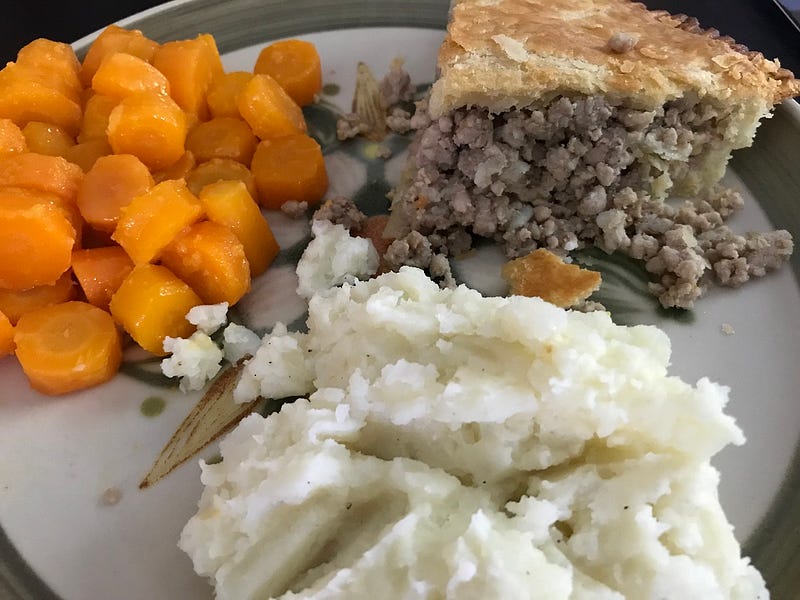
After nearly four decades of cooking for myself, I can’t say that there is much that scares me in the kitchen. I have no problem following a recipe, word for word, in the hope of achieving the expected results. I will even go so far as to say that I am pretty confident when keeping my eye on two dishes at once.
But it’s when a meal has three separate components (or more) than my anxiety can potentially boil over. In those moments, I start wondering how the talented jugglers I have seen on TV could spin multiple plates on the end of tall sticks, and keep them spinning beautifully.
To me, cooking is very much the same thing. It is the variability of variables that can potentially spoil a meal that keeps me on edge.
Let’s start with the essential work tools, the stove and oven:
I’ll never forget the stove that came with the house in my last place. At 15 years old, it wasn’t an antiquity, but by today’s standards for appliances, it was getting old… and increasingly unreliable.
It didn’t take many under-baked goodies for me to figure out that there was a problem with the oven. After a while, I bought an oven thermometer to get a second opinion on the temperature. Sure enough, the oven was almost always 25 degrees under the temperature I requested.
Turning the dial to 375 degrees for recipes calling for 350 worked for the most part. However, I had to keep an eye on the thermometer since, as I said earlier, it was ALMOST always 25 degrees under. Some days the oven suddenly decided to act normally and actually produced the requested temperature.
On the stove top, I had two and a half working burners. One was clearly out of service as it never produced any heat. The one I considered to be a half burner only worked on the high setting, so it was only good for a rolling boil, nothing else. The other two burners worked pretty well, but cooking a meal with only one big burner and one little burner was not exactly conducive for hosting parties or family get-togethers.
With my attention divided over an underperforming oven and keeping my eye on the burner from hell, trying to time a meal with any degree of accuracy was next to impossible.
That being the case, I kept my meals simple and kept the bar low on my expectations. But in doing so, I never really had the opportunity to practice making multi-dish meals.
When I developed a wheat intolerance, I had to organize myself to prepare more meals on my own. Given the challenge of cooking with varieties of gluten-free flour that behaved quite differently from regular flour, I needed greater certainty and reliability.
I treated myself to a beautiful new stove and double-cavity oven. I don’t ask for much in life, but it was heaven-on-earth to work with a stove that actually produced a temperature of 350 degrees when I asked for it and four fully functional burners.
But after moving to the country, I am back to dealing with a stove and oven that came with the house… and that have a mind of their own.
I sometimes wonder if the large front burner is possessed when the medium-high setting can be a quickly rolling boil for some dishes, while it barely produces steam for others, even after several minutes.
This trips me up as two parts of a meal might be ready, while still waiting for this burner to make its mind up to start cooking. Then, to try to speed things up, just turning the heat up by one notch, suddenly wakes up the burner into a rage, producing a rapidly bubbling mess in a matter of seconds.
It’s the same for our oven. I once tried a root vegetable gratin that I will never attempt again. Despite following the recipe to the letter and despite an extra hour of cooking time, the vegetables were still quite crunchy, which they weren’t supposed to be. I’ll have to see if I can still find my old oven thermometer… maybe this oven is possessed too.
And then we have the broiler issue… or anything over 425 degrees. No matter how clean the oven is, no matter how many windows I have open, no matter how many fans I have going, it is a given that anything at these temperatures will trigger the smoke detector. I just prepare for the inevitable and park a chair under the smoke detector for any recipe requiring high temperature cooking.
To complicate things further, in moving to the country and having greater access to farmer’s markets, I found that cooking times can vary between imported vegetables and local, fresh vegetables… just to keep me on my toes when it comes to synchronizing meals.
Similarly, how is it that different brands of rice noodles can behave so differently? Most times, my pad thai dishes have turned out pretty well, while I have occasionally experienced the disaster of overcooking the veggies and meat while waiting (and waiting… and waiting) for the noodles to reach the right tenderness.
In a related story, during the pandemic, we had to change brands of basmati rice, given that our go-to brand was impossible to find for a while. Trying to cook with a different brand was like re-learning how to cook rice all over again. My first batch was quite underdone for some reason, while several subsequent batches spilled over while cooking (as I was trying to compensate for the first batch). Now that we are approaching the bottom of the bag, I am finally getting the hang of it.
It is variables such as these that make the timing of more elaborate meals such a tricky undertaking.
I realized that the only way to mitigate my anxiety over the perfect synchronization of meals was to not try to achieve the perfect synchronization of meals… I no longer try to have all dishes finish at the same time.
Even though it may stretch out the overall meal prep time, I will often get certain dishes ready ahead of time and pop them in the oven to keep warm, as long as it doesn’t sacrifice texture, flavour or temperature. This allows me to better focus on the more tricky dishes, when I don’t have as many things potentially boiling over at the same time.
That way, when my attention isn’t divided in too many directions, I can make necessary compensations (a little more heat, a little less heat, more water, more oil, etc) before a dish starts going down a path of irreversible damage.
So far, I have found that this approach has brought me greater peace of mind and better results when I have challenged myself with meals with a number of separate components.
I often wonder how so many of our family’s home chefs have made big meals look so easy over the years. I suspect that there is a “practice makes perfect” element.
And who knows, maybe with a little more practice with this wonky stove and oven, I will be able to juggle more plates and to confidently keep them spinning until the meal is ready.
Did you enjoy this post? If you did, your claps, comments and follows are most appreciated.
Sincere thanks for reading!
Have a great day,
André