
Prepare to bet against bitcoin as it becomes civilised
If the cryptocurrency ceases to be a ringfenced product, the normal rules of investing will apply.
By Gillian Tett
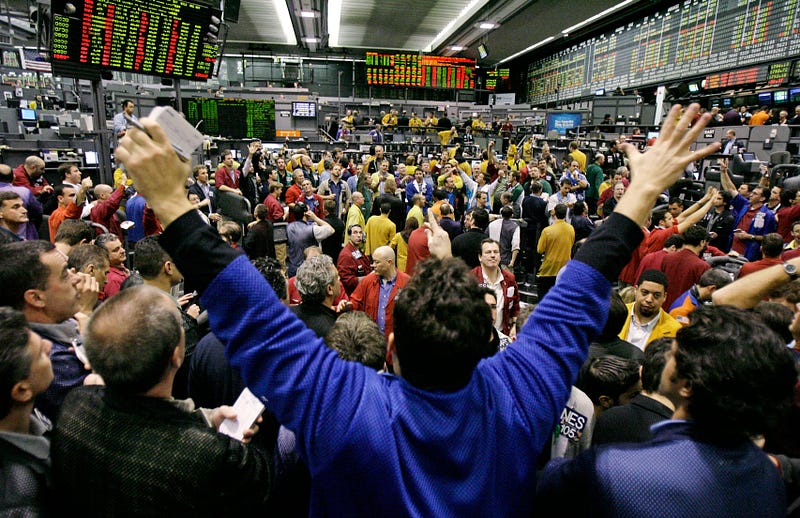
In recent years, bitcoin has been the wild west of the financial world. Now, however, it is being civilised — a touch. In the coming weeks, the Chicago Mercantile Exchange plans to start listing bitcoin futures, with a centralised clearing mechanism.
Cboe Global Markets may follow suit. That will enable investors to bet on the coin’s future value without actually holding it — just as investors can use the Chicago exchange to bet on hog prices, say, without ever handling a pig.
Is this a good idea? Some of the CME’s members do not think so. This week Interactive Brokers, an important clearing firm in the exchange, took the extraordinary step of using a newspaper advertisement to ask for more regulatory oversight. It fears that bitcoin is potentially so volatile that these futures will create huge losses for traders, which might then undermine the health of the CME and hurt other brokers, given its part-mutualised structure.
The CME — unsurprisingly — dismisses this as poppycock: it argues that any risks will be contained by rules that force traders to post a large initial margin or deposit (of about 30 per cent of the trade) to absorb losses, and by circuit breakers that would stop a trade in the event of wild price swings.
However, it is too early for outsiders to tell whether the naysayers are correct: there is simply not enough clarity on how big any bitcoin futures market will be, how it will operate or on the CME’s capacity to absorb any losses.
But while the regulatory debate bubbles on, there is a more immediate question facing investors: bitcoin prices. Until now, it has been an article of faith among bitcoin evangelists that if — or when — the currency became more “civilised”, this will boost the price.
After all, the argument goes, assimilating bitcoin into the mainstream investment world should boost its appeal and demand, making it more valuable. It is highly likely there will be an opposite effect. Until now, investors have not had an easy way to bet against bitcoin — the only “short” was to sell coins. But the CME futures contract will let investors place those negative bets. You do not need to be a conspiracy theorist to imagine that some bitcoin cynics will be doing just that.
And there is a second, more subtle issue too: the cultural “map” of finance, to use an anthropological term. Until now, bitcoin has essentially been perceived as a ringfenced product. The unstated assumption among investors has been that it occupied a distinctive space where normal investing rules did not apply. But as bitcoin becomes integrated into the derivatives market, that boundary may break down and investors apply for “normal” criteria in their valuations. Given the unresolved questions about how bitcoin works, that may lead to more scepticism; indeed, it is precisely what has often happened in the evolution of financial markets before.
Think, for example, about Japan. Before the mid-1980s, its stock market seemed to exist on a planet of its own, subject to its own valuation rules. But when Japanese equity derivative contracts were launched, and then integrated within the wider global market system as a result of financial reform, that sense of “otherness” broke down. The change in how Japan was seen through a comparative investment lens was not the only reason for the 1990 Nikkei crash, but it contributed.
So too with US mortgages. Until 2005 or so, outsiders could not easily assess or price the risks of America’s subprime mortgages: mortgage-backed bond prices were opaque, and the only way to short the market was to sell bonds. But when mortgage derivatives, such as the ABX index, were launched, it suddenly became easy to make negative bets. Then, the ABX index was published in newspapers, such as the Financial Times, in 2007, creating a visible barometer of sentiment. That helped a sense of panic to feed on itself after 2008.
Of course, in the long term, this type of evolution is highly desirable. Markets exist to enable investors to express price bets. They are usually more stable in the long run if prices are transparent and there is a wide pool of players. If bitcoin futures had existed a few years ago, the prices would probably not have swung so crazily this month.
But as the tale of the ABX or Nikkei 225 futures shows, that bigger philosophical point is scant comfort when investors and their counter-parties get burnt. Which, of course, is precisely why Interactive Brokers has paid for that ad. Investors and regulators need to take note: fat margins might protect the Chicago exchange as a whole (they hope) from bitcoin shocks; they will not shield unwary punters.
Copyright The Financial Times Limited 2017