
Prediction AI Is Coming. Are You (and the World) Ready?
How much do you want to know about your future? It may depend on who wants to know your past.

Note: If you are not a Medium member, you can read this story for free using this link. I encourage you to join our community!
Who among us doesn’t ponder the future? How often do you think about your life unfolding over short and long timeframes? Do you wonder about your future health and lifespan, your children’s success, or the outcome of working hard at your job? These deeply personal questions reflect our innate curiosity about what lies ahead.
Prediction is the cornerstone of human existence. A coherent life means anticipating what comes next. You cannot plan for the future unless you can “guestimate” the next steps in an unfolding sequence of your life’s events.
Because prediction is central to your moment-to-moment existence, you may not know that you have a thirst for knowing the future. Some worry about their futures more than others for reasons that are valid or simply obsessive. However, all of us are at least curious about what lies ahead, and therein lies a gigantic marketing opportunity for a new AI product.
Although a rollout timeframe is uncertain, the AI industry is rapidly moving towards an inevitable future. If you think Generative AI (like OpenSource’s ChatGPT and Google’s Gemini) is impressive, you may want to prepare for a well-informed bot telling you what to expect for your life in the future.
Generative AI vs. Prediction AI
Generative AI (GenAI) and Prediction AI (PredAI) are two distinct types of artificial intelligence that serve different purposes and are used in various applications.
Generative AI: Rooted in deep learning, GenAI uses a transformer model that excels in natural language processing (NLP). This allows the GenAI model to simultaneously scrutinize all input segments (such as data scraped from the Internet). These large language models enable rapid text analysis while prioritizing relevant sections during output generation.
Unlike conventional AI systems that rely on predefined rules or patterns, GenAI is designed to “imagine” and produce content that was not explicitly programmed, be it text, images, music, or even code, that is creative and engaging.
Prediction AI: PredAI is focused on forecasting future outcomes based on historical data, patterns, and trends. This approach utilizes machine learning algorithms, statistical models, and data analytics to make predictions and recommendations.
PredAI uses predictive analytics to evaluate a mixture of current events and past data to make educated guesses about future outcomes in specified domains (healthcare, markets, sports, etc.). Machine learning complements predictive analytics by discerning patterns from extensive data sets. The more relevant and abundant the data to the domains of interest and the stronger the pattern history, the more accurate their predictions become.
Can Prediction AI Become Personalized for Your Future?
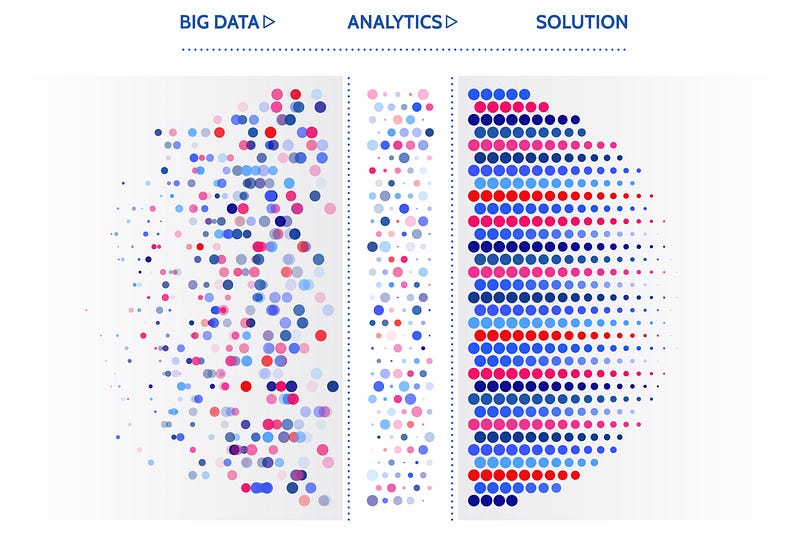
You may have noticed in the description of PredAI that this model requires tons and tons of historical information about the prediction domain. If you want your own personalized version of PredAI that will tell you about your future, then you will have become the prediction domain — and the PredAI model will want tons and tons of information about you.
Why does PredAI need so much historical information for its forecasts? From the perspective of statistical probabilities, you are a creature of habit, and your habits will determine your future. Pred AI wants to know about your routines.
Ten years ago, Patrick Tucker, a technology reporter and futurist, wrote The Naked Future (2014). It was the book’s subtitle that caught my attention: What Happens in a World That Anticipates Your Every Move?
In his book, Tucker expounds on an idea well-known to many cognitive scientists: the human mind is a prediction machine. By virtue of our human nature, we are always anticipating what comes next.
Prediction isn’t something that the brain does every now and then; it is an intrinsic property that never stops, and it serves an essential role in learning. When the brain’s predictions are verified, that means the brain’s model of the world is accurate. A mis-prediction causes you to attend to the error and update the model.
As Tucker noted, we learn to manage the future by creating mental models of the present. Given our vast range of experiences, we have countless models of how things work stored in our brains.
Here’s a simple example. As a child, you learn the different uses of a fork and a spoon. In turn, your brain develops models for each. As an adult, and without thinking, you draw upon those models when you set the dinner table with spoons rather than forks when serving soup to your guests.
You also create models for non-physical aspects of life, such as personal relationships or entities such as government. Based on years of friendship, you create a model of your best friend that becomes a cognitive rule-set for what to expect of your friend in your next encounter. The models we create help to predict the future. You predict that a fork cannot be used to serve soup. You predict that your friend will be happy to see you next week.
Personalizing Prediction AI for You and Your Life
The mental models you store in your brain are useful for you to make predictions about routine events. You have been studying hard for your professional licensing exam. You have taken practice exams, which have created a mental model of what to expect in the licensing exam. By matching your study habits with the practice model, you predict you will do well on the licensing exam.
But how well will you perform as you begin work in your chosen profession? The time and energy demands will be strenuous. Are you constitutionally capable of being available to your boss 24/7? Will you feel happy in this demanding role?
In order to predict your future in areas far from your habitual routines, you need to store a lot more information about your life in your brain. While human brains are the highest functioning of all living creatures, you have limits, such as forgetting that you dropped out of the high school track team because the schedule was too demanding of your personal time. That is, your history shows that you value personal time over competition.
How well will you do in a job that leaves you with no personal time?
All of your past experiences are relevant to your future experiences. But what if there was some magical entity that captured all of this information about your past experiences? What if data about the “historical you” were available to predict the “future you?”
The idea of someone knowing everything about you and predicting your future might be exciting or scary - but rest assured, it’s already happening. Your interest in your future creates incentives for industry leaders to make personalized models of Prediction AI available sooner rather than later.
The Copenhagen Model of Population-based Prediction AI

A team of researchers in Copenhagen, Denmark, has developed an interesting experimental prediction model based on a vast personal information database.
The Copenhagen team used a novel logic (“your life is like a sentence”) to examine the evolution and predictability of human lives based on detailed event sequences. This logic uses a sentence as a metaphor for life. For example, the more words in a sentence, the more likely you will know how it ends.
For example, “I am…” suggests many possible endings for the sentence, while “I am going to…” narrows the number of endings. If some entity knows your routines (today is Friday, and you often go to a certain location at the end of the work-week), then this entity might predict your future as “I am going to…Jake’s Bar after work to see friends.” In this way, your life is like a sentence because more information makes you more predictable.
Clearly, the more PredAI knows about you, the better it can make predictions about you. This premise led the Copenhagen team to gain access to a unique and comprehensive dataset from the Danish national registry, which included detailed day-by-day life events records for approximately 6 million Danish citizens over a 10-year interval.
From this national registry, the researchers gathered information about Danish citizens related to their health, education, occupation, income, address, and working hours, which were recorded in day-to-day resolution. Using this dataset in their large language model, the researchers demonstrated that human lives could be represented as sequences of events similar to sentences expressed in language. These sequences can be used to predict diverse outcomes, ranging from early mortality to personality nuances.
Let’s pause here for a moment.
Is this study beginning to give you the creeps? Consider the subtitle of Patrick Tucker’s book, What Happens in a World That Anticipates Your Every Move. If you live in Denmark, your national registry has recorded your every move. Within ethical and privacy constraints, that data set allowed the Copenhagen team to create a personalized, population-based Prediction AI model.
However, before judging the merits of this model, let’s first examine its core operations.
The Capabilities of the Copenhagen Model
The researchers highlighted three “prediction tasks” performed by their AI model, which they have given the geeky name “life2vec.” (I believe this is their short-hand descriptor for “from life to vector,” which also means “from life to snapshot.”)
1. Mortality Prediction: By analyzing the sequence of life events, the model is able to predict the likelihood of early mortality within a specified time frame. It does this by learning patterns associating certain event sequences with the risk of early death. For example, a sequence with multiple adverse health-related events might indicate a higher risk.
2. Personality Nuances Prediction: The model also predicts more nuanced aspects of human lives, such as personality traits. It does this by learning associations between life-event sequences and self-reported personality questionnaire responses. For instance, frequent social interactions might be associated with extroverted personality traits.
3. Person-Summaries: By delving into the rich tapestry of a person’s life’s events — health records, educational milestones, career progression, and much more — life2vec distills this information into a “person-summary” — a compact, comprehensive snapshot (vector) that captures the essence of a particular person’s life’s journey.
Let’s take a deeper look into this person-summary feature.
Imagine you’ve kept a detailed diary of your life, noting every significant event, from health check-ups and job changes to major milestones and financial decisions. Now, suppose you have a subscription to this life2vec app that reads through your diary and summarizes everything it knows about you into a single, easy-to-understand snapshot. This snapshot is like a special code that captures the essence of your story. The app creates a “vector” in your personal summary space.
When life2vec tries to guess something about your future, such as how healthy you’ll be or the kind of job you might have, it looks at your data profiled in this vector (snapshot). It pays attention to obvious things like your age, how well you’ve been taking care of yourself, or how much you earn. It is also smart enough to notice less obvious details, like the type of job you’ve been doing and how that might affect your future.
Based on what you want to know about your future, the specific details about you (your snapshot) can be adjusted to give the most accurate predictions for different questions about what’s ahead in a particular area of life.
For instance, life2vec might help you see how your job choices could influence your health in the future. These insights can spark new questions and lead you to explore areas you hadn’t thought about before, helping you understand the ‘why’ behind these AI predictions about your future.
In addition to personal predictions, life2vec’s three prediction tasks (mortality, personality nuance, and person-summary) can project future scenarios for you based on where you live, education level, age bracket, political affiliations — or whatever population categories you can imagine.
The Risks of Prediction AI

While having a personal AI assistant help you with decisions about the likely outcome of your future actions, the price of this benefit is an AI entity that knows everything there is to know about you. The more you tell it about yourself, the greater its benefit to you.
Is your loss of privacy worth it?
Having read about the power of Prediction AI, you can probably make your own list of risks associated with your digitized history. Here’s my list:
Ownership of the Prediction Model: While countries in the Nordic region and a few others have comprehensive and regulated citizen registry systems, few other countries do. If population-based Prediction AI prevails, the question arises about what entities will be keepers of the information about your life events. Can a private corporation owned by a billionaire be trusted with this information? Would you trust your government with this information?
Privacy and Ethical Concerns: Using detailed personal data for personal or population forecasting raises significant privacy and ethical questions, especially regarding consent, data protection, and the potential to misuse sensitive information.
Bias and Fairness: Generative AI has been known to “hallucinate,” creating false information. Prediction AI forecasts may be influenced by biases inherent in your history dataset, potentially leading to inaccurate or misleading future scenarios. This can obviously lead to bad planning or potentially disastrous outcomes based on bad advice.
Overreliance on Prediction Modeling: Some people need more reassurance than others about the future. A person’s anxiety-driven need for certainty could lead to a risk of over-reliance on such models for critical health decisions without considering the complex, multifaceted nature of human health and the limitations of PredAI.
Once It Arrives, Prediction AI Will Not Go Away
Prediction AI is actively used in many industries and will only become more pervasive. In healthcare, Prediction AI, along with Generative AI, is likely to become a core component of early detection and diagnosis of diseases, creating personalized treatment plans, and predictive analytics of disease progression, all of which can lead to improved patient safety, efficiencies, and cost reductions.
It’s Now My Turn to Predict the Future

Generative AI spread faster than any human or machine could have predicted. GenAI is now pervasive in almost all areas of personal life and most industries. Who knew 18 months ago that I would use an AI bot to plan my European vacation?
Does the same future hold for Prediction AI? Like GenAI, PredAI demands big data. However, PredAI needs historical and trended data to establish patterns that can lead to forecasts. Regarding personal histories, few nations have the kind of national registries that were used in creating the Copenhagen model.
Unless we are willing to allow profit-driven big tech firms to gather information about every detail of our past lives, the PredAI industry may not have access to the depth and breadth of person-centered data it would need to be a viable industry.
It is more likely that PredAI will penetrate our lives more insidiously. For example, healthcare plans keep track of medical histories, which are shared with specialty practitioners in the system as needed. A PredAI model could be very helpful by assisting doctors in predicting the trajectory of your recent diagnosis.
Ultimately, the growth of Precision AI may depend on how much we feed it. Whether angel or beast, a personalized PredAI will grow when given the nutrients it needs — your life’s history.
What’s the best advice to prepare for a future of PredAI? As experienced cowboys say to rodeo novices who are about to mount an angry bull for their first torturous ride, “Know the bull and be ready for the kick!”


