
Predicting Stock Movements with Monte Carlo Simulation: A Powerful Approach for Investors
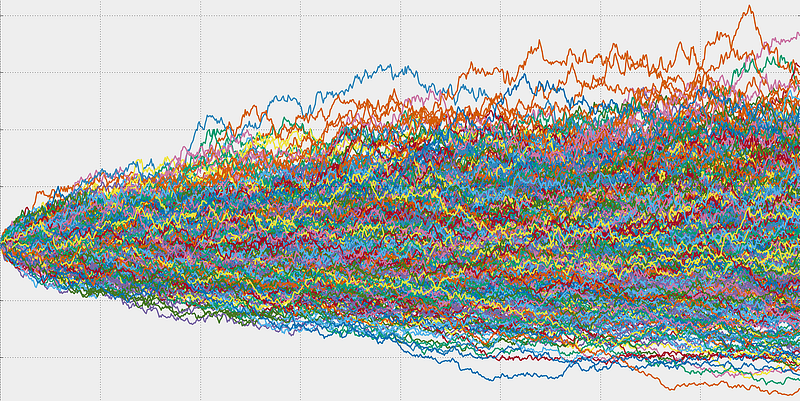
Investing in the stock market can be both exciting and daunting. Investors are constantly seeking reliable methods to predict stock movements and make informed decisions. One approach gaining popularity is the use of Monte Carlo simulation, a powerful statistical technique that can help forecast stock prices based on historical data. In this article, we will explore how Monte Carlo simulation works, provide Python code examples, and highlight its potential benefits for investors.
Understanding Monte Carlo Simulation:
Monte Carlo simulation is a computational technique that leverages random sampling to model and analyze complex systems. When applied to the stock market, it generates numerous simulated scenarios by sampling from historical price data and assessing the likelihood of different outcomes. By running thousands or even millions of simulations, investors can gain insights into the potential future performance of a stock.
Python Implementation:
To implement Monte Carlo simulation for stock price prediction, we can leverage the power of Python and its rich ecosystem of libraries. Let’s consider an example using the following Python code:
import numpy as np
import matplotlib.pyplot as plt

# Define historical stock prices
historical_prices = [100, 110, 105, 120, 130, 125, 135, 140, 150, 160]

# Define parameters for simulation
num_simulations = 1000
num_days = 10

# Calculate daily returns
returns = np.diff(historical_prices) / historical_prices[:-1]

# Generate simulations
simulations = []
for _ in range(num_simulations):
    prices = [historical_prices[-1]]
    for _ in range(num_days):
        daily_return = np.random.choice(returns)
        price = prices[-1] * (1 + daily_return)
        prices.append(price)
    simulations.append(prices)

# Plot simulations
for sim in simulations:
    plt.plot(sim)
plt.xlabel('Days')
plt.ylabel('Stock Price')
plt.title('Monte Carlo Simulation: Stock Price Prediction')
plt.show()
Benefits of Monte Carlo Simulation for Stock Prediction:
- Assessing Risk: Monte Carlo simulation allows investors to gauge the potential risks associated with investing in a particular stock. By generating a range of possible outcomes, it helps investors understand the likelihood of different scenarios and make more informed decisions.
- Decision Support: Investors can use Monte Carlo simulation as a decision support tool. By comparing the simulated outcomes of different stocks or investment strategies, investors can identify stocks with higher potential returns or portfolios with lower risks.
- Portfolio Optimization: Monte Carlo simulation enables investors to optimize their portfolios by evaluating the potential performance of various asset allocations. By simulating different combinations of stocks, bonds, and other assets, investors can find an optimal mix that maximizes returns while minimizing risks.
Monte Carlo simulation offers a powerful tool for predicting stock movements and making informed investment decisions. By simulating a large number of possible scenarios, investors can gain insights into the potential future performance of stocks, assess risks, and optimize their portfolios. With Python’s versatility and numerous libraries, implementing Monte Carlo simulation becomes accessible to a wide range of investors. Embracing this statistical technique can provide investors with a valuable edge in navigating the dynamic world of stock market investing.
Remember, while Monte Carlo simulation can provide valuable insights, it is essential to combine it with fundamental analysis and other investment strategies to make well-rounded investment decisions.
Note: This article is curated using AI-assisted tools


