
Psychology and Sustainability
Pre-loved Clothing Can Make People Happy
Research and a story about happiness and the circular economy

This dress is more than just a dress. At first sight, it’s summery light, good quality, it makes me feel good and I wear it on special days out with my family.
But it’s more than that. It’s a pre-loved dress which makes it even more special for me to wear. And here is why:
A few weeks back, a friend of mine had a private online sale. Nothing unusual as such. I was looking for a nice dress for summer (not many, just one) and this was it. I fell in love with a dress (yes, that actually can happen).
In hindsight, I have noticed it wasn’t just the dress and its design or look. The fact that it belonged to my friend, a person I know and appreciate, was a main reason for me. Also the fact that it was not a shop sale with multiple items and sizes. It’s only one, the one she was wearing on special days out, which makes it unique and rare.
We were both happy that day. I was happy because I found my summer dress and she was happy because she found a new owner for her pre-loved dress that carries her memories from her previous days out and made a bit of cash too.
I was curious about my intentions, and studies explaining our motivations for the second-hand pre-loved market are beginning to emerge more and more.
For example, Maria Ek Styvén, Professor and Chair of Industrial Marketing, and Marcello M. Mariani published their research study with the title “Understanding the intention to buy secondhand clothing on sharing economy platforms: The influence of sustainability, distance from the consumption system, and economic motivations” via Psychology & Marketing.
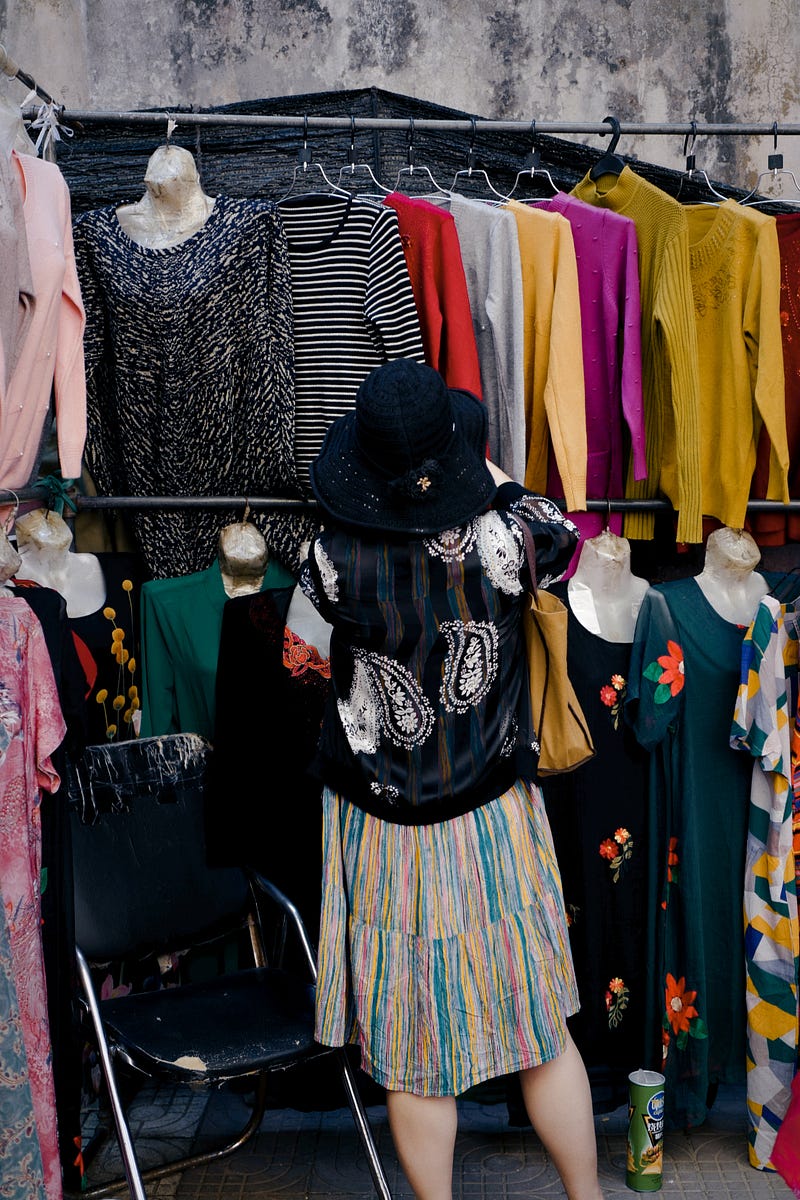
They found that the success rate for a sale depends on the way the seller presents themselves. For example, environmental motivations found higher chances for a successful transaction compared to those sellers who expressed their participation in the pre-loved market as being purely for economic gain.
The same study also showed that awareness of sustainability increases positive attitudes towards second-hand fashion. And participation in fashion’s sharing economy can also increase the perceived importance of sustainability aspects.
Zoe Kaiser, who studies Psychology and Neuroscience at New York University, summarised the study in an article on Fashion Psychology.
Some numbers and facts from Statista which I thought were interesting:
In the United Kingdom, there are a total of 3,943 stores specialised in selling second-hand goods and it is an industry employing an average of 36 thousand people. During 2019, sales in these stores saw a 17.6 percent rise in value, a notably large increase from the past two years.
The report only covers stores and not online shops. Also, the total numbers for 2020 and 2021 would be interesting to see as I can imagine they look different with the impact of the pandemic on consumer behaviour.
If you wonder what I am trying to say — with this dress, I have learned that buying a new dress from a shop can be great, and actually it’s so much more exciting and fulfilling if you find something that makes you feel you made someone else happy.
Oh, AND the dress has pockets too. Some people might understand what a bonus point that is.
Do you have a second-hand story? I would love to hear your stories that felt special for you and why.


