
Practice Poetry To Become a Better Writer
Another tool in your toolbox for growing as a prose professional.
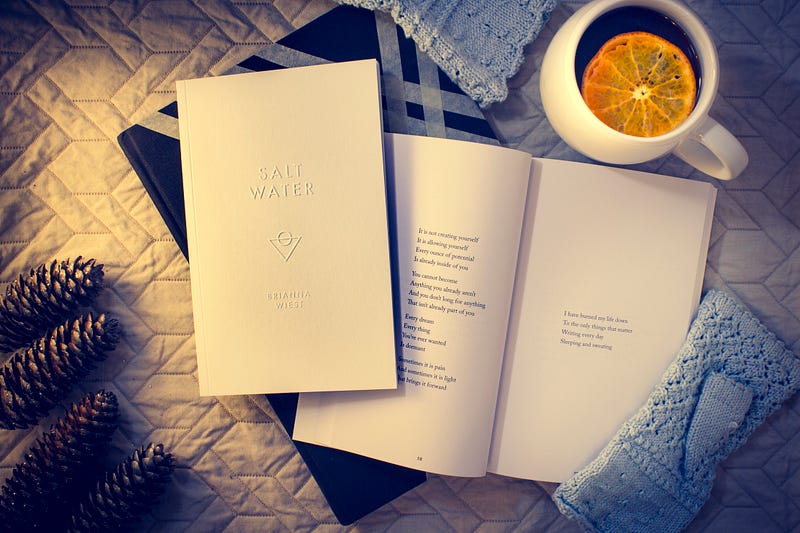
Many people get introduced to poetry during their school years and then never look at it again.
More’s the pity. Those people are missing out — especially if they fancy themselves a writer.
I won’t get into how poetry enters our lives every day in the form of popular music, catchy ad slogans, thoughtful greeting cards, or particularly poignant television moments. Poetry sneaks in a lot of places because it’s a mode of communicating that reaches people.
You don’t have to be a professional, full-time poet to appreciate this. But if you’re a writer — either aspiring or experienced — taking a fresh look at the practice of poetry and how it can make you a better writer could be fruitful.
I’ve written a fair share of poems over the years. I’ve even sold a few — for actual money. Poets tend not to make a lot of money being poets alone, but poetry itself as a form can help you develop as a prose writer.
That’s where the money is… if you do it right.
But more importantly, practicing poetry can help you stretch and strengthen things like self-expression, use of rhythm and word choice, flow, and growth.
Let’s look at how.
Practicing self-expression
Ever try to say something, and you have trouble finding the right words?
Of course, you have. We all have.
Writing poetry forces us outside of the typical way we express ourselves. Maybe for years, you’ve been journaling. Maybe you’re a veteran blogger of ten years or more. But how much poetry have you tried lately?
Probably not much since high school.
We all have different ways of expressing ourselves, but I maintain that if you haven’t tried composing a poem about your current thoughts or feelings about yourself or the world today, you’re missing out.
Just as an experiment, at some point today, try putting together a poem of… let’s say 10–12 lines… in blank verse. No rhymes or meter… just carefully crafted strings of words and thoughts presented as a poem.
If you’re feeling jaunty, try describing a feeling or thought as a metaphor. Thoughts on the recent US election could be discussed in terms of fighting a forest fire.
Or use a simile.
Writing is like starting a song with a duck but ending with a bluebird.
Or vice versa.
See what happens.
The economy of words
In poetry, every word counts. Every word used has a specific purpose: showing something, expressing an emotion or experience, or what-have-you. As a general rule, modern poetry doesn’t waste time with words that don’t contribute to the piece.
Take a look at some random poems from nearly any published poet. Note the verbs. You won’t find many instances of “is” or “are” but more active, evocative verbs.
If you tried the experiment I mentioned earlier, try it another time… but take some extra time to find the absolute best word or phrase for what you’re trying to express. Try a few different ones and see what works best.
Try picking evocative words — that summon up images, sounds, or sensations.
This thoughtful act of choosing the best words makes good practice for writing your prose pieces later. And it gets easier the more you practice.
Attention to rhythm
Paragraph, paragraph, single sentence, paragraph.
Good writing has a rhythm — both in sentence structure and how paragraphs are made and presented.
Use short sentences to speed things up. Break to a new paragraph to force a pause. Too many short sentences or paragraphs can run the risk of making a piece as monotonous as a series of long paragraphs.
Don’t mix short and long willy-nilly. Look up the work of Charles Bukowski and see how he breaks up the flow and narrative of some of his poems. Maya Angelou is also good at this.

Improving the flow of your writing
Related somewhat to rhythm, practicing poetry also gives you a leg up on flow — not only with sentence and paragraph length but the words themselves.
If you have any children’s books nearby, pick one up, and examine how specific word choices within a sentence enhances its readability. Dr. Seuss’s books are a great example of this. If you want a model that demonstrates prose more than poetry, look at stories by Neil Gaiman. While he is mostly known for his prose works, he’s written (and studied) a lot of poetry as well.
I’m not saying everyone should write like Neil Gaiman, but if you want to come close to his seemingly-effortless flow with words, you need to become more familiar with poetry and give writing it a try.
Challenging oneself to grow
If you’ve never been much of a poet, maybe now is the time to give it a try.
The poetic process (if it can be called that) forces you into a different mindset than you might use for prose writing. If you genuinely wish to grow as a writer, you need to stretch what it means to be a writer. By encompassing poetry into that, you give yourself more room to grow and develop.
If you already write poetry, try different forms you haven’t tried. Haiku and tanka forms are fun to play with.
So are limericks.
Or you could tuck in for a long haul and work on an epic.
Go on, I dare you.
Writing poetry can fun
Many people feel that writing poetry carries too many constraints, such as rhyme or meter, which are too challenging or too restraining.
Putting aside the proposal that challenges can be fun and productive experienced in their own right, the idea that there are “rules” doesn’t really apply.
e e cummings didn’t use capital letters much
don marquis eschewed most punctuation also
yet both were successful, celebrated poets
Poems are not constrained by the same rules as prose. You’re allowed to play around and experiment with grammar, form, punctuation, and so forth. It’s best to be consistent within the written piece, but within that piece, you make the rules.
Final verse…
Whenever… whatever you’re writing… you’re working on improving your process. Don’t get lulled into engaging in the same process repeatedly with little in the way of real change.
Step outside your comfort zone and spend a day or two writing poetry. You will surprise yourself with what you come up with and how it affects the rest of your writing.
Thank you for reading. I’d love to share more with you via my Bi-Weekly Word Roundup newsletter sent to subscribers every other Sunday. It will feature news, productivity tips, life hacks, and links to top stories making the rounds on the Internet. You can unsubscribe at any time.


