
Powerful…not “Piti”ful
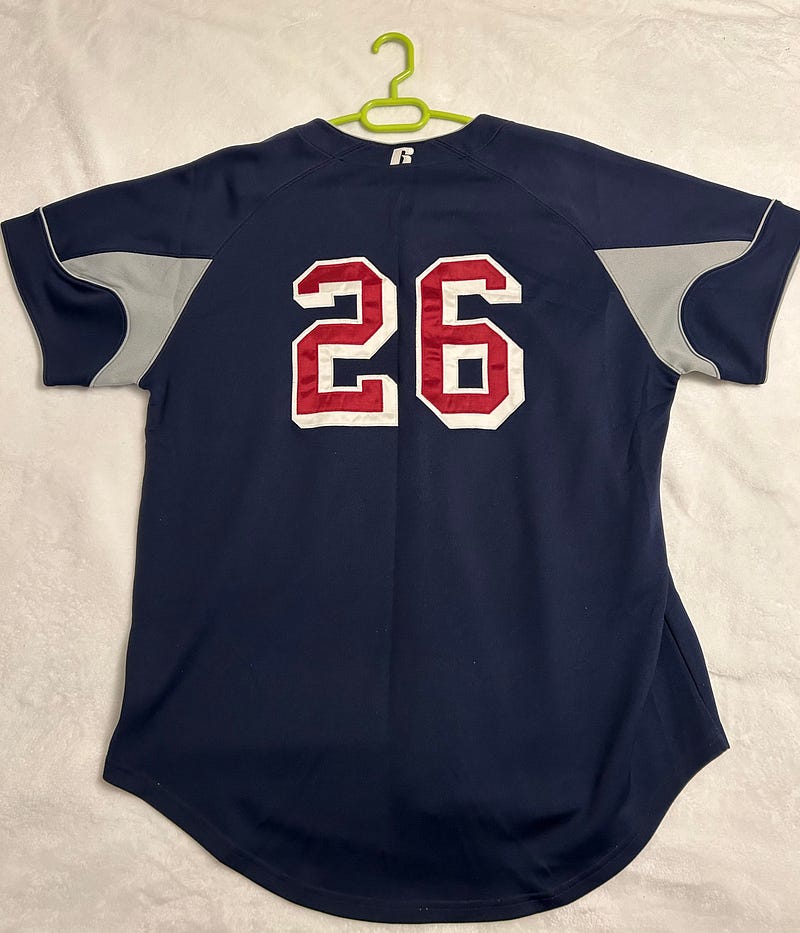
I still have James Kessler’s baseball jersey hanging in my closet. Who is James Kessler? He’s not a name you will find in any MLB roster or folklore. He was my student, my baseball pitcher, and most of all, he’s on the mantle of my lifetime heroes.
His mother, Jean, best describes him in The Last Tear: A Memoir, “The Last Tear is the harrowing true story of my only child James, a dynamic 17-year-old who was diagnosed in San Francisco with a rare cancer, dying eleven months later on the eve of Mother’s Day, 2009. Rather than allowing cancer to define his days James became even more focused on school, college applications and his future, inspiring not only his peers but the larger community including President Obama.”
Yes, including President Obama, who met James during his run for the presidency thanks to the Make-A-Wish Foundation. Following that meeting, he invited James to be with him in Chicago the night of the election and then later to his inaugural celebration in Washington D.C.
How did this 17-year-old become so powerful as to inspire a President of the United States? It has to do with an extremely positive view of living each and every day.
There are many places where you can read about the power of positive thinking but to meet it face to face is extra inspirational.
I saw this every time he took the mound. James did not fit the mold of a great pitcher. He resembled the Pillsbury Dough Boy, not a chiseled athlete. But that was only his physical presence, his emotional and mental presence was rock solid — all while wearing a sheepishly sweet smile.
I would joke that James couldn’t throw hard enough to break a pane of glass. And to be honest, when I had him start a game, I would also have another player begin warming up in preparation for when James would get himself outmatched by the other team’s hitters.
Despite my lack of confidence, James was never outmatched and constantly impressed everyone witnessing his performance. He wouldn’t overwhelm the hitter but he never gave up a hard hit and his teammates were able to make the play. His pitching gave his teammates a chance to play and build their confidence.
On a Saturday afternoon during James’s junior baseball season, we were the visiting team against a rival school. They were not only a rival but when they had their ace pitcher throwing, they were one of the best teams in The Bay Area — and he happened to be pitching that day. Lucky us! For us, it was James’s turn in the rotation.
For the first three innings, both pitchers had not let a runner on base when James took his bat, stepped into the box, and took things into his own hands. As unlikely for success at the plate as he was on the mound, James nevertheless poked a ball over the outfield and into the gap. He legged out a three-bagger and scored when the next hitter drove a ground ball up the middle.
After entering the dugout to a hero's welcome, James came straight up to me and told me he couldn’t go one more inning. He told me of a pain in his hip that was getting worse. He played with his pain all game but the trip around the bases was too much. Since this was the first I had heard of it from him, I gave him some great advice from my many years of coaching, “You should see a doctor about that.”
It was the end of the season and closer to the summer break when we had that conversation. The next I heard from him was right after that doctor’s visit. I was on the road when he called and had to pull over as it broke my heart. His mom and he just got the news — it was sarcoma, a rare form of bone cancer. His prognosis was five more months of being present in our lives.
At the time, his story was sad but inspiring and actually still is. Especially now with my MSA and deteriorating body, his graceful and appreciative approach to each day and his spirit help me center myself when self-pity begins to creep in my mind.
Such was and still is his impact on those who shared in his life. He has shown us that even when we are at our most vulnerable we can still be powerful, not pitiful.
Eventually, he was overmatched by cancer but for most of his battle, he approached it like pitching. He wasn’t given much chance to last long in either case. If the doctor’s prognosis were to be compared to baseball, he was only given a chance to survive one maybe two innings. But he proved us wrong.
What he did prove was that each pitch or each day means so much so put your full focus on it and believe it will be a success. And even if it’s not, let it go and focus on the next one. A pitcher can not know the inning he gets overmatched like we cannot know the circumstance of our demise. But James taught us to enjoy and depend on others to love and support every pitch and make it a masterpiece.