
Power to the Person!
I don’t want to have to help you.
Don’t get me wrong. I find it rewarding to help people.
Several years ago, on the way to a Christmas gathering with my family, we came across an accident along the Interstate. An elderly gentleman had spun off the road, and his car was now upside down on a slope. I left my wife and two young sons in our car and, along with several other people, ran to help. I worked to get the man out and to a waiting State Patrol car as others tended to his trapped wife.
A few years later, on my way to a National Guard Drill on a snowy and icy winter morning, I came across a truck and horse trailer upside down in the Interstate median. I was the first on the scene and rushed to help. The driver was trapped; his wife was already out of the truck, but their daughter was tangled and caught in her seat-belt in the back seat. I cut her out and got her and her mom to the emergency crew that had just arrived at the scene.
These weren’t the first time I had stopped at a roll-over accident.
And I didn’t mind helping for even a moment. Nor will I hesitate to help neighbors, friends, and families who need a hand — or the stranger at Costco trying to wrestle a very heavy gun safe into his truck. And my careers — as a public-school educator and a Soldier — have been built on helping people. But there’s a difference between helping people with a short-term need or in an emergency and helping people who shouldn’t really need help in the first place.
Unfortunately, our society has stripped far too many people of individual power, so their well-being relies on help from others. And the ultimate solution is not about somehow giving “power to the people” collectively, but rather helping every individual discover, accept, and wield their personal power.
Power to the person!!
Before starting college (during multiple “Gap Years” after high school), I built and raced cars and coached several hockey teams. I loved helping others learn about their cars and how to fix them and make them faster. I loved helping my players discover the joy of hockey, being part of a team, and improving their skills.
When I decided to work toward a professional career, I knew I should be a teacher, and ideally an auto shop teacher. And that’s exactly what I became. But something didn’t quite click. I enjoyed teaching, but it wasn’t what I expected, and that led me on a journey that only recently brought me to a critical realization — being a teacher, at least in the schools we have today, is not about creating self-sufficient individuals; unfortunately, the schools instead create dependence.
What I really wanted was to give people power; I loved helping people learn and develop, but I didn’t want them dependent on me to do that. I wanted to help them become self-sufficient. And that’s the dirty secret of our society. We create dependence.
This is not political. Dependence is not created through government and other programs that help those in need. We need those programs while we work toward every citizen being truly self-sufficient, and we are nowhere near that point yet.
What will it take to get there?
POWER TO THE PERSON!!!
What? All caps and a third exclamation point doesn’t make that less annoying?
You have the power to stop reading this at any time, so it’s in my best interest to not annoy you. And it’s in my best interest to keep you engaged and convince you the pay-off for reading this will be worth your time. But over what else do you have power?
There seem to be thousands — maybe tens of thousands — of articles just on Medium providing tips, advice, “secrets”, etc. to help you attract more reads and followers to make more money from your writing. There are probably millions of articles, videos, books, and websites to “help you get rich.” That’s because financial wealth seems a logical way to gain a sense of power, and those with plenty of money do have a form of power.
But many people with little or no money have a great deal of power. Maybe their power doesn’t provide influence or a big house, or a car, or a membership at the country club, but they have personal power.
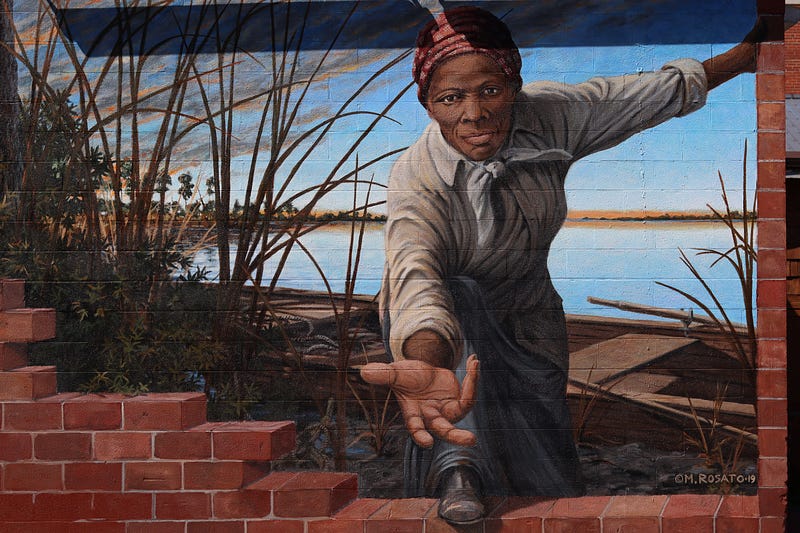
The most powerful people of whom I’m aware were slaves and survivors of concentration or prisoner of war camps; people like Harriet Tubman, Solomon Northup, Viktor Frankl, Louis Zamperini, and John McCain. These people had their external sources of power completely stripped away. They had virtually no control over any aspects of their lives, yet they retained their power over themselves. They refused to give up or give in.
Where do such people come from? What is the source of their power? Is such power available to everyone?
They come from everywhere and nowhere. The five I named are pretty well known, at least in part because of their experiences as slaves and prisoners. Yet there are thousands of others, and they came from all walks of life.
Many surviving slaves and prisoners say God gave them power, but many others were not religious. Those who credit God often say it was their faith in God that saw them through. Regardless of whether it was God, their faith, or something else, these survivors accepted that power was available if they chose to take it, and they understood it came with a condition.
That condition provides the answer to Question Number Three: Is such power available to everyone?
The power to survive enslavement or a POW or concentration camp comes with a corresponding responsibility — the responsibility to survive.
That may sound snarky or stating the obvious, but it is profound and critical if you take the time to think about it. And it is the idea that allows anyone to obtain personal power transcending external sources of power a person may or may not have. It’s also the critical ingredient for eliminating racism and inequality.
Power and responsibility correlate directly. When you have power, you have responsibility. Absent power, you have no responsibility. And when you have great power (say it with me, Uncle Ben), you have great responsibility.
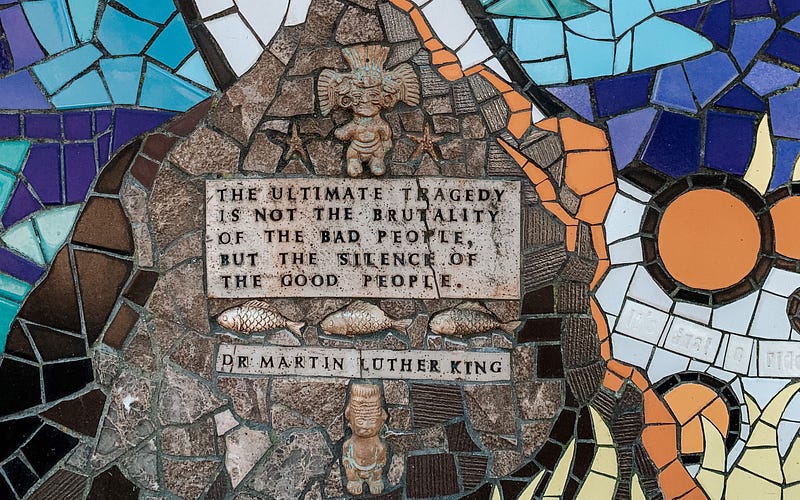
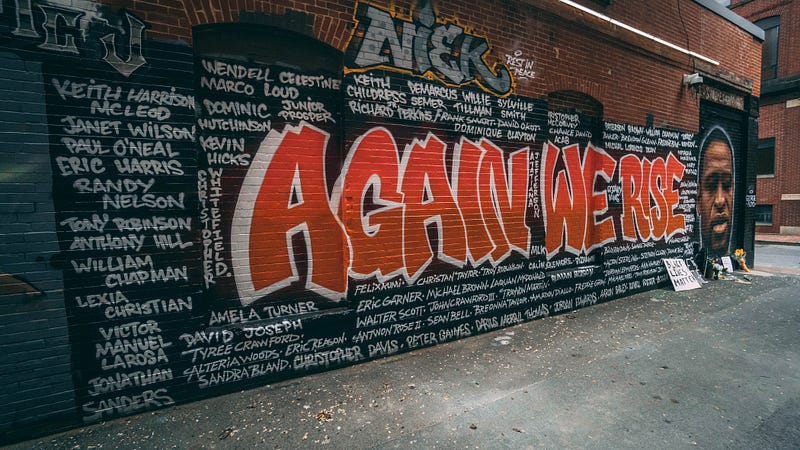
I could (and will) write multiple essays on the power-responsibility dynamic. For now, in our current state of unrest over racism and inequality, we must avoid putting all our eggs in the basket of giving “power to the people.” Many groups are exercising their collective power to bring about change, and that is great as far as it goes. For lasting systemic change, however, we need to foster the power of individuals.
Power shared in a group absolves individual members of responsibility, thus their efforts often flounder and become unsustainable. On the other hand, Individuals with power have individual responsibility and cannot absolve themselves. When a group forms of personally powerful (and subsequently responsible) individuals, they become nearly unstoppable as they hold both each other and themselves accountable. Such a group cannot be manipulated or have their purpose hijacked or distorted by outside forces.
A group whose members do not have individual power and responsibility will not have cohesive nor stable power. Individuals or small groups within or external to the group can manipulate the group’s power and even use it counter to the members’ values. The group can easily dissolve without achieving its purpose.
Fostering individual power in our country will allow us to restore the collective power of the citizenry. That will provide our best chance for true equality to flourish and racism to end.
We can again become a beacon of hope for the world, but only when all our citizens are self-sufficient and when helping one another comes from our sense of individual power and responsibility.
The first rollover at which I stopped involved a Ford Bronco that ejected the driver and multiple bags of groceries. Oddly, despite happening on a busy Interstate frontage road, I was the only witness. I was in the far lane of the highway checking my blind spot to change lanes and saw the Bronco dramatically cartwheel twice through the air. I immediately pulled to the shoulder and ran across three traffic lanes, the shoulder, and the frontage road. No one else had stopped, which surprises me to this day.
The driver was face down in a culvert. My Army training for treating casualties kicked in as I carefully rolled the woman over, assessed her condition, and began treating her for shock. Others finally saw the accident, stopped, called 911, and began assisting. An ambulance arrived, and I provided a statement to police before continuing my trip home.
To the best of my knowledge, the woman in the Bronco and the family in the truck all survived as did the elderly gentleman in the car. Unfortunately, that man’s wife didn’t make it and I’m sure her family had a sad Christmas.
I am grateful for opportunities to help people in big and little ways; I swore an oath to give my life to protect my country; but I dream of the day when none in our country are perpetually dependent on others. Yes, power to the person.
You may also enjoy:
Kevin Miller is a Boomer who joined the Army during the Cold War and continues to serve. He has spent 30-plus years working in K-12 education as a teacher, administrator, and consultant and is now on a mission to reinvent our school model. His book Know Power, Know Responsibility provides the imperatives for a complete redesign of schools and the way to get there. See his website knowresponsibility.com to learn more.