
Power Of Silence:
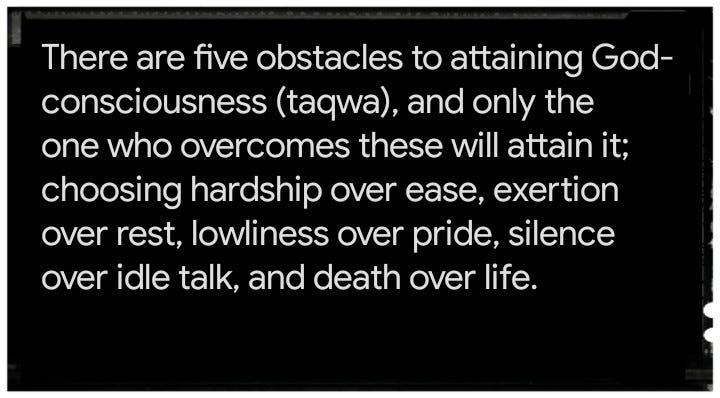
The state or fact of keeping silent; a refraining from speech or from making noise. The literal meaning of silence is the complete absence of sound or noise.
Silence can help increase your self-awareness by giving you the chance to observe and accept your thoughts and feelings without judgment.
When you’re sitting in stillness and silence, you become more aware of your body and mind. We all feel stress from time to time, but silence may help decrease stress levels by lowering cortisol and adrenaline levels.
In Islam silence is considered to be one of the first stages of worship. Talking less is something important as stressed in the Holy Quran.Talking less is not only rethinking what you want to say but restraining yourself from speaking what is unnecessary.
It’s not a secret that now in the modern world, people talk too much and it sometimes causes disunity in society. It’s the importance of silence that is very beneficial for us Muslims. Stress is one of the most difficult aspects of modern life.
Allah says:“God does not like that evil should be mentioned in public except by one who has been done an injustice. And God is all-hearing, all-knowing.” (Surah An-Nisa` 4:148)
Silence restores our cognitive resources. When we allow ourselves to disengage and relax, we are able to tap into our inner thoughts, ideas, and memories. All profound things and emotions of things are proceeded and attended by silence. Silence could be marketed just like clean water or wild mushrooms. Speak only when you feel your words are better than silence.
Allah says:“And if you call them to the guidance, they will not follow you. (It is) same for you whether you call them or you remain silent.”
(Surah Al-A`raf 7:193)
Silence offers opportunities for self-reflection and daydreaming, which activates multiple parts of the brain.
Silence gives us time to turn down the inner noise and increase awareness of what matters most. It’s not a weakness to remain silent. It takes real strength. When you’re quiet, you avoid unnecessary talk that might lead to lying.
Benefit Of Talking Less In Islam For The Better Life:
Silence balances your natural rhythms and brings your spirit.
Silence opens and puts intentional attention on the present.
Silence is able to focus better and determine how success.
Silence can lead to the development of new brain cells.
Silence increases awareness and personal reflection.
Silence brings your mind, and body to harmony.
Silence develops willpower and self-discipline.
Silence helps in discovering your purpose.
Silence lowers heart disease and tinnitus.
Silence concentrates better on any goal.
Silence provides you with a sense of calm.
Silence becomes better in decision-making.
Hazrat Ali (A.S) said:“When intelligence is complete speech becomes rare”. Traditionally it has also been said that one should “be sure of the stupidity of a man if he speaks too much”.
A wise man once said “Modesty brings silence”, and according to Islamic tradition modesty is also a branch of Faith.
Modest people do not highlight their merits, they Feel embarrassed when they are given praise, and genuinely do not Feel they have done all that much to deserve it. One should know that if someone is truly worthy of being praised, Allah (swt) makes sure that such an individual’s merits are made known to everyone. In other words contrary to contemporary opinion one does need to be loud and boastful in order to be heard, appreciated and recognised.
We are living in a time in which the abnormal is perceived as being normal. And if we allow ourselves to be controlled by the ever- changing norms of society then this shows that we are being controlled by people, whereas in actual fact we should only be controlled by the wishes of our Almighty Creator.
Furthermore, the one who endeavors to gain the love, admiration or approval of people will exhaust himself. In the end, his action may leave some pleased and others unhappy.
It is said that if “one desires immortal glory he should seek glory in the Immortal”. In other words seeking the pleasure of Allah (swt) makes one pleasing to good people.
The Prophet (saw) said “If a person is given silence, he is given wisdom”, the tongue is a great temptation, and learning how to control it is an enormous discipline. Whenever the Holy Prophet (saw) spoke, he always spoke the truth, even in levity. He disliked verbosity and cautioned His companions about talking needlessly.
The blessed companions of the Prophet (saw) were people of Few words and questions, but great actions. When the people of the first and second generation were asked a question they would tremble out of fear for Allah (swt).
Imam Malik once said “Before answering a question one should (present himself) in front of heaven and hell (contemplating about them) and then should choose an answer which he thinks may save him From the Fire”.
It was For this reason that unlike today the Salaf were Far From eager to answer a question or to present their opinion about a matter. Today, however everyone has to have their say, even upon issues that they fully do not grasp.
Mawlana Rumi said “The Lord lives in every heart. So if you desire to win your Lord's pleasure, do not break anyone’s heart”.
Intentionally breaking someone’s heart is possibly one of the worst things one can do. And it’s the harsh/ruthless words naively uttered by some which hurt people’s feelings and break hearts.
Hazrat Ali (A.S) has said “wounds of knives can heal, but the wounds of the tongue can never heal”. A Believer is the one from whose tongues and hands other Muslims are safe. We should ask ourselves if our words bring comfort and relief to those around us or do they cut deeply into their hearts, and send them plummeting into grief and sadness.
Our pious predecessors developed the habit of keeping silent by placing pebbles in their mouths which used to prevent them from speaking, others used to restrain themselves in their houses. This is because they knew that ones spiritual affairs can not be perfected until the heart is rectified and ones heart can not be rectified until the tongue is rectified.
The Heart of a Man lies under his tongue which is why Hypocrisy is Blameworthy.
The hypocrite says with his tongue what is not in his heart. If the heart was sound then the condition of the tongue would Follow. This is why the tongue has often been described as the interpreter of the heart.
Scholars hold that due to the direct connection between the tongue and heart, much Dhikr (remembrance) of Allah (swt) is recommended, this is because what a person repeats on the tongue reaches the heart. The Believer is he whose tongue lies beneath his heart, in other words he thinks before he speaks, whilst the hypocrite is he who speaks without thinking.It should also be noted that excessive talking deadens the heart.
The Holy Qur’an does encourage people to speak out, but only if this serves a worthy purpose. Indeed to remain silent on some occasions is reprehensible.
Our pious predecessors have said “Knowledge has been divided into two parts. The first part is to keep silent and the other half is to know when to speak and when to be silent”.
Commandments Of Silence And Encouragement Towards It In The Qur’an and Sunnah:
Allah, exalted, says, “Not a word does a person utter without having a vigilant observer ready to write it down.” (Qaf: 18) He also says, honoured and majestic, “Do not follow blindly what you do not know to be true: ears, eyes, and heart, you will be questioned about all these.” (al-Isra’: 36) Abu Hurayrah, Allah pleased with him, narrates that the Messenger of Allah (saw) said, “Whoever believes in Allah and the Last Day, let him say what is good or be silent...”

Quotes Of The Predecessors And Scholars On Silence:
Abu al-Darda’, Allah be pleased with him, said, “Learn silence just as you learn speech. Silence is a dear wisdom. Be more keen to listen than you are to speak, and do not speak about a matter that is of no concern to you. Laugh not but it be due to amazement, and walk not but with a purpose.”
Anas ibn Malik, Allah be pleased with him, said, “Four do not cease being amazing: Silence - and it is the first form of worship, humility, remembrance of Allah, and having little.”
Wuhayb ibn al-Ward, Allah have mercy upon him, said, “It used to be said, ‘Wisdom is ten parts: Nine of them are in silence, and the tenth is in isolating oneself from the people.’”
Categories of Silence:
1- Praiseworthy Silence:
Which is to withhold one’s tongue from all that Allah has forbidden of speech, like backbiting, slander, profanity, and similar things. Likewise, not saying that which is in itself permissible out of caution that it may lead to the impermissible.
2- Blameworthy Silence:
It is when one is silent when it is necessary to speak out. Examples of this include forbidding what is wrong, not spreading good talk, and concealing knowledge.
Benefits of Silence:
1- It is a sign of complete faith and sound Islam.
2- It is a sign of good morals and a pure soul.
3- It bears the fruits of Allah’s love then the people’s.
4- It is from the greatest means to gaining poise and having dignity.
5- It is a sign of wisdom.
6- It is a saviour from mistakes, and a means to having free time for thinking, worship, and remembrance.
Allah Almighty Says The Power Of Silence In The Quran:
“When will this promise come to pass,- if ye speak the truth?” (Surah Yunus, 48)
“That will be a Day when they shall not be able to speak.”
(Surah Al-Mursalat, 35)
“If only we had had before us a Message from those of old.”
(Surah As-Saffat, 168)
“We should certainly have been Servants of Allah, sincere (and devoted)!”
(Quran 169)
“Except Thy servants among them, sincere and purified (by Thy Grace).”
(Surah Hijr, 40)
“They speak not before He speaks, and they act (in all things) by His Command.” (Surah Al-Anbiya, 27)
“O, believers! Always fear Allah (The Almighty) and say what is correct and straight.” (Quran 33:70)
Islam has specified several characteristics of a good Muslim, one of them is keeping silent. Being silent is extremely important in Islam and the Holy Quran is also stressed. It is more than just being quiet and not talking too much, but it’s about a good akhlaq which defined the real Muslim. Even though it seemed simple, not everyone is capable of being silent.
Allah says:“And tell My servants to say that which is best. Indeed, Satan induces [dissension] among them. Indeed Satan is ever, to mankind, a clear enemy.” (Surah Al-Isra’ 17:53)
Silence can set the stage for the practice of mindfulness, which has a range of mental health benefits. One of the biggest benefits of being silent in Islam is calming our minds and resulting in a more positive manner. Every Muslim must remember that your tiger lives inside your mouth, so be careful not to unleash it. It’s true that your mouth can either be your blessing or your curse.
Allah says:“And when is recited the Quran, then listen to it and pay attention so that you may receive mercy.” (Surah Al-Araf 7:204 )
Silence can be powerful in many ways. It can help us to think more deeply, to reflect on our thoughts and emotions, and to Find peace and clarity in our minds.
Silence can also be used as a tool for communication, to convey meaning and emotion without words. Finally, silence can be a powerful way to show respect, to honor someone's presence or memory, or to acknowledge the sacredness of a moment or place.
Keeping silent establishes piety, brings about the blessings of Allah, increases wisdom, brings peace and happiness and is the gateway to beneficial knowledge. One should also know that Allah is most easily reached through silence.
May Allah(swt) bless us with the wisdom that is acquired through silence, and give us the ability to think before we speak.Ameen.
JazakAllah (May Allah reward you with goodness)for reading.
Kindly Follow & subscribe to receive the latest insightful stories by email.