
Power of Change, Real or Imagined (Change -Series Part 2)
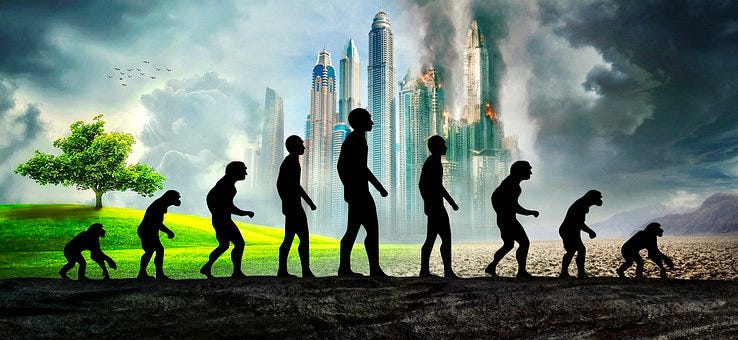
As I start this journey of change, the very first question that I have asked myself is whether it is possible to change.
If we don’t believe that we really can change, then there is no reason to even try to change.
The problem is that most of us at some point in time, have tried to change, and failed. Because of our failures, many of us have given up. But life does not have to be like this.
But believing in something is not enough, because we can all believe in many different things. The fundamental issue is, whether are there any reasoned grounds for holding this belief.
N.B. It is possible to couch this topic in terms of free will, but that is not something that I want to talk about here. I am not interested in a philosophical debate.
My greater concern is to find out if people think they can change and why they believe that this is true, assuming that they do.
What are our real-world beliefs about change, and how widespread are these beliefs?
Finally, I also want to look at science and see what it tells us about change.
In particular, there are three main areas that I want to talk about.
1. What everyday people think 2. Are there real stories of people who have actually changed? 3. What does science say about change
- What do everyday people think about trying to change themselves?
Consider the view of Barbara Carter who recently commented on one of my blogs.
“Yes! It is possible to change. Change is growth. Change is being open to another way. Change is about possibilities.”
I think most people would agree with Barbara and think much the same.
So, let us dive deeper into this, and think about how many people on Medium, are writing about change. This is one of the most popular topics on this platform, and it is clear that there are many people who are actively interested in changing themselves. So, why is it that this is one of the most talked about topics on Medium, and why is it also one of the most important topics on the internet?
Self-help and self-development are very popular topics on the internet, and they appear in countless lists and form part of the most-read or most searched articles on the internet.
This points to two things. The first is that there are an uncountable number of people who want to change their lives and are looking for ways to do this. The second fact is that the self-help and self-improvement industry is a multi-billion dollar industry.
In 2020 this was a $US11.5 billion dollar industry composed of self-improvement books, online courses, and motivational speakers.
This is a serious money-making business, and those making money from it obviously recognize how huge the potential market is.
So, it is not unreasonable to conclude that there is a great need being expressed by people who want to change and are heavily invested in making that change a reality.
People seek to change in many different ways. Some like me, choose a spiritual path. But there are many who practice a wide range of different approaches to bring about change in their lives.
Consider a few of these, and I am making no attempt to include every different kind of treatment that people may use.
Chromatherapy, meditation, yoga, crystal therapy, and naturopathy, including herbal medicine, nutrition, homeopathy, Acupuncture, hydrotherapy, and even lifestyle counseling.
Fairly obviously people do believe that it is possible to change, and they are strongly motivated to make that change possible.
2. Are there real stories of people who have actually changed?
The answer emphatically is yes.
There are real-life inspirational stories that move all of us.
Consider Malala Yousafzai who was shot in the head by the Taliban, but overcome all such obstacles to become an international advocate, and Nobel Prize laureate.
Nelson Mandela spent 27 years in prison for his anti-apartheid activism and then went on to become the President of South Africa, and what about Stephen Hawking who suffered from a debilitating motor neuron disease, and still went on to become one of the greatest scientists of his time?
Oprah Winfrey overcame a life of poverty to become one of the highest-paid entertainers in the world.
Or people like Bill Gates, Steve Jobs, Steve Wozniak, and Ronald Wayne. In more recent times, there is Mark Zuckerberg who is a major shareholder in Facebook.
I am not going to make an exhaustive list of people who have reached dizzying heights in their lives, because there are too many to count. The point simply is, that there are many people who have overcome incredible disadvantages in life to become successful. We are not simply talking about wealth creation or the problems that business people have, because underlying all success is a definitive mentality that is continuously reinventing itself, and changing the world.
3. What does science say about change
3.1 Pscyhoanalyze
There are a large number of psychologists and psychiatrists who practice in the world to help people. Showing that there are a large number of people actively practicing to help people change, and naturally, there are a large number of people who go to such professionals for help. In fact, healthcare professionals rate 2nd on a list of professions in terms of importance, behind Educators.
So, psychologists and psychiatrists are saying, yes people can change, and it is our job to make that change a reality.
3.2 Brain Research, Neuroplasticity, and Genetics
Scientists believe that we are able to change ourselves because of neuroplasticity. This refers to the brain’s ability to change and adapt in response to new experiences, learning, and the environment.
3.2.1 Nature vs Nurture Argument.
The idea is that there are two major elements that help define who we become. The first is our genetic inheritance, such as whether we have blue eyes or green. Of course, when we talk about genetics we are talking not simply about the color of our eyes. We are talking about everything.
If you take identical twins, raise one in a rich environment and the other in poor circumstances, and test each child later once they have grown up, there is often a clear difference in their intelligence. Why is that? It is because the environment can impair development, and can affect how intelligent a person becomes.
But is that the end of the story?
No. People can improve their cognitive abilities through education, training, and practice. Reading, engaging in intellectual discussions, and challenging oneself can help improve cognitive function and increase intelligence.
3.2.2 Neuroplasticity
The brain is able to change and adapt through new experiences, learning, and environmental conditions. The brain is not a static organ. It is highly adaptive and changeable. So, our brains can be rewired and reorganized based on our experiences and actions. This, in turn, can change our thoughts, feelings, and behavior.
Learning a new language, or even playing a musical instrument can bring about changes in the structure and function of the brain.
In psychological terms, cognitive-behavioral therapy (CBT) can alter patterns of brain activity and improve symptoms of mental health disorders.
Importantly, dietary changes combined with exercise can promote better physical and mental health.
The science is clear, we are able to change ourselves through intentional efforts to modify our behaviors, thoughts, and experiences.
In fact, we can undertake activities that can promote neuroplasticity and rewire our brains to support our goals and aspirations.
The first thing we must change about ourselves to grow and become more is our mindset. Our mindset is the collection of beliefs, attitudes, and assumptions that shape our perception of the world around us and determine how we respond to different situations.
A growth mindset is one in which we believe that our abilities and intelligence can be developed through hard work, dedication, and learning from our mistakes. In contrast, a fixed mindset is one in which we believe that our abilities and intelligence are fixed traits that cannot be changed or improved.
So, if we want to grow and change, we must consciously choose to change ourselves, and the only thing stopping us is ourselves.
We must be willing to take risks and put ourselves out there, outside our comfort zones so we can learn and grow.
Conclusion
Our own life experiences, our knowledge of other people’s lives, and fact-based science all tell us, that yes, we can change. But this won’t just happen, we have to make it happen.
Copyright ©️ 2023 Philip Temple. All Rights Reserved.
Finally, I would deeply appreciate any small contributions that you might be able to make to help me on my writing journey.