
Poverty Is a Strange Invisibility Cloak
In this age of the internet, as you fellow medium writers/readers know, there are more possibilities than ever before online. Many people on this platform are writing for usually three reasons: to create an additional passive income, to make more money to pay off debt, or to be a writer.
I am all for it! I am all three of those reasons. But I always found it interesting to think of the people that we may leave behind. The privileges that we have, whether we feel we have them or are not aware, are there. Admittedly, there are many worries I have about the future. And especially, with the pending recession that is about to hit Europe and the rest of the world, there is a lot unknown. There are fears about the struggle and hardship that it may bring. We are working towards goals that are not only fulfilling but will lessen that hardship.
Financial Freedom would be amazing. Being able to pay off debt. Amazing! The ability to increase your income with hard work, patience, and time. It is amazing but also a privilege.
I always found it uncomfortable or strange when people who are financially successful always contribute their success to hard work and hard work that they achieved by not making “excuses”. I would not take away their story or their experience. They may have worked hard and currently work hard. That is not my place to judge.
But that story is incomplete. There are people worldwide who work hard but never experience that type of success. There are people who work less and have even more.
I believe that Elizabeth Filips describes it best in her youtube video about how it is more than just the equation equating the number of hours you work to what it takes to succeed:
We should acknowledge this. If you are single, and you are able to decide your free time outside of work, that is a privilege. If you were able to work in high school/college for spending money and not financial stability, that is a privilege. If you were able to stay with your family or your friends while looking for a job, that is a privilege. If you were able to decide whether or not you want to work, that is a privilege. Acknowledging this does not take away our hustle. It doesn’t mean that we don’t work hard.
By acknowledging the privileges we have, we have the potential to be more thankful for where we are in life and be kind when we see people on different paths than our own.
In western countries, to be middle class with debt is normal. The boomer generation has definitely repeatedly advised the age-old advice, “If you give up your Starbucks you can pay off your debt in no time.” Millennials in recent years have responded in abundance that it is not the case. Student Loan Debt is more expensive than ever, the cost of living with minimum wage not to match is higher, and there are more expenses than in previous generations.
In the U.S. this is a constant conversation and battle. Even now, with the student loans on pause, there are petitions and protests to Cancel Student Loan Debt. There are trends in minimalism, tiny houses, and having side hustles on top of your 9–5 job. Many of these trends are the result of life choices evaluated to create time, pay off debt, and better living.
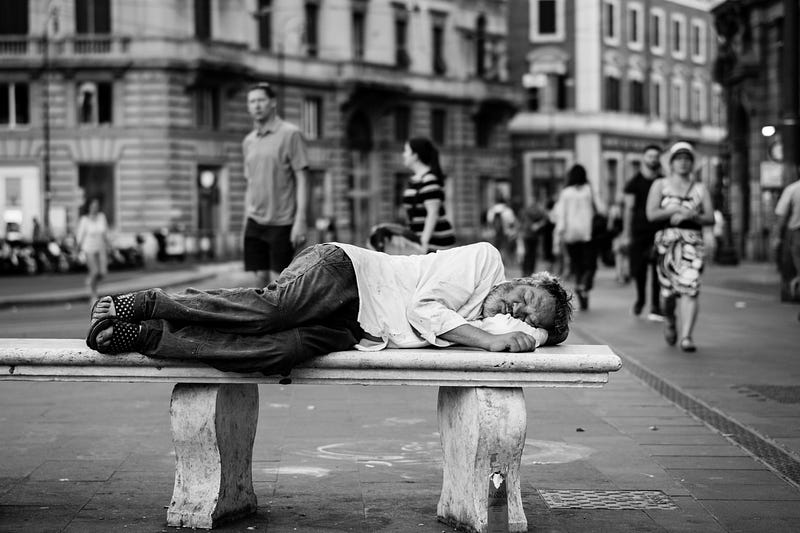
But even with all the financial conversations, there is still a group of people who are not included, the homeless. Depending on the city where you live, you may see them outside subways, in main squares of cities, or even outside popular restaurants. With all the conversations about the added stresses of money, this particular group is for some reason usually described as “deserving” of their situation.
But in reality, the members of this group are individuals who have vast stories, experiences, and reasons for being homeless. It could because of overwhelming debt, loss of job, depression, addiction or a series of events with out the support needed to prevent a loss of their home. And it becomes even harder to escape once someone hits that point. Especially, if you don’t have the emotional support or the financial support to get through it.
If you are applying for a job, what address and phone number do you put down?
Where do you go to the bathroom or take a shower for a new day?
Where do you sleep at night where you have shelter from the cold and that is safe?
You could go to a shelter, but depending on the country you live in it may not be of much help. I have met homeless women in the U.S. who avoided shelters due to being harassed or fear of safety. In the UK, there are many shelters that require a British pound a night to stay.
These questions have crossed my mind at different times in my life. I think about if I lost everything quickly. What would I do? Where would I go? Would I even know where to begin?
When I travel, I always enjoy seeing the beauty of a new country and a new city. Every place has something to offer. But admittedly, I also look to see how they treat their vulnerable and where the homeless are.
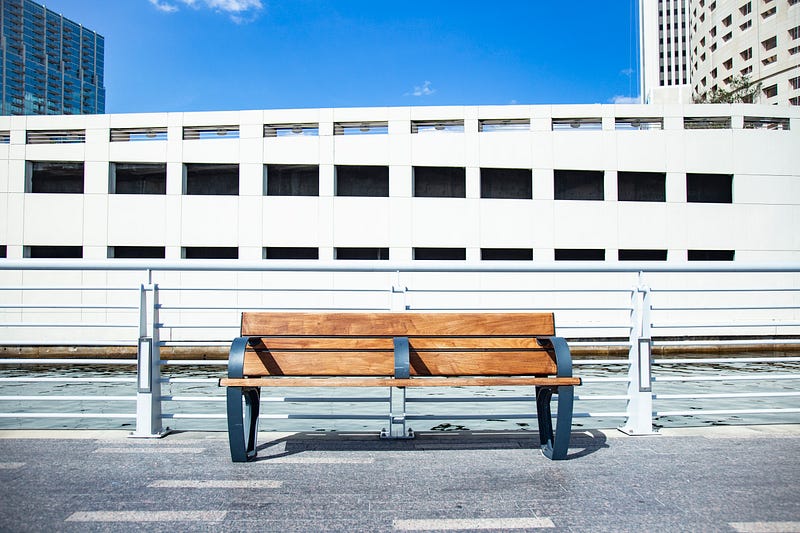
There are some cities that put restrictions on where the homeless are allowed to be. And they may add touches to the area as a way to discourage people from sleeping there. Or even added touches of, only customers can use the bathroom.
Such as the picture below. A divider is put there so that no one tries to sleep there.
There is a strange stigma around homelessness. Somehow every homeless person is a drug-addicted, irresponsible with money, not educated, or an alcoholic. That may be the story of some people. But that is also the story of people who live in nice homes and have jobs.
I have wondered if we perpetuate this narrative because we don’t want to imagine ourselves in that position. Even when I see those videos of people pretending to be homeless as a way to scam people and “prove” that is reason why people are purposefully homeless, I can’t help but think of the purpose of the pretender. It is another way to reveal their sense of superiority over a group of that they don’t understand. If we feel like we “know” someone's story as to why they are struggling, then it helps prevent us to make the same mistakes.
Did you know the famous, Oskar Schindler, ended his days in poverty? He lived on the donations from the people he saved during World War II. He was once a wealthy businessman. And even after the war, he attempted two more businesses that went bankrupt. Imagine if he didn’t have their support?
This disconnect has a way of rippling down from our thoughts to our actions.
When we avoid eye contact when we pass them on the street or pretend like we can’t hear them when they try to talk to us- it is for our comfort. Safety is always important when talking with strangers. But imagine all day long you have people pretending you don’t exist to by you.
Imagine how isolating that must be.
You don’t want to ask someone for money because it is demoralizing. But you have to. You speak louder because a group of people pretend to not hear you. It can grow frustrating and discouraging that things can change. There are services and opportunities for job placement. But think of the emotional ups and downs to get through it.
You don’t always have to donate. If you don’t want to. But you could at least say something like you would any other person who is tapping your shoulder on the street asking for directions.
So my question for you: Where do you see the most homeless in your city? Do you know what your city is doing about it?
To clarify my own experience: I have a Masters of Anthropology in International Development and Humanitarian Assistance. I have worked with NGO’s/ Nonprofits for 15 years in San Antonio, Washington, D.C., and in London.
I conducted my dissertation on “Homelessness in London Amid Covid-19 Lockdown”.