
Posthumanist Angst on a Dying Planet
Is there a legitimate basis for hope?
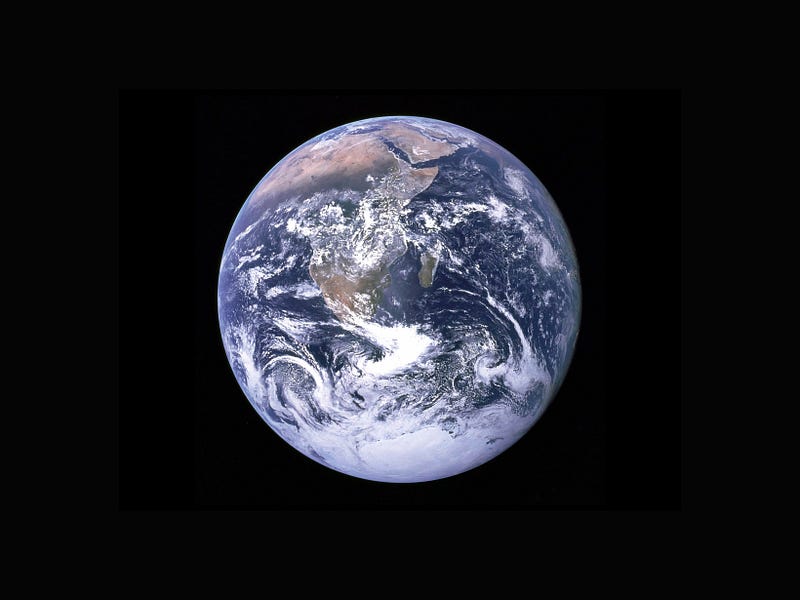
Those of us paying close attention to the dramatic changes in the natural world feel it. All is not well here on planet Earth.
Mass extinction is underway, rivaling the top five mass extinction events in the past, with species of plants and animals dying off a thousand times faster than the background extinction rate. Climate change is beginning to take place now that the planet has heated up two-thirds of the way towards the 1.5 Celsius tipping point. There are 8 billion people living in the world today, and most of them inhabit relatively poor countries that are fast acquiring the consumption habits of rich ones. The future does not look promising.
All this creates anxiety in the hearts and minds of those who aren’t completely oblivious to what’s going on. How did we get into this jam? Who’s to blame? How do we get out of it? Can we get out of it?
The Failure of Humanism
There is a growing consensus among those living today that the dominant paradigm during the past 500 years has failed us. That paradigm goes something like this: Superstition, irrationality, and theocracy prevailed during the Middle Ages, but science, reason, and humanism turned things around. Now that we are enlightened, there is nothing we humans can’t do!
That’s been the narrative embraced by most educated people for quite some time now. But others are starting to seriously question it.
Nowadays some thinkers reject the basic assumptions of this humanist narrative. In a piece simply called “Posthumanism,” a media scholar named Jay David Bolter sums it up nicely:
Humanism was by definition anthropocentric; humanism as a historical phenomenon drew on a renewed and reinterpreted appreciation for the rhetoric and civilization of Greece and Rome, in placing man (rather than God) at the center of its literary and philosophical project.
The keyword here is “anthropocentric.” For 500 years it has been all about us all the time – our prosperity, our well-being. No other life-forms matter. This entire world exists only to be exploited and consumed by us. Some people put the label “Western” on this mentality.
A so-called humanist thinks that human beings stand apart from the rest of the natural world — that we are superior to all other life forms. The 17th-century Rationalist philosopher René Descartes minced no words about it:
There is none that is more powerful in leading feeble minds astray from the straight path of virtue than the supposition that the soul of the brutes is the same nature with our own.
And there it is, the supposition behind our anthropocentric worldview. We are something special; the rest of nature is not. We are all that matter; the rest of nature does not. This way of seeing things is precisely what has gotten us into trouble.
Power and Control
For thousands of years, humankind has exerted tremendous control over the natural world. We call our impact upon it civilization — a way of living that is deeply rooted in agriculture.
Before agriculture humans were hunter/gatherers for tens of thousands of years, living in sync with nature for the most part. But our lives were marginalized back then by the vagaries of wild nature. With agriculture came food security and a material improvement of the human condition overall. Our population exploded as a result. It exploded again a couple of hundred years ago when we industrialized. We are still feeling the consequences of that.
We have, in a sense, conquered wild nature. But there have been unforeseen consequences. As the environmentalist philosopher Holmes Rolston III said in “Values Gone Wild”(p. 199):
When the wildness is almost conquered, we begin to awake to the error in the mastery theory.
Some of us have awakened, anyhow. Others are still sleeping. In their dreams, they think there is no limit to the Earth’s resources or to how much we can manipulate things. In their dreams, they think we humans have all the power.
Interdependence and The Struggle for Existence
Some people do not question humankind’s unbridled exploitation of the natural world. They think it is utterly Darwinian, that our impact only shows that we have succeeded in the struggle for existence that all life-forms undergo. But Charles Darwin made it clear where he stood regarding this matter. In his book The Origin of Species he wrote:
I should premise that I use the term Struggle of Existence in a large and metaphorical sense, including the dependence of one being on another, and including (which is more important) not only the life of the individual, but success in leaving progeny.
What’s curious about this statement is the phrase “dependence of one being on another.” That contradicts the whole idea of the struggle for existence, doesn’t it? What was Darwin trying to tell us? If this is strictly a dog-eat-dog world, then why should any give individual care about the fate of its species, much less about any other life form?
I suspect that Darwin knew enough about nature to see how all things are connected. Some naturalists call this interdependence the web of life. More scientifically minded folks call it the biosphere. No life form lives in isolation — not even humans. Everything is connected. What we generally call nature is an interwoven fabric of living things wrapped around the planet. This fabric is no more than fifty miles thick.
A Legitimate Basis for Hope
The evolutionary biologist Lynn Margulis sees cooperation, not competition, as the prevailing force in nature. When two life-forms interact with each other in such a way that they both benefit, symbiosis is happening.
Margulis sees this taking place throughout nature, as complex organisms acquire bacteria and other primitive organisms in their struggle to survive. A clear illustration of this is the bacteria in our own guts that are essential for digestion. She thinks symbiosis is so prevalent that it even happens at the cellular level, driving evolution. Contemporary microbiology is slowly proving her right. In her book The Symbiotic Planet she wrote:
We are symbionts on a symbiotic planet, and if we care to, we can find symbiosis everywhere.
The biosphere on this planet is one immeasurably complex matrix of interconnected life-forms — not just predators and prey, but symbionts as well. In fact, all living things are symbionts to some greater or lesser degree. In the 21st century, we are just beginning to realize this. We humans do not stand apart from nature. Like all living things, we are inextricably entwined with it and, as wild nature goes, so goes humankind.
Taking care of the planet and all the living things on it is the key to our own long-term survival. Stewardship isn’t a new concept. Thousands of years ago, it was written in Genesis:
The Lord took the man and settled him in the garden of Eden to cultivate and take care of it.
What’s new is our growing awareness of this, and the urgency of the situation at hand.
Is it too late? Are we already too far down the path of self-annihilation to turn things around? A pessimist would say yes; an optimist would say no. Truth is, we don’t really know how resilient nature is or the extent to which we can turn things around.
What we do know is that Nature won’t die even if we transform our home planet into something like Mars. Nature is eternal. Only the biosphere we inhabit is being threatened. Only the fate of humankind and that of every other life form on this planet is at stake. We can either stay on this destructive trajectory or change course. The choice is ours. Homo sapiens is an exceptional problem solver. We have demonstrated that time and time again. So then… what’s it going to be?


