
Postcards from Rome
Join us on the day we walked through the eternal Roman city
In spring 2022, my wife and I arrived at the Civitavecchia port on a cruise. Eager to explore the ancient metropolis just an hour drive away, we hopped on a bus and set off on a same-day visit to the captivating city of Rome. I carried a small backpack and my smartphone camera to capture a fraction of Rome’s beauty and history.
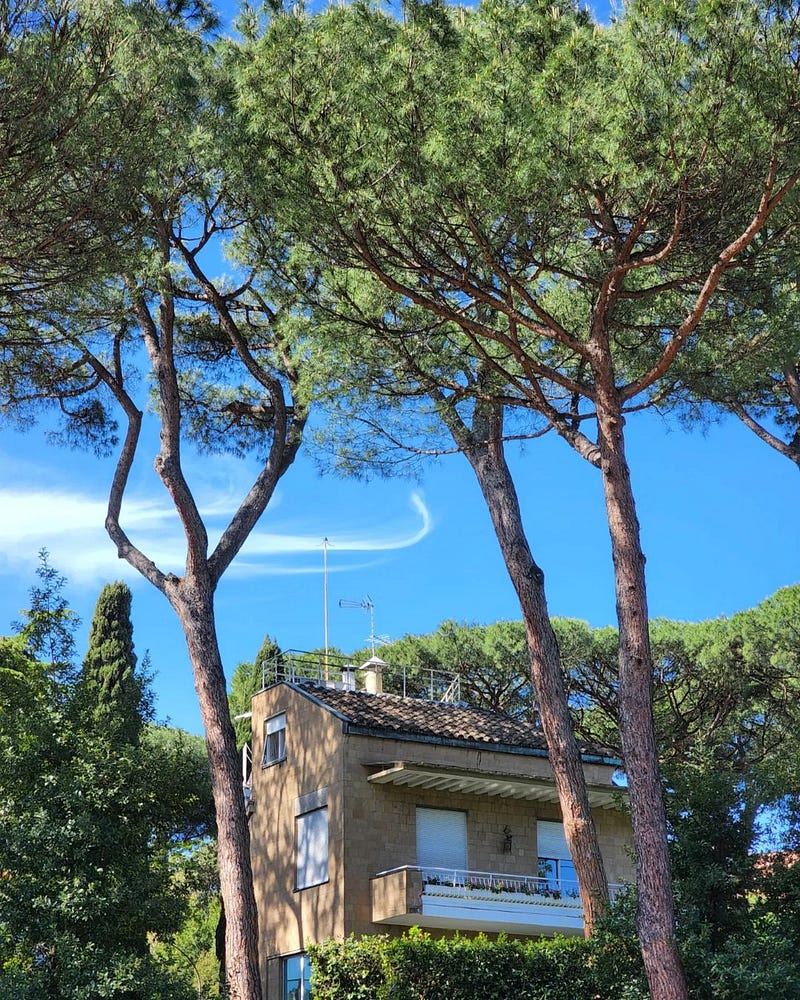
Under picturesque clouds, we began an unforgettable walk around the Eternal City. A year later, I am delighted to share glimpses of Rome’s rich history through 40 unique photographs.
Circo Massimo
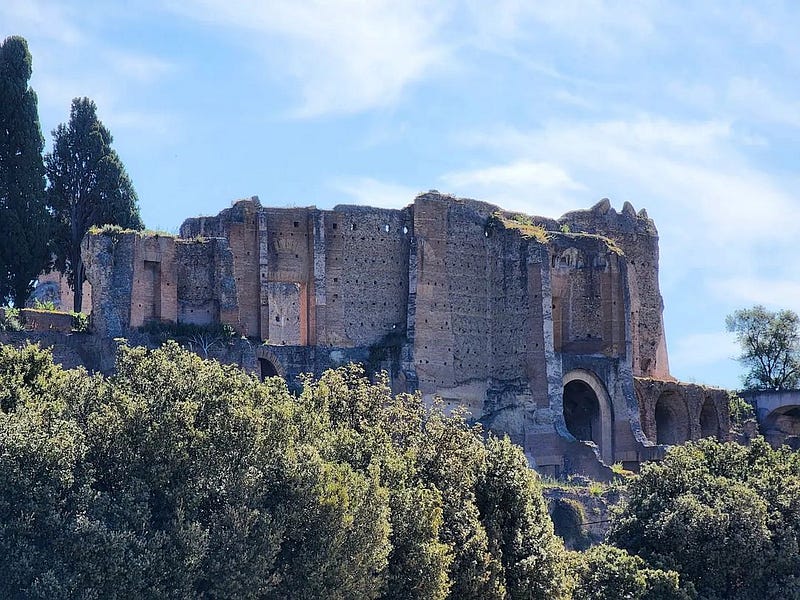
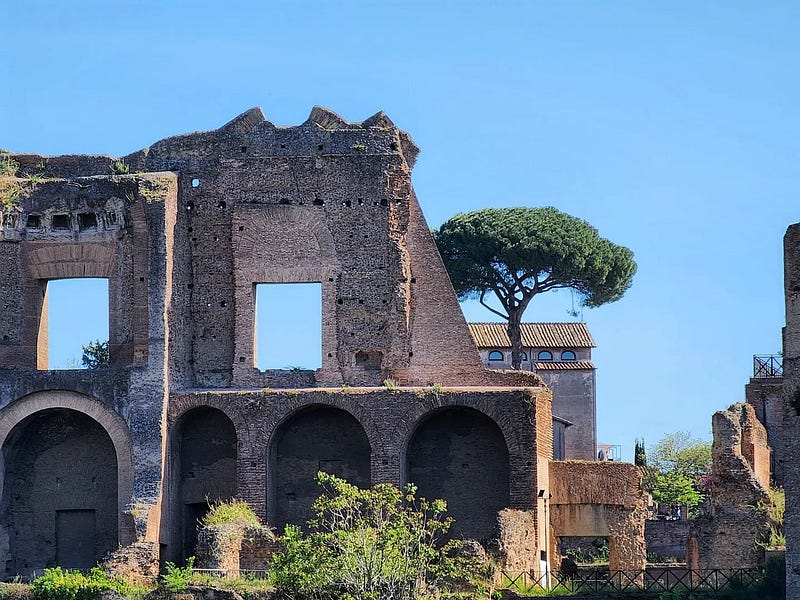
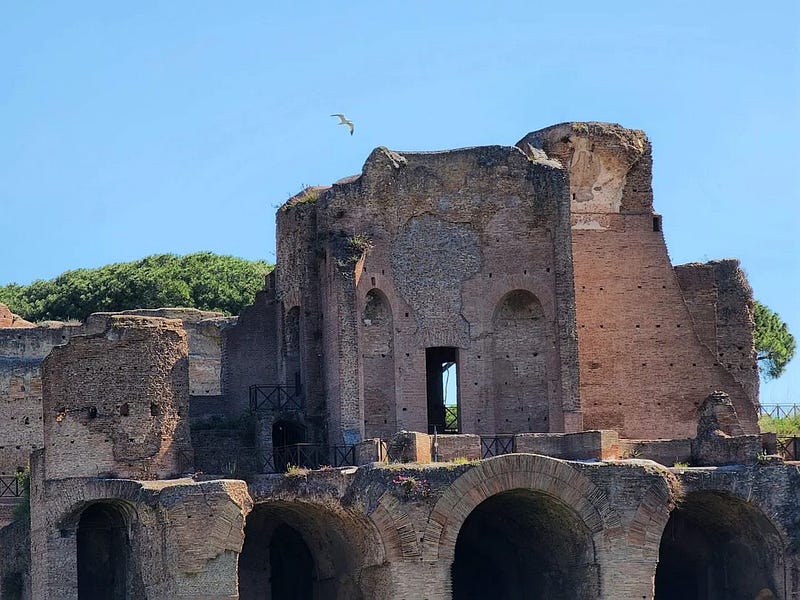
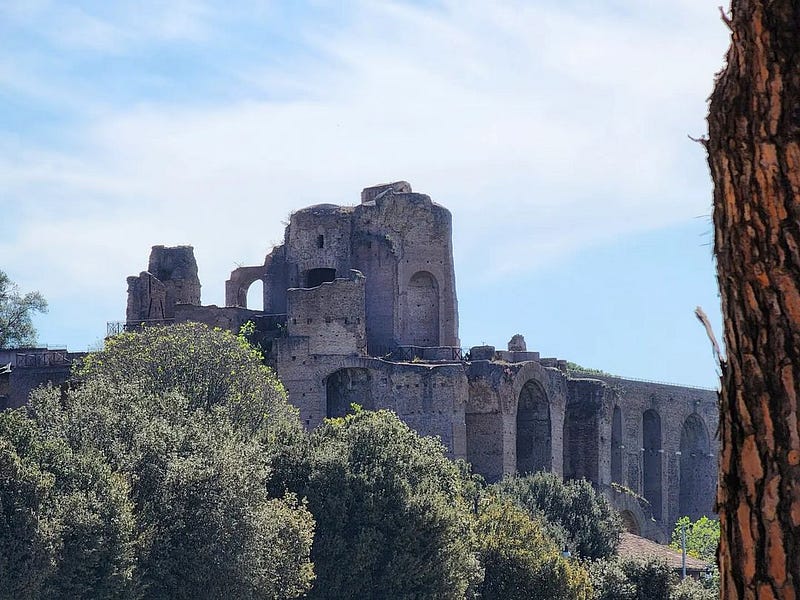
We stepped off the bus near Circo Massimo. The vast expanse of ruins of this ancient Roman chariot-racing stadium bears witness to a time when it could accommodate more than 150,000 spectators. Today, its greenery provides a peaceful contrast to the roaring crowd that once filled this colossal venue.
Ghetto di Roma
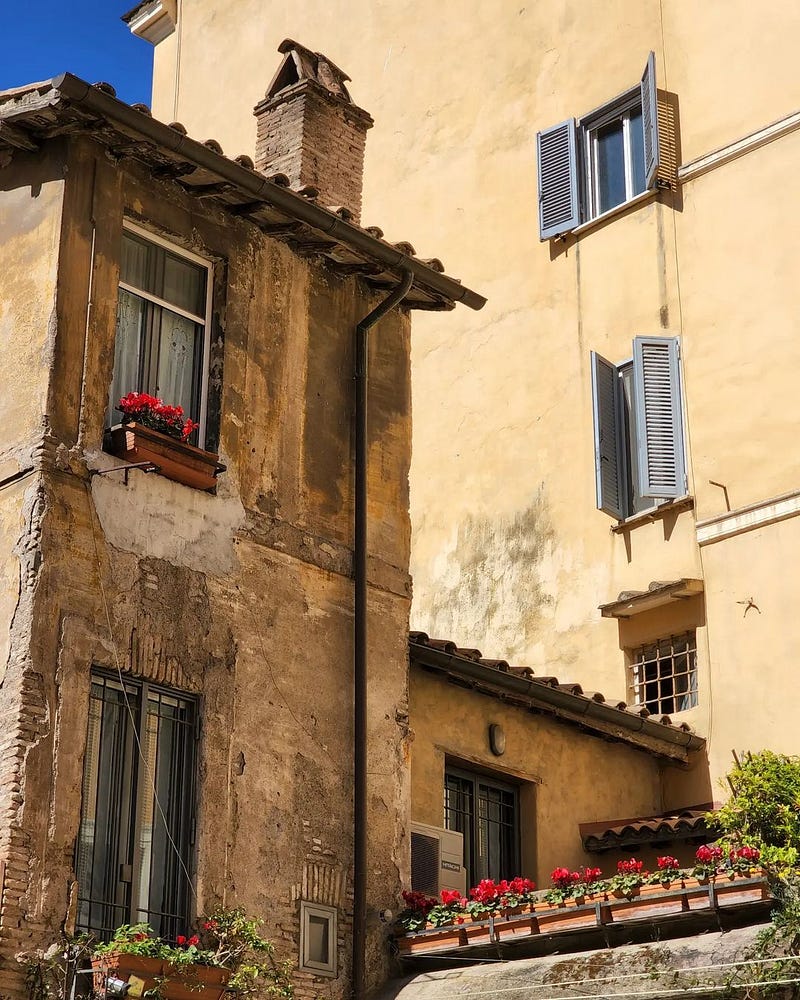
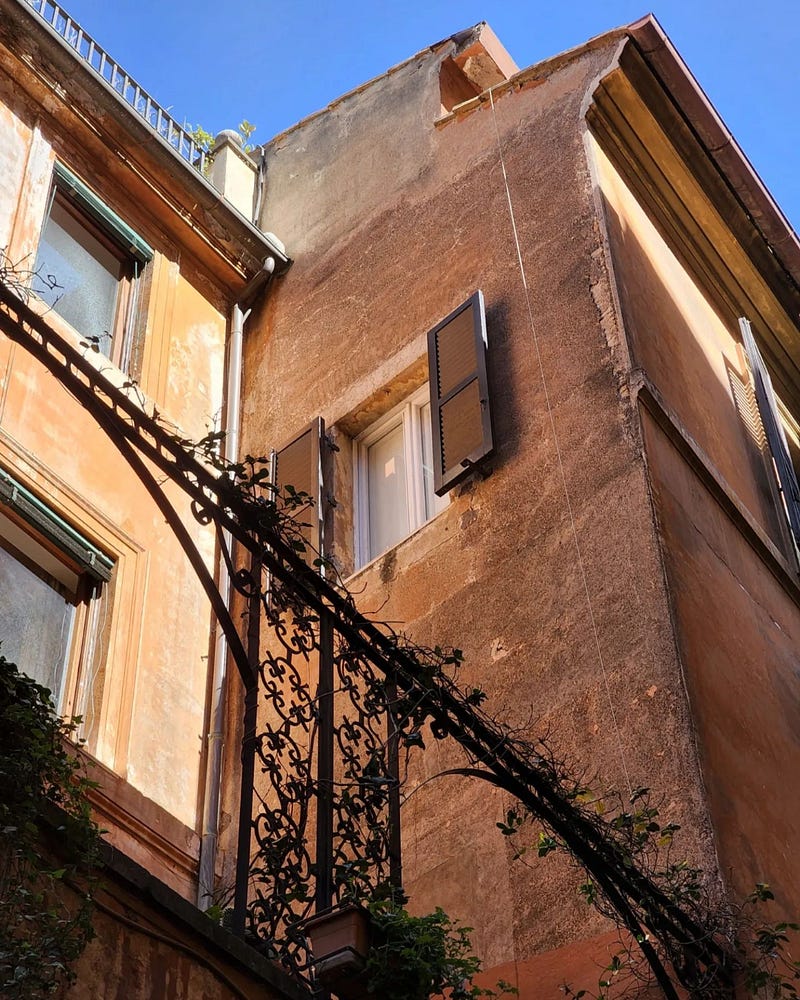
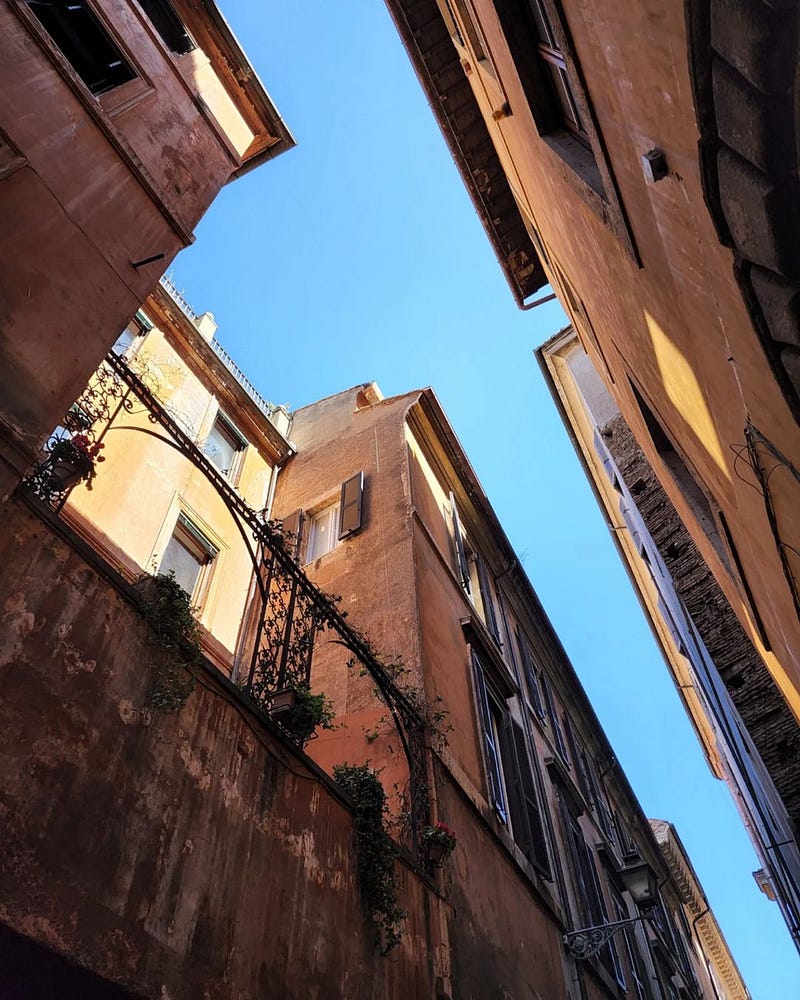
With no set itinerary, we soon discovered ourselves walking through the Roman Ghetto, an area once enclosed by a wall the local Jewish community had to finance following Vatican’s orders in the Late Middle Ages. They were confined to a cramped space, resulting in extreme poverty and terrible sanitary conditions. Two centuries later, during the Napoleonic Wars, the ghetto’s enforcement was temporarily lifted. The walls were eventually demolished in the late 19th century as part of a citywide urban renewal project.
During the Fascist regime, Jewish residents faced renewed persecution and hardship. Despite many Jewish families living nearby in those obscure times of the 20th century, the former ghetto was no longer their struggle’s epicenter.
Altare della Patria
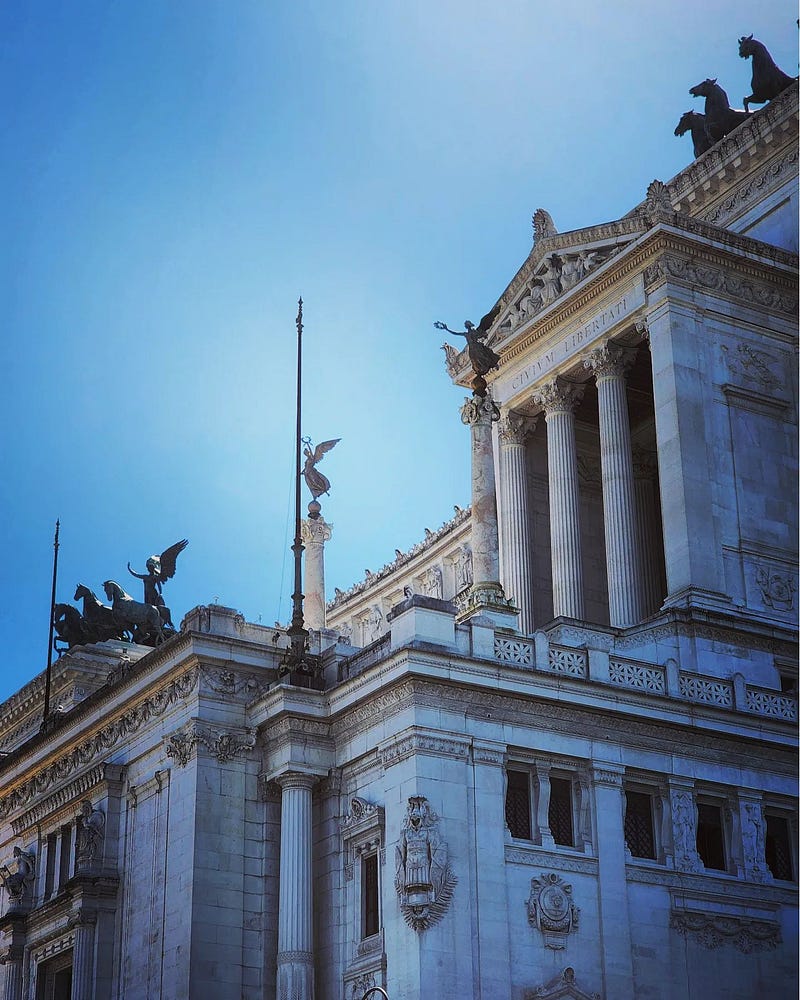
Heading towards the city's heart, the imposing Monument to Victor Emmanuel II took us by surprise. Its impressive scale was so striking that I had to pause and quickly consult Wikipedia to learn more about this site. Popularly referred to as The Altare della Patria (The Altar of the Homeland), we learned that its construction occurred during political turmoil, as Italy struggled with its identity under the grip of Mussolini’s dictatorship. Following World War II, the monument was purged of all its Fascist symbols.
Despite its controversial origins, this architectural marvel stands as a reminder of Italy’s complex history.
Fontana dell’Acqua Felice
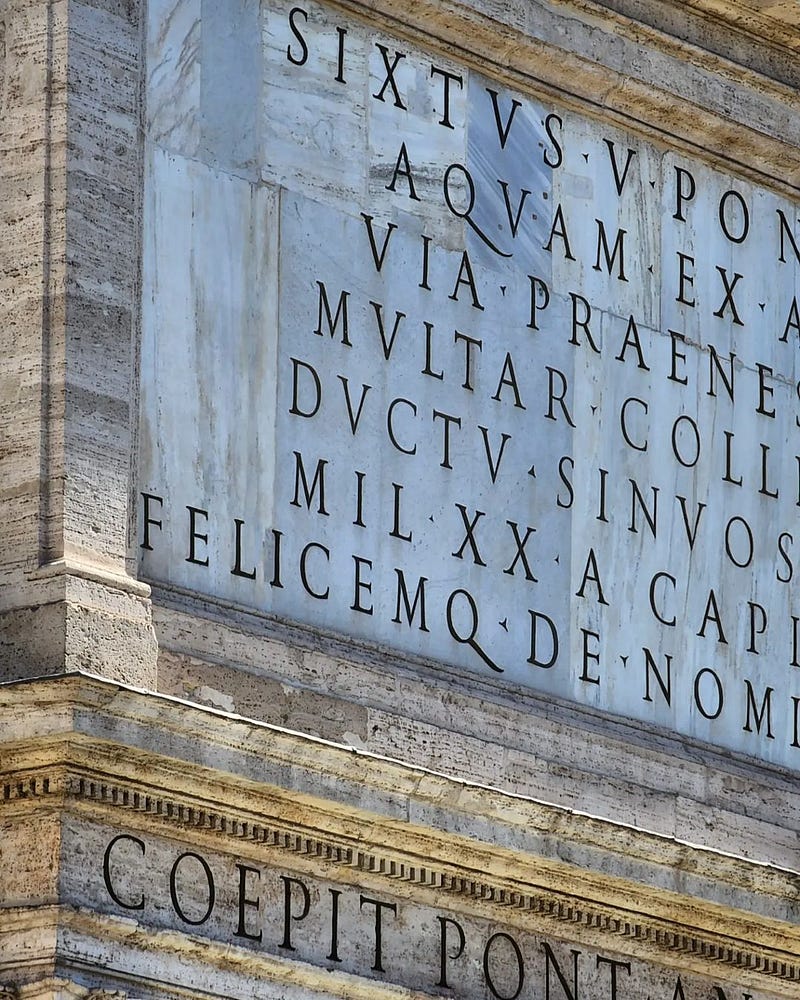
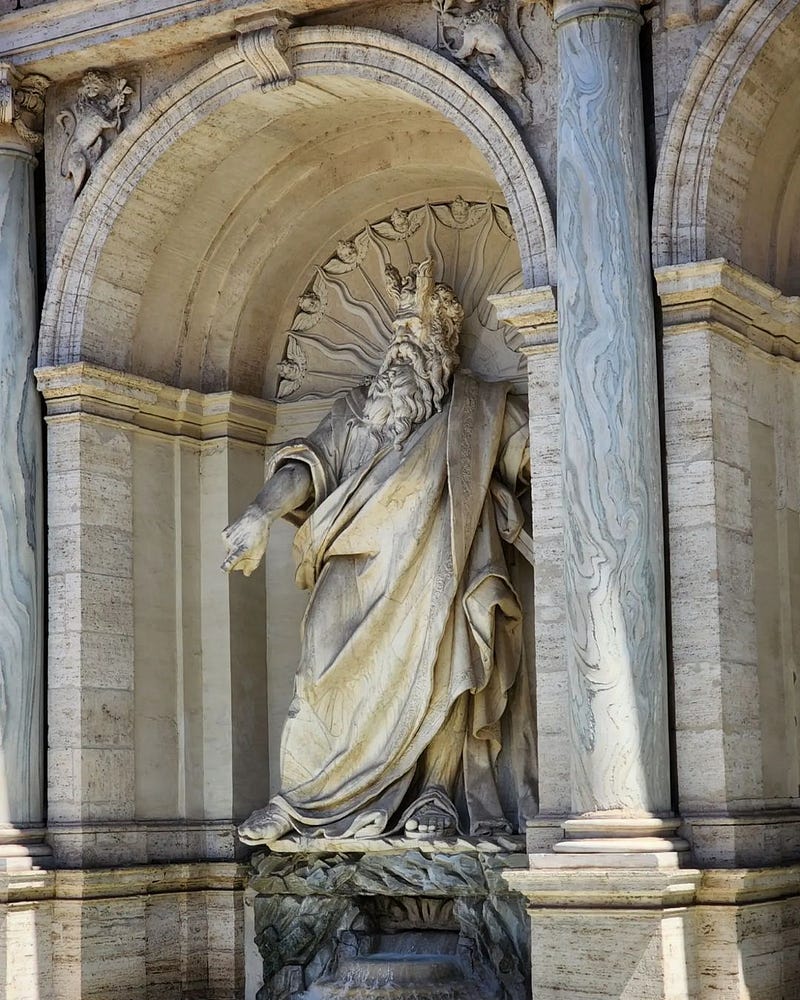
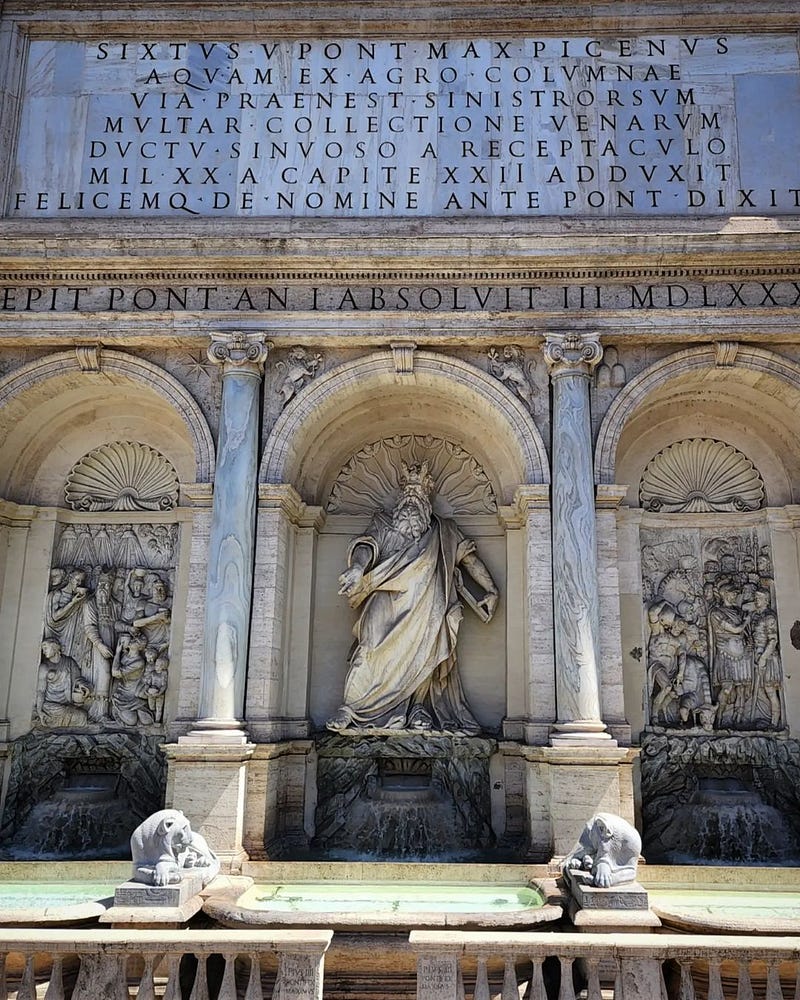
The first Roman fountain we met by chance was the Fontana dell’Acqua Felice (translated as Fountain of Happy Water, also known as Fountain of Moses). This monumental piece showcases exquisite marble engravings and stunning statuary — a visual delight.
Arco di Constantino
Have you ever arrived at a destination you’ve longed to visit, only to find yourself short on time to explore? That’s precisely what happened to us as we approached the iconic Roman Colosseum.
But our attention was momentarily drawn to the Arch of Constantine, another popular tourist spot. Separated by 235 years, the arch commemorates a significant military triumph and the ascent of Christianity in the Roman Empire. Spanning 21 meters wide and 25 meters tall, this monument is adorned with elaborate reliefs narrating Constantine’s victory and celestial aid.
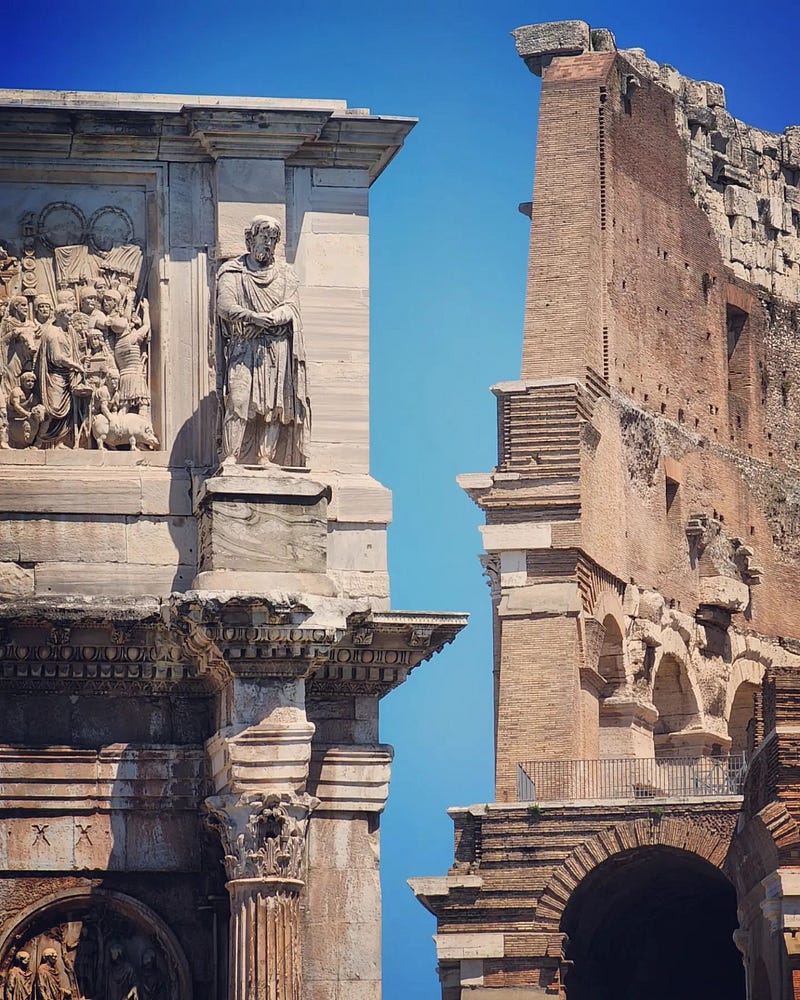
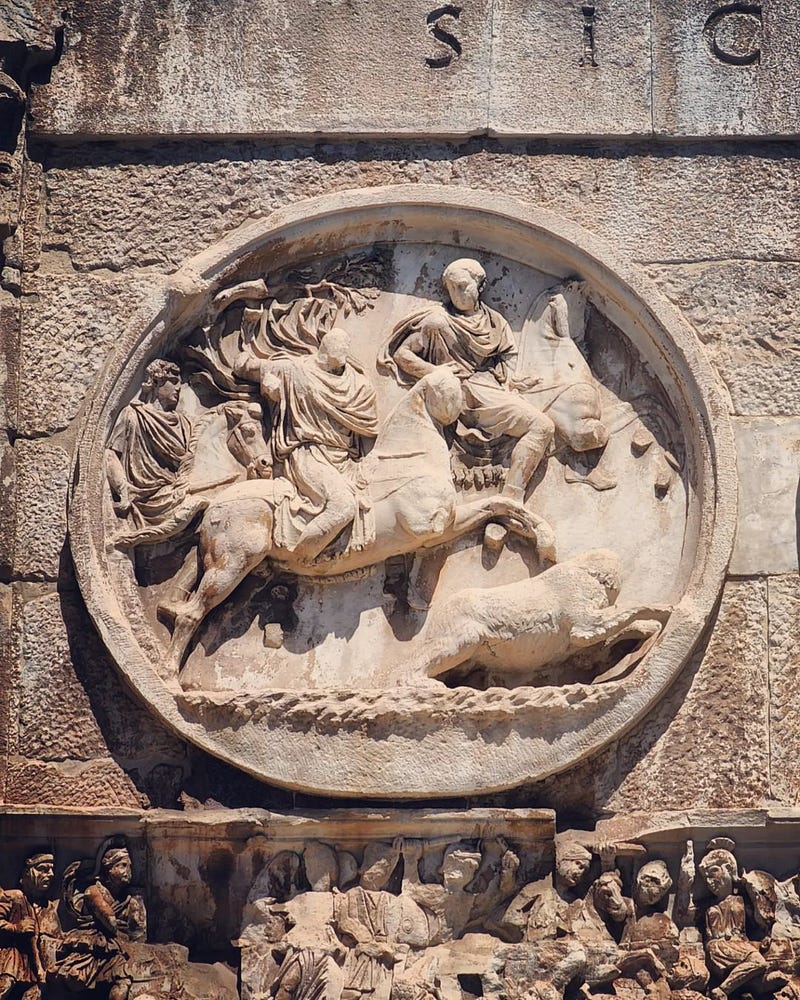
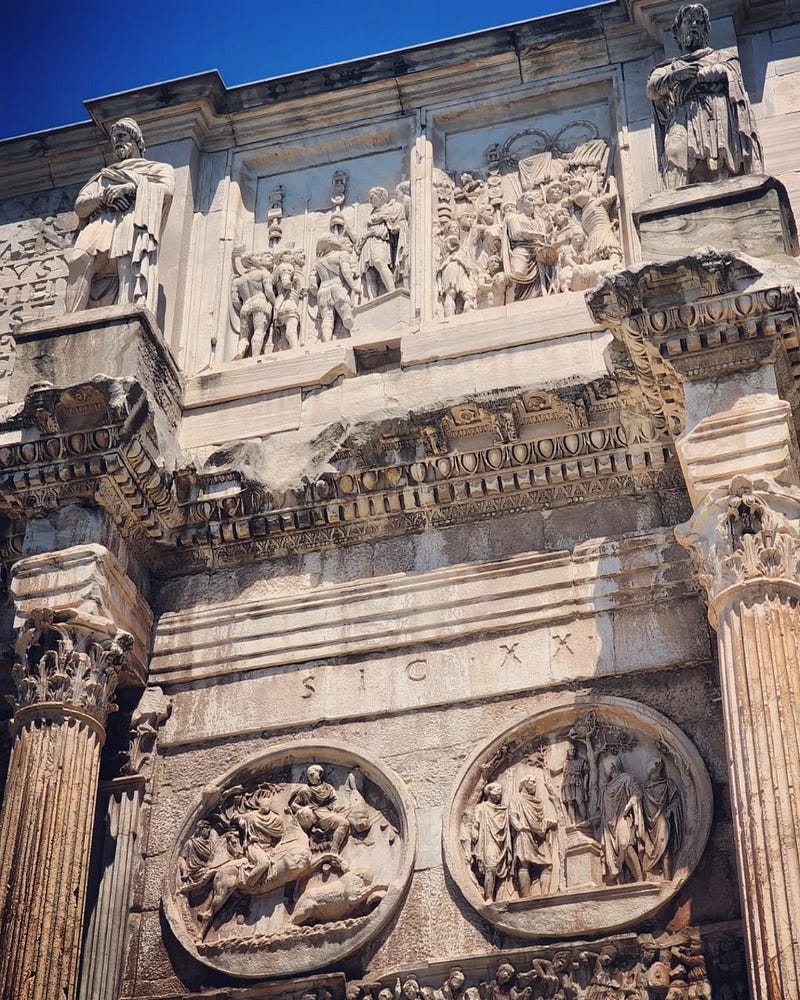
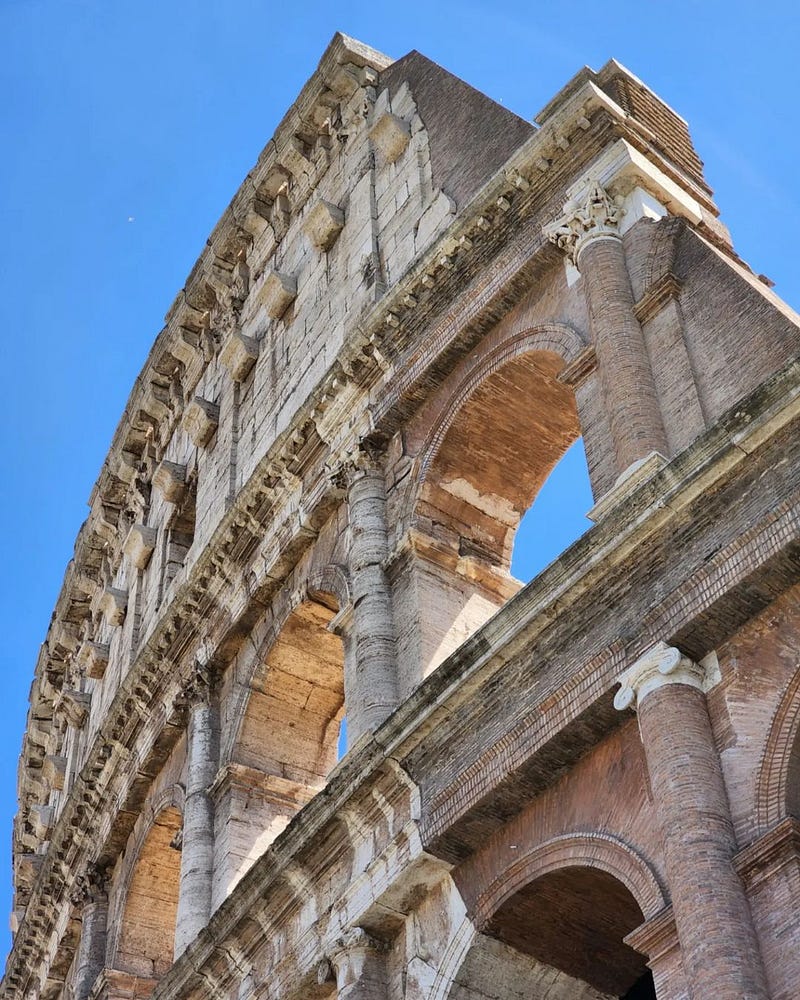
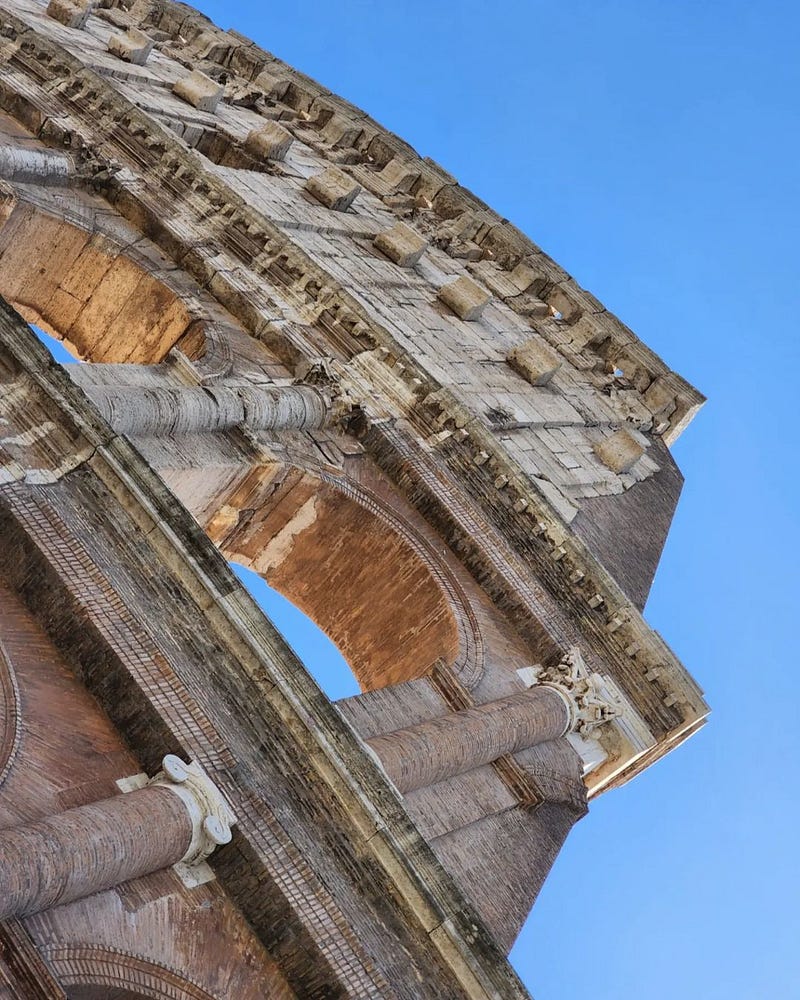
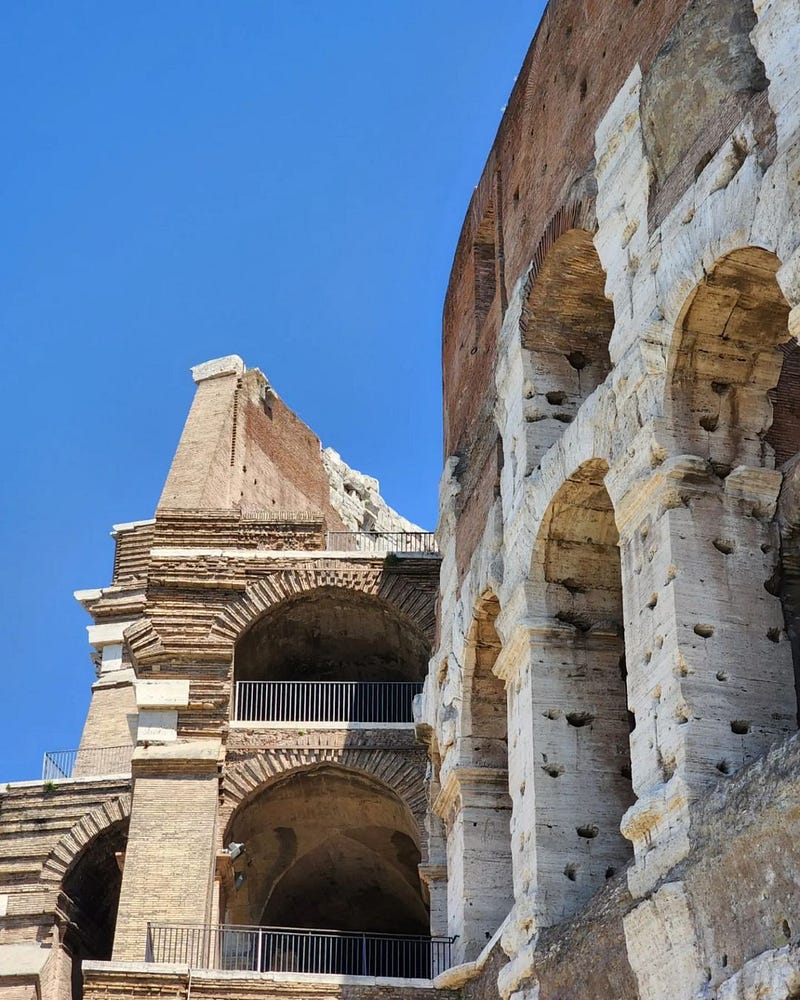
Il Colisseo
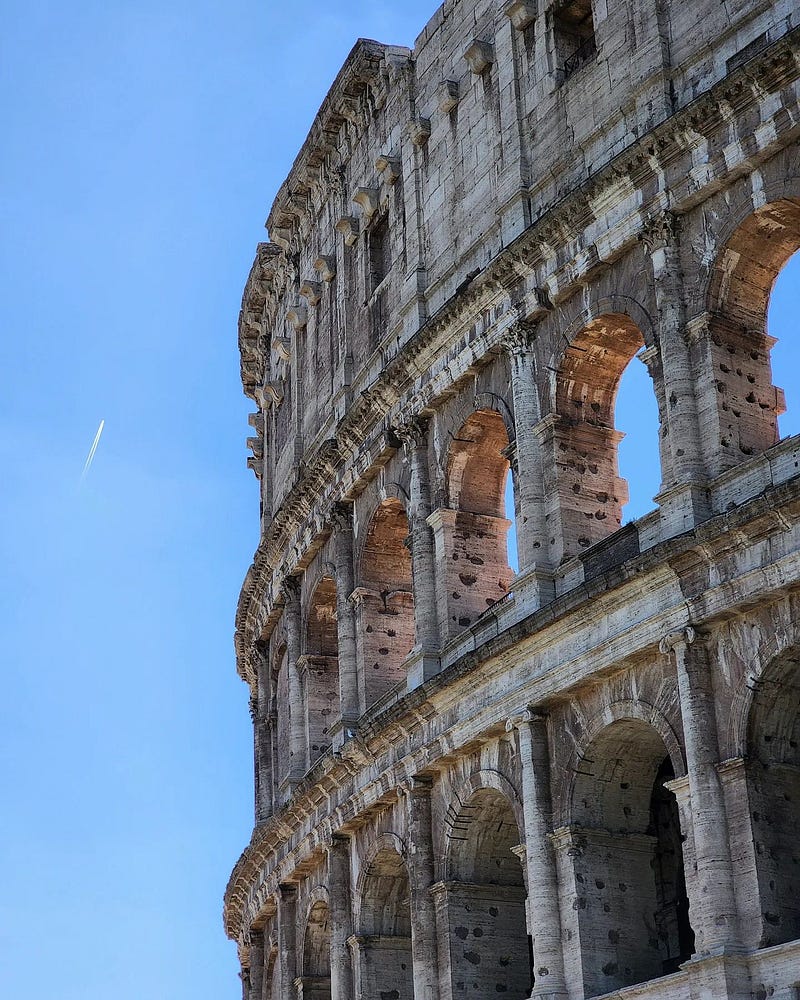
Due to our limited time, we could not enter the Colosseum. We strolled around the building, reflecting on the unparalleled spectacles of ancient Rome while pondering the ethical stance of these brutal confrontations from a contemporary perspective.
Most gladiators were slaves or prisoners of war, occupying the lowest social rank. They underwent rigorous training with the constant threat of death looming over them. Only a few could win their freedom by earning the favor of the crowd or a wealthy patron.
The Colosseum is a reminder of the impressive engineering accomplishments of ancient Romans and the perilous conditions imposed upon humans and animals for entertaining purposes within its walls.
Basilica di Constantino
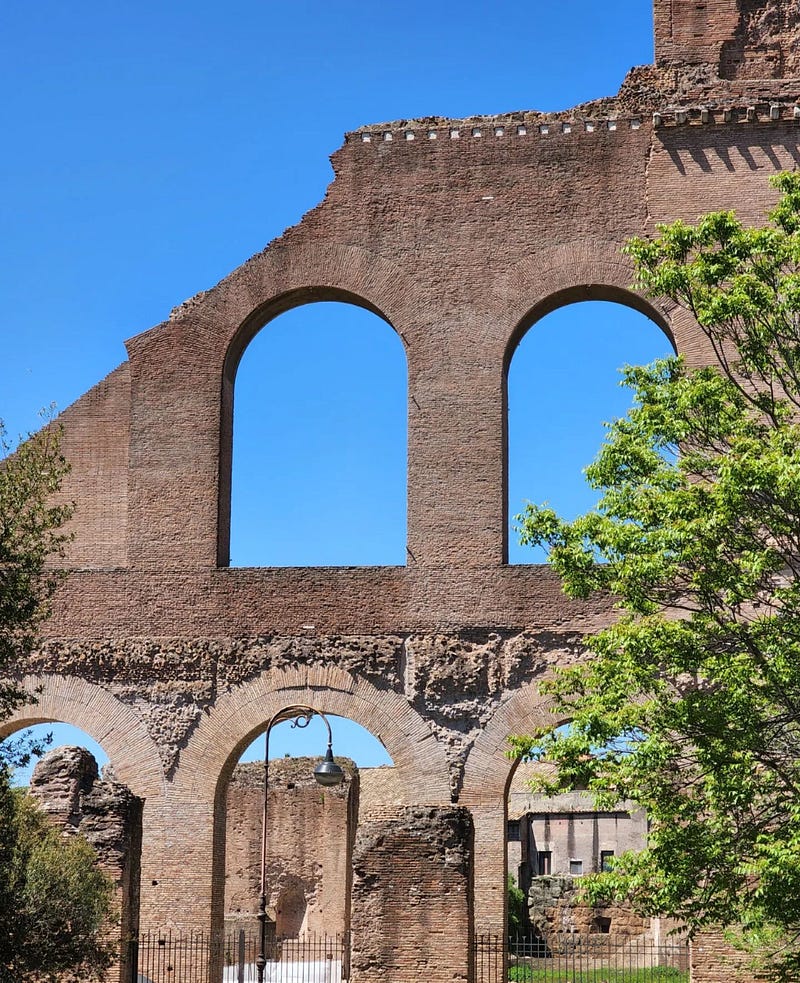
After a short lunch break, we found two more ruins. The picture at the left depicts the window frames of the Roman basilica that once housed the massive statue of Constantine. The other shows the remains of the largest temple of ancient Rome, dedicated by Hadrian to Venus and the concept of Eternal Rome.
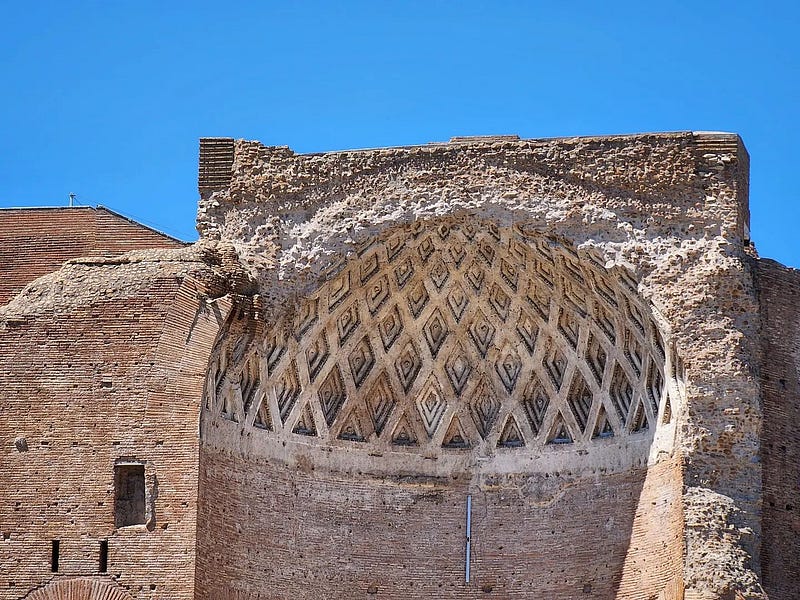
Clivo di Venere Felice
The ancient street of Clivo di Venere Felice (Hill of the Fortunate Venus) is surrounded by iconic ruins. My wife Yolanda enthusiastically modeled to capture the essence of this moment.
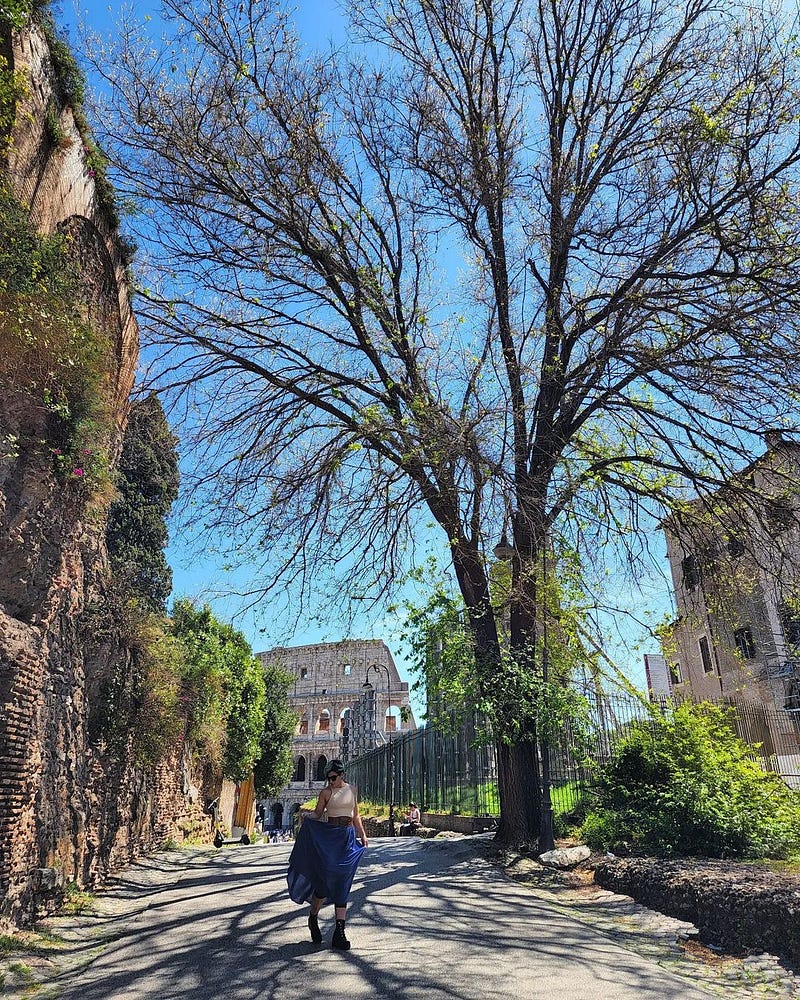
Via Leonina
Along Via Leonina, we enjoyed being surrounded by a mix of old-world charm and modern energy. This cobblestone street highlights Rome’s timeless appeal. Here I had another opportunity to take a memorable shot.
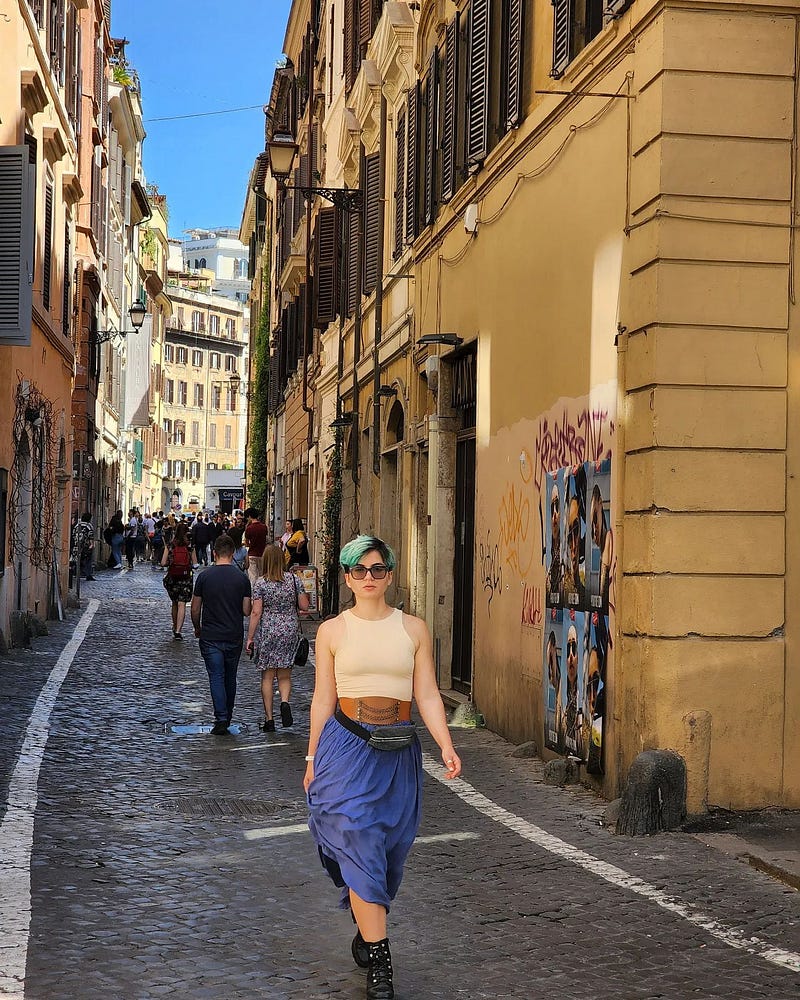
Fontana di Trevi
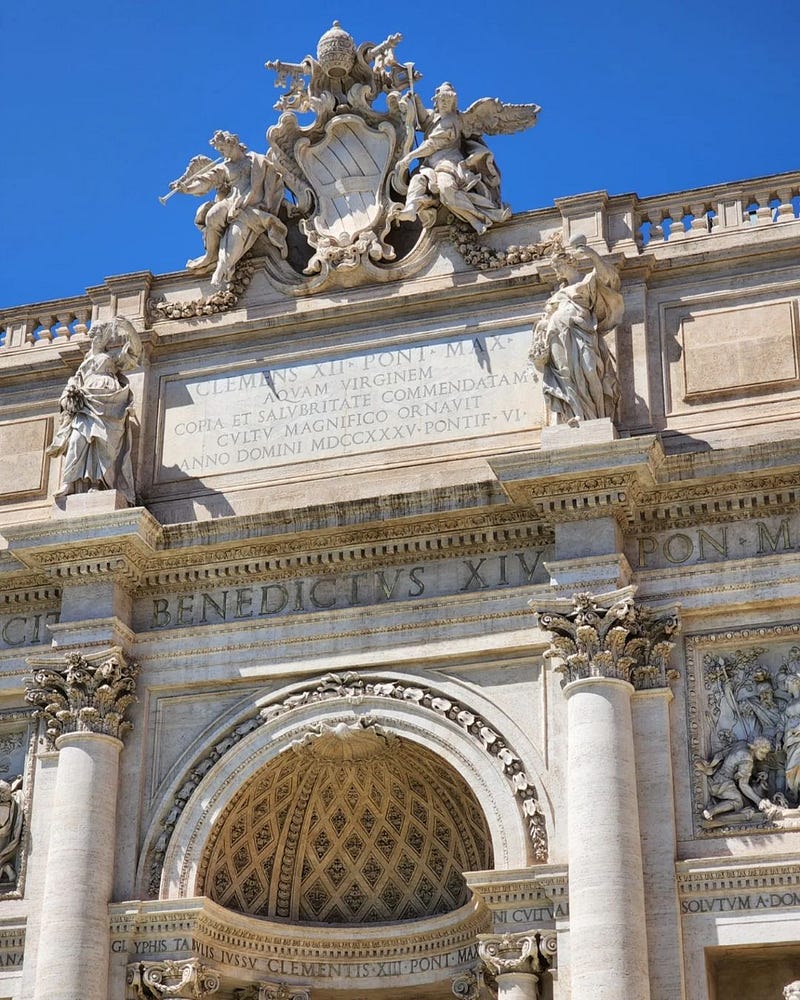
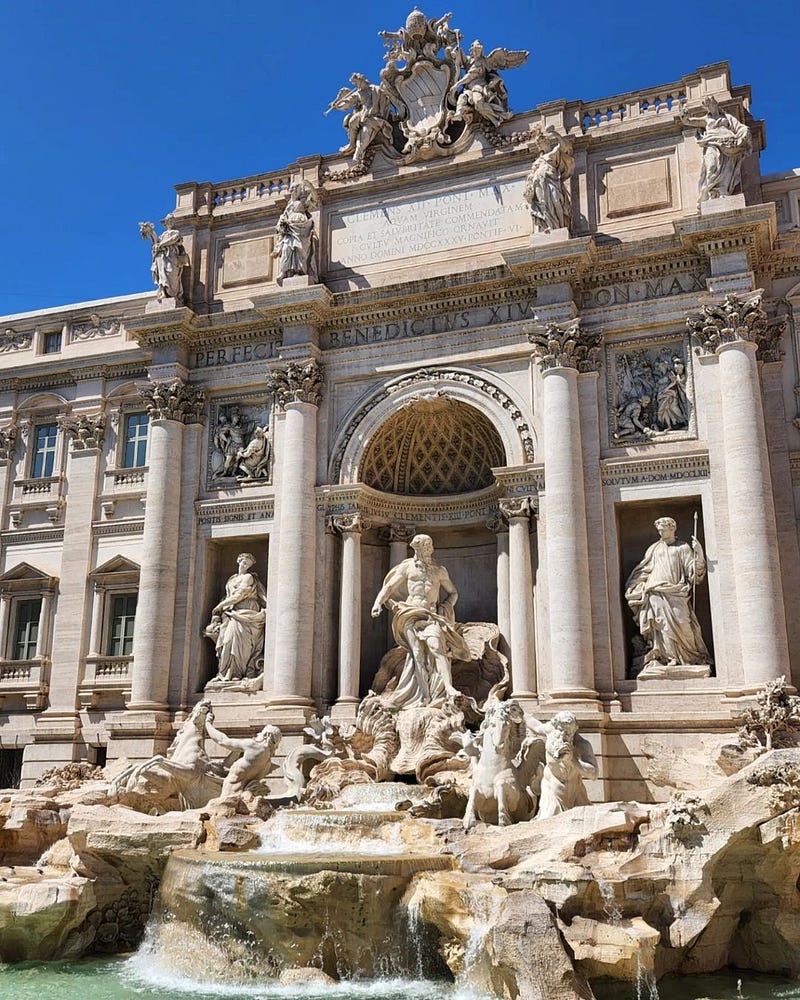
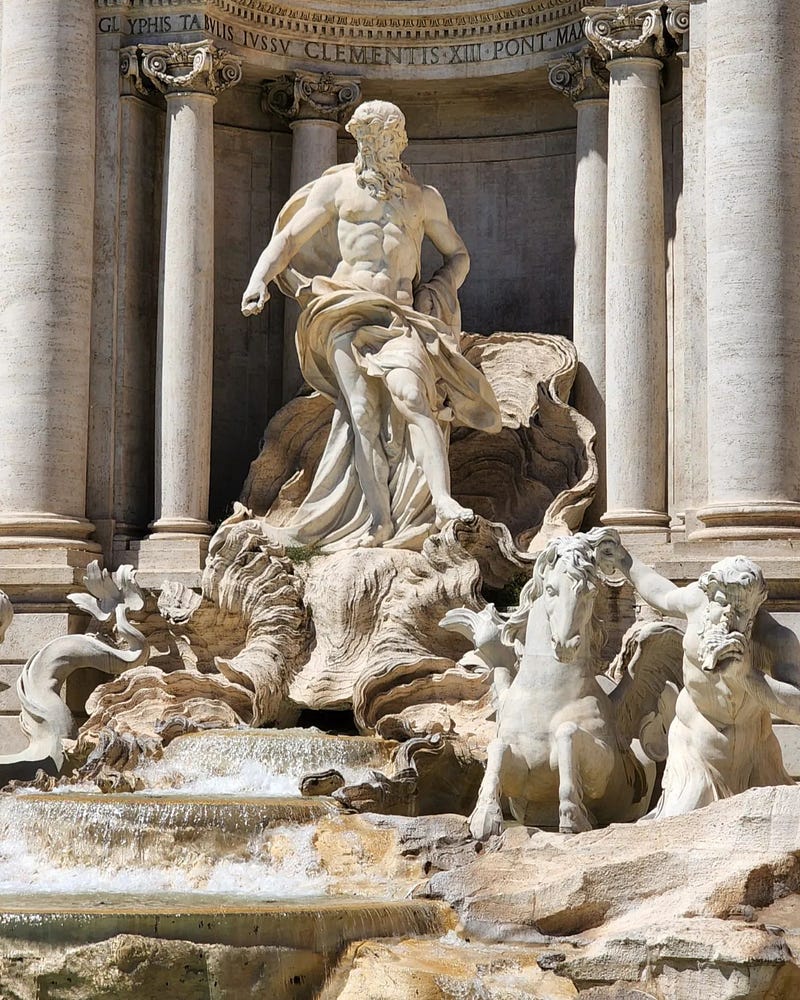
We were left in awe admiring the iconic Fontana di Trevi, a monumental fountain depicting the god Oceanus and Tritons taming seahorses. Capturing these photographs without any obstruction from the tourist crowd was quite the feat.
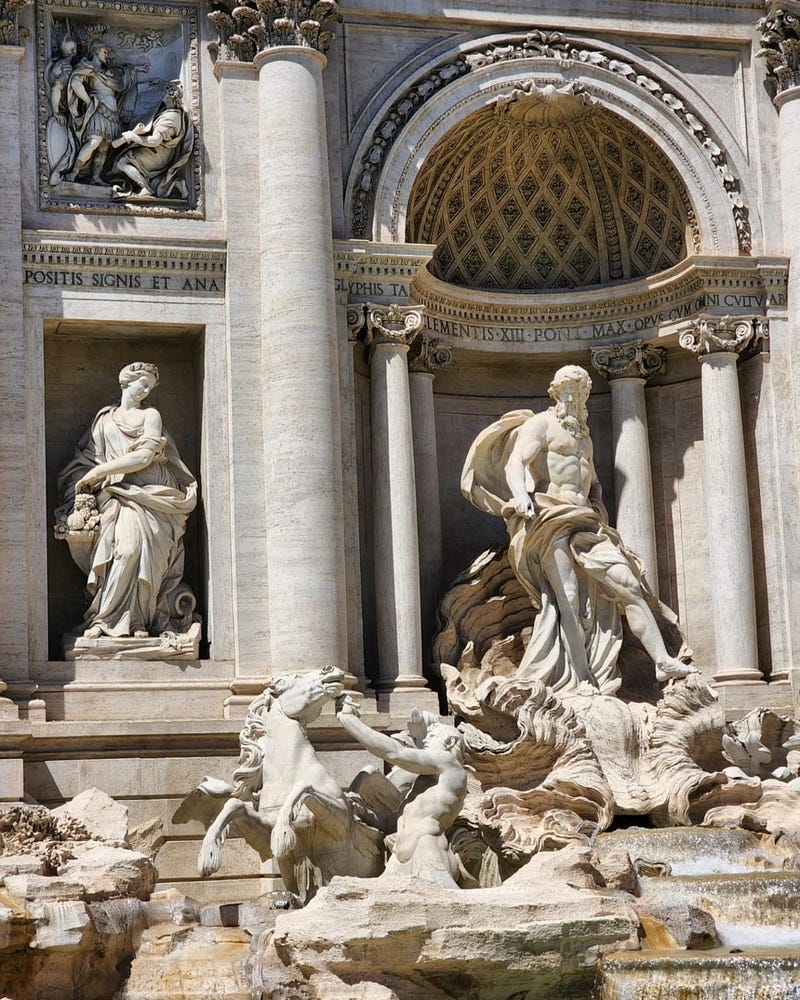
Tempio di Adriano
We found the legendary Temple of Hadrian, just a five-minute walk from Fontana di Trevi. The northern colonnade, featuring eleven columns towering at the height of 15 meters, gave us a glimpse into the temple’s grandeur in its prime.
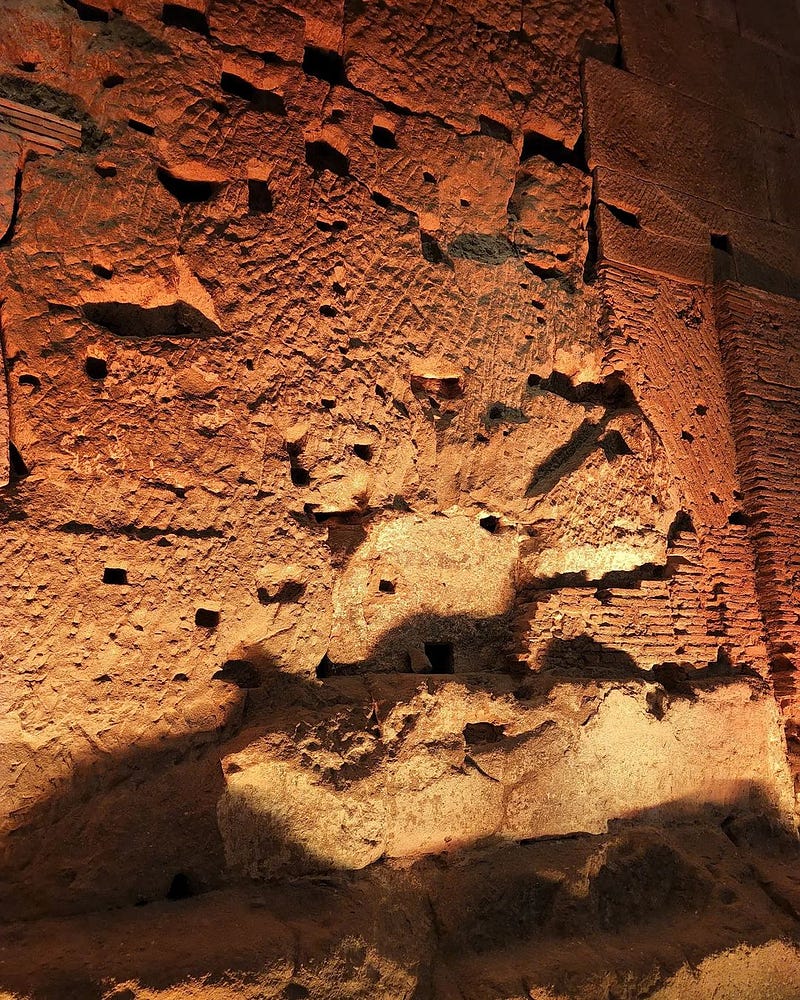
Intrigued, we decided to explore the building for a few minutes. We were delighted to find out that the walls of the original facade’s interior side had been beautifully protected. Unfortunately, only this section of the temple remains preserved today.
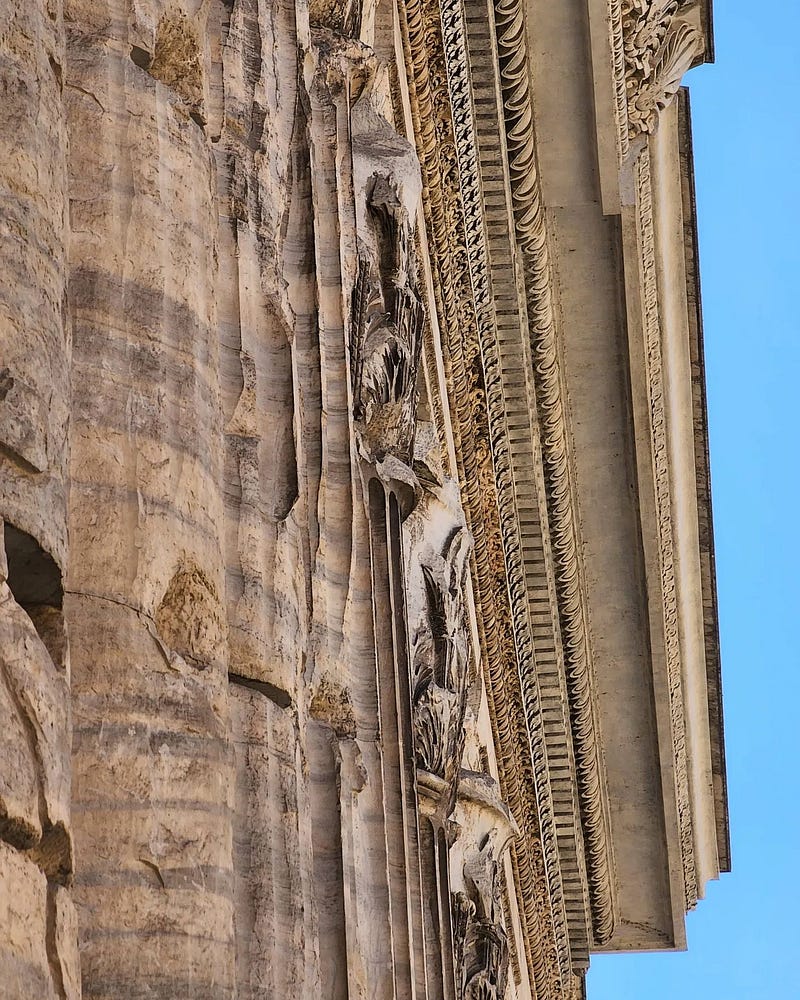
Pantheum
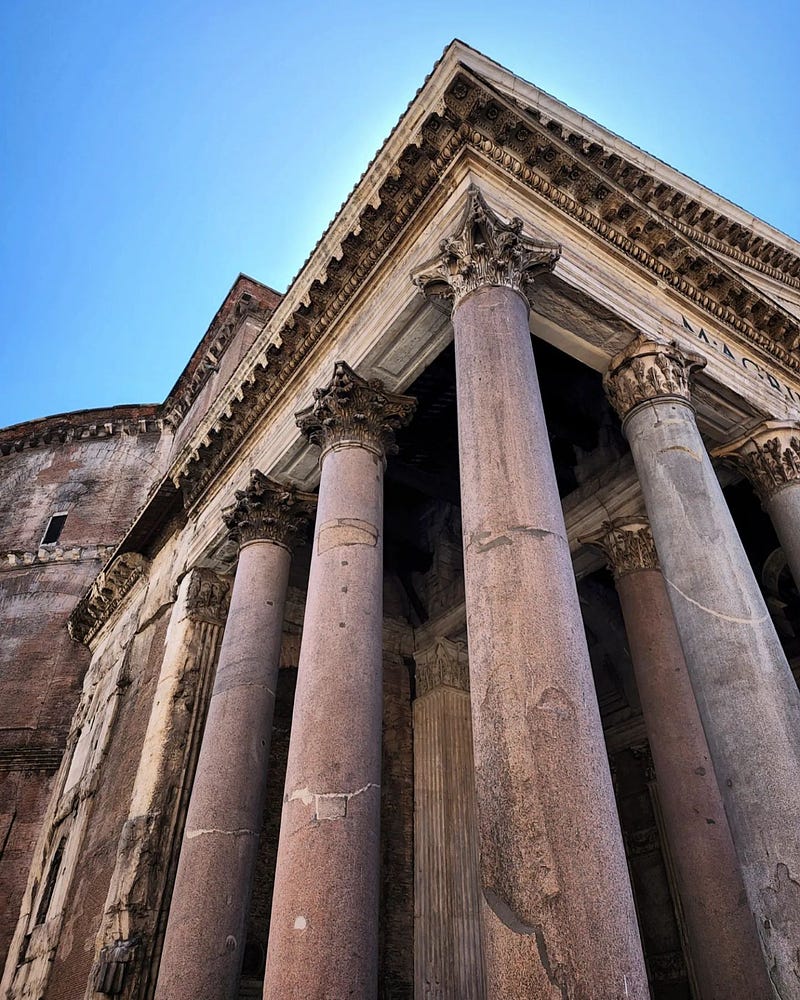
Speaking about colonnades, we walked past the Pantheon of Rome two blocks away. I was literally struck by the architectural mastery on display. Although we didn’t have the chance to visit the interior, it left a lasting impression on us.
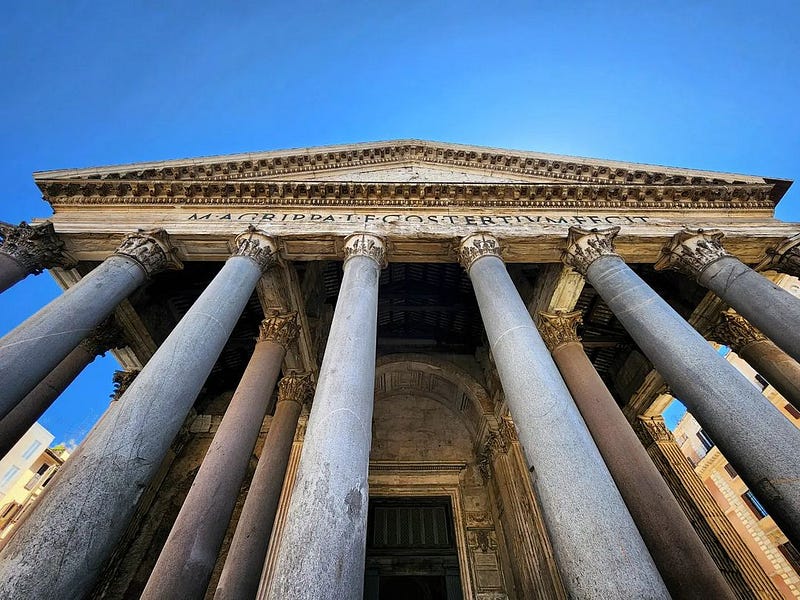
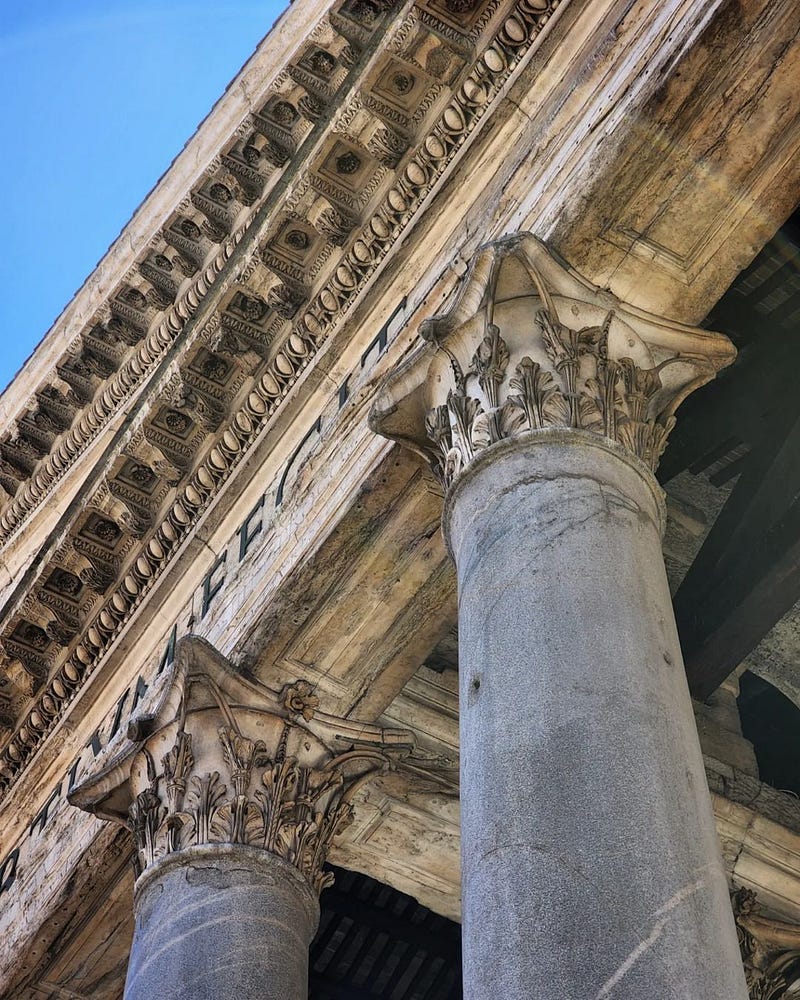
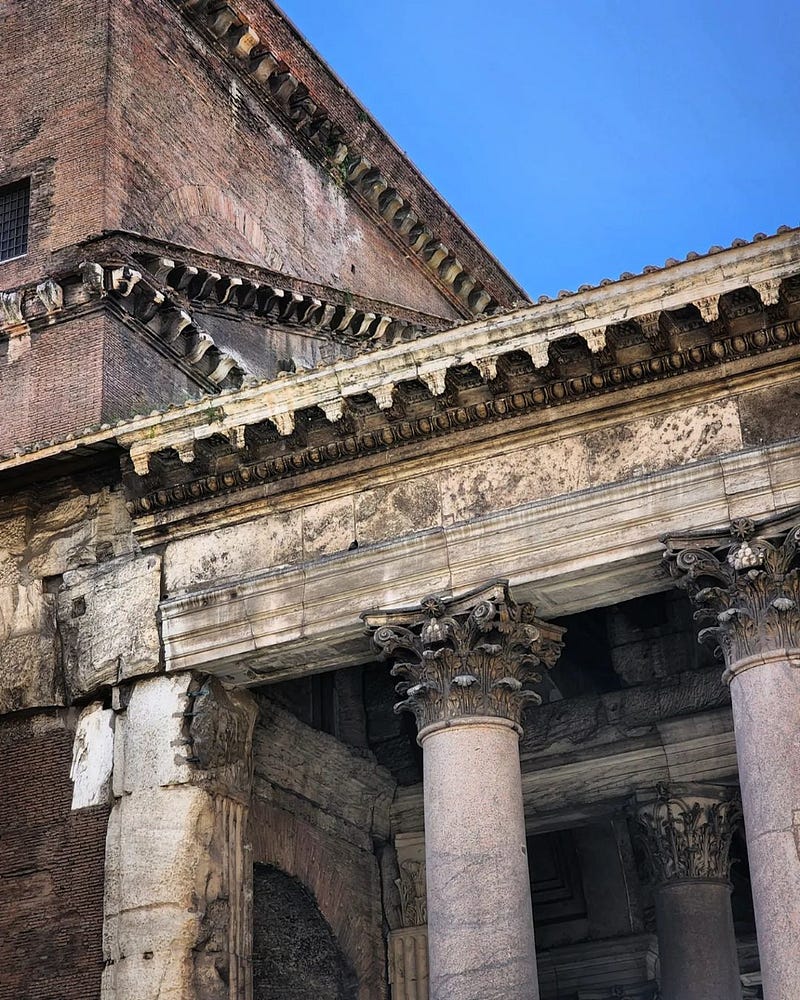
Via del Coronari
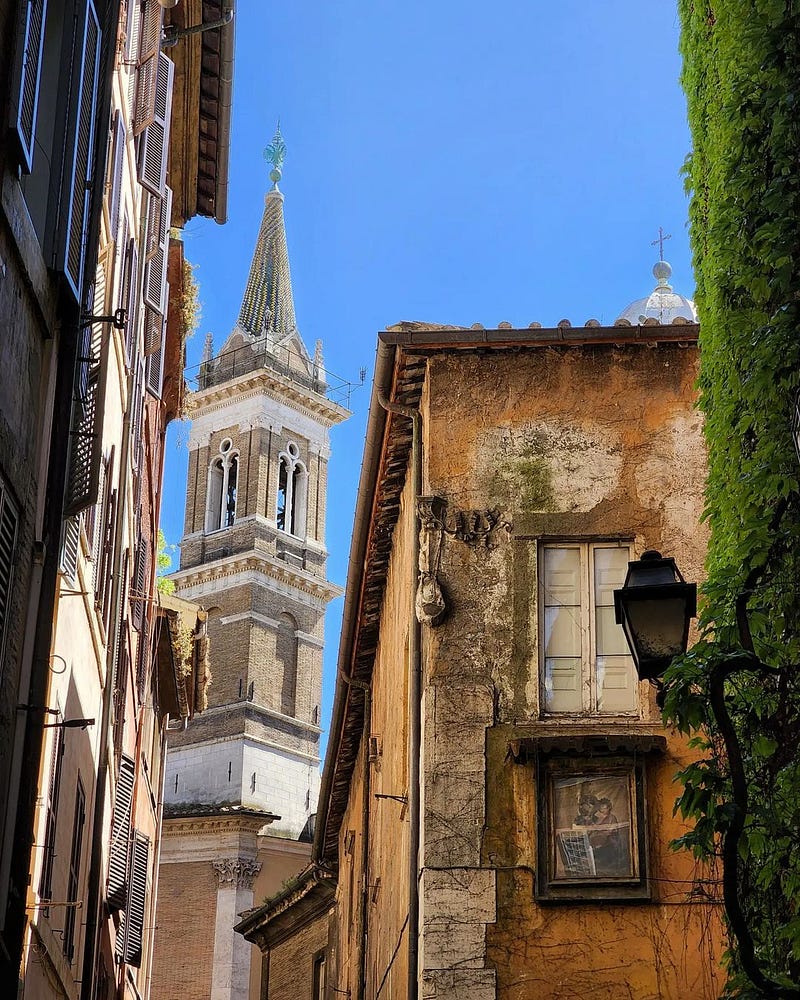
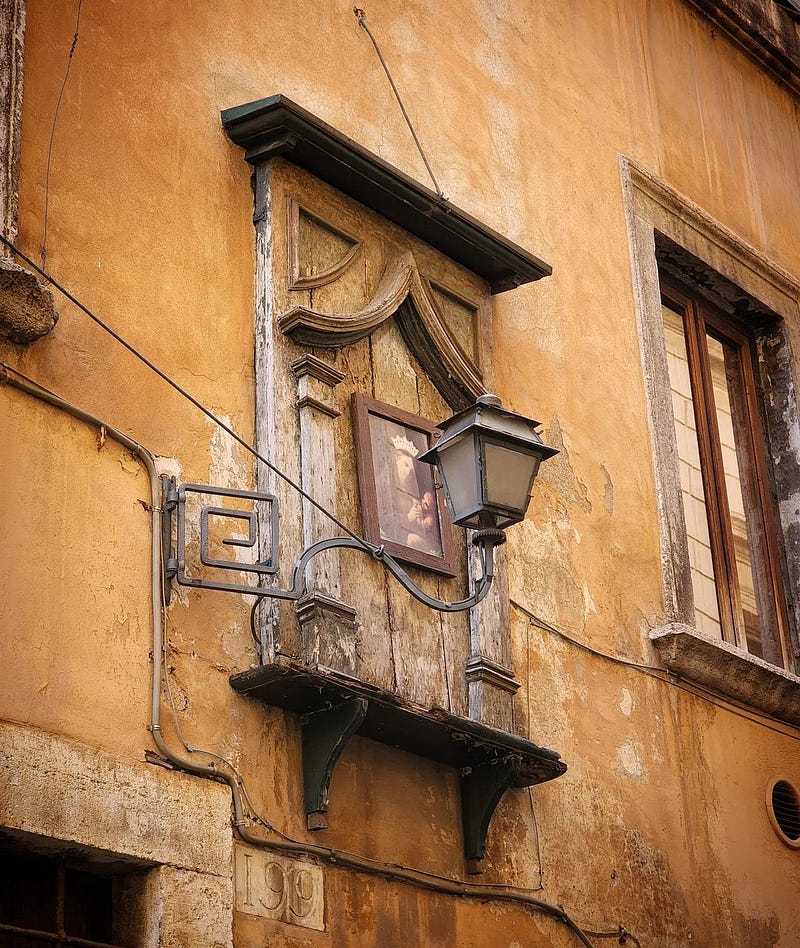
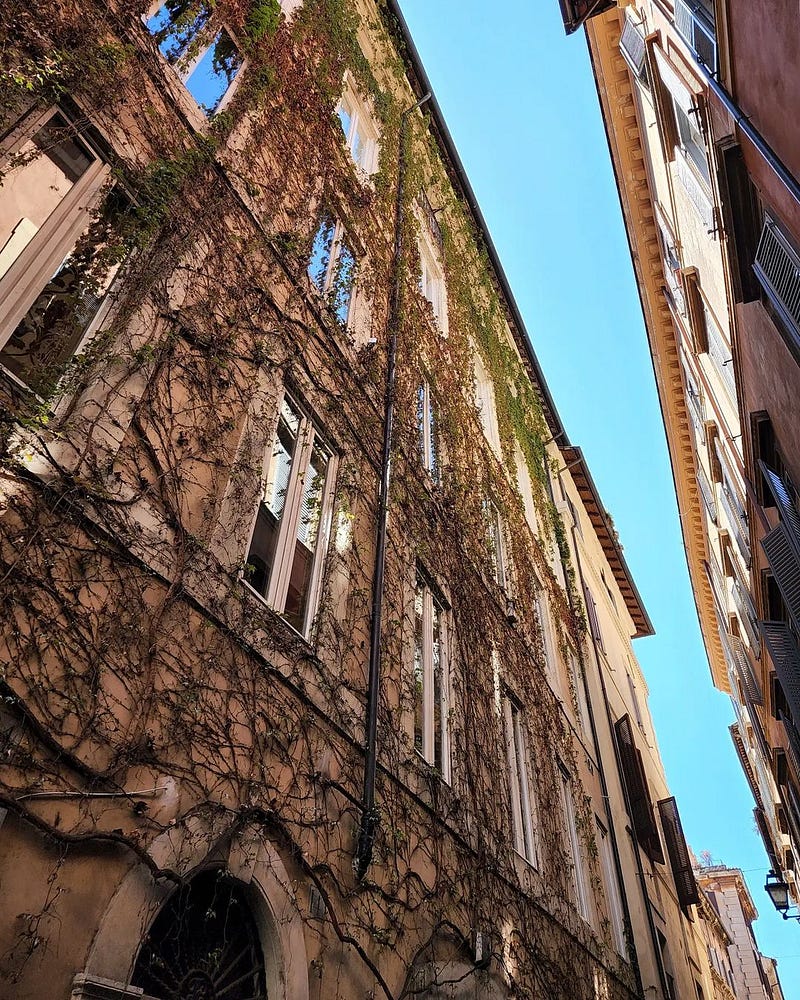
The street Via del Coronari opened before us, offering a charming atmosphere of quaint shops and historic buildings. You can see the tower of the Chiesa di Santa Maria della Pace in the first picture.
Isola Tiberina
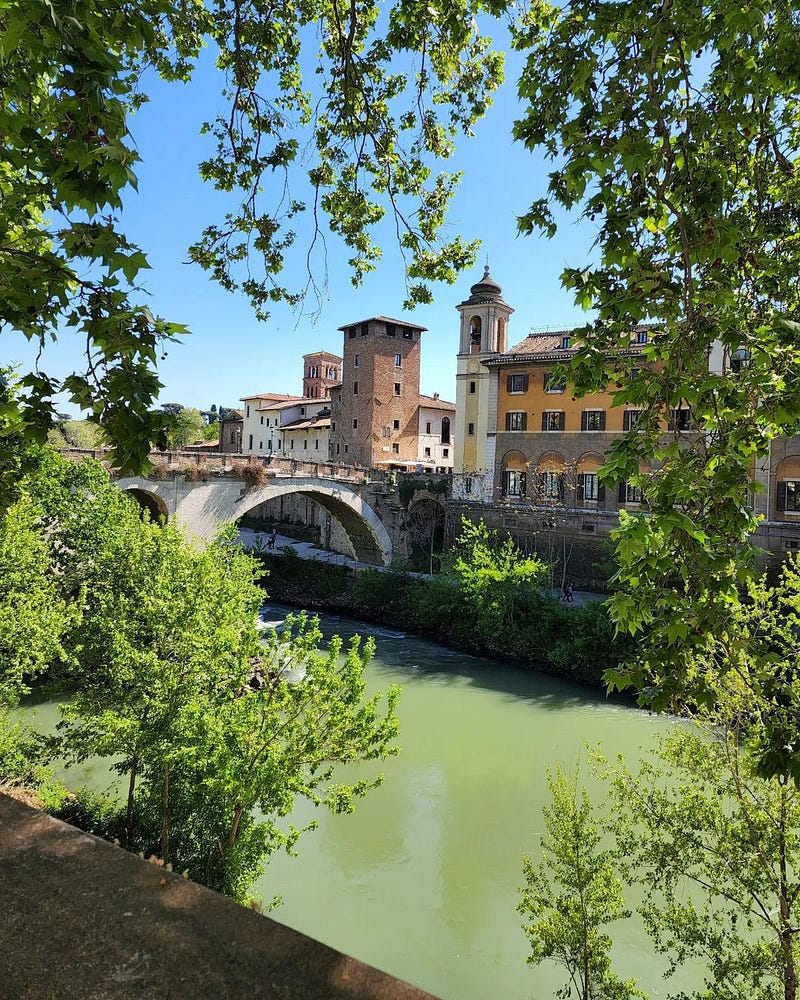
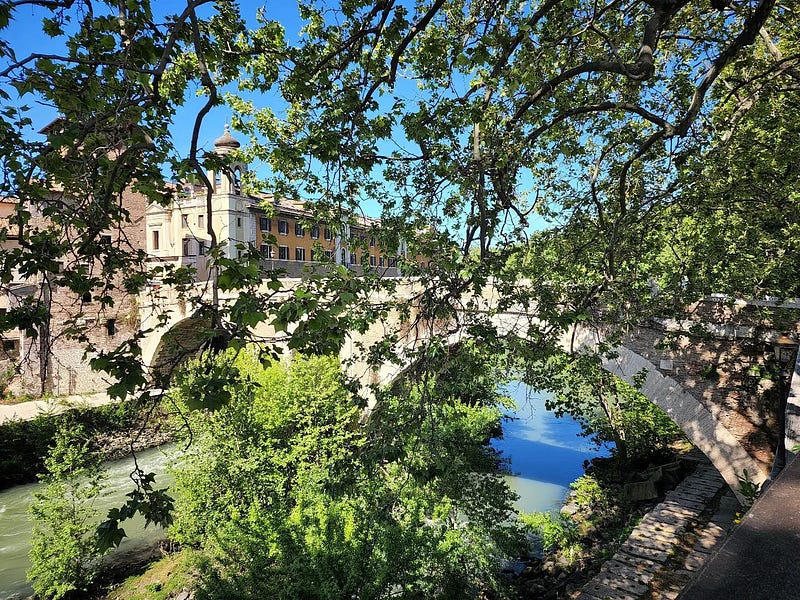
As time ran out, we retraced our steps back to the pick-up point. We had to postpone visiting the Vatican area, which may take us hours to explore. However, we took a slight detour to see Isola Tiberina, the island nestled in the heart of the Tiber River. We crossed Ponte Fabricio, Rome’s oldest bridge, which dates back over 2,000 years.
Cloaca Maxima
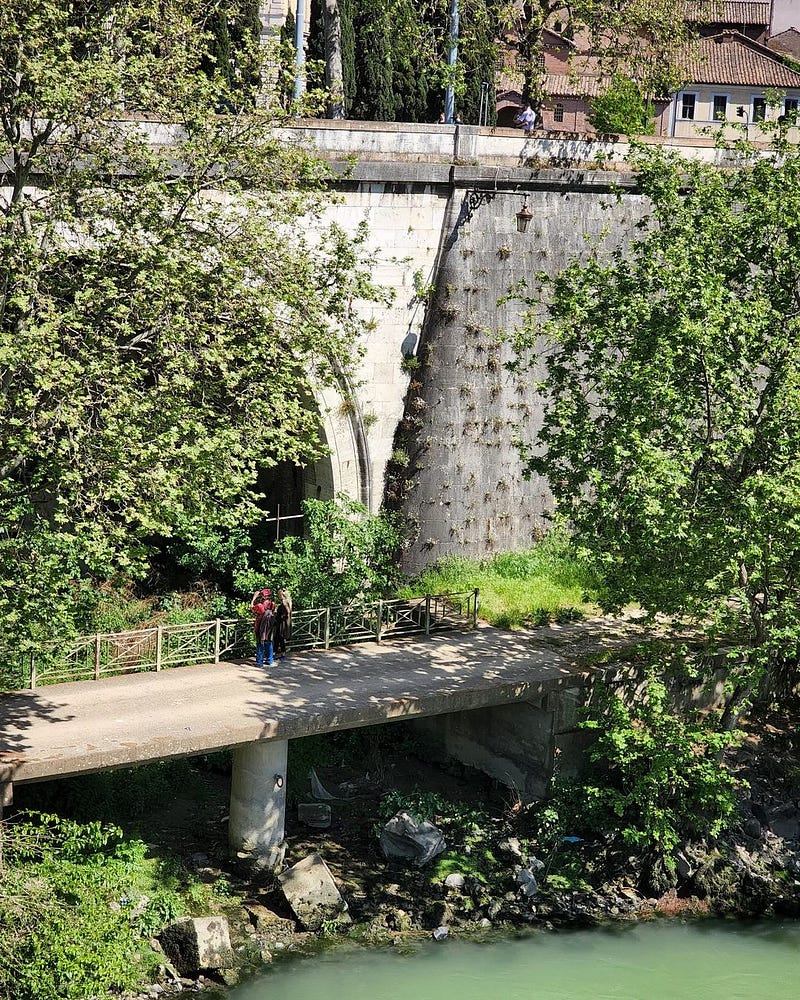
We made our way back to the city via Ponte Palatino. We looked down into the water and discovered the Cloaca Massima, an impressive Roman sewer system from ancient times. This engineering marvel still employs a network of underground channels to efficiently remove excess water and waste, reducing the threat of floods and diseases.
Arrivederci!
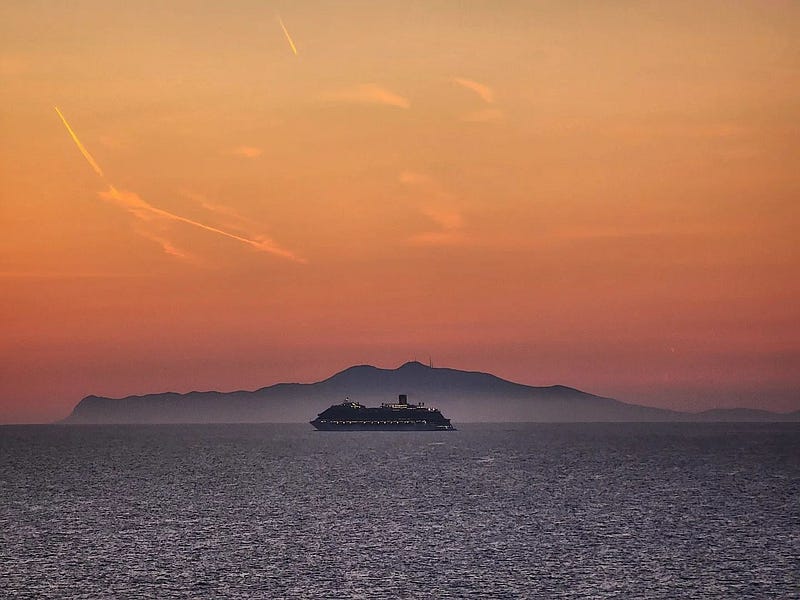
We had to say goodbye to Rome a couple of hours before sunset, but the memories and photographs from our first visit will stay with us. We left with a solid determination to return and continue exploring the countless gems that make this city an eternal treasure.
Explore additional photos on my Instagram profile of my experience in other unique locations around the globe.


