
Post Your Content Everywhere
What a Writer Can Learn from Little Women
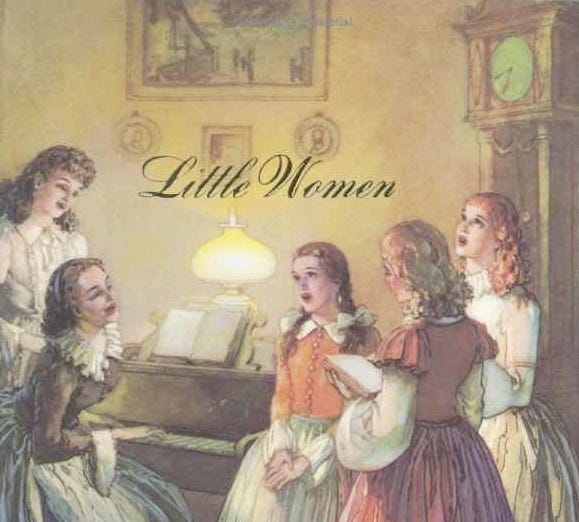
Repurposing what one writes and posting it everywhere isn’t new. Discover how Louisa May Alcott, the author of Little Women, became a millionaire.
Repurposing to Get Readers
The content marketing experts, the internet gurus, the how-to-do-it teachers all say “Put your content everywhere!” Writing a story on Medium? Put it on your blog. Just posted an article on Linked-In? Get it over on Medium (with a note that it appeared first on LI). Get it all up on your social media platforms.
Louisa May Alcott didn’t have the internet, much less a computer, but she knew how to get her book seen and how to make money from it. Her practices still make sense today.
From Writer to Millionaire in 1888
Most of us don’t think of Louisa May Alcott, the author of Little Women, as an entrepreneur. Wasn’t she just a spinster who amused herself by writing popular books for girls, books still read by girls and their moms?
Absolutely not! She was an astute business woman who rose from poverty to die a wealthy woman. Not from inheriting money from an aunt as portrayed in Little Women, she earned her money from selling her writing. Alcott grew a wildly successful business worth a million dollars at her death in 1888.
Louisa May Alcott published Little Women in 1868. It’s been repurposed for 152 years. Little Women is still in print, published in 50 languages including Tagalog. It has never been out of print!
How She Did It
Alcott’s father Bronson Alcott, a Transcendentalist and friend of Ralph Waldo Emerson and Henry David Thoreau, spent his time thinking and talking rather than supporting his family. Soon his daughter, Louisa May, would take on the responsibility for supporting the family.
Her first break came from writing sensational, pot boilers for Frank Leslie’s Illustrated Weekly. Leslie paid her $50 a story which she wrote under a pseudonym.
When the publisher Thomas Niles asked if she’d write a girls’ story, she said “no.” He argued that children’s books were popular. That he and Alcott could make some money in that genre.
She finally agreed and wrote the first half of Little Women. The first run of 2,000 copies sold out in a few days. Thousands more were shipped all over the country. Alcott took home a $1,000 check. (A lot of money in 1868.)
Her family lived on the royalties from her books long after Alcott died.
Ten Lessons on Making Money with Writing from Louisa May Alcott
- She wrote every day, including in her journal.
- She took advice from her publisher (an expert) about what would sell.
- She listened to readers and changed a plot to make them happy. She had Jo marry, even though she thought little of marriage. Jo is the character who most resembled Louisa May herself. But she knew it would help sales because readers had complained that Jo wasn’t married.
- She wrote what she knew best: her family, her house, her town, eventually New York City. She would soften the family’s difficult experiences, and her father’s refusal to support the family.
- She had the courage to go beyond the norm. Girls’ stories had been stilted and overly-religious. She made them more realistic, less preachy. Readers responded to the change.
- She knew and took an interest in the business of writing. She asked for a percentage of the sales rather than a flat fee before the first half of Little Women was published. She kept track of sales. She understood that writing is a business.
- She wrote sequels: following Little Women with Little Men and Jo’s Boys. Sales of Little Women increased.
- She was controversial: Louisa May avoided preachy Christian themes, even going to church, which were popular in children’s books of the time. Christian evangelicals responded by banning the book. Book sales soared.
- She loved to write. Writing was her passion. It’s what she did. She thought of herself as a writer.
- AND she repurposed her writing. Little Women came out in serialized form and in many different editions.
If Louisa May Alcott were Alive Today, she’d be a Billionaire
Although heirs of Louisa Mae Alcott no longer receive royalties from her books, enterprising entrepreneurs make money from repurposing Little Women. Not only from selling one edition after another but also from movies and stage productions.
Hollywood has produced four Little Women movies: starring Katherine Hepburn in 1933, June Allyson in 1949, Winona Ryder in 1994, and Saoirse Ronan in 2019. This latest and wildly popular version was up for an Academy Award.
PBS collaborated with the BBC for a TV version in 2018. Mark Adamo wrote an opera based on Little Women. (You can watch it on YouTube.) “Little Women” perform in a musical, a Broadway play, a ballet, in anime.
Little Women is a brand: You can buy paper dolls, coffee mugs, t-shirts, sticky notes, Christmas tree ornaments, bookmarks, and more. You can visit Louisa Mae Alcott’s house in Concord, Massachusetts. And while in the gift shop, why not buy a costume for your daughter in case she’s in a Little Women school play?
Antique Madame Alexander dolls of Jo and Marmee (the girls’ mother) are available on e-bay for $1,500 each plus postage.
In 2006 Geraldine Brooks won a Pulitzer Prize for her novel March, a tale of the “Little Women’s” absent father, a chaplain in the Union Army. Fans of Little Women devoured the novel, argued about it, loved it, and hated it.
Twelve years later, Anne Boyd Rioux, an English professor at the University of New Orleans, published Meg, Jo, Amy, and Beth: The Story of Little Women and Why It Still Matters.
Backed by rigorous scholarship but written for a non-academic audience, Meg, Jo, Amy, and Beth appeals to anyone interested in Little Women: how it’s been understood, its fascinating history, and why it’s important today.
I don’t have statistics to back up my claim, but I’m certain sales of Little Women rose after the publications of Brooks’ and Rioux’s books. And probably after each movie.
How are you repurposing your content? Do you have bookmarks to go with your newly published book? Maybe a book bag? Is your book in paper, audio, and ebook. If you’re writing articles or stories, are they everywhere online? Are you doing an audio version of each story?
As for me, I’m repurposing by combining 40 Medium stories into my forthcoming eBook, Oh Look . . . There’s a Squirrel.


