
Post-Holiday Anxiety? Nah, You’ve Got This (With These Hacks!)
Brain still on Vacation? No Worries, I’ve got your Back

Ring, ring — my annoying phone keeps screaming at me. I look at the screen — my husband is calling. He knows I’m busy with work, I’ll call back later — I think to myself as yet another Gannt chart flashes in front of my eyes.
Ring, ring — the device from hell starts yet again and at this point, I swear to all gods, I’m annoyed: I’ve got stuff to do, deadlines are looming, come back home and we can talk later, just stop calling! — I pour a waterfall of Sprite down my throat.
Where was I? — looking lost, I’m staring at my three screens, endless notebooks and Kanban boards on both sides of the laptop.
Cling — a message appears on my phone screen.
“Come downstairs and open the bloody door, the code lock seems to be broken and it’s freezing outside!” it says. I jump off my desk and run three floors down, without realising I still have my slippers on. I open the front door — only a gust of freezing winter wind to bite at my cheeks.
He must be by the back door — I think to myself as I rush to the other side of the building, suddenly self-conscious of my hairdo and ridiculous Santa-themed slippers.
To my surprise, my dearest husband was nowhere to be found.
I stare at the door — take a careful peek outside — and no one but a fluffy squirrel is running away in the fear that I might just fry her for dinner. I heard Americans do that — barbecue squirrels. Well, that would be a whole new cultural experience whilst we’re at it!..
I try calling — nothing. Take a picture of the door — with no one next to it. Swing by the front door and do the same. I’m sending these images via WhatsApp as I climb back to the apartment.
All sorts of thoughts rush through me — Am I sure it was in fact, my husband? I am confident I saw his WhatsApp picture and I’m pretty sure it was his voice. But I was busy with work and his calls were distracting, can I really say it was him for sure?
As I reach the third floor, my heart jumps out of my throat — a fridge (Is that MY fridge?!) is on the landing and as I rush through the corridor more thoughts spin in my mind — I left the door open! Was this one of those AI-designed scams? Is there anyone in my house? Should I call someone?!
Half scared, half battle-ready I carefully enter the flat only to realise the fridge is still very much where it should be. Yet the fear mixed with adrenaline rushes through my veins and I embark on a journey of exploring every nook and cranny of my house — need to make sure no one got in, after all!..
At that point, I forgot about my husband and was all too concerned about the perceived threats and scenarios my tech-conscious brain cooked up. When the phone rang again, I was angrily telling them to go to hell. My husband was not impressed — much less, he was freezing, still very much downstairs.
It hit me: probably ten or so minutes had passed. I came to realise that the whole situation was in my head — I was too stressed about my work, and anxiety got the better of me.
But the question remained: what the hell happened to him?
So, once again I found myself going downstairs: front door — empty, no one by the back door either. At that point, I was convinced that the stress of being back-at-work-hysteria was very much a thing — when he finally picks up the phone, I don’t even give him a chance to complain (surely, he has a few bones to pick — it’s freezing out there, after all!..) and go straight to the point: “Where the hell are you?”
“What do you mean, where am I? I’ve been waiting by the front door for ten minutes now, get your bottom downstairs and open the bloody door, the code lock seems to be broken!” he is not in the mood for jokes, I can tell.
After a few harsh remarks here and there, I kindly (barely!) advise him to take a look at his surroundings and please explain to me in which parallel universe he sees himself at our front door. Silence followed by swearing and panting as he rushes past the neighbouring building on our left.
Turns out he was so stressed that he mixed up the houses.
In his defence, I could say that we recently moved. But I would like to think half a year is a decent amount of time to remember which building you live in. All jokes and irony aside, it was a wake-up call: we’re both overwhelmed.
And we just came back from the holidays!
I’m sure many of us are the same — stuck in some limbo this January. It might not be as extreme (I sure hope it’s not!), but I’m fairly confident: most of us feel burdened by the overwhelming pressures of workloads, deadlines and upcoming projects.
Chances are, some things are still dragging from December. Getting back on track can be challenging, but we need to make a conscious effort and help ourselves.
Bribery 101: The Secret Weapon for Slaying Your To-Do List (Science Approves!)
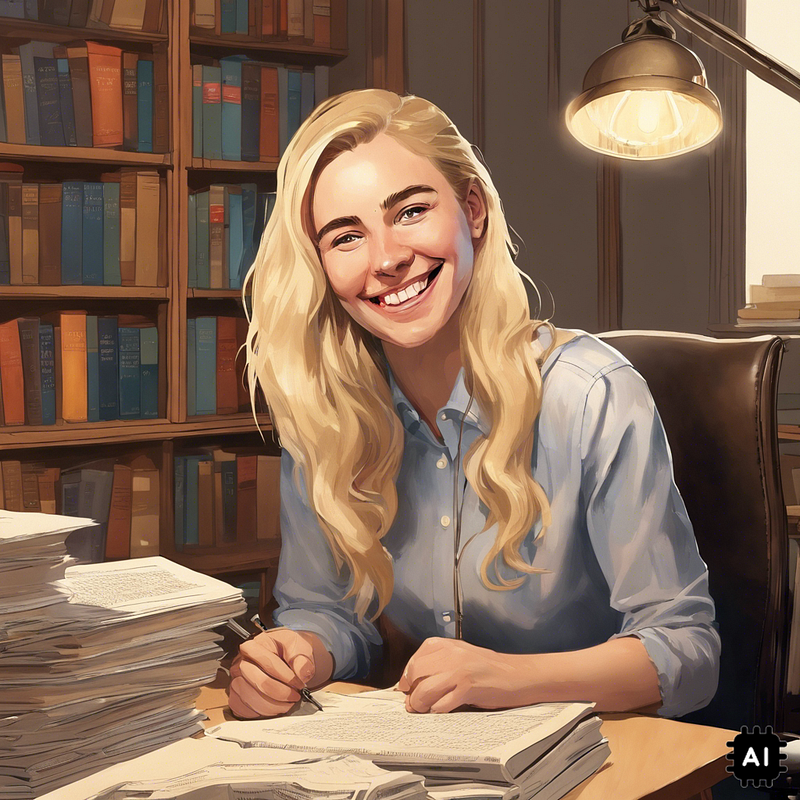
All of us have found ourselves in a place where we have piles of work to do, yet it is difficult to move even a finger. Simply put, we lack motivation. After the holidays with tables laden with food and evenings filled with cheerful laughter, it’s difficult to push ourselves. Life hack: we need to trick our brains. And what better way to do it if not dangling a sought-after reward?
Every important goal should have a corresponding award. And if you are laughing whilst thinking it’s a childish way to go, I can only say: it is pure neuroscience.
The reward pathway is an actual thing. This circuit is based on the neurotransmitter dopamine being fired in our circuits and emitting pleasure and positive feelings. Dopamine is distributed to the amygdala, prefrontal cortex and other parts of our brain. Simply put, it’s the feeling of being happy (the same as eating chocolate!).
Naturally, subconsciously we want to repeat the action to get that same reward in the future. This leads to a change in our behaviour.
So, even though we realise how important motivation is, sometimes we just can’t help it. Activating the reward pathway enables us to increase motivation whilst incrementally changing our behaviours and supporting the journey towards those dreams and goals. If we want to easily manipulate our own attitudes and behaviours, the easiest way is to find a motivating reward.
Micromanaging — out through the window!
Many of us tend to micromanage in our personal and professional lives. It’s a hell designed for perfectionists — it inevitably leads to a loop where nothing lives up to a certain unrealistic standard and all projects collapse as a result.
What’s left? Stress, anxiety, feeling helpless.
How unnecessary.
If we take a look at our workload, we will notice: there are general and specific tasks. Some of the specific tasks could get into small details and become time-consuming, yet the majority of our everyday tasks both at work and at home are relatively general.
The thing to consider is if the result is aligned with the need and if the time contribution is equivalent to the importance of the result. If the answer is no, other tasks take priority. As a result, we ought to revise this particular task, break it apart to address the most important or urgent aspects of it and delegate (or even eliminate!) the rest.
Obsessing over details reaps little rewards, yet causes unnecessary anxiety. Stop micromanaging and start generalising as well as dividing (and conquering!). Dissect your tasks in a way that would allow you to reasonably address the critical parts and discard or delegate the less important bits. Most of our anxiety comes from problems we create in our heads.
Failing to plan — planning to fail

I heard a lot of people discussing planning, diaries, and to-do lists. There are as many ways to do things as there are people walking the earth. However, I strongly believe that writing it down has strong power. Warren Buffet — the giant of the financial world — once said that he tends to write down every meeting and every task in a little journal. And then he forgets about it until he needs to plan that particular day or week.
When put down to paper, the task suddenly materializes and gains form. In my opinion, it starts a certain lifecycle:
- If it is something important — it will get the attention needed.
- If it is something a bit trivial — the time will come for it to be remembered (but we have a clear head for now, since it is already put to paper).
Writing my tasks down is always a good start. Maybe simply because I — like many others out there — am a kinesthetic learner. Meaning that I remember better when there is writing involved. So, the task is somewhere in my head, but I know that it is not needing my attention. Yet.
At the end of the day, anything that works — goes. As long as it helps us remember everything that is important, and gives us a hand to prioritize, schedule and work it out.
So, when trying to get back on track — plan. Write it down to craft how you will achieve it. And then just do it.
Helping others to help us

Be helpful. Be understanding. Be a colleague who lifts everyone up. And keep in mind that if you do right by them, they will become your biggest support.
A good employee is the biggest asset of any company. They create value, ensure brand recognition, give outstanding customer support, drive sales… Employees are the backbone of any business. Yet many may struggle when adapting to a new role, adjusting to corporate changes, etc. One does not need to have line management responsibilities to assist their colleagues, simple things can make a massive difference:
- Establishing good communication
- Coaching and training
- Providing all the information and support needed
- Empowering people to make their own decisions
- Giving constructive feedback
To sum up, ensuring that people around us are comfortable and feel supported to do their jobs, results in improved work efficiencies and a better psychological microclimate for all. We might be helping others, but eventually, we’re helping ourselves.
Good night’s sleep — good day’s work
Having many tasks to deal with and personal lives to attend to many of us start cutting hours of precious sleep. And even though it’s not a good solution, in the short run it can solve a problem or two. However, good sleep is essential if we want to keep a clear head, remember information and make well-calculated decisions.
Sleep is essential to concentration, attention, creativity, and synthesis of new ideas. According to the National Sleep Foundation:
“As you sleep, memories are reactivated, connections between brain cells are strengthened, and information is transferred from short to long-term. Without enough quality sleep, we can become more forgetful. Studies suggest that sleeping shortly after we learn new information helps us retain and recall that information later.”
When lacking sleep, our work quality drops, attention at work or school lingers, and results don’t live up to expectations. We also lose attention to detail and risk becoming sloppy, as well as easily irritated. This affects our social behaviour and disrupts relationships both at work and at home. And it only feeds into it more, leading to stress and anxiety, and cutting our sleep even further.
So, a good night’s sleep should be one of our priorities as sleep affects cognitive performance and focus.
Sports help our mental performance

Engaging in sports, however horrifying that may sound to some of us, is a simple, yet powerful way to seek productivity in our lives. According to Healthline, physical activity reduces stress and depression, increases productivity and improves your mood.
“Get involved in a physical activity. Whether you are playing sports, working out at a gym, or taking a brisk walk, physical activity triggers brain chemicals that make you feel happier and more relaxed.”
On top of the usual benefits, scientists proved that sports nourish leadership skills. A scientific study carried out in schools revealed that students taking part in sports showed better leadership skills in comparison to those who didn’t.
Sports contribute to wellbeing, better concentration and higher achievements at work. So the conclusion is simple: we need to hit the gym.
You are what you eat
We all know: some food is tasty, yet worthless, and some food may not be that amazing but is essential if we want to be healthy. 20 per cent of all the calories that are gotten with food go to fuel the brain. Thus, there is no doubt that our diet affects concentration and processes within the brain. According to Medical News Today,
“The foods we eat can have a big impact on the structure and health of our brains. Eating a brain-boosting diet can support both short- and long-term brain function.”
Not to go into small details about the types of food to be eaten, I just want to say that a healthy diet with a variety of vitamins and different natural supplies included is the best. All the fast foods and trendy snacks are a hindrance to health and well-being — they lack even the basics of good food.
Eating healthy is a straight way to more efficiency, productivity and a happier life.
Don’t be afraid of procrastination — it can also be a good thing
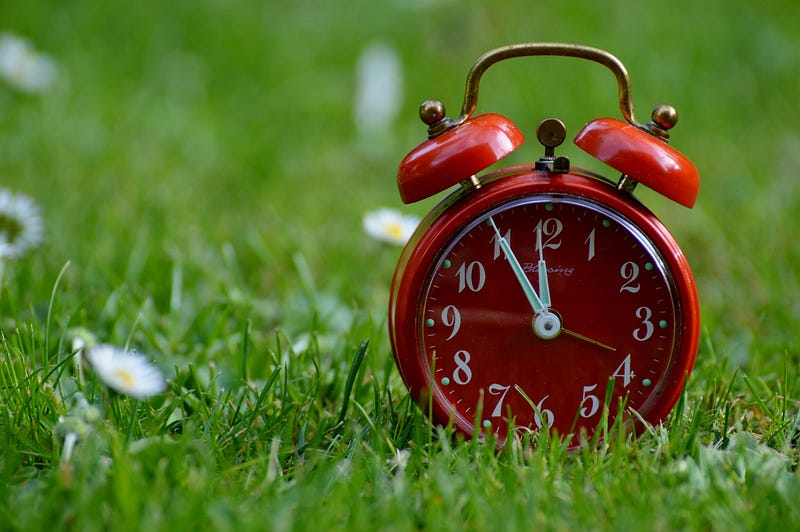
“Time you enjoy wasting is not wasted time.”
― Marthe Troly-Curtin, Phrynette Married
When we get stuck with certain tasks or goals, people tend to say that we are procrastinating and that it will bring us no good. However, only a few know that procrastination has two forms — active and passive. Surprisingly, active procrastination can be a positive thing. As the famous happyologist and writer Susanna Newsonen stated in The Psychology Today:
“Sometimes procrastination is your mind and intuition trying to tell you that you shouldn’t be doing something — or telling you to process something before making a rushed decision.”
S. Newsonen emphasizes that we never procrastinate on urgent matters that are truly important to us. So, in a way, procrastination helps to evaluate our to-do list and prioritize the tasks.
Procrastinating on certain tasks either means that they are not very important and could be done later (or maybe lose significance in the process and be totally taken out of the list), or that they are important and time-consuming (which is why we put them aside and focus on smaller tasks that are easier to achieve and take out of our to-do list).
Either way, active procrastination helps us to get things done. We take care of smaller tasks to give full attention to the important ones. And in the process, we give ourselves a chance to contemplate the big upcoming work that is left for the end. Later it helps us to achieve our goals as we already have a strategy and an execution plan in mind.
So, is it acceptable to conclude that sometimes procrastination is not so much procrastinating after all?..
Ideas for the taking
I hope that my ideas and findings helped you to get back on track. The first days after coming back from holidays are difficult as we lack attention and concentration. Luckily, there are countless ways to help ourselves!
To sum up, it is important to:
- Keep motivated. Remember the reward pathway? Work on it. It truly does wonders.
- Plan the plan. Start a work diary or a bullet journal to keep it organized and track the progress.
- Do your tasks well, but don’t dive into micromanaging. It makes life easier.
- Be a good colleague and help others out. Someone might help you out later as well.
- Eat well, sleep well and do a bit of exercise every now and then.
- Don’t fear procrastination, but if you must, procrastinate in an active way.
And remember: positiveness and a wide smile can do wonders. So if you do end up frustrated because the code lock of your entrance door doesn’t work, look around — you might just be at the wrong house!..
But you know what? It’s fine. It’s just another day of life. And it seems it wasn’t an easy one... So laugh it off and head back home, make yourself a cup of tea and don’t feel bad about being overwhelmed — we’ve all been there.
My scribbles dive into a variety of topics. The thread of thought can be unpredictable — inspired by places, people, experiences or the occasional earworm on the playlist…
I often weave my cloth of writing unsure where the threads will lead — or if the final tapestry will hold.
Yet whether I scribble fantasy or horror, highly opinionated or research-driven pieces, I hope it leaves you with something to ponder: makes you feel better (or worse?..), strikes an inner monologue (hopefully, voiced out in the comments!) or simply gives you something to chew on, inspiring to keep the creative ball rolling.
Thank you for reading!