Post, follow, like, learn: How Instagram improves students’ learning experience
5+ ways to use Instagram in the classroom
The information era has changed the way people communicate, learn and behave. Everything goes faster and changes more frequently than ever before. The new generation of college students has more access to information and quicker than most of us, educators, do.
And so, many students wonder why they should be assisting college courses when they can learn anything they want online, at their peace, from people they respect and follow, without being judged or evaluated by someone else than themselves.
And when they do go to college, they do it because they still need that certificate to get the job they want, although this is changing fast. Or just because they have to please their family who’s paying for their studies.
In my short career as a university professor, I’ve seen the rate of student absenteeism rising to unprecedented levels. The enthusiasm and engagement of students drop to the floor. And still, little has been done in the education system to counteract this unfortunate consequence of technological evolution.
As a mindful and caring professor, I’ve decided to do something about it. Because, while, I believe in the positive impact technology has on human evolution, I also believe that proper education is not to be handed to computers and artificial intelligence solely. And education, my friends, is what makes us evolve.
So, in my quest for opportunities to raise students’ motivation, engagement, and of course learning, I found Instagram to be a great tool for doing just about that.
Why Instagram?
Unlike any other social network platform, Instagram is a place where pictures count more than anything else. And, of course, beautiful pictures create greater stimuli in our brains than any word would. Visuals are easier to remember and thus they decrease learning time, improve comprehension, and increase retention.
What a better tool than a platform where you can post instantly thousands and thousands of photos and give access to everyone you want.
Another reason to choose Instagram upon Facebook, for example, is that it’s easier to set up a business account, to found and follow people, and to post things. But more importantly, because Instagram is the second most popular social network app used by both Millenials and Gen-Z.
Now, compared to Snapchat, Instagram provides wider access to professional accounts and relevant topics than Snapchat does. It also gives you higher control over who sees your post, who can react to them, and to avoid unwanted followers and inappropriate comments or content.
Also, by setting a business account you can easily track engagement. An Instagram business account allows you to see how many of your students (and other followers) have seen your posts, clicked on your stories, visit your profile, open your links, and much other amazing analytics and everything for free. Of course, if you want more details on your data you better use premium platforms as reports+, Iconosquare or Hootsuite.
Among the many things you can do with Instagram for improving the learning experience of your students, here are some examples of how I use it for my classes.
1. Instagram posts to share class-related content
Probably the most known feature of Instagram is picture posting. The most powerful value of Instagram for teaching is in posting interesting content related to your class through beautiful images. Although, there is nothing wrong with posting selfies here and there sometimes.
But, posting class-related content through pictures is a great way to engage your students and help them learn and remember what you just told them in the amphitheater.

You can create posts in the form of study cards for example and facilitate students’ study time by inviting them to revise your latest post on that subject. You can summarize a lecture with 5 visuals that take the most important insights of the topic through bullet points, tiny mind maps, short definitions of concepts, steps of a process, Memes for pointing out important “boring” things…and many others.
But the best of the best is creating 60 seconds Instagram videos to explain a concept, give real-life examples or recap on a specific topic. Whether it is only you speaking or an animated slideshow to explain a topic, videos generate more engagement than pictures on Instagram and are potentially more valuable for teaching purposes.
What is important here is to keep short, simple, and compelling. Posts are supposed to be easy to the eyes but also they have to speak by themselves. So short but effective, anything that is not crucial leave it for the post description. If students want to know more they’ll read the description, if not they at least got the main idea in the pic. But it has to be compelling and attractive. You don’t need to be a graphic designer to create beautiful posts, but you need a minimum effort to create posts that students ( and your other followers) want to double-click. You can use tools like Canva, Crello, Adobe Spark, PicFlow or PicPlayPost and use free layouts ready for you to use or inspire from to make your posts.
2. Instagram lives for Q&A
When you are wrapping up your lecture and you ask students if they have questions, many times they say “No” in the rush to finish classes and go to do something fun. Hours or days later you start receiving a considerable amount of emails from those students asking, most of the time, the same questions over and over. So you can decide to either respond to one of them and ask her to spread your explanation to her classmates or your answer to each one of them, time at a time. The risk of doing either of those is first spending much time on emails while you could be doing research and second suffering from the “Chinese whisper” effect when each student tells the other their interpretation of the answer given by the professor.
A much better solution is to schedule an Instagram Live Sessions for Q&A. I, for example, plan, at least one week ahead, Instagram Lives with my students at dates and hours that we previously agree upon so that everyone gets to participate. Also, one day before the Live session, I post an Instagram story with a question sticker to invite students to post their questions and doubts before the Live. In this way, I get to prepare the answers beforehand and be sure I don’t miss anything.
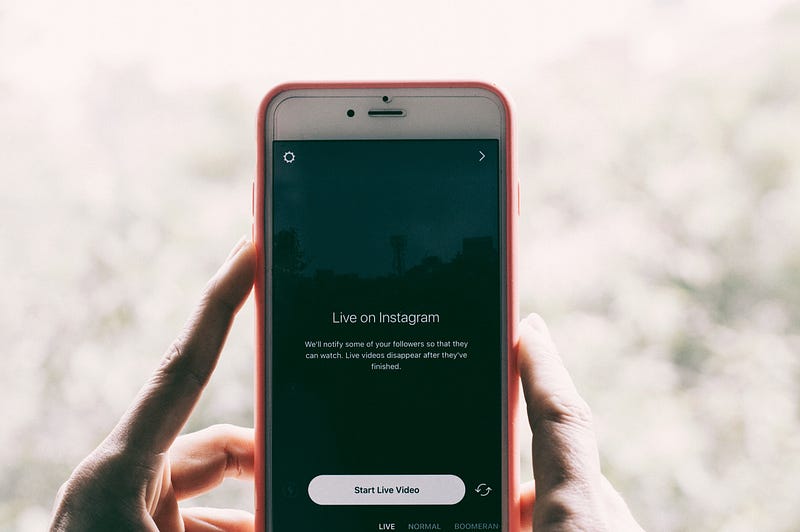
The cool thing about posting questions stickers one day before the Q&A is that when you are “live” you can share each question posted by each participant and give the answer at the same time. So your students will have on their screen the sticker with question been asked at the same time they hear your answer.
This exercise is also a great solution when you are traveling, when your students have internship periods and when they are abroad. Because unlike Skype or meet, you only need your phone and internet connection. No need to add users to the conversation and ask for all your student nicknames or give a code to join the conference. The only thing you need to do is give your username so that they can follow you.
Also when you think that other students (or the same) could benefit from this Q&A session in the future, for example, the class of the next semester, you can convert them into IGTV videos. Once you finish your live session, you can tap on the upper right corner button “save” and then you can upload it again to your IGTV channel. Learn how to do it here.
3. Instagram stickers for challenges, quizzes, and polls
Other great features of Instagram are the quiz and polls. While you cannot expect to do a final exam using these functionalities, you can use them to do in-class or out-class fun challenges.
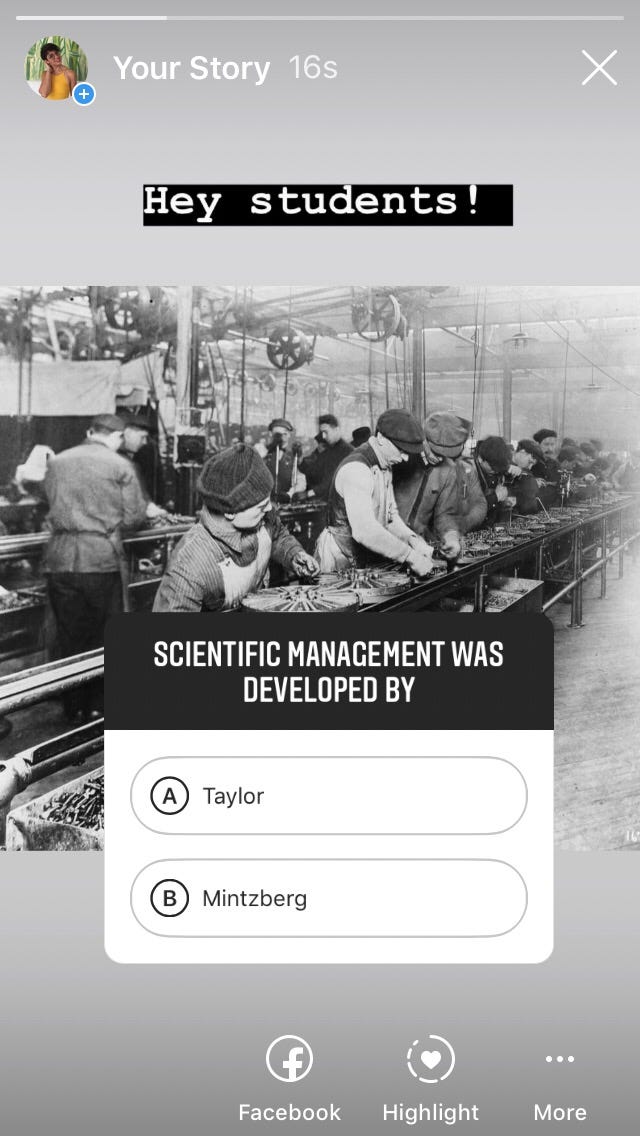
You can create a short quiz through your stories and invite students to answer them while in class. This can be a great exercise to wrap up over a topic and a great way to shake up a bit the “boring” lecture atmosphere.
You can prepare a short quiz and post it in your story while you project it on the white screen. Your students get to respond to your story questions live and you can share who got it right and who didn’t. This encourages some competitive behavior but in a fun and constructive way. Then after you share the class results for each question you can explain the correct and answer and ensure that all the class understands it.
This type of challenge can also be used outside the classroom. You can invite your students to answer to your story quiz while they are supposed to be studying for the final term. This can help them study but what is most, it improves their confidence so that they freak out less for the exam.
4. Instagram stories to reward effort
The main purpose of using social networks such as Instagram is to brag about something and get social recognition. And nothing gets students more motivated to learn that some rewards. Many studies show that recognizing publicly the effort of people improves their self-confidence in performing a task and encourages them to learn and improve their performance on that and other related tasks.
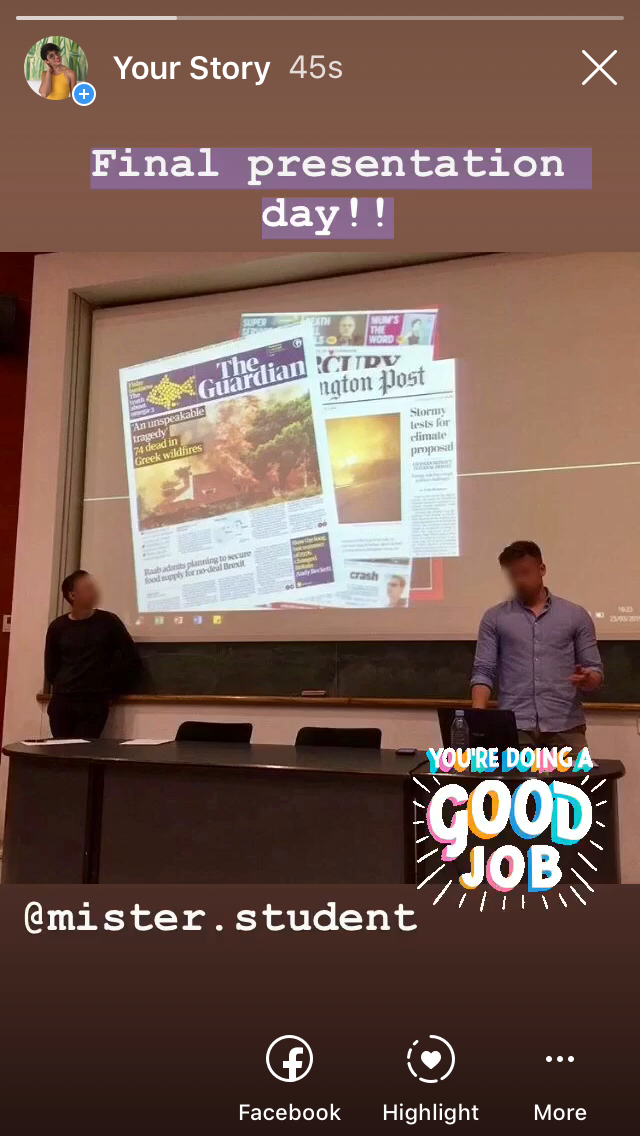
Also, positive psychology shows that academic achievement improves when we focus on student’s improvements and strengths, rather than in failure and weaknesses.
So, a funnier and more impactful way to recognize students’ hard work and effort can be through Instagram shoutouts.
When a group does a great presentation, take a picture and share it in your story by tagging (when possible) your students. In this way, they’ll see your appreciation and they can share it with the public (their followers) that matters to them. This creates a double recognition: one by the professor and the other by peers and friends (followers).
5. Instagram video stories for short assignments
Instagram can be also a great tool for short assignments to be handed-in after classroom hours. For example, you can ask students to present a brief review of a topic, article, or lecture through an Instagram video story. For this, you invite students to post their video stories and tag you so that you can share it with all your other students.
What is interesting here is that Instagram video stories have a maximum length of 15 seconds and this trains students to be concise and direct to the point when presenting a topic. So, for example, you can ask your students to provide and defend their opinion on a specific debate while keeping it at 3 consecutive video stories (that is 45 seconds).
Also, if students tag you in their stories you can re-share them in your own story and even choose which followers can see the story. So, if topics are sensitive, or not quite related to other courses you give, and to avoid confusion you can share it with only a group of people (your students) and not all of your followers. But, the best way to share it and be sure all of your class sees other classmates’ videos is to share it during a lecture. It is quite fun because students get to laugh a little bit and they can get feedback directly from both you and classmates.
Instagram for professor-student bonding
If you try to remember which classes you enjoyed or learned the most when you were back in college you’ll probably also remember the professor who gave those lectures to you. Most of the time, the level at which we enjoy and learn from a lecture is directly related to the person who gave it and the environment in which it happened.
This doesn’t mean that having a cool professor guarantees better learning, or that listening to music makes you smarter. You can have a cool lecturer who sucks at teaching, and you can listen to Beethoven while studying and still don’t have a clue of what is being explained.
However, we have better chances to learn and reach academic achievement when the surroundings are safe. And a safe environment exists only if there is a feeling of trust between the members of that environment. If you don’t trust your classmates then probably you’ll hesitate more about giving your opinion in class, afraid you’ll be mocked by others. If you don’t trust your students, you won’t let them work in autonomy, afraid they won’t get the work done.
And trust can only appear when we get to know each other. Trust emerges when the wall that keeps students apart from teachers gets torn down.
The reason toddlers learn more easily from their older siblings than from their parents is that they feel less distance between them. The same stands true for young (and less young) adults: you learn more from peers that share similar status and characteristics as yours than from people with different status and characteristics.
Instagram can be a great tool for tearing down the student-professor wall. As you share, somehow, personal life details through Instagram, students can see you are just as human as they are. They’ll see more of you than just the professor and they may realize that you are more alike than they thought.
But be careful, there are also limits on sharing personal stories with your students. While is alright to post one picture now and then of your weekend at the beach, your cats, or your fitness goals. Posting your hardcore party with your girlfriends or your kids’ Easter eggs’ chase would probably have no effect on your students’ learning achievement.
Of course, how much personal you go is your decision. But a piece of wise advice, if I may, is to keep it to a level that serves your purposes of improving your student’s learning experience. Anything over that is just too personal and might be misinterpreted.
If you like to see how else I use Instagram for teaching you can follow me on @miss.startup