
Post-Easter Contemplations: Why Hatred, Failure, and Death are the Attributes of Real Leadership
Humans are biological and social beings. As biological beings, humans first and foremost think about survival and procreation. In evolutionary terms, humans, as a species, are most successful when they live in a social group. This, in turn, implies that human social groups need a certain order to prosper in the long run. This order is ensured by the hierarchical dominance of some individuals over others. In practical terms, any order means a social group’s compliance with certain norms and rules established by its dominant individuals.
As any parent knows, you may use either physical force or psychological influence to maintain discipline.
Management is the organization, coordination, and administration of processes in a society, an institution, or a company relying on some organizational and administrative hierarchy. If you are a manager, you manage things relying on the use of physical force or the threat of physical force.
Leadership implies establishing a moral and psychological climate in a society, an institution, or a company. If you are a leader, you have an impact on a society, an institution, or a company through moral and psychological influences.
Submission to physical force can be easily explained and understood. But why are humans inclined to be submissive to moral and psychological influences? The fact is that following a certain set of rules saves you, as a biological being, a large amount of food and energy. The human brain usually accounts for just 2% of the total body weight, while consuming from 20% to 25% of the body’s energy. That is why when some say that “too much thinking is bad for you”, there is a certain amount of truth behind this ironic expression: the process of thinking is definitely expensive in terms of food consumption and energy production. Therefore, following a certain set of rules is a good way to save your biological resources.
Why are fashionable, politically correct messages insisting that “the real leader is the one who creates other leaders” or “the real leader is the one who creates a safe environment for others” are rather meaningless and increasingly hypocritical?
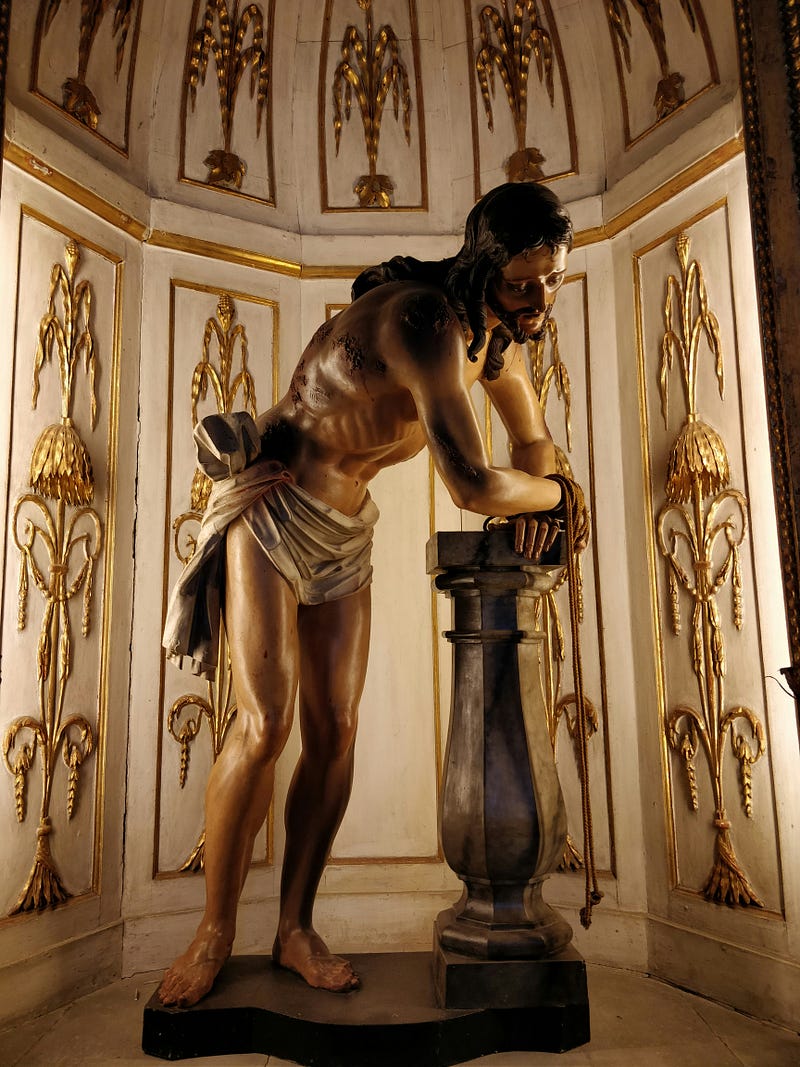
Drawing parallels to the Bible, Jesus Christ was the leader who was mentoring people to follow certain moral rules by employing various psychological techniques. At the same time, King Herod was the manager who was professionally managing his kingdom organized as his personal business entity.
Jesus Christ did not intend to create a safe environment for others. He was often direct, straightforward, and even blunt in his communication with the followers, openly telling them that they were basically losers. He was a disciplinarian, after all.
History clearly demonstrates that to successfully manage a society, an institution, or a company you need both ideology and rules. Thus, a leader is a priest, while a manager is a ruler. As Napoleon put it: “A leader is a dealer in hope.” I would add that a manager is a dealer in fear and love. Niccolo Machiavelli insisted that for a ruler: “[because they are difficult to combine,] it is far safer to be feared than loved, if you cannot be both.”
Ideology can be represented by a religion or a school of philosophy. Christianity, Islam, Judaism, Hinduism, and many other religions are the classic examples of ideologies. But various schools of philosophy developed in Ancient Greece (Stoicism, Epicureanism, Cynicism), Ancient India (Buddhism), and Ancient China (Confucianism, Taoism), as well as modern liberal, conservative, or communist beliefs are ideologies too. Buddhism is a good example that the line that separates religion and philosophy is very thin.
How does leadership interact with management? Humans are materialistic beings. Therefore, when things are going well in a society, an institution, or a company, moral and psychological influences have a minimal role, while managers maintain its daily functioning.
New religions and schools of philosophy begin to gain strength when things start falling apart, while the old ideology is not capable of providing any convincing justification for this deterioration. If the economic situation and financial circumstances do not improve, the new ideology, first, becomes attractive. Then it becomes popular. Finally, it gradually transforms into the dominant one.
This is followed by a change of the governance and management system. The new system’s major task is to solve the problems that have accumulated under the old ideological regime. As the economic situation in a society, an institution, or a company stabilizes, its collective mental mindset may show some signs of improvement.
As a result, the role of ideology begins to decline again, while the role of management increases. If the economic situation gets worse, we can expect that a society, an institution, or a company will be in search of a new ideology to provide a clear and compelling direction out of this new crisis. In this way, we can witness the beginning of a new stage in the leadership and management cycle.
History provides many examples in support of this chain of events. Christianity began as a movement within Judaism because many Jews felt frustrated at the lack of any realistic chance of liberating themselves from foreign subjugation that had already lasted for many centuries. In classical Judaism, the afterlife is not a topic of any serious discussion because things were going well for Ancient Israel when it was becoming its dominant religion. At the same time, Christianity, like many other sects of disillusioned Jews, is saturated with descriptions of a happy afterlife because the reality was unbearable and hopeless.
Christianity won the hearts and minds of the multilingual inhabitants of the Roman Empire because paganism and slavery began to exhaust themselves from an economic perspective. Therefore, the Roman society needed a new ideological basis to support a transition to feudalism. As feudalism exhausted its economic potential, the medieval society needed a new dominant ideology to support a transition to capitalism. This was the fertile ground for a Reformation and the emergence of Protestant churches. As the growth rate of technological progress and the standard of living started to accelerate, the role of religion began to decline even further. At the same time, we could witness a rise in the prestige of science and pragmatic thinking that reached its apogee in the 1950s and 1960s.
How might leadership interact with management?
If you really want to become a leader, you need to prove your leadership ambitions in moments of crisis. What are the qualities leaders should demonstrate when facing a crisis:
1) You should be a charismatic person and you should be fanatically confident in your righteousness. Crises require proposing quick fixes and taking quick action.
2) You should be able to generate innovative problem-solving ideas and you should be able to attract the right people who can bring these ideas to life.
3) You can expect success, glory, and honor. However, you should be mentally prepared to face many very unpleasant situations along the way. You are extremely likely to be hated. You are very likely to fail. And you even have a higher-than-average chance of dying. If you need any proof, just recall the fate of Jesus Christ, Imam Ali, Guy Julius Caesar, Girolamo Savonarola, Jean-Jacques Dessalines, Napoleon, Shaka, John Smith, Abraham Lincoln, Leon Trotsky, Benito Mussolini, Adolf Hitler, Mahatma Gandhi, Patrice Lumumba, Martin Luther King, Salvador Allende, Indira Gandhi, and many others.
If you successfully manage day-to-day administrative and business operations, you can become a good manager. But you are unlikely to become a leader. There is nothing wrong with that. Furthermore, it is totally fine because most people who hold managerial positions are primarily engaged in running day-to-day operations rather than in generating ideas how to resolve a crisis. However, if you are a manager rather than a leader, you should not expect to be admired, adored, and deified. These expectations are unreasonable, unfounded, and even counterproductive.
The criterion for figuring out whether a certain individual is a leader or “just” a manager is quite simple. If no one particularly cares about the course of his or her life after this individual leaves office or steps down from any other post of authority, he or she is a manager. The life of leaders and their ideas remain engaging regardless of whether he or she holds any official position at all.
What can we expect in the future? If humans do not evolve biologically any further, the periodic crises of human civilization are very likely to continue. This implies that humans will still need leaders who could lead through these crises.
If we, as a species, will keep on evolving, thus reducing the role of biology in our behavior, human civilization will be able to function properly by relying on highly specialized project managers only. The recruitment and selection process for each individual project will focus on the objective evaluation of each prospective project manager’s abilities and qualifications. It can be achieved, for example, by scanning different parts of the brain responsible for specific activities. In this way, we can facilitate the development of both artificial and natural intelligence. And, hopefully, humans will stop being animals who primarily compete for food, sex, and social dominance. Instead, they will feel happy from trying new things, learning new ideas, and discovering new experiences. Novelty is sexy as you know.
Probably, this vision of the future of humanity may seem boring and too orderly to many. Is there any place left for intense emotions, strong feelings, exciting adventures, burning passions, and spiritual impulses? If you take various religious descriptions of paradise, you will find out that it is a peaceful, orderly, and extremely predictable place. If you want emotions, feelings, adventures, passions, and impulses, you should visit hell, instead. As Mark Twain put it: “Go to heaven for the climate and hell for the company.”


