
Positive and Negative Effects of Religion

Does religion do more good or more harm for the world? This has been the subject of intense debate for centuries. In this article, I will try to weigh both sides. I have compiled a list of some of the positive and negative effects of religion on people and on society. I ended up with 31 positives and 25 negatives. I’ll start with the negatives:
Negative effects of religion:
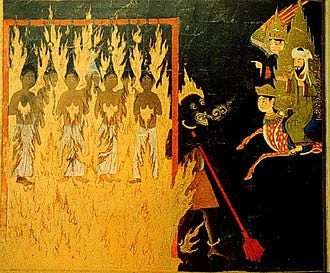
1. Many religions teach that some people will go to hell after they die. That’s a pretty dark thing to believe. It’s pretty harsh to say that someone deserves to suffer for all eternity.
2. Some religious groups go even further and claim that you have be in their religion to earn salvation, which would imply that anyone outside their religion would automatically go to hell. That is an appalling thing to believe.
3. Also, some religious people worry that they themselves might go to hell, which is a source of unnecessary anxiety in their lives (since, after all, hell is probably not real).
4. Some religions, especially the Catholic Church, have a long history of trying to suppress human sexuality, even when it’s completely normal and healthy sexuality. And when it gets suppressed, people don’t learn how use it.
5. Many religions teach (or previously taught) that homosexuality is immoral. By doing so, they have ostracized the gay community.
6. Some religions have a long history of silencing and oppressing women.
7. Some religions have a culture that turns a blind eye towards physical and/or sexual abuse.
8. Religion has played a role in many wars throughout world history. (But please note: if people didn’t have religion, I’m sure they would’ve found something else to start a war over.)
9. Many holy books, including both the Bible and the Qur’an, contain some passages which are bizarre and violent and which have inspired some fundamentalists to commit bizarre and violent actions.
10. In the past, religious beliefs were used as a reason for executing or sacrificing people. (In some parts of the world, that still happens.)
11. Religion sometimes encourages people to be ascetic and delay happiness until the afterlife, rather than enjoying this life while we have it.
12. Religion sometimes teaches people to accept injustice as God’s will, rather than to fight against it. (This was Karl Marx’s criticism.)
13. Religion sometimes displays a patronizing attitude towards poor people in the Third World.
14. In Christianity, some of Jesus’ teachings are rather extreme (e. g. “sell all that you have”).
15. In some countries, religion has too much influence on the government.
16. Some religious groups encourage people to vote for political candidates who are opposed to any sort of progress, just because they are socially conservative.
17. Religion teaches people not to question things.
18. Religion has a history of resisting the development of science.
19. Some religious people, inspired by their beliefs, refuse to listen to good medical advice, and refuse medical treatment.
20. Religion fosters a belief in superstitions (e. g. the idea that if you pray for something, God will make it happen).
21. Related to this, religion teaches people to believe in some doctrines which are very unlikely to be true and which an intelligent person should not otherwise believe. An example would be the Catholic doctrine of the Virgin Birth of Christ, which — let’s be honest — is probably not true.
22. Some religious groups place too much emphasis on following the letter of the law with regard to their rules, dress, rituals, etc.
23. Religion fosters an attitude of contempt towards people who are less religious.
24. Some religious communities are very insular and fear the outside world.
25. Some (very extreme) religious groups believe that the end of the world is imminent and that we need to prepare for the end-times. That is a very irrational and self-destructive thing to believe.
Positive effects of religion:
- Religion often helps people believe that their lives have a purpose.
2. Religion supplies people with direction and meaning, which benefit one’s mental health.
3. Some people attest that their religious beliefs are the source of the courage they need to keep going in life (“The Lord is my strength”).
4. Most people want to believe that there is more to reality than just the physical, scientific universe, and religion teaches us that indeed, there is.
5. The religious view that “everything happens for a reason” can be comforting during difficult times.
6. The religious view that “God has a plan for you” makes life seem less chaotic.
7. Religion allows people to believe they’ve been forgiven when they feel regret and remorse over things they’ve done wrong.
8. Religion allows people to believe that someone (God) understands them and loves them.
9. Religion teaches us to be kind to others.
10. Religion teaches us to serve others.
11. Religion teaches us to forgive others.
12. Religion promotes humility.
13. Religion promotes gratitude.
14. Religion makes the concepts of right and wrong seem more palpable.
15. Religion can help people accept painful things about the world.
16. Religion reminds us that some things can never be known (“God only knows”), which can help to relieve anxiety.
17. Religion can help people come to terms with their own faults and shortcomings.
18. Religion teaches us to focus on what really matters, rather than worldly success.
19. The hope for the afterlife can be a source of comfort for people who are unhappy in life.
20. The hope for the afterlife can also be a source of comfort for people who have recently lost a loved one.
21. In general, the hope for an afterlife makes death seem less frightening.
22. Religion provides us with role models (e. g. the saints).
23. Religion builds community. The deep sense of community that one finds in religion is difficult to find anywhere else.
24. Religion provides a structure to time (e. g. the Sabbath).
25. Some people find religious rituals to be very meaningful (e. g. reciting the Takbir).
26. Religion is the origin of most of the world’s holidays, and holidays are fun.
27. Religion has been the inspiration for much art and music over the centuries.
28. There is evidence that religious people have a lower suicide rate than nonreligious people.
29. Religious groups have been a driving force behind some progressive movements in history, including the abolitionist movement and the Civil Rights Movement.
30. Early Christianity was much more supportive of women than were most other societies at that time. Christianity (arguably) played a role in the long-term development of women’s rights in the Western World.
31. Many religious institutions and organizations provide medical care (and other necessary services) for people all over the world.

Conclusion:
So which is greater, the positive effects or the negative effects? Well, it’s hard to say.
In my personal opinion, the positives ultimately outweigh the negatives. But you don’t have to agree with me.
However, what has become clear to me is that most of these effects, whether positive or negative, are not directly caused by religion. Rather, they are caused by how people choose to use religion. What matters is not how religious or nonreligious you are; what matters is how you choose to make use of your religious views, whatever they may be.


