avatarAraci Almeida

Free AI web copilot to create summaries, insights and extended knowledge, download it at here

3892

Abstract

rists.</p><p id="c6c6"><b>Whoever goes to the city of Porto now asks for a <i><a href="https://www.google.com/search?q=francesinha&amp;rlz=1C5CHFA_enPT970PT970&amp;sxsrf=ALiCzsaUybq5bL-tLMfiRqrXAhAkLQsikA:1663614392363&amp;source=lnms&amp;tbm=isch&amp;sa=X&amp;ved=2ahUKEwj-lpnHxqH6AhUGWBoKHb85DDEQ_AUoAXoECAIQAw&amp;biw=1280&amp;bih=632&amp;dpr=2">francesinha”, </a></i>as if it were the most traditional food ever.</b></p><p id="ac70" type="7">The Francesinha, which is a highly calorific fast food and not healthy at all, is nothing more than two slices of bread with meat, cheese, a hot sauce, and fries around it. This wasn’t Portuguese food!</p><p id="8d5f">In fact, the dish was made up by an emigrant living in France who tried to re-invent the famous “Croque monsieur” sandwich…So you see why all that cheese!</p><p id="9e10">Of course, it is appetizing (although not to my taste), but it is not what used to be the main dish that characterized Porto, but the <i><a href="https://www.google.com/search?q=%22tripas+%C3%A0+moda+do+Porto%22.&amp;tbm=isch&amp;ved=2ahUKEwjyn_nHxqH6AhUIGRoKHQTlDd8Q2-cCegQIABAA&amp;oq=%22tripas+%C3%A0+moda+do+Porto%22.&amp;gs_lcp=CgNpbWcQAzIECAAQHjIECAAQHjIECAAQHjIECAAQHjIGCAAQHhAFMgYIABAeEAUyBggAEB4QBToECCMQJzoKCAAQsQMQgwEQQzoECAAQQzoHCAAQsQMQQ1DmBljmBmDVCWgAcAB4AIABdogB5gGSAQMwLjKYAQCgAQGqAQtnd3Mtd2l6LWltZ8ABAQ&amp;sclient=img&amp;ei=ub0oY7LfOIiyaITKt_gN&amp;bih=632&amp;biw=1280&amp;rlz=1C5CHFA_enPT970PT970">tripas à moda do Porto”</a></i><a href="https://www.google.com/search?q=%22tripas+%C3%A0+moda+do+Porto%22.&amp;tbm=isch&amp;ved=2ahUKEwjyn_nHxqH6AhUIGRoKHQTlDd8Q2-cCegQIABAA&amp;oq=%22tripas+%C3%A0+moda+do+Porto%22.&amp;gs_lcp=CgNpbWcQAzIECAAQHjIECAAQHjIECAAQHjIECAAQHjIGCAAQHhAFMgYIABAeEAUyBggAEB4QBToECCMQJzoKCAAQsQMQgwEQQzoECAAQQzoHCAAQsQMQQ1DmBljmBmDVCWgAcAB4AIABdogB5gGSAQMwLjKYAQCgAQGqAQtnd3Mtd2l6LWltZ8ABAQ&amp;sclient=img&amp;ei=ub0oY7LfOIiyaITKt_gN&amp;bih=632&amp;biw=1280&amp;rlz=1C5CHFA_enPT970PT970">.</a></p><p id="c71d">A dish of beans, mainly white, with carrots, rice, and pork tripe, because the meat was for the rich once again.</p><p id="2515">But something happened that made this traditionalism be considered archaic, leaving these healthier practices behind and replacing them with foreignisms that are increasingly leaving their mark on the health of the Portuguese. <b><i>Obesity, which was rare to see, is increasingly evident in the streets of Portugal.</i></b></p><p id="88c3">We now eat more and worse.</p><p id="7700">Even the average restaurant is saturated with chips, rice, and steaks. This seems to be the most typical dish in a country that once had such a rich gastronomic culture.</p><p id="d3a7"><b><i>Young people have also unlearned how to cook.</i></b></p><p id="d05e">They no longer know how to make delicious casserole dishes. They grill a steak and turn on the gas for the grill. They make rice and turn on another gas burner for that pan. They cook boiled vegetables ( hopefully) and turn on another gas burner for that other pan.</p><p id="5524">It is also in itself a huge environmental and energy waste, and of course, it comes out of their wallet.</p><p id="1248"><i>With so many problems afflicting us, it is immoral to see the amount of food we waste nowadays.</i></p><figure id="8cf0"><img src="https://cdn-images-1.readmedium.com/v2/resize:fit:800/1*IFDN_dANp43w3ZSph58i9A.png"><figcaption>Rice and shrimp, all cooked together</figcaption></figure><p id="824c">Valencian rice, Sardine rice; “Arroz de sanchas ( a certain type of mushroom);” and Chicken rice are all rich, delicious dishes that seem to only dwell in some people’s memories instead of remaining in the kitchens.</p><figure id="18e2"><img src="https://cdn-images-1.readmedium.com/v2/resize:fit:800/1*8wJiV0ol0y5QoRjGguTIbQ.jpeg"><figcaption>Photo by me while living in Italy.</figcaption></figure><figure id="226a"><img

Options

src="https://cdn-images-1.readmedium.com/v2/resize:fit:800/1*tgEFI9-z6koHEsRfC0n3mg.jpeg"><figcaption>My grandmother about to prepare that rice with mushrooms:</figcaption></figure><figure id="415d"><img src="https://cdn-images-1.readmedium.com/v2/resize:fit:800/1*77EWj1yE9POKLJbxAnJsDw.jpeg"><figcaption>These ones appear in Fall.</figcaption></figure><p id="078c">Fortunately, my husband and I continue to value the typical cuisine in our home, combining it with greater environmental savings. Don’t think that we eat less appetizing things, quite the contrary.</p><figure id="780b"><img src="https://cdn-images-1.readmedium.com/v2/resize:fit:800/1*W0B2vdapSX7AqsUevGXMuQ.jpeg"><figcaption>stewed squid with boiled potatoes</figcaption></figure><p id="647c"><i>We see other adults who are unaware of the mere fact of knowing how to cook. </i>Spending money for nothing on takeaway food doesn’t even have a Portuguese word for it, so we say “take away,” revealing the widespread Anglo-Saxon culture.</p><p id="d5dc">Pot food must return to Portuguese kitchens. <b>Demand it! Whether you’re Portuguese or a tourist!</b></p><p id="f1a0">There are fewer dishes to wash, less gas wasted, and less food wasted.</p><p id="8414">We win in everything! In health, in money, in the environment, and our palate that thanks us so much!</p><figure id="f0d3"><img src="https://cdn-images-1.readmedium.com/v2/resize:fit:800/1*0eu40jnNA9hg3-rtzyCOKw.jpeg"><figcaption>And another one.</figcaption></figure><p id="8e7f"><i>Hello, I’m Araci, a female writer from Portugal. I like to write about my country, Portugal. But I also enjoy pop culture, American culture, and cultural differences. I hope you’ve enjoyed this article!</i></p><p id="0904"><i>You can also find more about me here:</i></p><div id="ae4d" class="link-block"> <a href="https://araci-almeida.medium.com/about-me-joana-araci-rodrigues-almeida-988dd810798"> <div> <div> <h2>About me — Joana Araci Rodrigues Almeida</h2> <div><h3>The whole story — or at least what’s coming to my mind — and the importance of the places and people that make who you…</h3></div> <div><p>araci-almeida.medium.com</p></div> </div> <div> <div style="background-image: url(https://miro.readmedium.com/v2/resize:fit:320/1*1y2jhzBZBEArZVTddaDHcQ.png)"></div> </div> </div> </a> </div><p id="228b"><i>If you have enjoyed this article, maybe you would like to buy me a coffee here <a href="https://ko-fi.com/joanaaraci"></a></i><a href="https://ko-fi.com/joanaaraci">https://ko-fi.com/joanaaraci</a>.<i> I don’t drink coffee that much, but food is getting ridiculously expensive, and I need to put it on the table.</i></p><p id="4e55"><i>There are other ways to help me out:</i></p><p id="e3ac"><i>Are you considering joining Medium for only 5$ a month? Your membership fee directly supports me. This way, you are helping me out while you’ll also get full access to every story on Medium.</i></p><p id="a0d5"><i>If so, consider doing it through my referral link.</i></p><div id="7ecf" class="link-block"> <a href="https://araci-almeida.medium.com/membership"> <div> <div> <h2>Join Medium with my referral link — Araci Almeida</h2> <div><h3>As a Medium member, a portion of your membership fee goes to writers you read, and you get full access to every story…</h3></div> <div><p>araci-almeida.medium.com</p></div> </div> <div> <div style="background-image: url(https://miro.readmedium.com/v2/resize:fit:320/0*vCTSOboLWJs6jbwo)"></div> </div> </div> </a> </div><p id="c909"><i>Thank you for reading me.</i></p></article></body>

Portuguese Pot Food — A Thing of the Poor or Rich With Strange Palates?

Changes in society have been changing the way we eat, and in Portugal, too, this has not been beneficial.
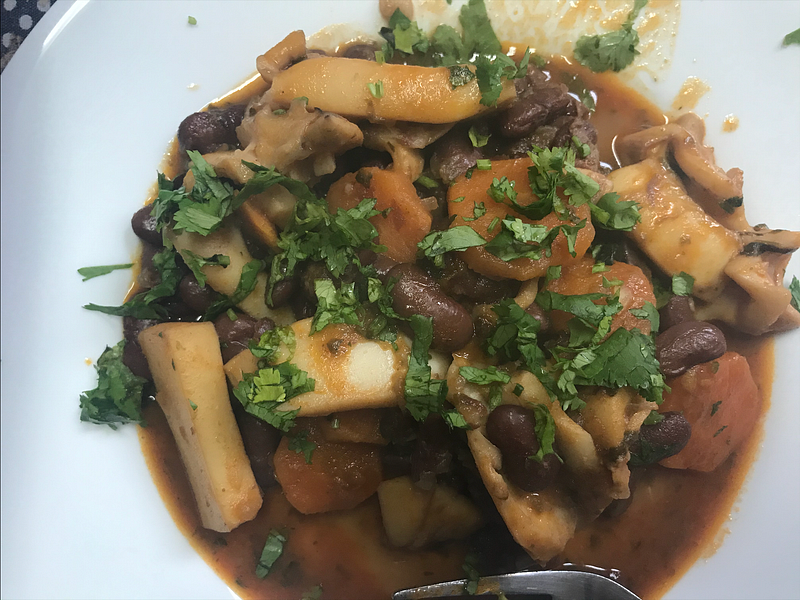
Feijoada de chocos, a dish often cooked by my dear husband. All photos taken by the author.

The typically Portuguese “tacho” (pot) food has been disappearing. And it’s not only the food; the healthier traditions of the Mediterranean diet that used to be found in Portugal are increasingly giving way to chic restaurants called gourmet— which have reinvented cuisine (often pleasing the palate of tourists)— or too Americanized or Italianized fast food, or whatever.

It is becoming increasingly challenging to find a typical Portuguese restaurant in Portugal. It seems to be a huge setback, but our society, which has changed so much in the last decades, has opened up to Europe, and there has been so much good but also so much bad about it.

Meat consumption has doubled, while one of the legumes, so typical of our diet, has fallen and seems to be on the verge of total disappearance.
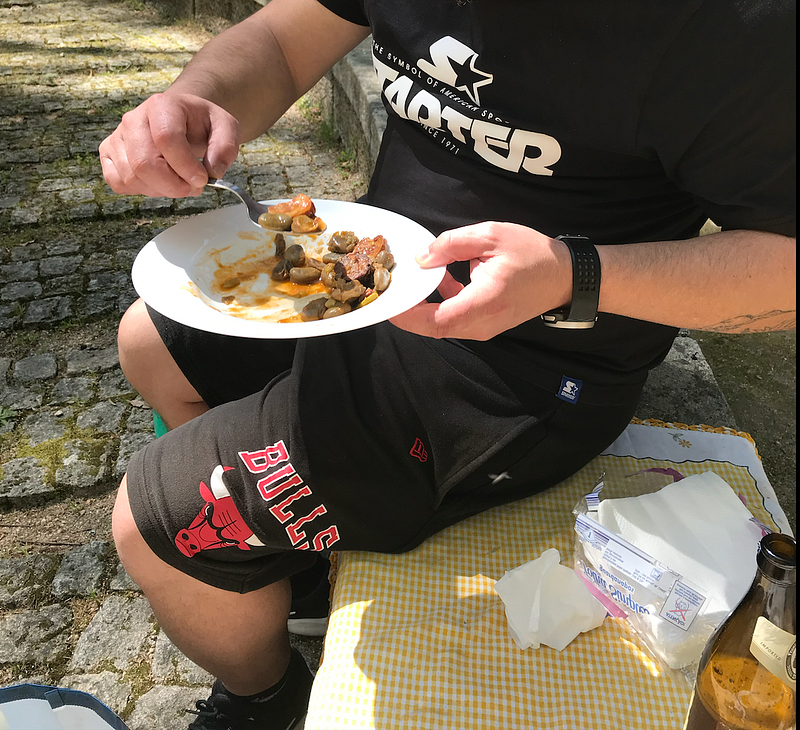
My husband eating a dish made of broad beans and chorizo
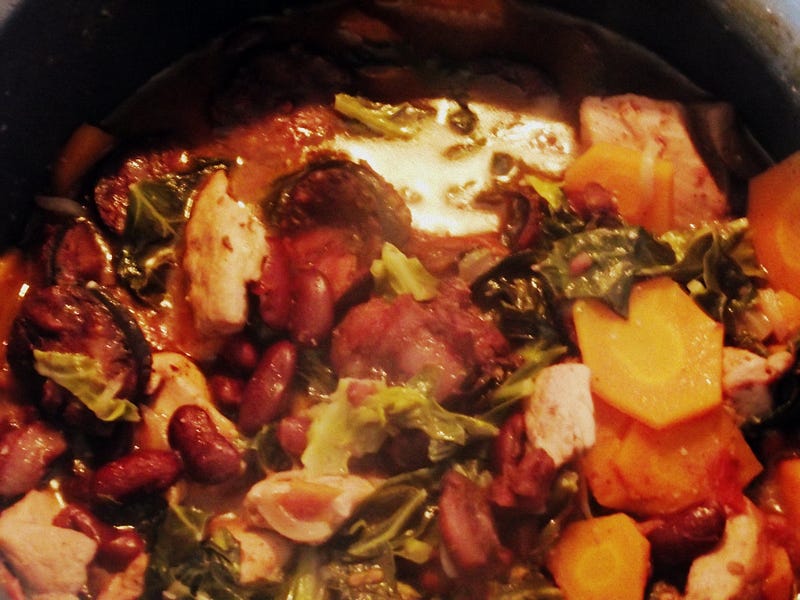
Photo by me and cooked by me. A typical dish of red beans in Portugal

In his almost ninety years of age, my grandfather is a living example of the food that once existed in old Portugal. Lots of beans, vegetables, a piece of cornbread, and a glass of wine.

There was no meat because it was a sign of wealth, something that did not abound in the interior of Portugal during my grandfather’s youth.

We ate what the land gave us, and only when the family from the big city visited us, only then, as if it was a huge feast, my grandmother cooked chicken and pasta.
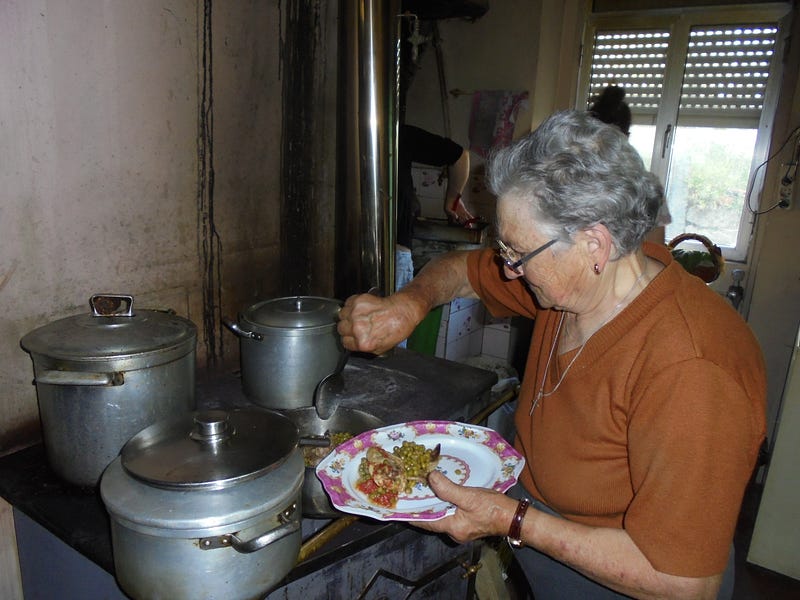
My grandmother, taking out green peas from a pot.

But don’t be fooled that the chicken was cooked in a separate pan and the pasta in another. No, it was all cooked together! I also grew up with these teachings passed on to me by my mother, who learned from her mom.

A good Portuguese stew is based on onion and olive oil, which is left to stew until golden brown. Then add the tomato, which you want to refine. Add the chicken and a little water, but still very little. Add salt. Cover the pan and cook over very low heat. For carrot lovers, add diced carrots. When the chicken starts to brown, add water to cover it completely. Wait for it to boil, and let the meat cook like this for a long time. Only then do we add the pasta, and those who love cabbage as I do, and if it’s in season, we add a good dose of cabbage until the pasta is just right.
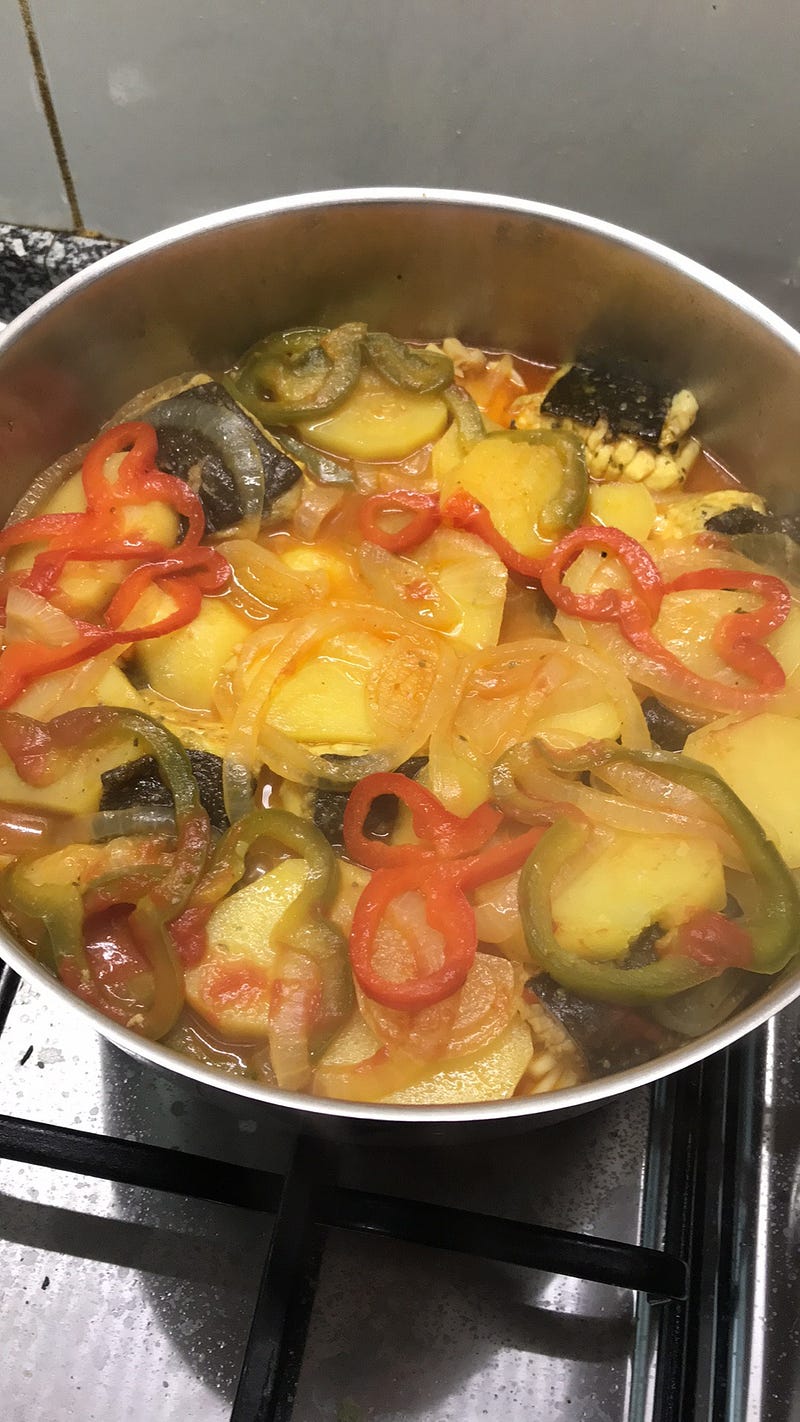
A dish I like to cook, we call it caldeirada, fish, peppers and potatoes, all in one pan.

This was and still is one of my favorite dishes. But it’s a dish we never find in Portuguese restaurants anymore. I feel like a huge traditionalist when I go into a Portuguese restaurant, and there are hamburgers, pizzas, and sushi, and if I ask for something Portuguese, I am bombarded with food that has been internationalized for tourists.

Whoever goes to the city of Porto now asks for a francesinha”, as if it were the most traditional food ever.

The Francesinha, which is a highly calorific fast food and not healthy at all, is nothing more than two slices of bread with meat, cheese, a hot sauce, and fries around it. This wasn’t Portuguese food!

In fact, the dish was made up by an emigrant living in France who tried to re-invent the famous “Croque monsieur” sandwich…So you see why all that cheese!

Of course, it is appetizing (although not to my taste), but it is not what used to be the main dish that characterized Porto, but the tripas à moda do Porto”.

A dish of beans, mainly white, with carrots, rice, and pork tripe, because the meat was for the rich once again.

But something happened that made this traditionalism be considered archaic, leaving these healthier practices behind and replacing them with foreignisms that are increasingly leaving their mark on the health of the Portuguese. Obesity, which was rare to see, is increasingly evident in the streets of Portugal.

We now eat more and worse.

Even the average restaurant is saturated with chips, rice, and steaks. This seems to be the most typical dish in a country that once had such a rich gastronomic culture.

Young people have also unlearned how to cook.

They no longer know how to make delicious casserole dishes. They grill a steak and turn on the gas for the grill. They make rice and turn on another gas burner for that pan. They cook boiled vegetables ( hopefully) and turn on another gas burner for that other pan.

It is also in itself a huge environmental and energy waste, and of course, it comes out of their wallet.

With so many problems afflicting us, it is immoral to see the amount of food we waste nowadays.
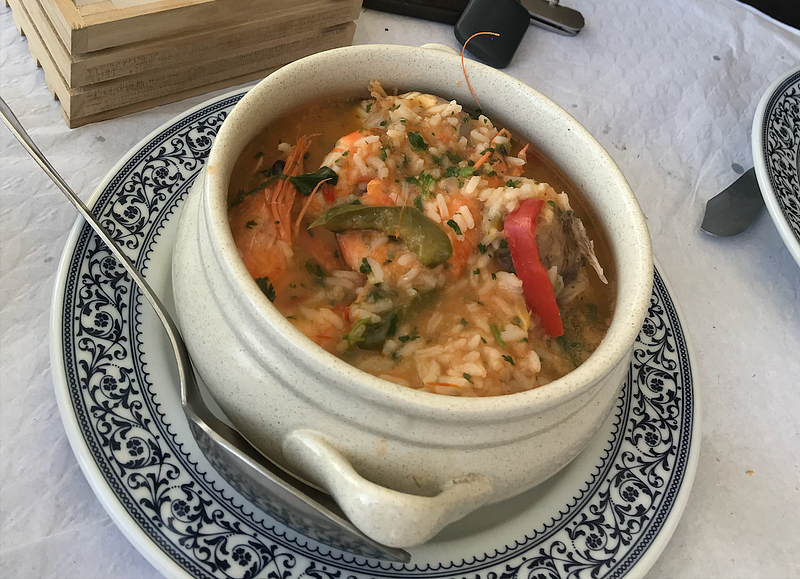
Rice and shrimp, all cooked together

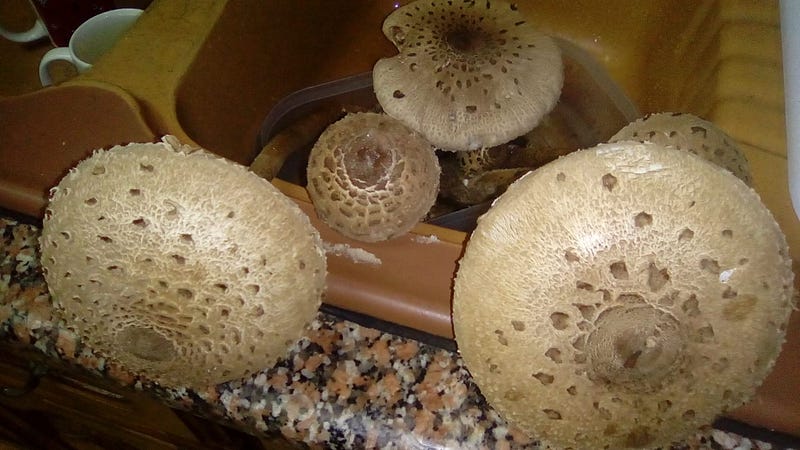
Valencian rice, Sardine rice; “Arroz de sanchas ( a certain type of mushroom);” and Chicken rice are all rich, delicious dishes that seem to only dwell in some people’s memories instead of remaining in the kitchens.
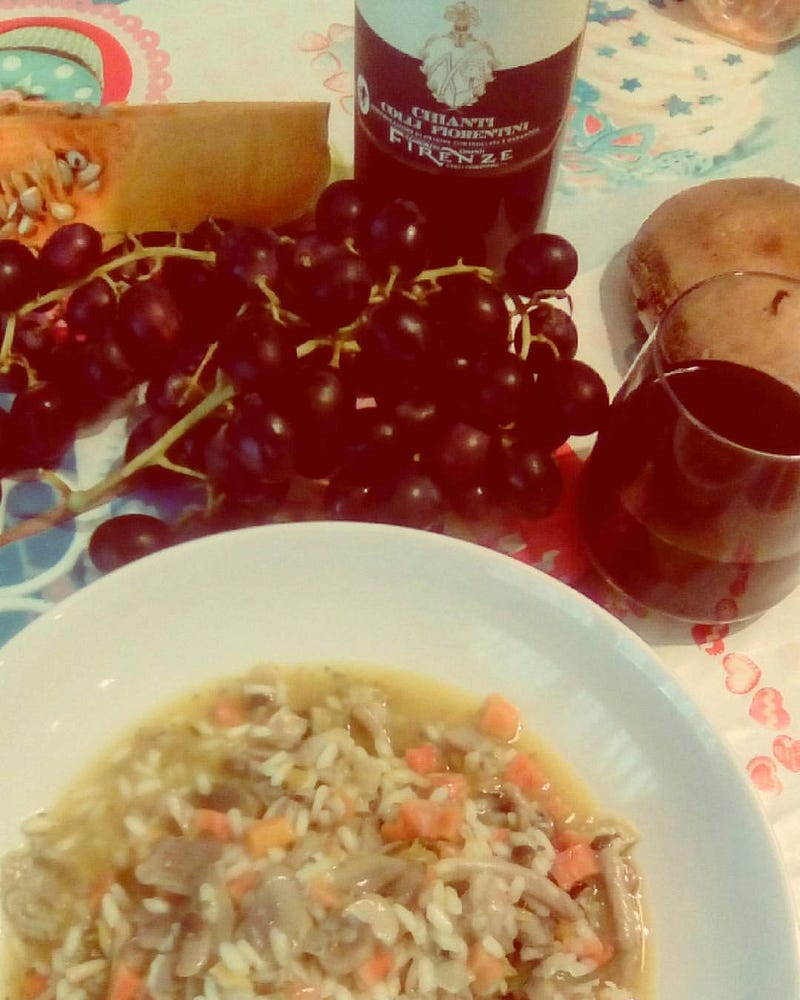
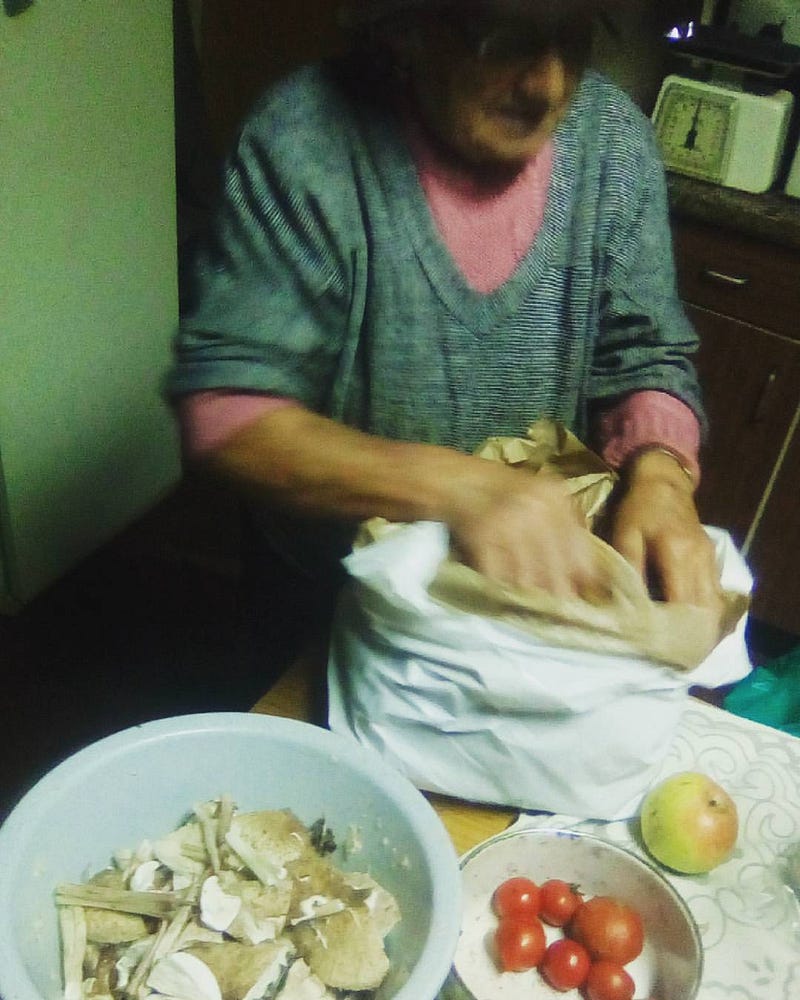
Photo by me while living in Italy.
My grandmother about to prepare that rice with mushrooms:
These ones appear in Fall.

Fortunately, my husband and I continue to value the typical cuisine in our home, combining it with greater environmental savings. Don’t think that we eat less appetizing things, quite the contrary.
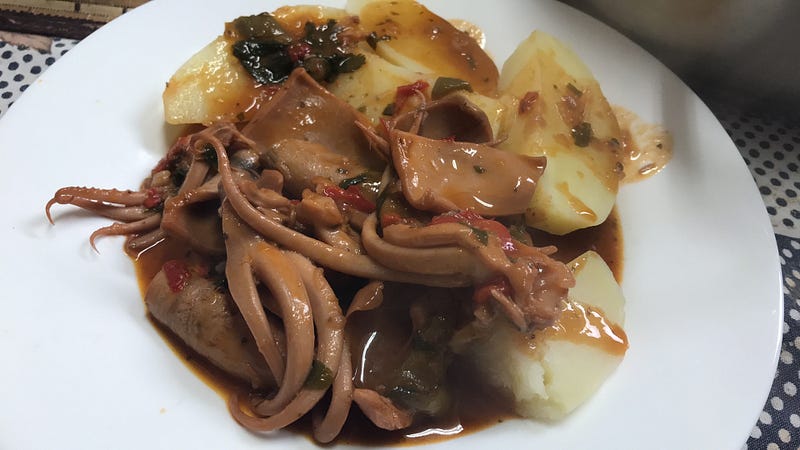
stewed squid with boiled potatoes

We see other adults who are unaware of the mere fact of knowing how to cook. Spending money for nothing on takeaway food doesn’t even have a Portuguese word for it, so we say “take away,” revealing the widespread Anglo-Saxon culture.

Pot food must return to Portuguese kitchens. Demand it! Whether you’re Portuguese or a tourist!

There are fewer dishes to wash, less gas wasted, and less food wasted.

We win in everything! In health, in money, in the environment, and our palate that thanks us so much!
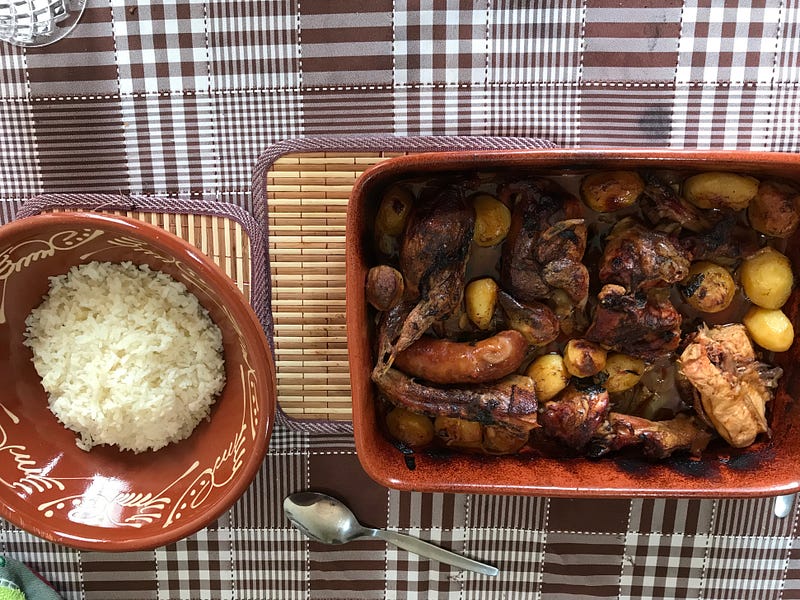
And another one.

Hello, I’m Araci, a female writer from Portugal. I like to write about my country, Portugal. But I also enjoy pop culture, American culture, and cultural differences. I hope you’ve enjoyed this article!

You can also find more about me here:

If you have enjoyed this article, maybe you would like to buy me a coffee here https://ko-fi.com/joanaaraci. I don’t drink coffee that much, but food is getting ridiculously expensive, and I need to put it on the table.

There are other ways to help me out:

Are you considering joining Medium for only 5$ a month? Your membership fee directly supports me. This way, you are helping me out while you’ll also get full access to every story on Medium.

If so, consider doing it through my referral link.

Thank you for reading me.

Food
Cuisine
Portugal
Sustainability
Monthly Challenge
Recommended from ReadMedium