
13 Scary Places in Portugal You Should Never Visit Alone
Introducing some of the creepiest places from Portugal’s dark side
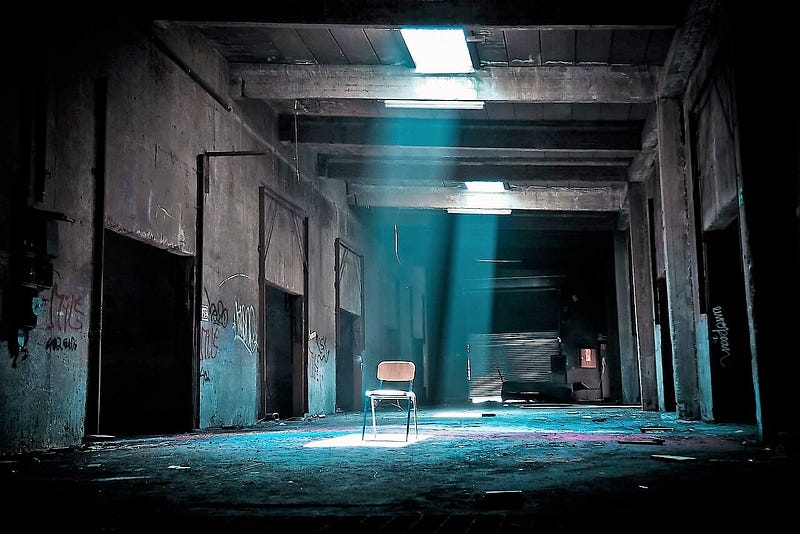
Portugal has many faces, each one promising something new. Everything you see, from vibrant cities to forlorn villages, will leave you in awe, especially if you dare to explore the country’s dark side.
What makes my homeland even more remarkable is that it has so much to offer with its natural landscapes and ancient history alike.
Furthermore, Portugal has some of the most spectacular tourist hotspots worldwide. But that doesn’t mean there aren’t a few less known creepy places lurking in the shadows.
If you want to explore uncharted territory that doesn’t appear on most tourist guides and help your heart keep pace with your legs, you should definitely consider visiting Portugal’s dark side.
Here is my list of the top 10 scariest places to visit in Portugal.
1. Lethes theater
In Greek mythology, Lethes is a mythical river whose waters have the power to erase from souls’ memories the setbacks and bitterness of life.
The building of the Lethes theatre in Faro started as a Jesuit school— whose license was granted on February 8, 1599.
Afterwards, in 1759, the Order of Jesus was banished from the country, and its possessions were confiscated.
During the French invasions, Napoleonic troops commanded by General Junot raided and desecrated the facilities of the old college.
Years later, in 1843, the school was auctioned off by Dr. Lazaro Doglioni.
The Lethes Theater opened its doors on April 4, 1845, and was shut down in 1925.
The Algarve delegation of the Ministry of Culture restored the theatre in 1991.
Nowadays, it’s home for The Algarve Theatre Company.
Actor and director Luís Vicente explains how the Lethes’ inception results from tragedy and love.
Around 1804, on a stormy night, a young doctor, Lazarus Doglioni, was traveling on a Venetian that sank off the Coast of Algarve. Fishermen from Tavira rescued Lazarus and the remaining survivors.
During his recovery, the young Lázaro Doglioni became friends with one of the most illustrious inhabitants of the city, whose daughter he fell in love with and married.
Thus, he possessed a sizeable fortune that allowed him to purchase the building.
During one of the theater’s renovations, workers found a skeleton of a Napoleonic soldier walled up in a niche where the electrical cabin sits today.
I’ve also read about the true story of a dancer who committed suicide on stage because of unrequited love.
Thus, many believe their earthbound spirits still haunt the theatre.
2. Mont’Alto sanatorium
I’ve visited the sanatorium many times, but I have goosebumps every time I cross into those galleries of charred walls and ruined staircases.
The Mont’Alto Sanatorium was once a health establishment for tuberculosis patients. It sits on top of a hill in the municipality of Gondomar, near Porto.
Inaugurated in 1958, the hospice only worked for a short time and was closed in 1975. The building was built to house about 50 patients and included a school, a laundry, a water reservoir, and a chapel. However, at times the building housed up to 350 people simultaneously.
After its abandonment, it was looted, and several fires erupted inside and in the woods around it, explaining the charred walls. Since then, there have been reports of people experiencing bizarre events walking across the galleries, namely in the room that was once the morgue.
I recall one of my recent visits to the sanatorium with my girlfriend. At one point, she lost her hair clip. I started looking for it on the filthy floor around us. But I couldn’t find it anywhere. Suddenly, I spotted a hair clip identical to hers, but this one was all rusted away as if it had been there for decades. A part from the rust, the hair clip looked like the one she had lost and was never found. We left it there on the floor and walked away. Creepy, to say the least.
3. Hotel Aqua Radium
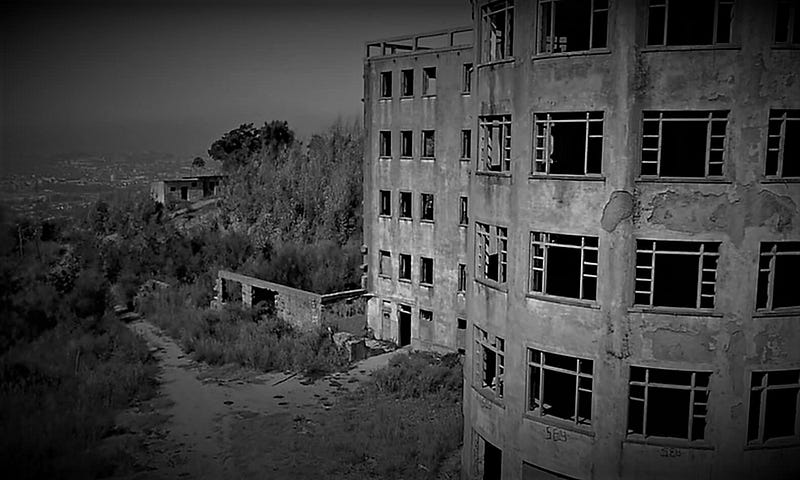
This ancient site is located in the district of Guarda, municipality of Sabugal, in the Portuguese countryside.
The former radioactive thermal water complex was built to host those looking to cure various ailments, but nowadays, it lies in ruins.
According to local folklore, many people died from radioactive poisoning in these hot springs.
It is said that the Radium Baths are haunted to this day by the souls of those who died from its waters.
4. Pauliceia manor
The old manor belonged to Manuel de Sousa Carneiro, born on September 6, 1907, in São Paulo, Brazil. He was the son of Portuguese emigrants.
His parents returned to the family estate in Águeda when Manuel was still a child.
In its early years, the manor suffered a flood and, soon after, a fire. Villages doomed such bad luck as the “work of the devil,” and the Pauliceia curse became part of the building’s lore.
The palace in its architecture is a Brazilian-style villa, very common in São Paulo. The property was named after “Pauliceia,” a locality in that Brazilian state.
The manor was home to the family and the help. During the First World War and the Spanish Flu pandemic, many suffered an agonizing death inside those walls, and legend says their restless souls still haunt the place.
5. The Chapel of Bones
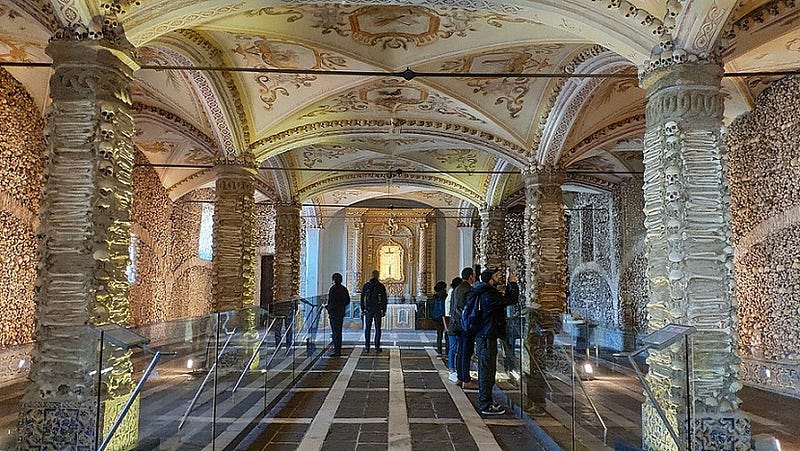
The most famous chapel in Évora was built in the 17th century to reflect on the transitoriness of human life and the consequent commitment to an enduring Christian life.
Architect Siza Vieira felt inspired by the chapel’s imagery and produced a tile panel counterpointing the miracle of life to the misery of death. The panel greets visitors in a rather creepy way.
“We bones that here lay, for yours we wait”
The walls and the pillars are covered with thousands of ancient bones and skulls amassed from several burial places on the convent grounds.
The Chapel of Bones is one of the best examples of baroque’s peculiar taste for necrophilia in Portugal.
A visit not for the faint of heart.
6. Hotel Serra da Estrela
Halfway up the largest mountain in mainland Portugal sits a luxury hotel that reopened in 2014.
The hotel was once a sanatorium for tuberculosis patients.
The clean air of the mountain was the motto for its construction back in the 1940s.
Like every other sanatorium worldwide, hundreds of patients are said to have died in horrible conditions.
The legend goes that the tormented spirits of the patients who lived and died inside those walls still roam the corridors of the old sanatorium.
7. Beau Séjour Palace
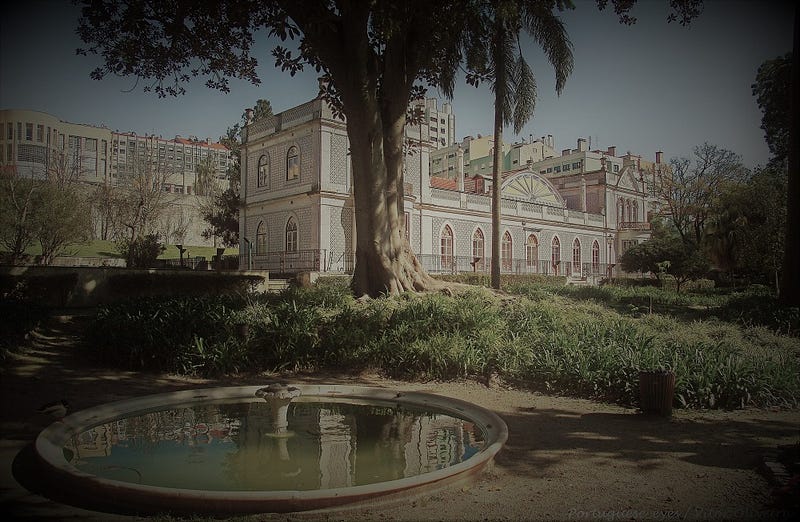
This 19th-century palace is said to be haunted. The once nobleman’s summer house has a frightening story lurking inside its walls.
There’s a veil of mystery supporting the haunting thesis. Objects tend to disappear and are found elsewhere. Strange sounds can be heard at night, namely the sound of bells in the gardens, although there are no longer any bells in place.
The viscountess of Regaleira and the baron of Glória were its former proprietaries, and their ghosts are said to roam the corridors still.
8. Juncosa’s farm
The farm is located in Rio de Moinhos, Penafiel. Thus, relatively close to where I live.
Another tragic love story explains the Santo António da Juncosa hauntings.
Legend has it that one day the so-called Baron of Lages distrusted his wife’s fidelity.
Enraged by jealousy, the baron was driven to madness. He tied his wife to a horse and dragged her through the village.
Only afterwards, when he saw the woman’s body lying mangled on the road, did he come to his senses. Realizing the atrocity he had committed, the baron took his own life and that of his children. Hence, his spirit is said to wander forever around the farm and inside the main building.
9. Chalet Biestar
Sintra’s lore refers to this building as the “Witches’ House.” You can find it by taking the road that leads to Pena.
The neo-gothic architecture and the woods surrounding this place are reminiscent of witchcraft movies.
The locals claim that a secret society formerly met there and that a book the Devil wrote is housed in the building’s cellar.
That explains why the building was used as the backdrop for some breathtaking scenes in Roman Polansky’s thriller “The Ninth Gate.” You can have a better look into the atmosphere of the place by following in Johnny Depp’s footsteps and watching the video below:
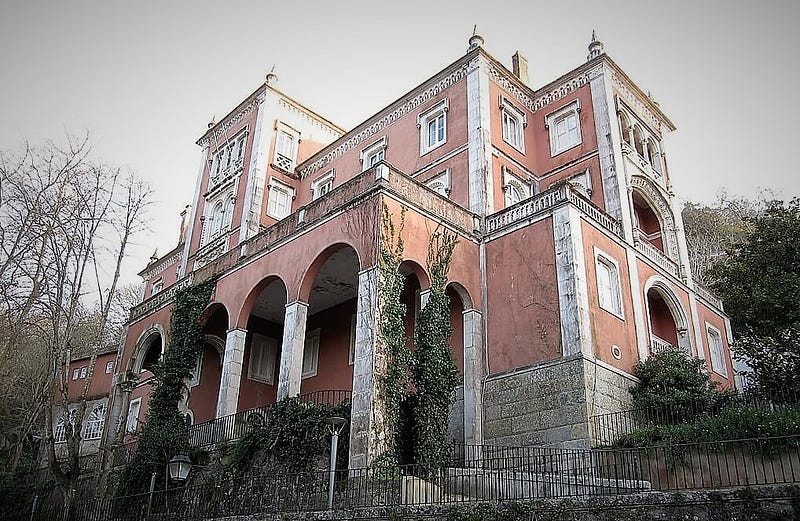
10. Valenças Palace
The Palácio Municipal de Valenças was built in the second half of the 19th century and is a representative example of the eclectic, romantic movement that flourished in and around the Sintra hills at the time.
The palace’s name comes from its second owner Luís Leite Pereira Jardim, 1st Count of Valenças, who inherited the property still in the 19th century. After he died in 1910, the property was inherited by his son, the 2nd Count of Valenças, Ricardo Anjos Jardim.
Legend says the building is haunted by the ghost of a housemaid who fell in love with the count and took her own life out of unrequited love.
The Sintra municipal slaughterhouse, which was in operation until around 1850, was located where the Valenças Palace, or Duche Palace as it was initially known, was constructed.
11. Almourol’s castle
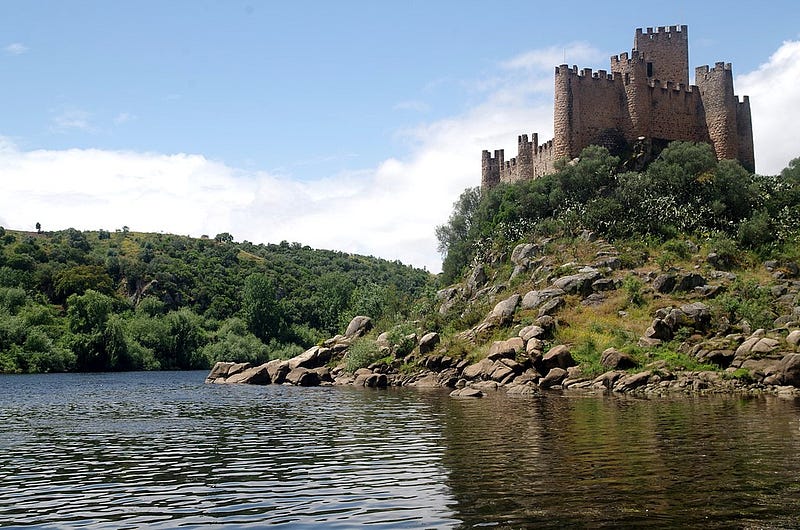
Located in the district of Santarém, the castle sits on a small island, a place of beauty during daytime and dread at night.
The site was once occupied by the Visigoths and the Muslims (from the 8th century onwards), who named it Al-morolan (high stone).
At the time of the Christian Reconquest, Almourol was seized by D. Afonso Henriques in 1129.
Afterwards, the stronghold was home to the knight templars, but its myths and lore go back to when the Arabs ruled the Portuguese south.
Folklore has kept the tragic story of an Arab princess who fell in love with a Christian knight. But, she was betrayed by the knight who only sought to take the castle. When the Christians seize the bastion, she throws herself off the walls to her doom.
Legend says some people can still hear the princess cry of sorrow up on the castle walls.
12. Marques Gomes’ Palace
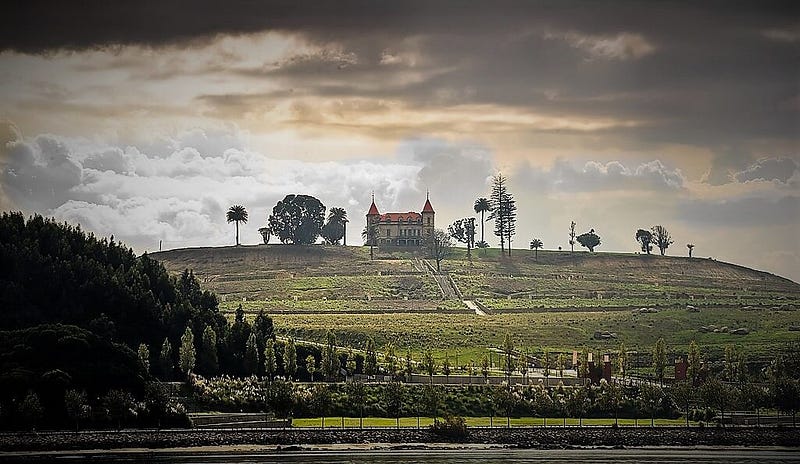
Manuel Marques Gomes was a Portuguese businessman who made his fortune in Brazil in the early 20th century. When he returned, he had a lovely mansion built on the banks of the Douro River.
After the death of its owner, the palace fell into ruins. The building was looted and set on fire. The Palace is said to be haunted, and rumor says that within its walls, visitors may hear an enraged voice vociferating: “‘Get out of here, go away!”
13. The ‘Devil’s house’
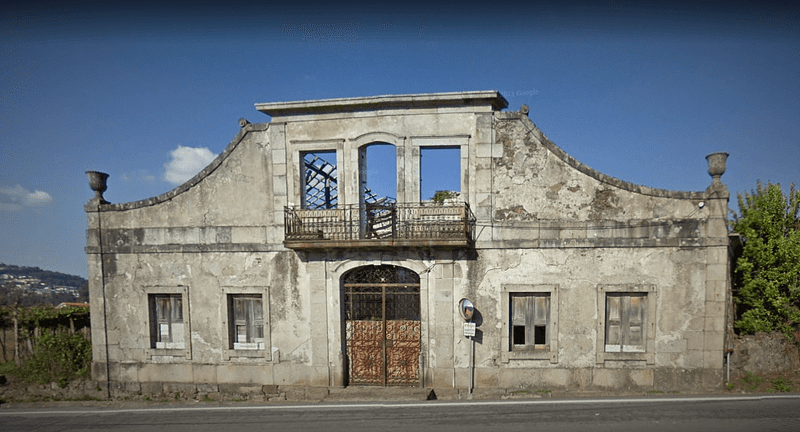
A farmhouse in the municipality of Felgueiras is rumored to be haunted. Various supernatural occurrences have been reported to the authorities, such as objects flying and furniture pulling.
Additionally, there was a suicide, according to rumors. Locals say the building caught fire at least three times, and there were several strange accidents nearby.
Visitors report feeling watched and experiencing a peculiar atmosphere inside its walls. Numerous people have reported hearing noises and seeing a man’s silhouette on the balcony.
Final thoughts
All in all, I recommend listing Portugal on your travel bucket list.
With a rich culture, friendly people, and breathtaking scenery, Portugal is ready to surprise you at every turn.
Whether you’re looking for some world-class tourist attractions or prefer more off-the-beaten-path travel experiences, there’s something for everyone in this great country.
In the meantime, why not boost your trip up a notch on the thrilling factor, and visit these places? I guarantee that you will be amazed or even spooked.
Welcome to the dark side of Portugal.
⭐️ Sign up through this link. Support your favorite platform and its talented authors. You’ll boost our community’s success and support my work with a small commission, all while gaining exclusive perks and benefits as a member.


