
PORTUGAL TRAVEL
Porto’s Hills Are Alive With History
Hills, bridges, port wine, and one of the world’s most famous bookstores
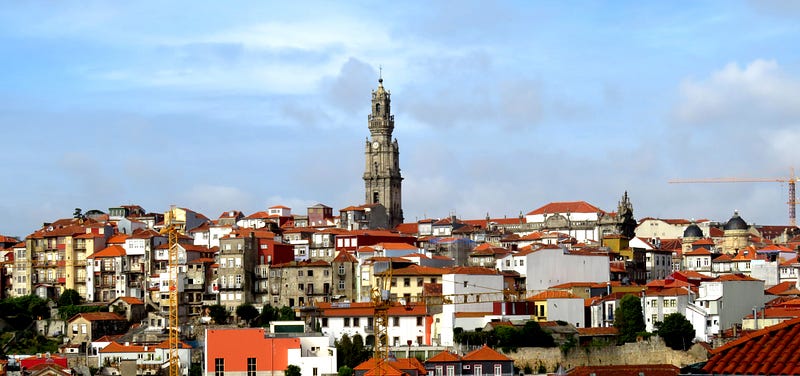
After a difficult journey to get to Porto thanks to a rail strike in Portugal, the city didn’t fail to impress me. I fell in love with Porto at first sight and very few cities have done that.
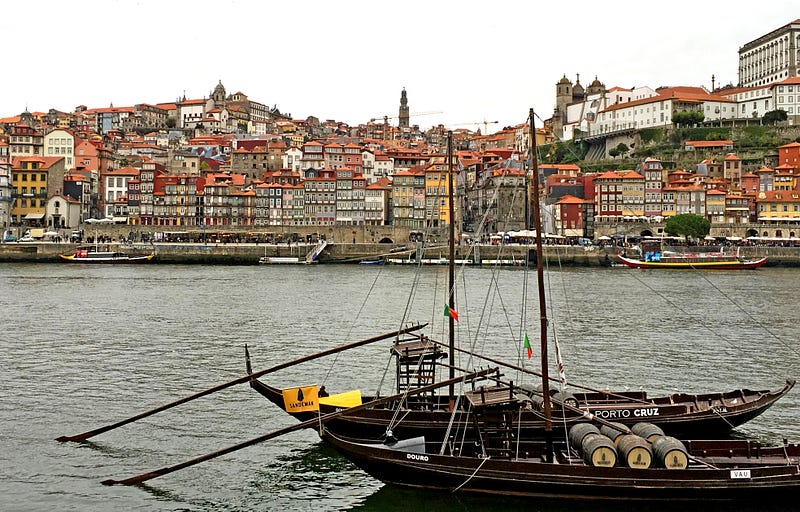
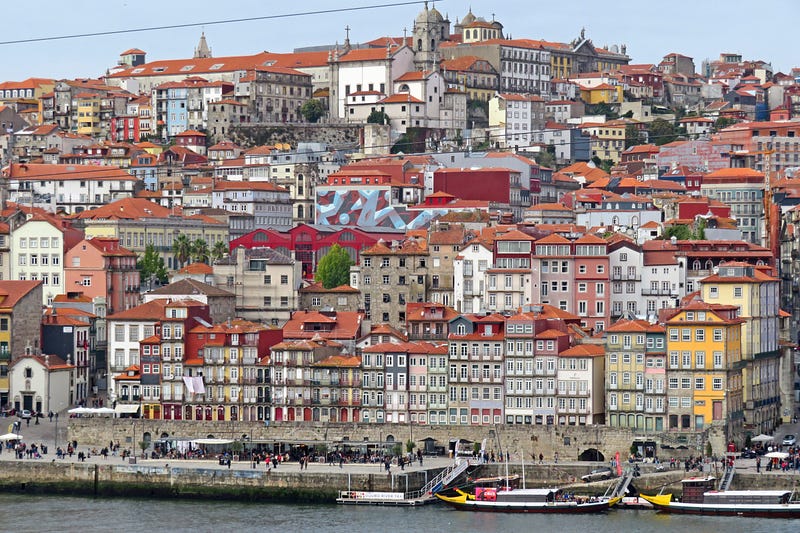
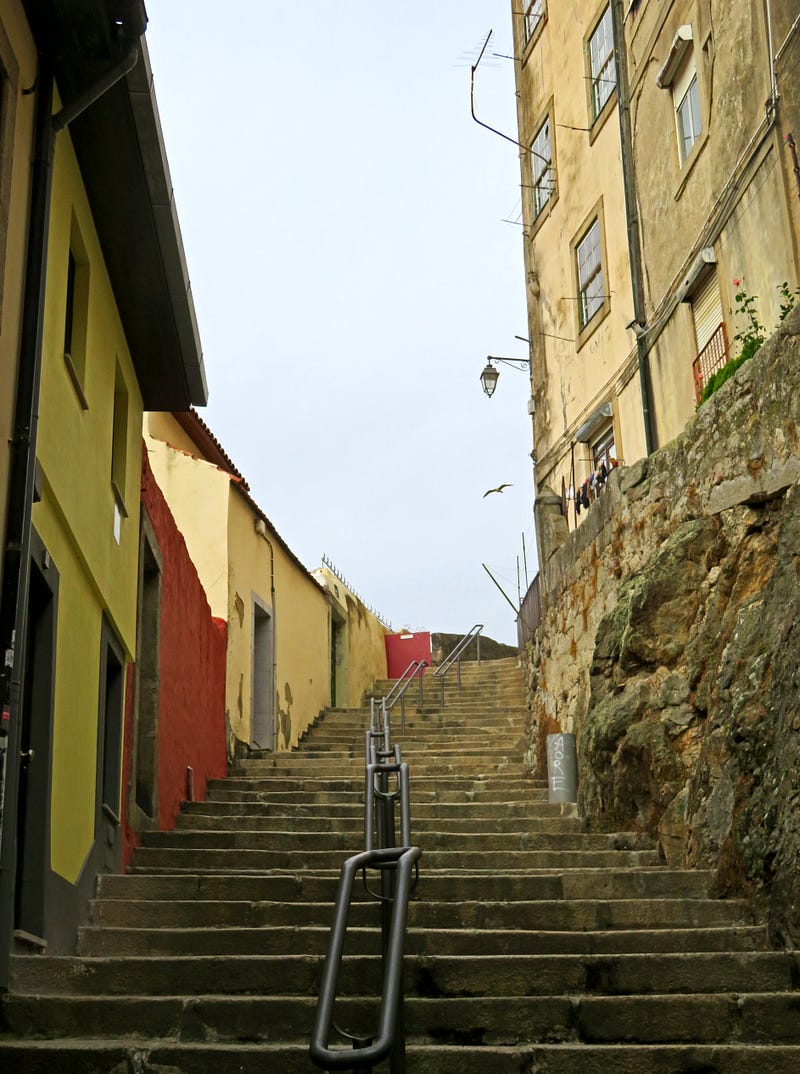
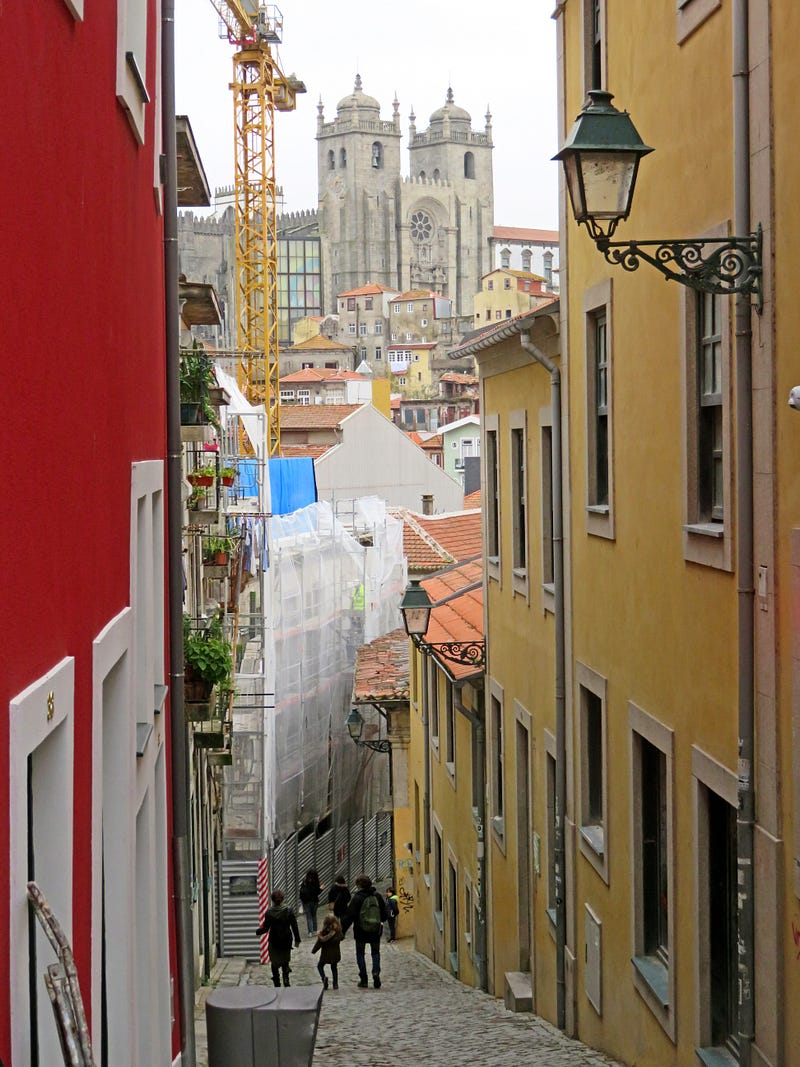
Pastel colored buildings rise up from the banks of the massive Douro River but Porto isn’t as hilly as Lisbon. I did my homework and I knew Porto would involve a lot of steep hills to climb so I made sure to wear some comfortable walking shoes, plus the main tourist area is compact so I found it relatively easy to get around, despite the hills.
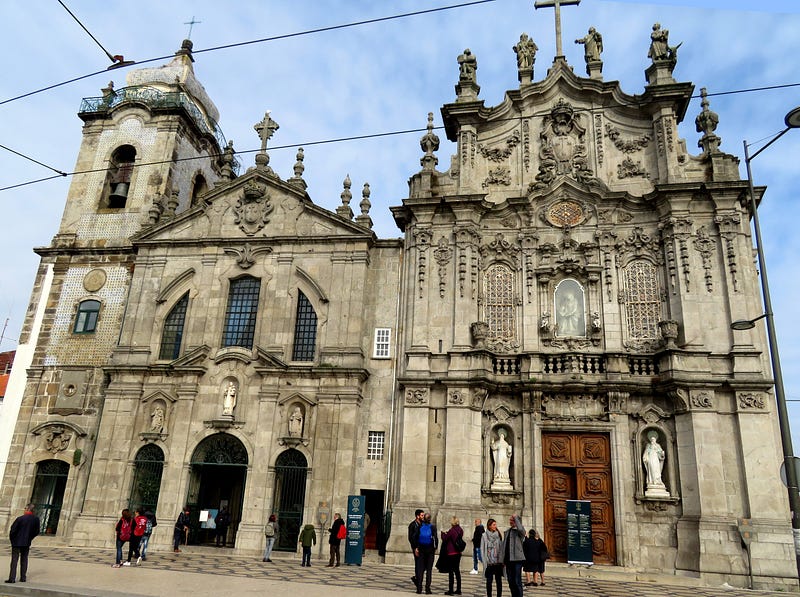
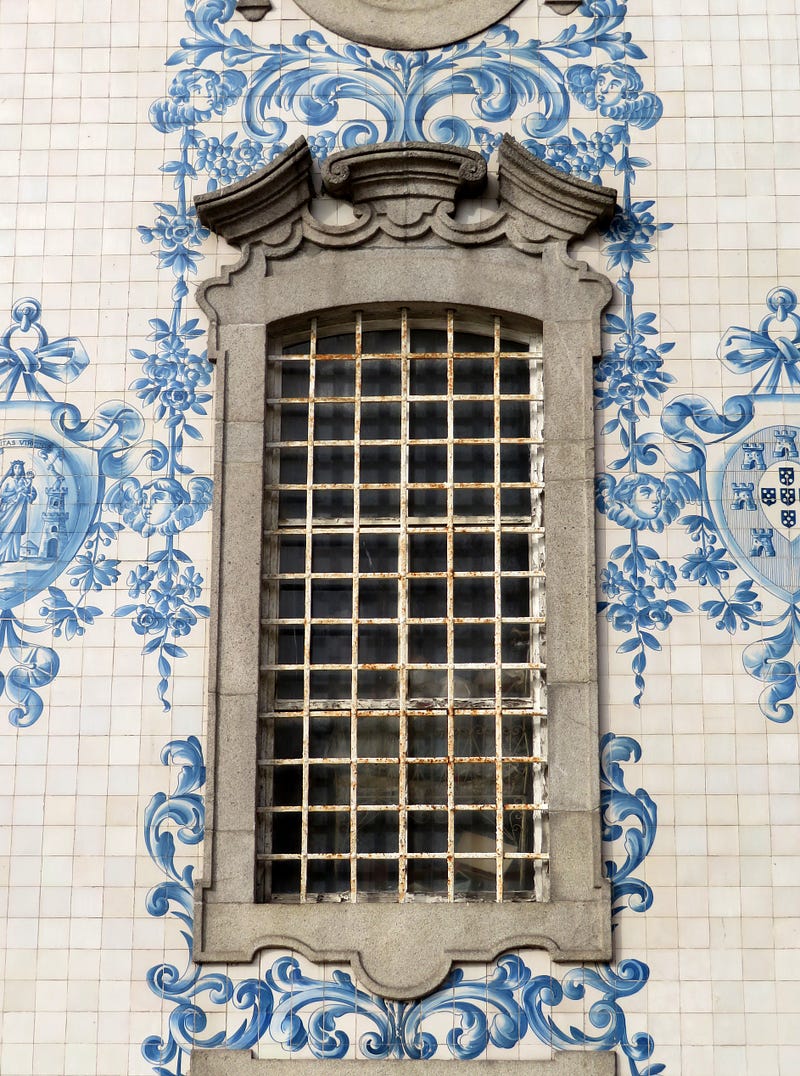
Our hotel led straight to Rua de Cedofeita, a pedestrian street lined with shops and restaurants and the twin Carmo and Carmelitas churches. They look like one huge church but are actually separated by one of the world’s narrowest houses, built to keep the nuns and monks separate. One side of the building is covered in traditional blue and white tiles.
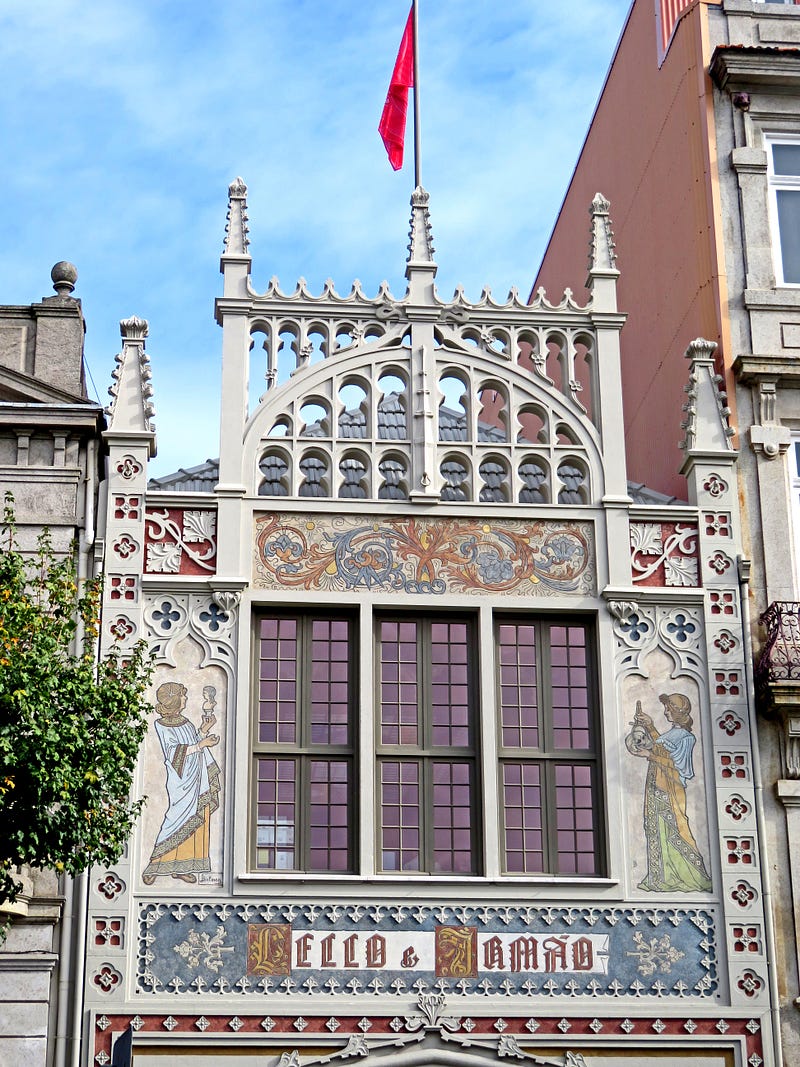
Just around the corner on Rua das Carmelitas (named for the church and the nuns) is one of the oldest bookstores in Portugal, which has become one of the biggest tourist attractions in Porto. It’s often called one of the most beautiful bookstores in the world. But Livraria Lello isn’t just a bookstore. It’s unique interior design is reported to have inspired J.K. Rowling’s description of Hogwarts in the Harry Potter series. She was a frequent visitor to the shop when she taught English in Porto in the early 90s.
The two story building has a unique facade with exquisite pastel colored relief designs and tiles. It is a mix of neo-Gothic and Art Nouveau.
Before entering, we had to buy a 5 euro ticket on a side street near the bookstore. But even if it’s a timed entrance ticket, you still have to wait in a long lineup that winds its way down the street, even in low tourist season.
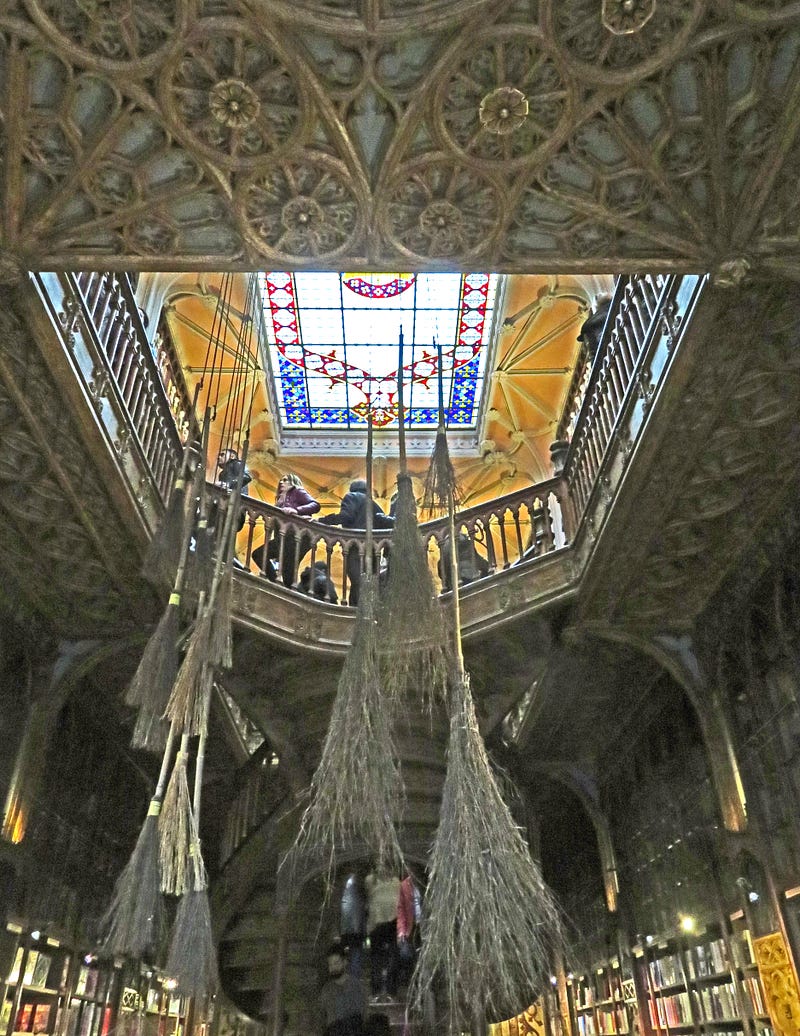
Once we got to the front of the line and entered the store I was overwhelmed. There is a nod to Harry Potter with several brooms hanging from the ceiling but the big crowds made it difficult to see all the details.
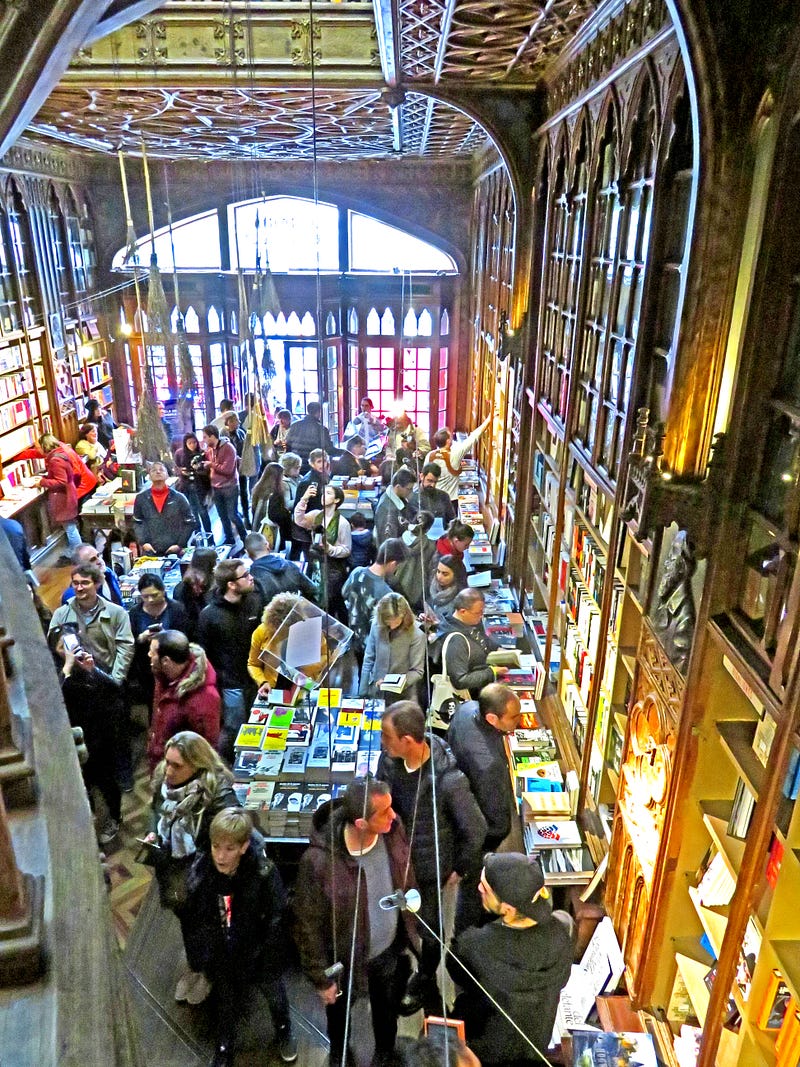
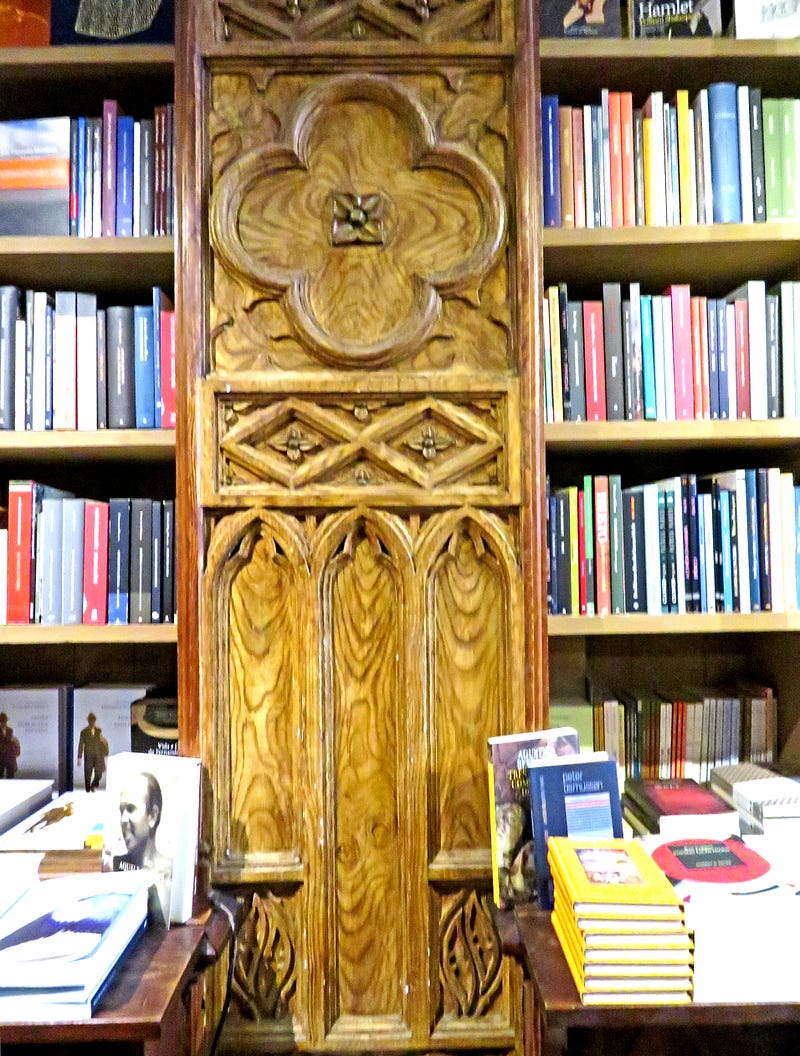
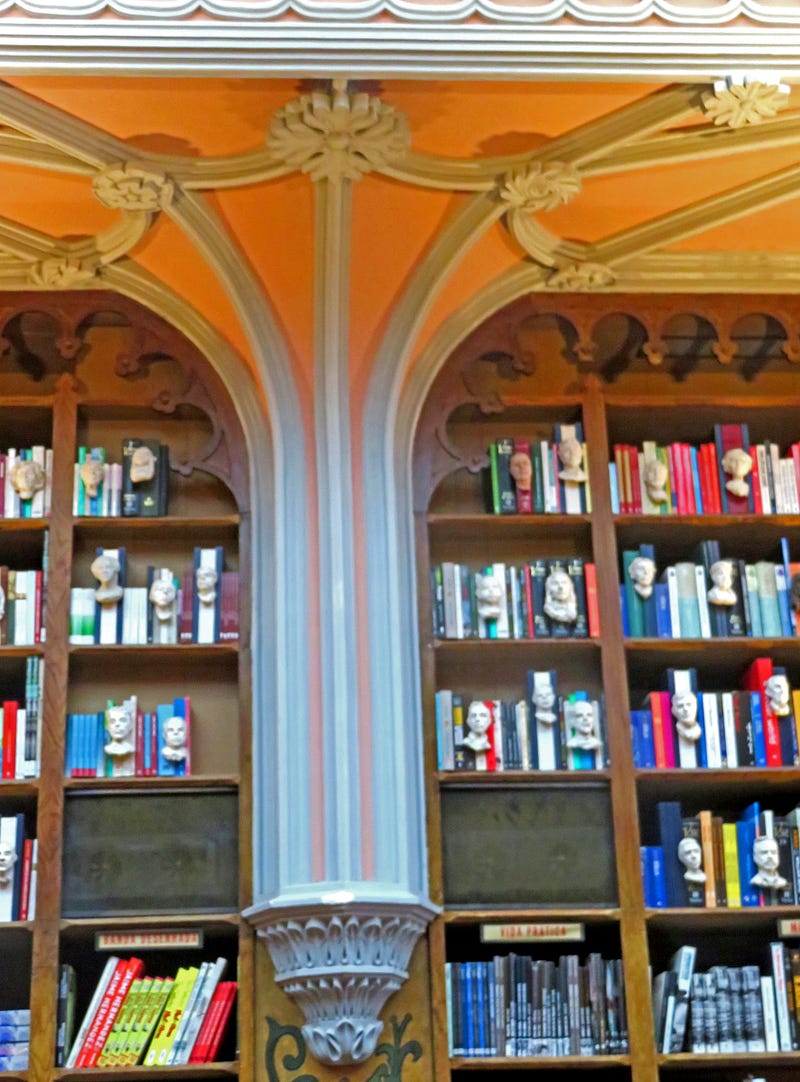
Did I mention, there are books there too? Massive floor to ceiling shelves of books include an extensive selection of English language titles. There are also books in other languages and a large collection of the works of Portuguese writers. Wooden ladders and rails are positioned along the shelves to get to the literary treasures that are out of reach.
Most of the visitors, as many as 5000 every day, are not so much interested in the books as they are busy taking photos and selfies to prove that they were there (yeah, okay, I was one of them although I did buy a book.)
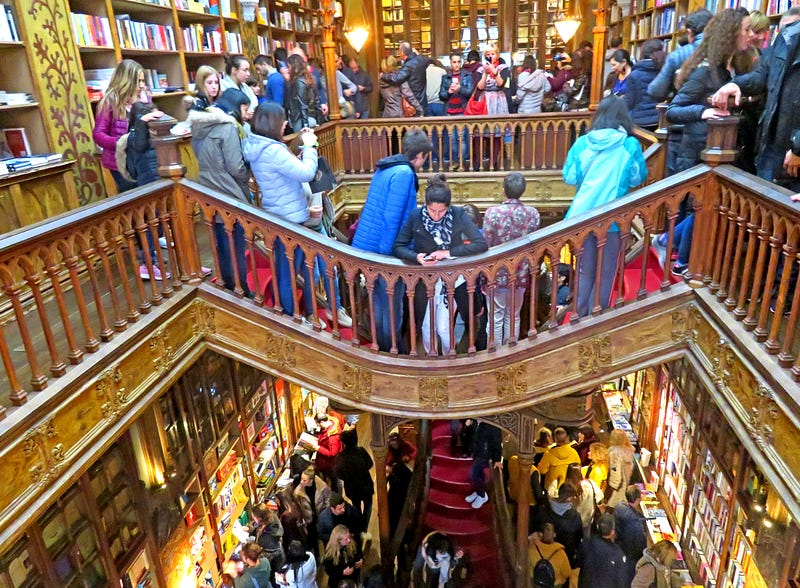
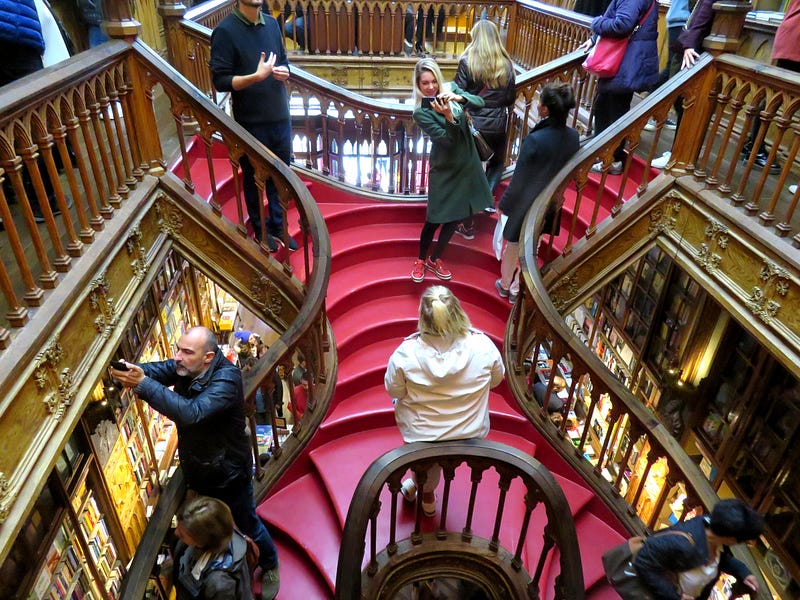
In the middle of the first floor is the famous forked staircase. The exquisite carved staircase appears to be constructed with a rich medium brown wood, but look closer and you will see that it is, in fact, made of plaster. The wooden stairs are stained a deep red.
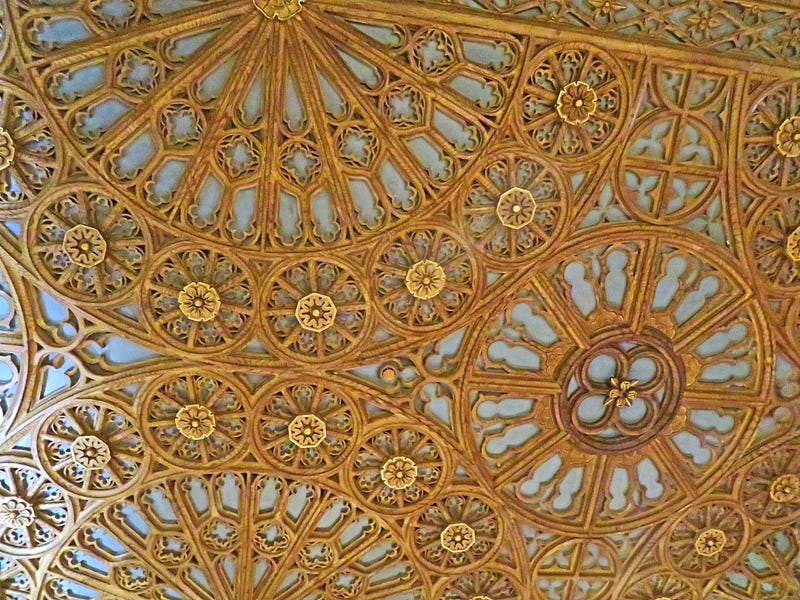
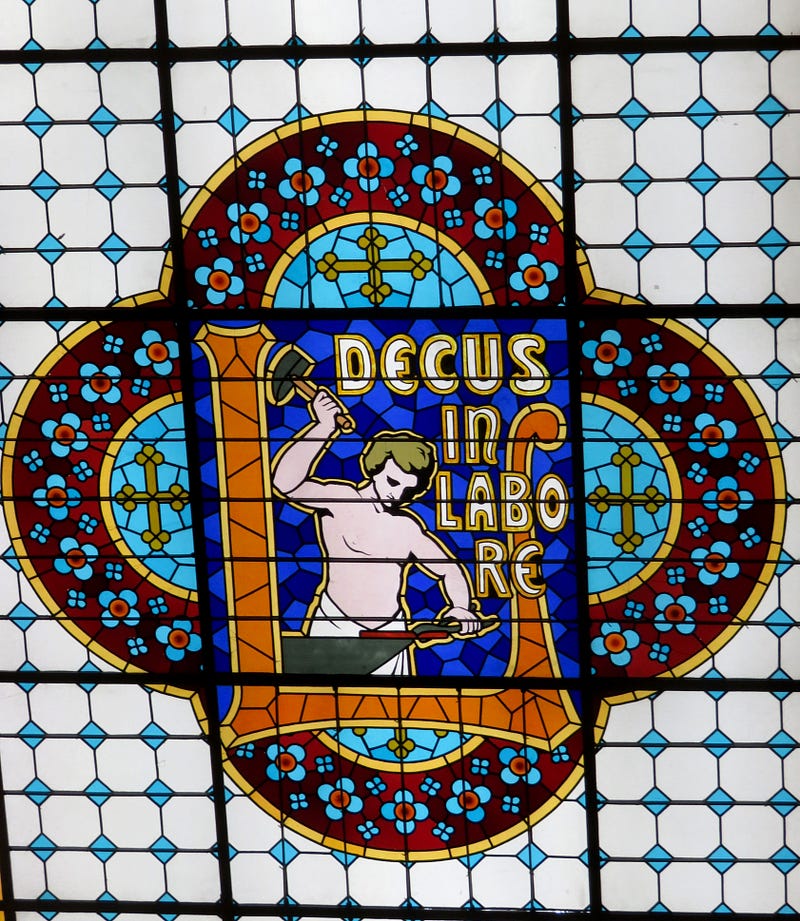
Look up to see the spectacular ornately ceiling, again the plaster is made to look like carved wood with a robin’s egg blue background and in the center is a stained-glass skylight bearing the words, Decus in Labore or Honor in Labor.
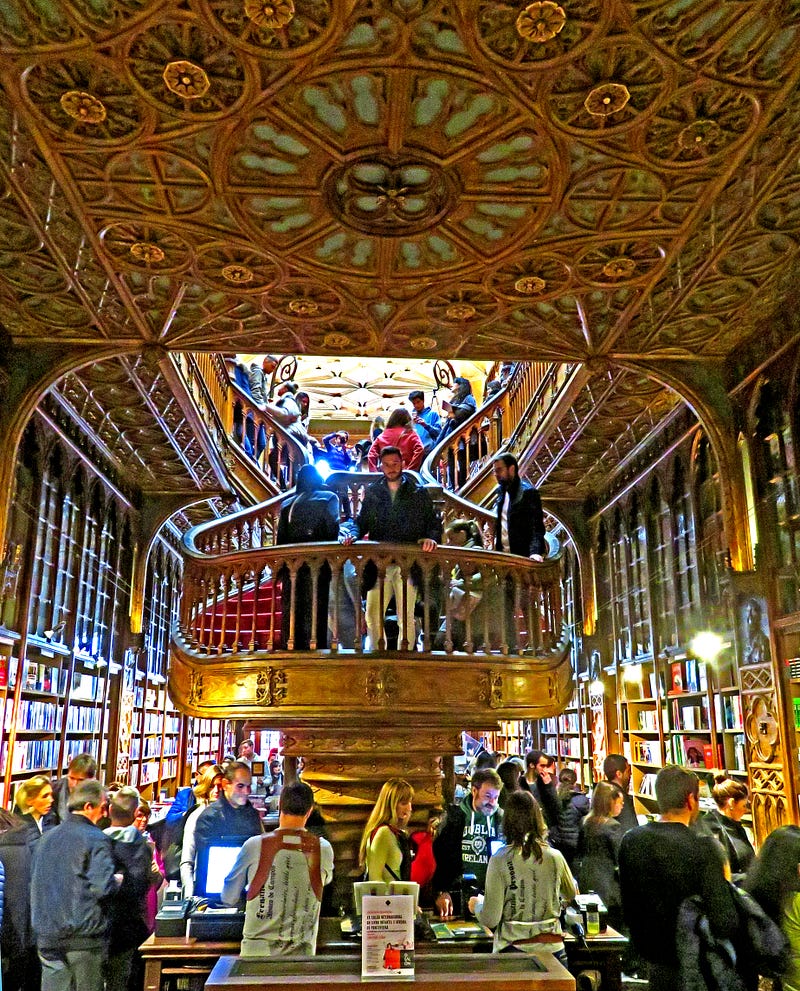
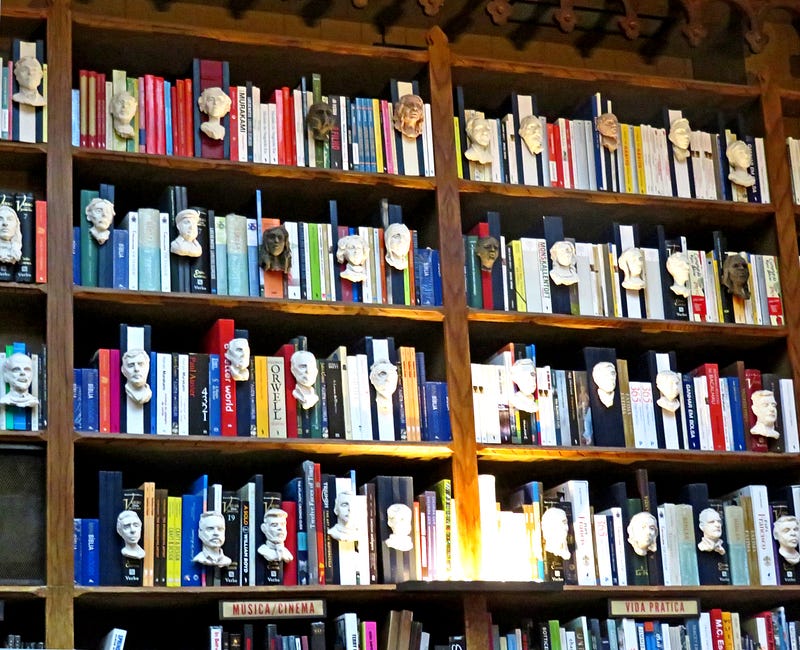
There are also plaster busts of famous Portuguese writers and literary figures as well as representations of Antonio and Jose Lello, founders of the bookstore.
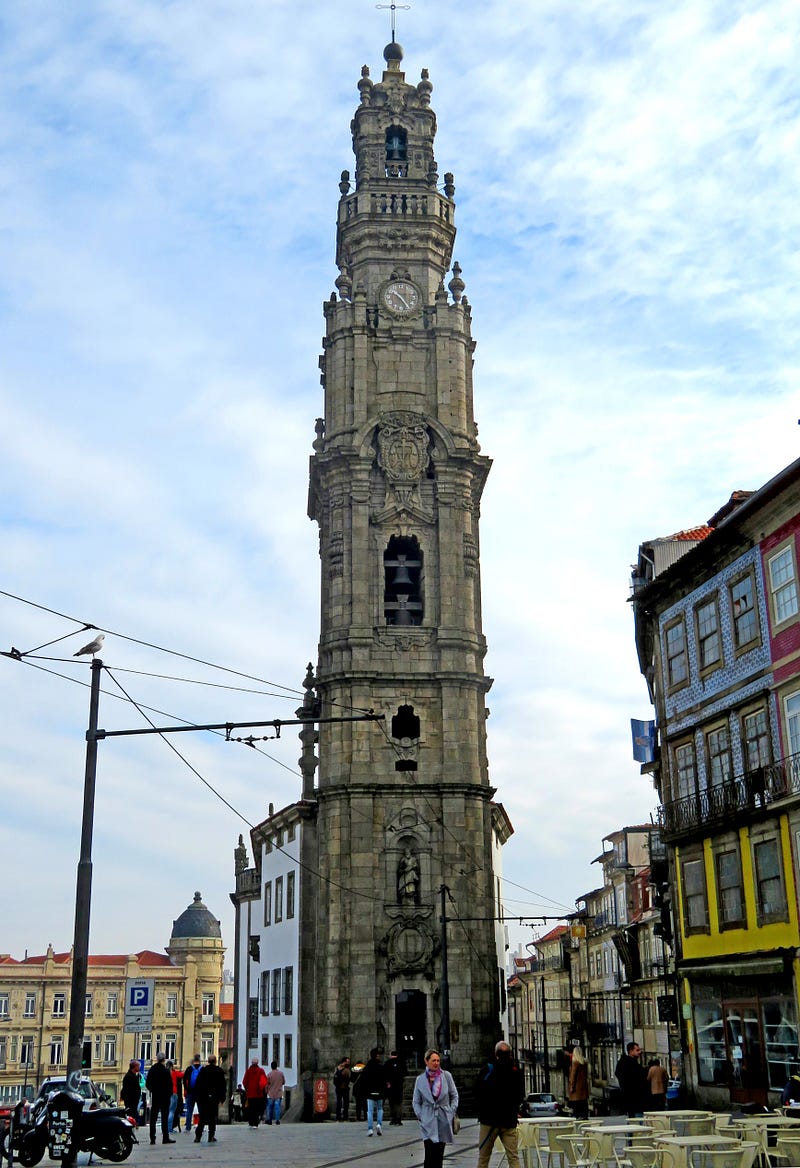
About a block away is the Torre dos Clerigos, a church and tower that will give you a birds-eye view of Porto. It stands like a beacon towering above the city. And no matter what time of year it is, expect lineups, even in the off-season. After waiting in line for over half an hour we finally made it to the front of the line, only to find out we had to book our entry. The church is free to visit and doesn’t require an “appointment” but because of the narrow staircase, the number of visitors to the tower is strictly limited.
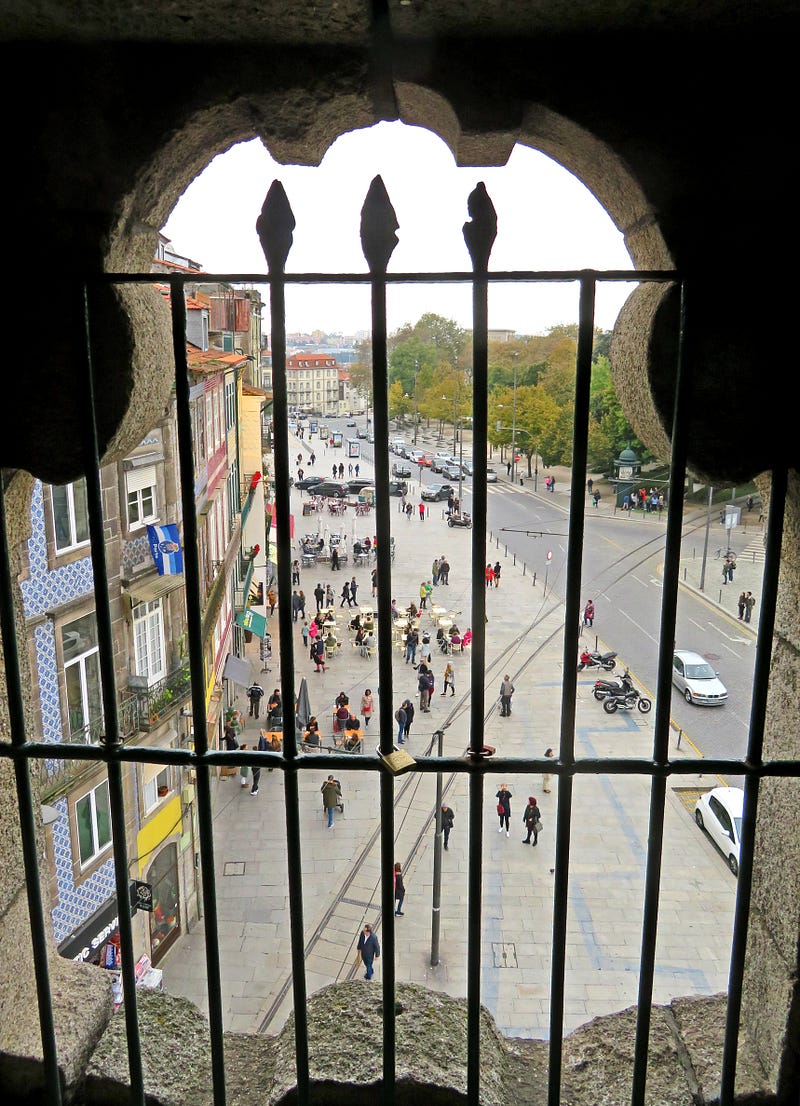
The tower is 76 meters tall and you have to climb 240 stairs up and then 240 stairs back down, so it is not for the faint of heart. It also doesn’t help that it is so narrow in places that it is difficult to move, and when you are stuck behind a slow group of people, it can be a claustrophobic experience. Still, the views are breathtaking and you can get a good lay of the land of this beautiful city.
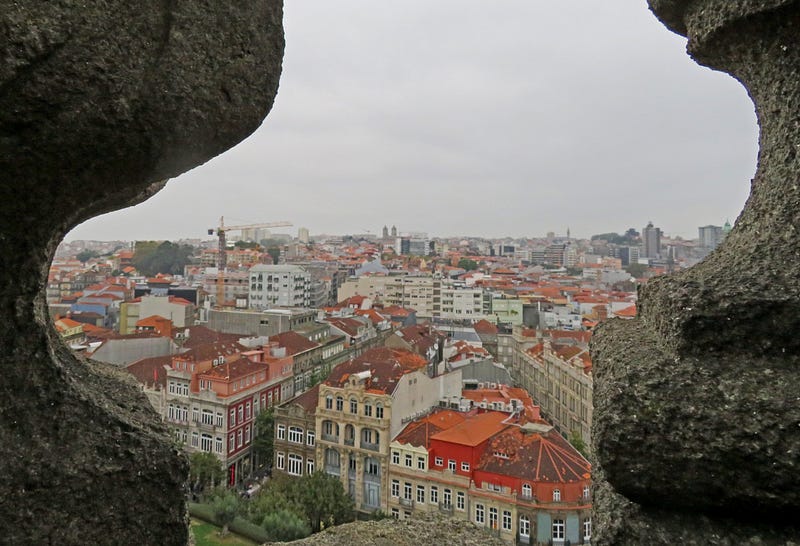
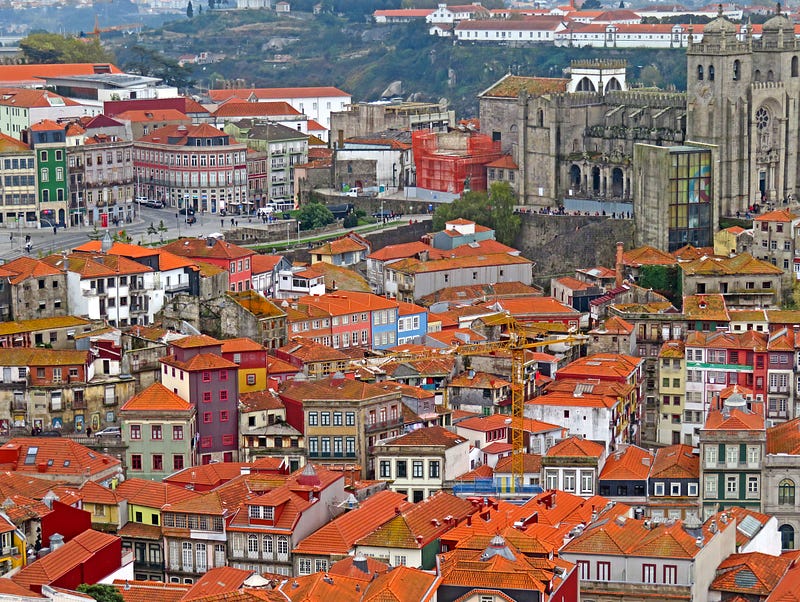
We continued our walking tour of the narrow streets in the Ribeira (river) neighborhood until we reached the Gothic Romanesque Porto Cathedral or Se. Unfortunately, renovations were going on at the time so we couldn’t see the nave.
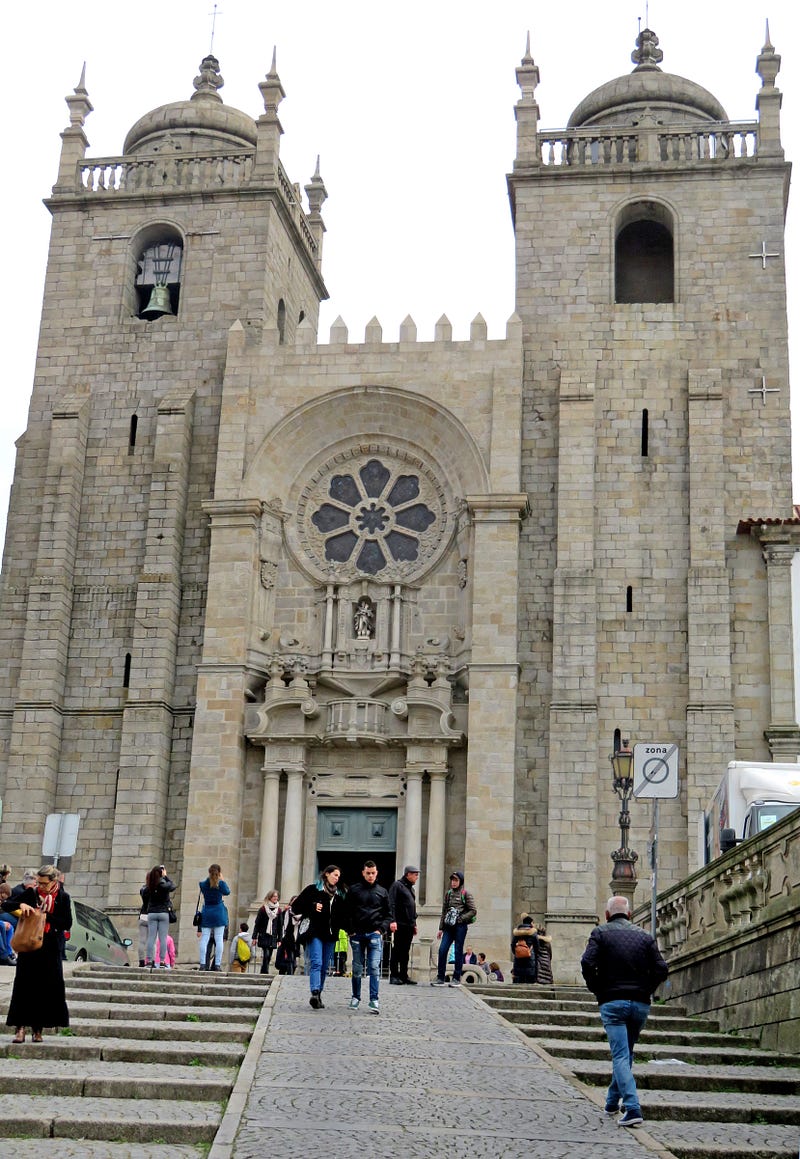
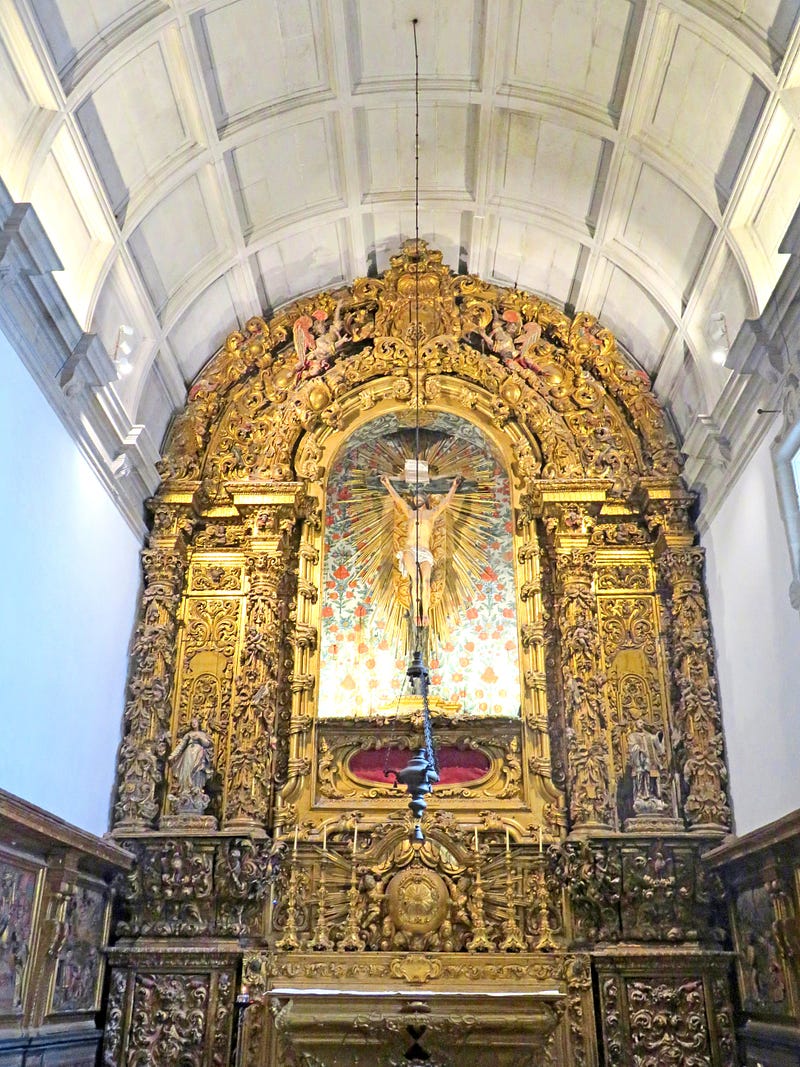
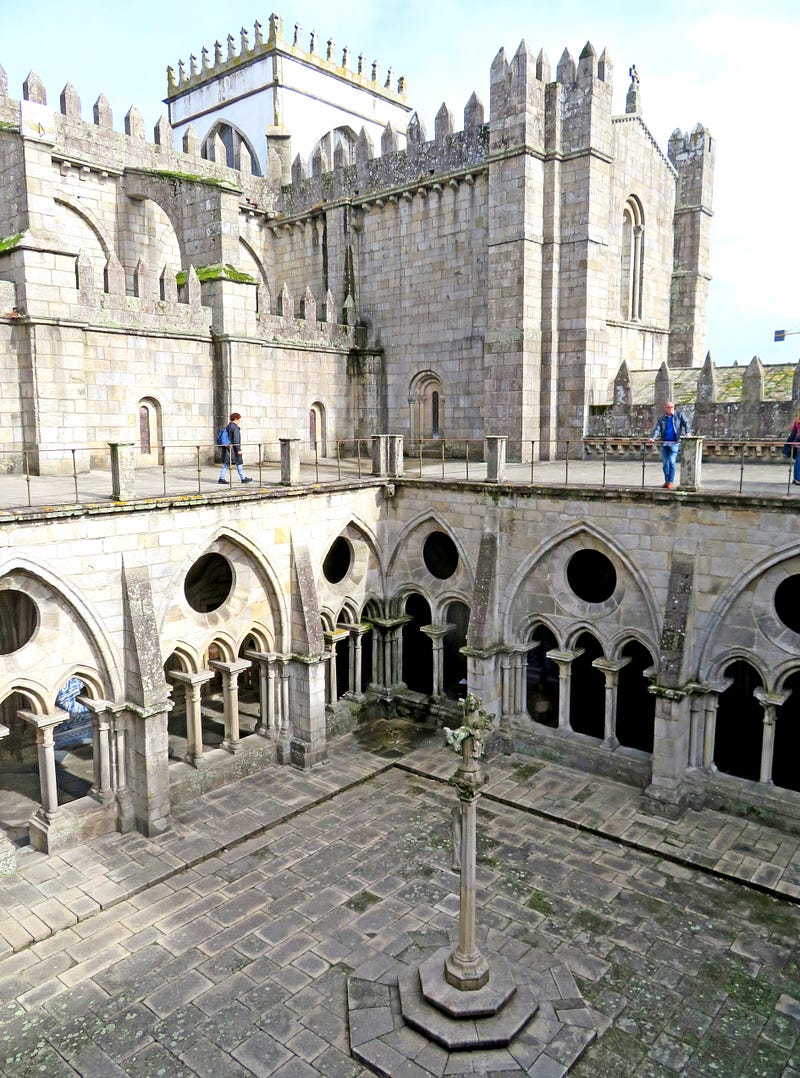
Moving downhill from the cathedral is a relatively easy walk toward the river, but I didn’t forget that we would eventually have to walk back uphill when our tour was over.
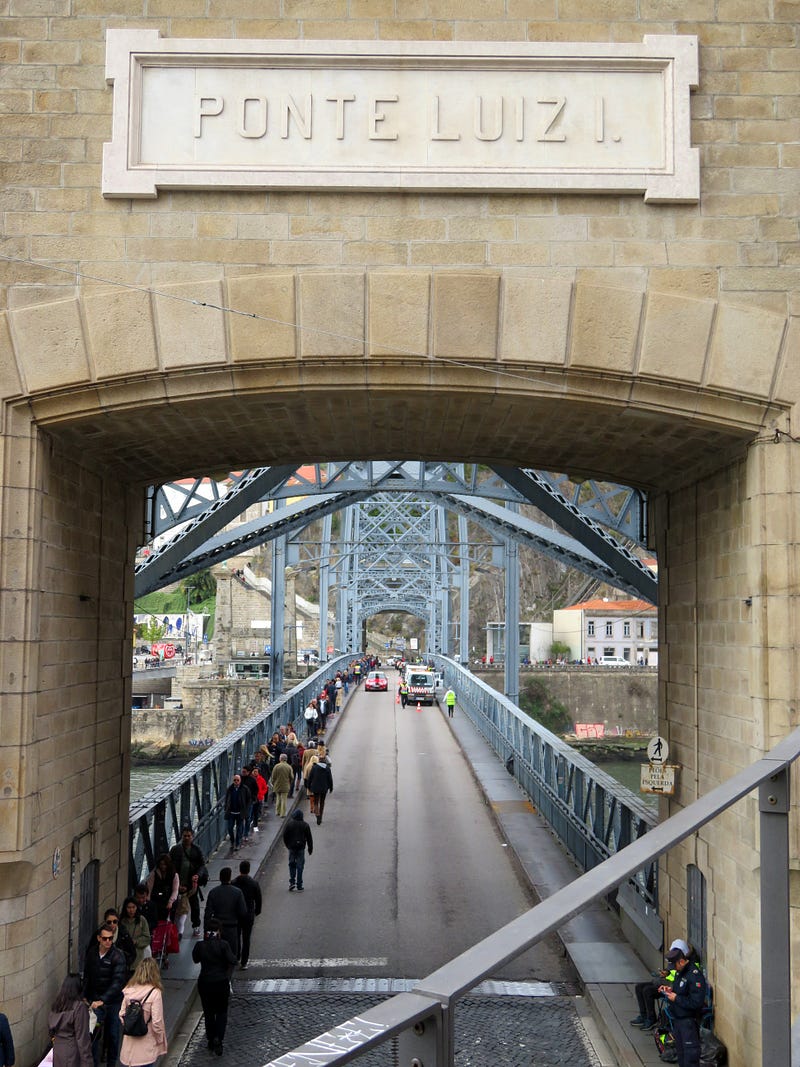
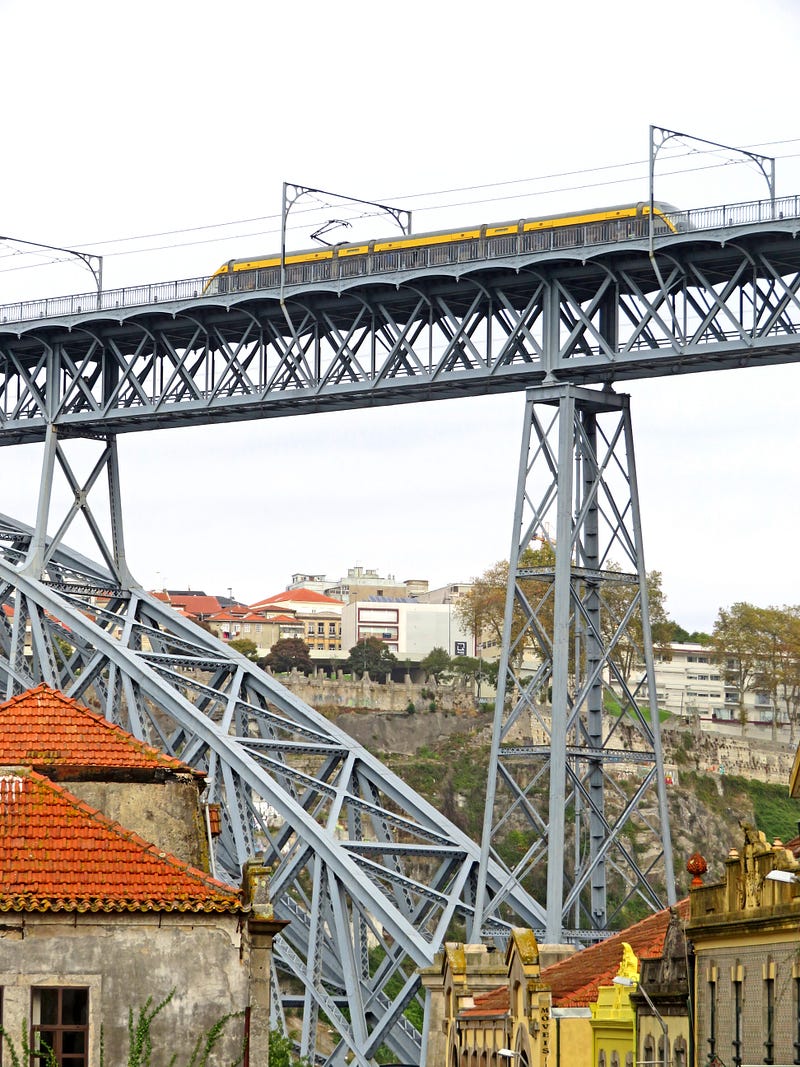
The Douro River is massive, with Porto on one side and Vila Nova de Gaia on the other side joined by a series of bridges. The most famous and the most beautiful is the Dom Luiz I Bridge, a double-deck metal bridge that is supported by a massive parabolic arch. The top deck is used for the LRT trains and pedestrians and the lower deck is for vehicle traffic and pedestrians. I was warned that the top deck might be too much with my fear of heights. I don’t think I have to tell you, I didn’t go there.
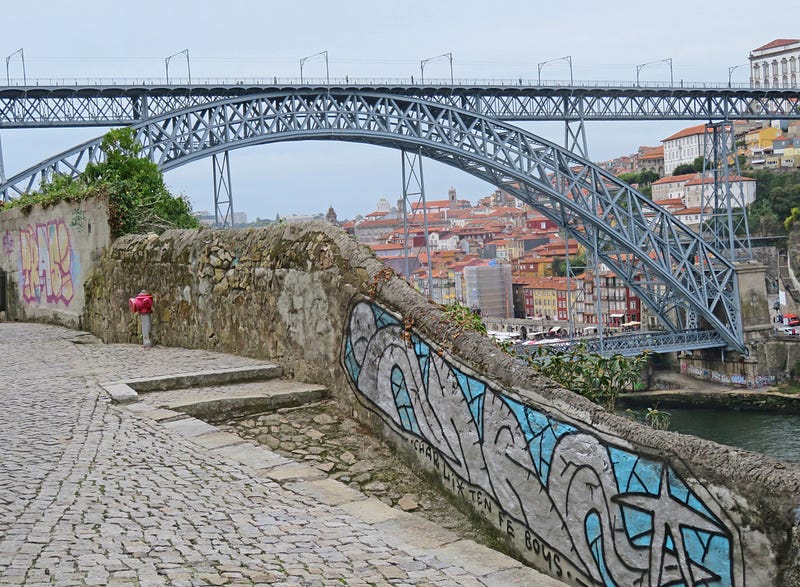
The river bank on the Porto side is lined with numerous restaurants and patios for people to have a drink or a meal and enjoy the beautiful scenery and the parade of tourists and locals passing by.
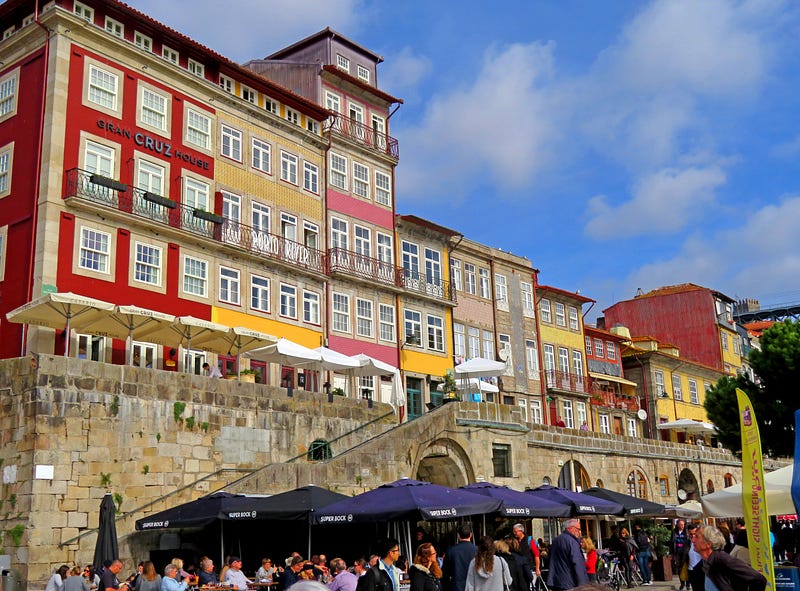
Something that shocked me, is that there is no railing along the riverbank and quite a long drop to the water below. I was too nervous to get too close and my stomach flipped as I watched children running and playing along its edge. I could only imagine how many intoxicated diners stumbled into the river.
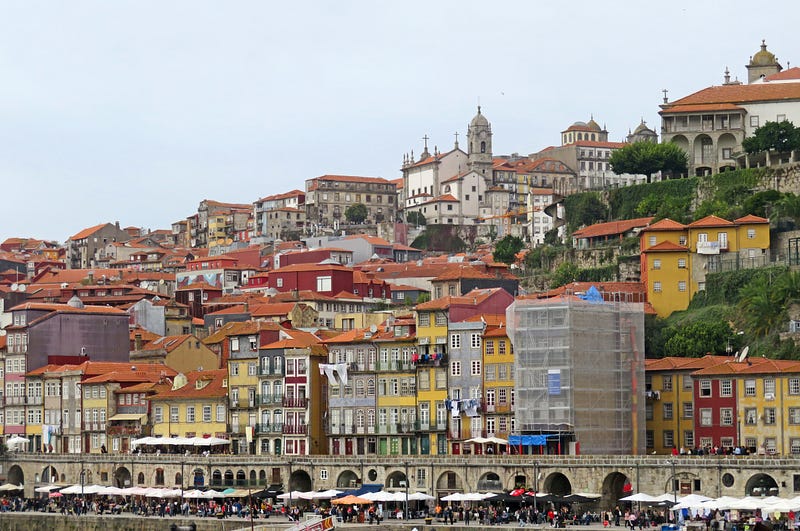
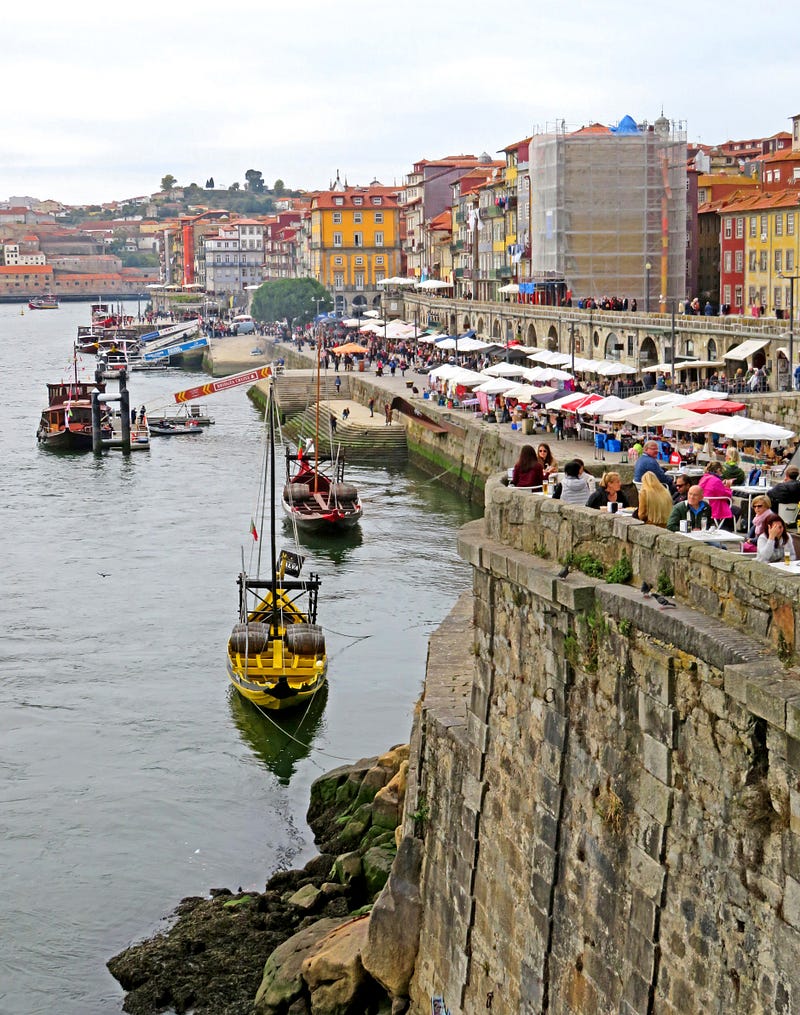
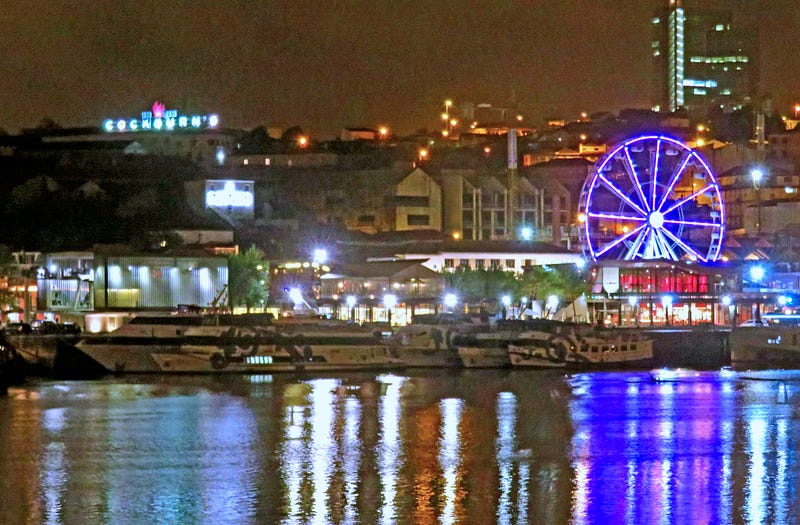
On the other side of the Duoro River is Vila Gaia and its waterfront area also has restaurants and shops and even a ferris wheel that is lit up at night, but the main highlight is the port wine caves.
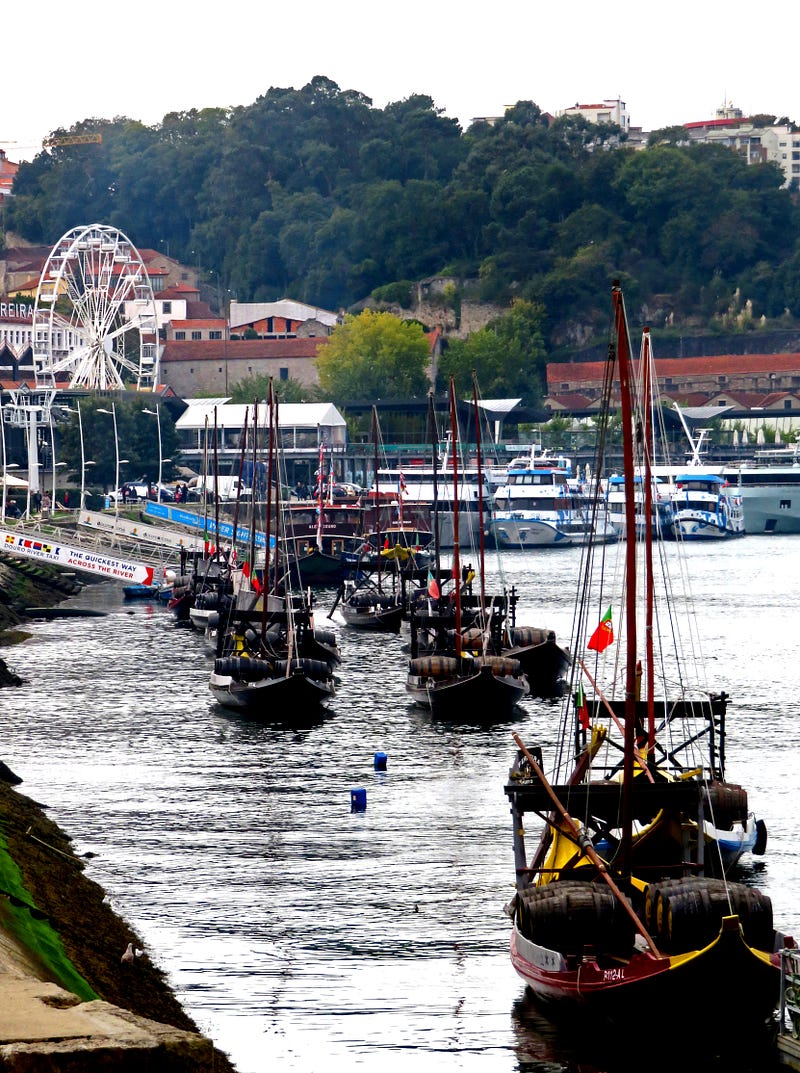
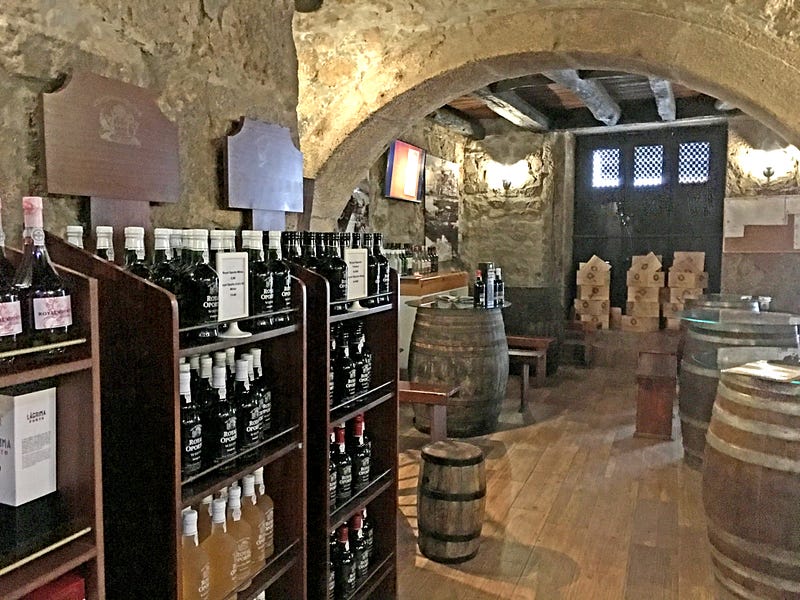
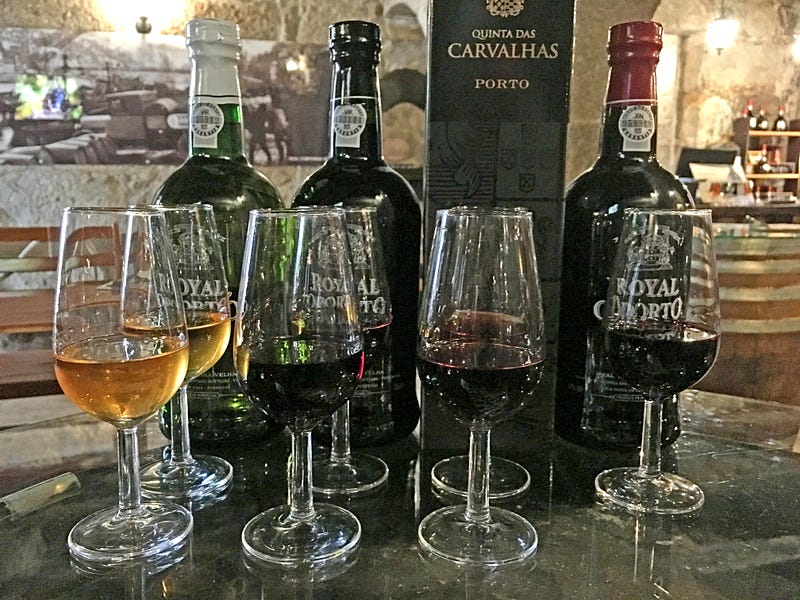
Some of the most famous port winemakers in the world have their own private caves or cellars where you can sample their products. My friend and I had a flight of port at Royal Oporto cave, tasting the different kinds of port and the different grades, and getting tipsier and tipsier as we drank up. While each glass was just 2 euros, by the time the sales pitch came, we were more than a little tipsy and easily agreed to buy a bottle or two to take home.
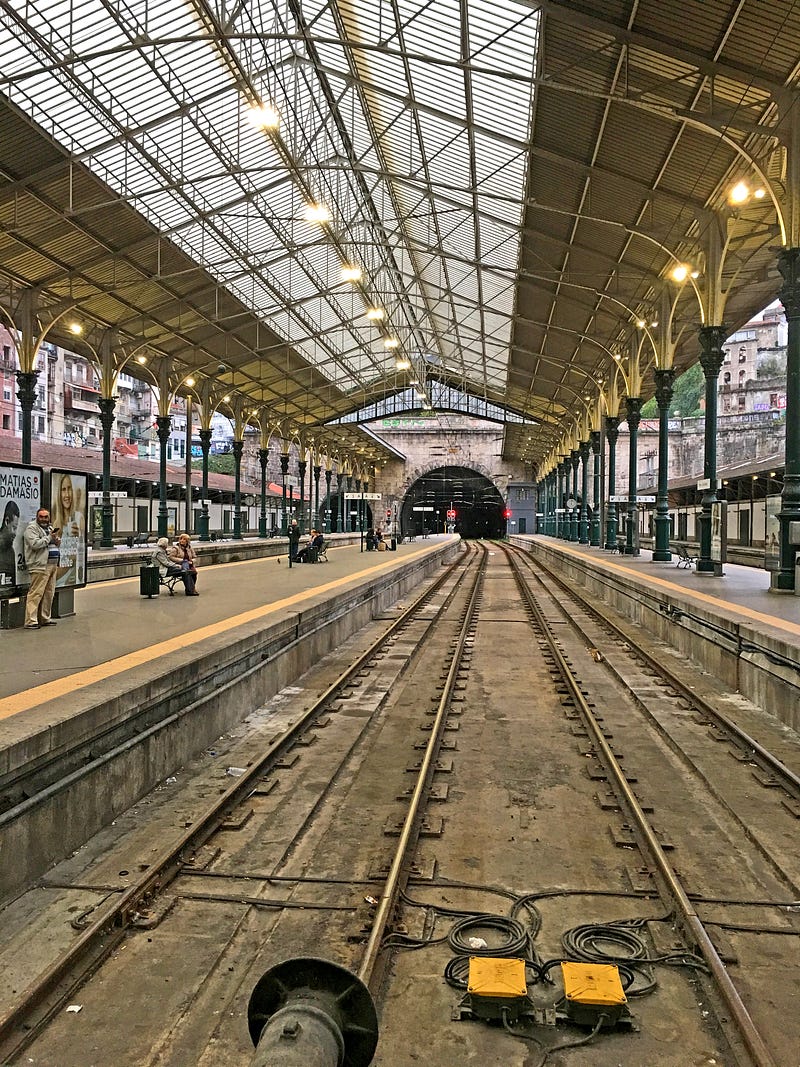
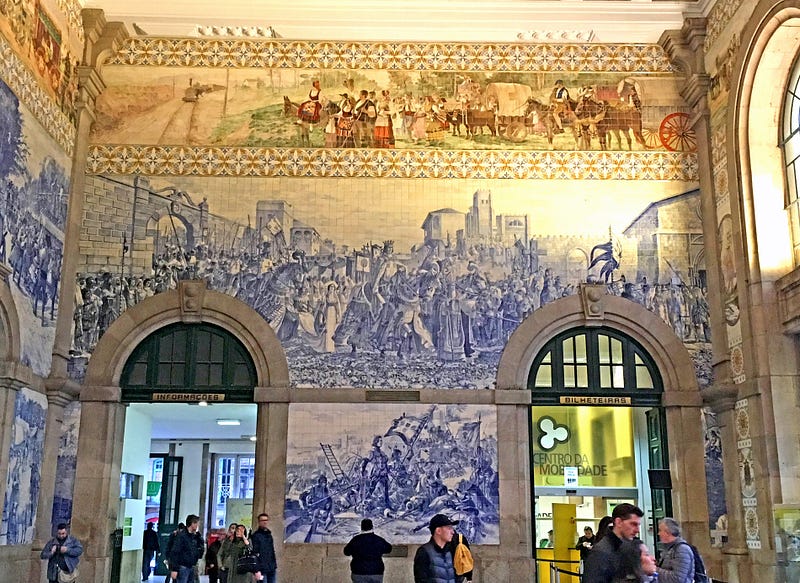
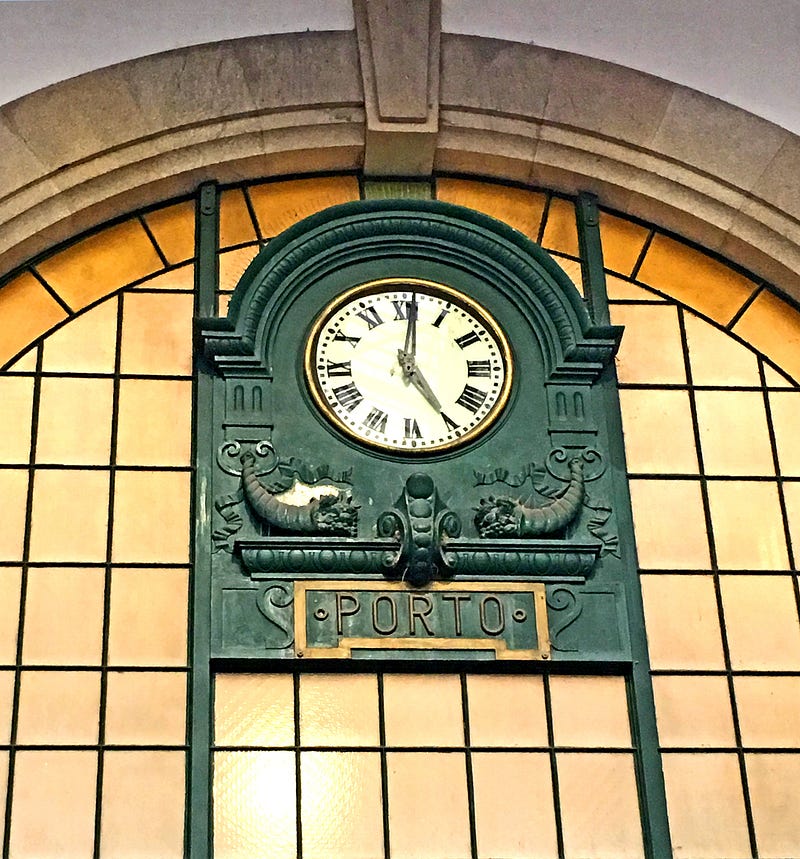
Porto is the gateway to several northern Portuguese cities, all just a short train ride away. But what a train station. Porto Sao Bento is in the center of the city. Built early in the 20th century, the interior walls are covered in panels and tiles or azulejos, depicting Portuguese history. There are said to be more than 20,000 tiles covering the walls and ceiling.
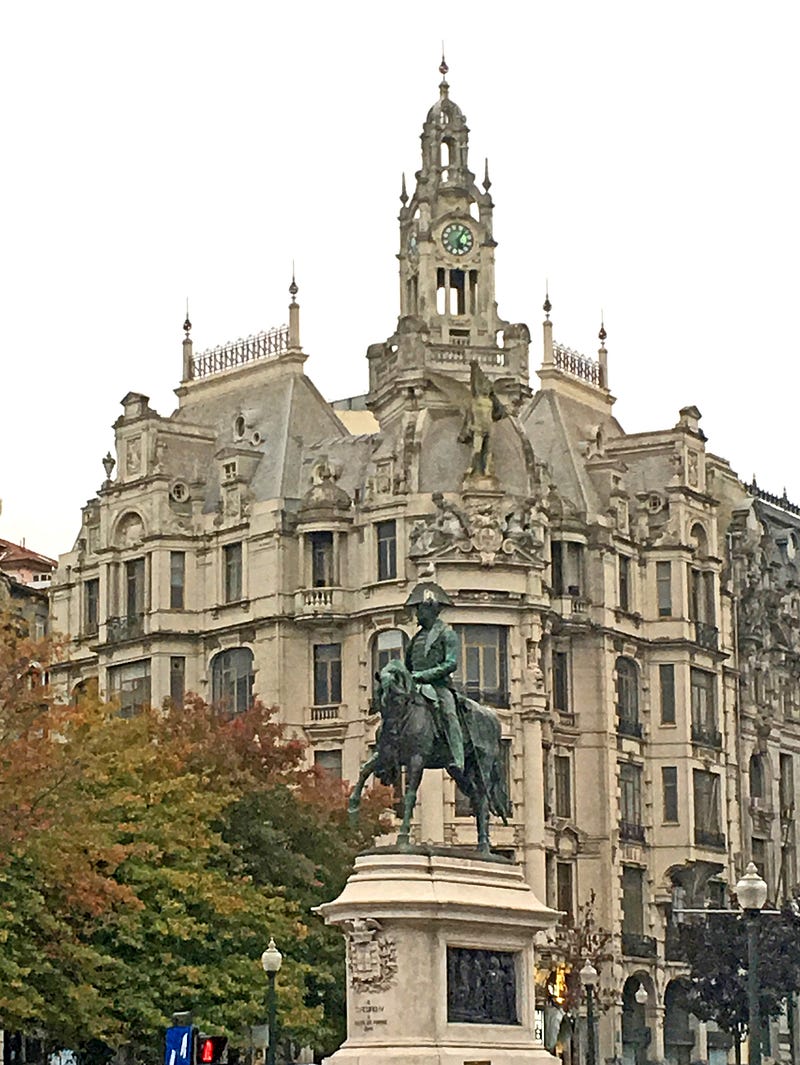
Just north of Sao Bento Train station is Avenida dos Aliados, the main street in Porto. It’s a great place to stroll, wander through the main square and admire the surrounding domes and pinnacles of the buildings as well as numerous statues, with city hall the central focus.
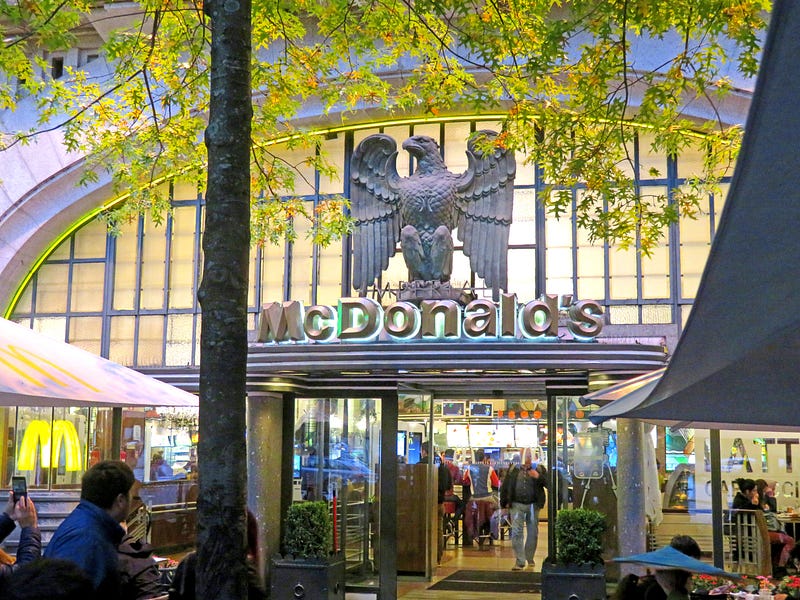
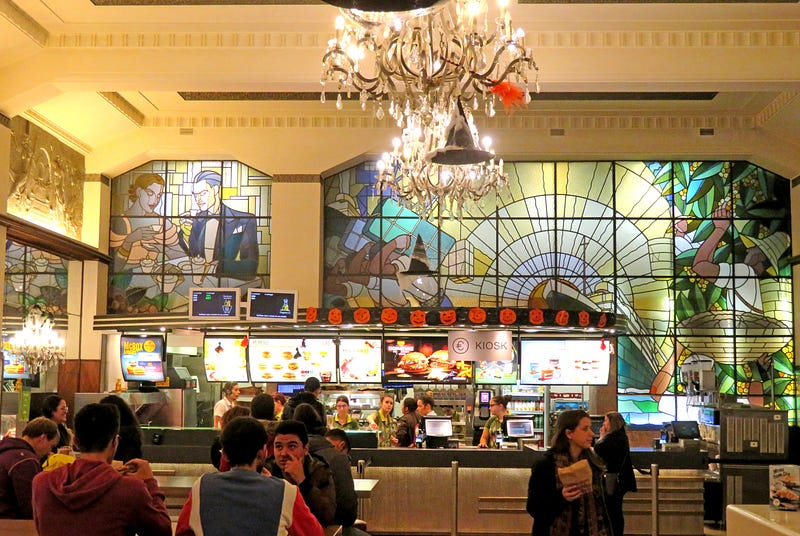
Porto is a foodie’s haven with something for everyone, from high-end gourmet meals to fast food. And the most famous fast food, even in Porto is McDonalds. The one on Aliados is considered to be the most beautiful in the world. It is the former Imperial Café, a historic building that was built in the 1930s and converted into a fast-food restaurant in 1995. The front arched glass window with the McDonald’s logo topped by an eagle, prepared us for what was inside. The stained-glass window, the chandelier, and the art deco motif made me forget where I was.
Porto has some unique foods that it has made famous. I could sense my cholesterol levels rising as I considered a Francesinha sandwich. It consists of a Portuguese roll, layered with pork, beef, smoked sausage, and a fried egg and then covered in a cheese sauce. Too much for me.
Something that is not quite so rich and is even more of a specialty of Porto, is the Bifana sandwich. A Portuguese roll with piles of marinated roasted pork that has been soaking up vinegar, garlic and spices. It’s served with a mound of caramelized onions. With or without mustard.
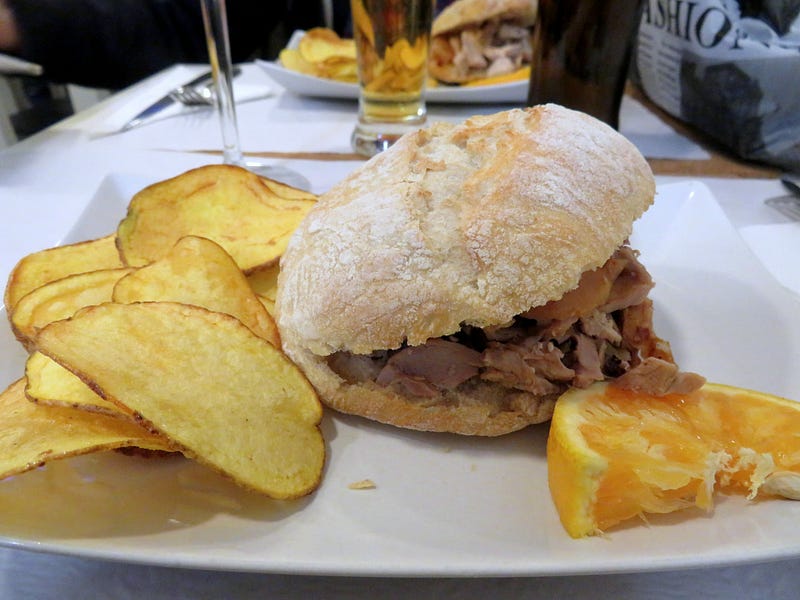
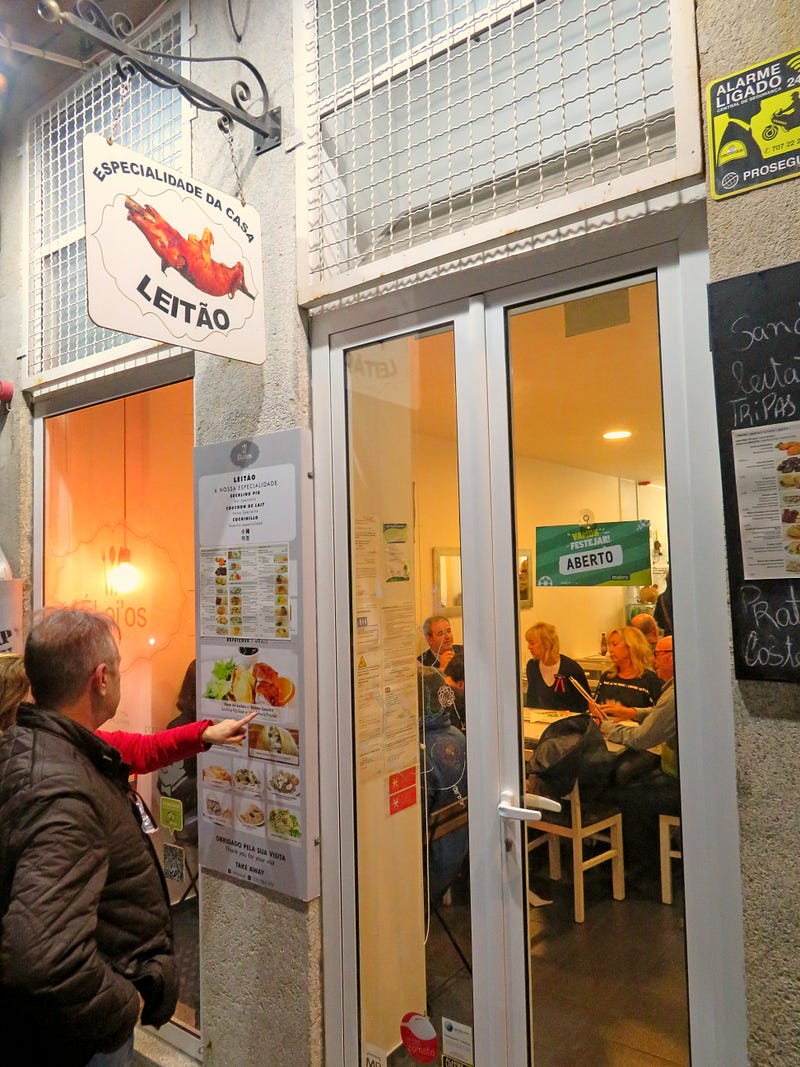
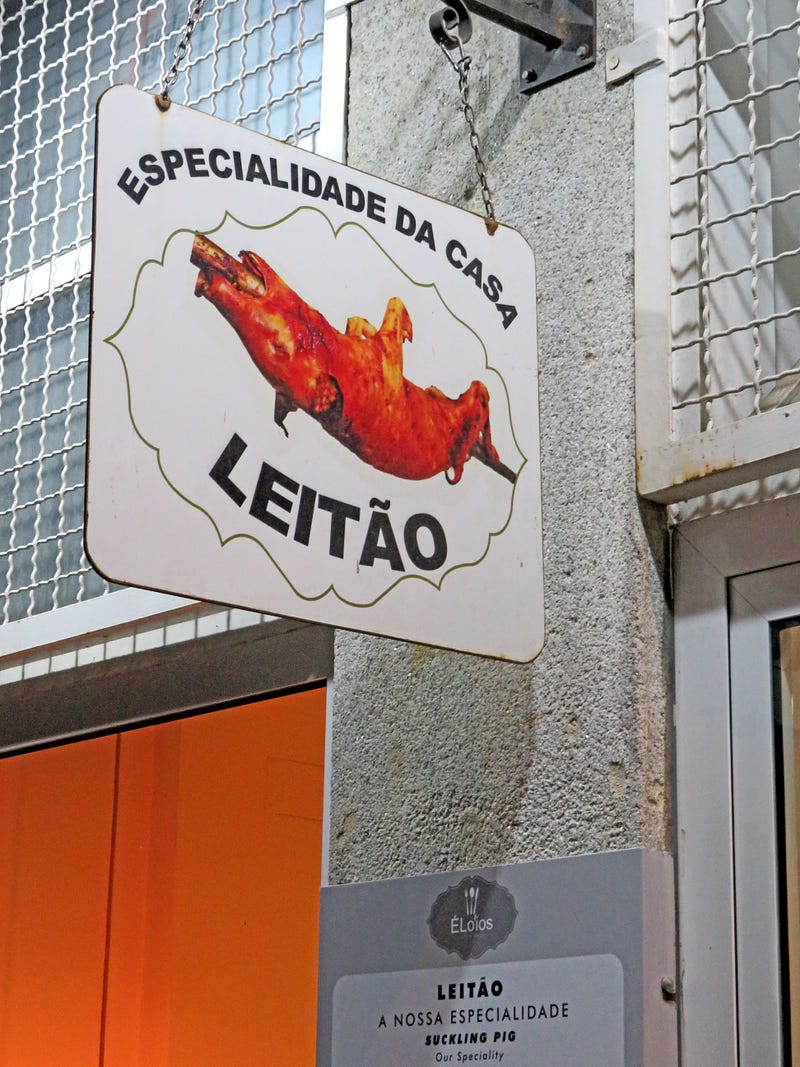
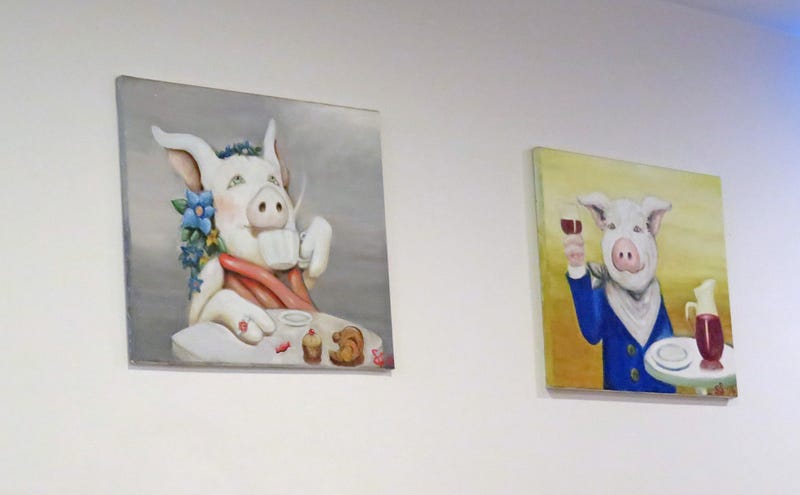
We found a small family-owned restaurant on a sidestreet that served delicious Bifana. It came with a sauce that was rich and spicy (I’m sure it was a version of Peri Peri). The restaurant is called ELoi’os Café and the sign Leitao out front, and the pig art on the walls, leave no doubt that their specialty is pork. The restaurant is small and you might have to line up to get inside but it is well worth it.
If you are visiting Porto, I wouldn’t recommend the Porto Card. We got the card but never used it. It gives you discounts on various tourist sites as well as free transit for 25 euros for each card. But I couldn’t be bothered to check if there was a discount for every place we stopped at. So for me, it was a complete waste of money. Lesson learned.
A great day trip from Lisbon is Sintra, with its storybook palace and quintessential haunted castle, Quinta de Regaleira. It is unlike any other place I have visited before.
On the other side of the Iberian Peninsula is Valencia, a beautiful Spanish city I used as a base when I took part in La Tomatina.
Thank you for reading.


