
Portals of Self: Vedanta Philosophy in Being John Malkovich’s Cinematic Enigma
Ancient wisdom in postmodern wordplay

Being John Malkovich represents a singular, experimental film work capable of stimulating deep philosophical reflections. In 1999 its release caused quite a stir, receiving rave reviews that highlighted the very high quality of the screenplay signed by Charlie Kaufman. While presenting itself as a quirky surreal comedy, the film directed by Spike Jonze, deals with existential themes of considerable depth. Through a creative and irreverent approach, it poses questions concerning the nature of the self, the possibilities of altering one’s identity and perception, and the very meaning of reality. To those unfamiliar with the Vedantic philosophical tradition, such questions may appear to be mere narrative devices. In reality, they turn out to be closely related to Vedanta’s reflections and some of its central concepts such as māyā, anattā and saṃsāra.
Following a skilful interweaving of comic elements and subtle symbolic entanglements, the film invites one to question the validity of ego and individuality, evoking the ultimate unity that subsists beyond appearances. Like a few others, Being John Malkovich stimulates an interpretation from a Vedantic perspective, offering unprecedented keys to issues dear to Indian philosophy. It manages to do so in an original way, contaminating theoretical rigour with a lively creative and subversive vein. Because of this, it represents a work of unique value, capable of exploring with depth ancient metaphysical reflections but within a very modern narrative and formal framework, worthy of the interest of the Vedanta-savvy viewer. I, therefore, invite one to scrutinize its multiple levels of meaning, grasping its resonances with the teachings of a tradition as ancient as Vedanta.
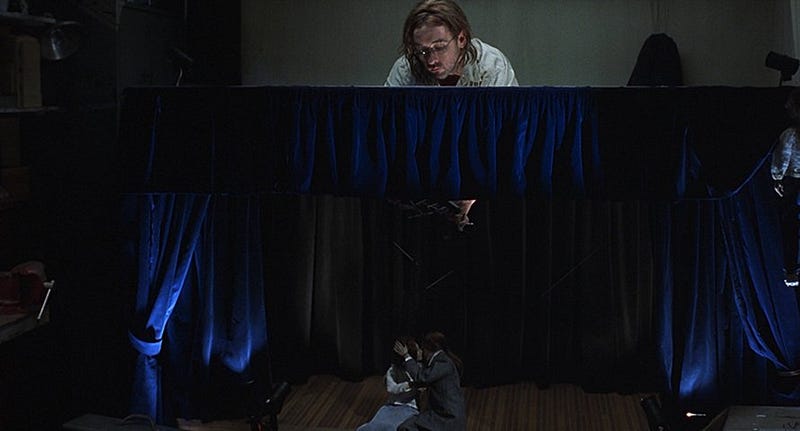
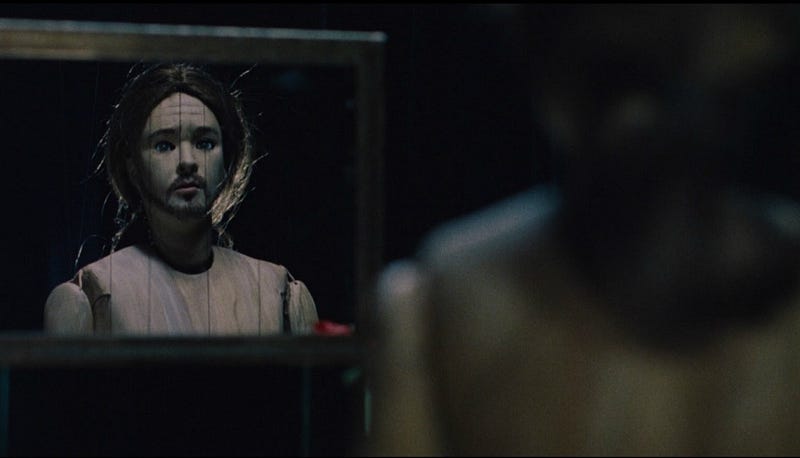
The film opens with the performance of a puppet who, looking into a mirror, enters a crisis over the inner division between the mirror image (me) and the speaking self. This dichotomy is reminiscent of the Vedantic concept of “Ahamkara,” the illusory ego that separates man from ultimate reality. As in Vedanta, the puppet also seeks external confirmation of the lost unity in the form of recorded applause. However, the absence of a real spectator reveals puppeteer Craig’s inner alienation, and longing for recognition. Craig soon discovers the existence of a mysterious “portal” capable of physically projecting him into the mind and body of actor John Malkovich. As the characters venture through the portal, they experience a perspective of life different from their own. This experience can be interpreted as a metaphorical embodiment of the Vedantic “Māyā,” or the illusion that hides the ultimate Reality behind phenomenal appearances. At one point, Craig even manages to physically control Malkovich’s symbolic union with a larger dimension, comparable to the concept of “Brahman,” the absolute Reality beyond individual distinctions.
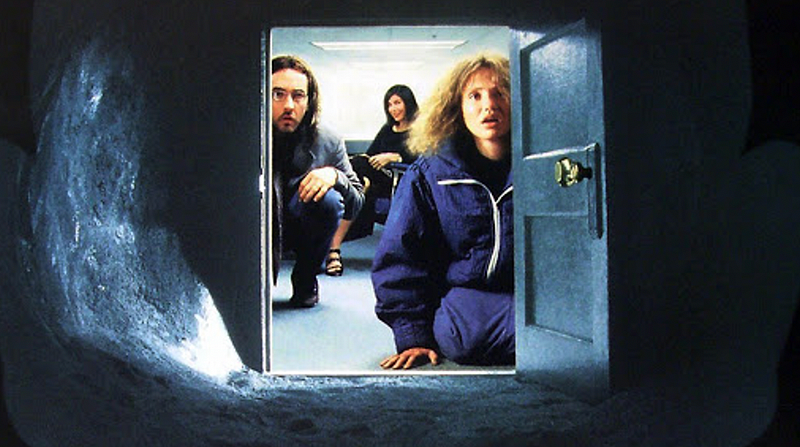
As we continue through the film, we discover how the identity of the characters is not something fixed and permanent, as the Vedantic idea of anattā or “non-ego” suggests. The fluid flow of consciousnesses through bodies evokes the changing becoming of existence according to this philosophical perspective. In Vedantic philosophy, anattā or “non-ego” is the doctrine that the ego, or individual self, is an illusion. This doctrine underlies many Indian spiritual traditions, including yoga, Buddhism and Jainism. Anattā is often expressed with the image of the river. The river is a single entity, but it is composed of many different waters flowing together. Similarly, the ego is a single entity, but it is composed of many different aspects, such as the body, mind, emotions and thoughts.

According to the doctrine of anattā, these aspects of the ego are constantly changing. The body ages and dies, the mind is constantly changing its thoughts and emotions, and thoughts themselves are fleeting. Therefore, the ego cannot be a permanent or unchanging entity.
Furthermore, the film Being John Malkovich can be related to neti neti, “not this, not this,” as it explores the theme of the search for identity and the desire to be someone else. The characters in the film experience the possibility of entering the head of actor John Malkovich for fifteen minutes, experiencing his life from an internal point of view. This experience leads them to question their identity, their gender, their role, and their relationship with others. The film could thus be seen as a kind of reverse neti neti, in which the characters deny themselves to identify with someone else, but without achieving awareness of the true Self.
In the Vedanta, we find again the concept of saṃsāra, which indicates the karmic cycle of births and rebirths to which the individual soul (jīva) is subject until the reaching of the final liberation (mokṣa). This happens because of the ignorance (avidyā) which causes the soul to identify itself with the phenomenic apparatus of mind and body, forgetting its true nature of Ātman, individual manifestation of Brahman. The different acts accomplished in the previous lives thus generate a trail of karma which inexorably conditions the rebirths to come, in an endless process. Only the sacred path, which includes ethical discipline, knowledge and devotion, allows to cut this karmic bond.
In the finale of Being John Malkovich, Craig finds himself imprisoned in the consciousness of little Emily, Lotte’s daughter conceived while the latter was “inside” Malkovich. Deprived of free will, Craig is forced to observe the world through others’ eyes, almost as if he was reborn in another body. This condition powerfully evokes the Vedantic vision of saṃsāra. Captured in the cycle of causes and effects of his karma, Craig seems destined — like the soul according to Vedanta — to relive in a new existence, at the mercy of the consequences of his past actions.
To break the continuous cycle of death and rebirth, it is necessary to discover the truth about the true self, the Ātman. The Ātman is the individual aspect of Brahman, the supreme and ultimate reality. This is the essence of the teachings of Vedānta: the individual self and the absolute Self are one thing. When the soul fully realizes this unity, when it sees beyond the illusion that creates separation, then it can finally free itself from the chains and torments of saṃsāra, the infinite cycle of death and rebirth. The soul then exits the prison of the phenomenal world and merges with the supreme bliss of Brahman.
Thanks for reading.