
Pompeii, Italy: A City Frozen in Time by the Eruption of Mount Vesuvius
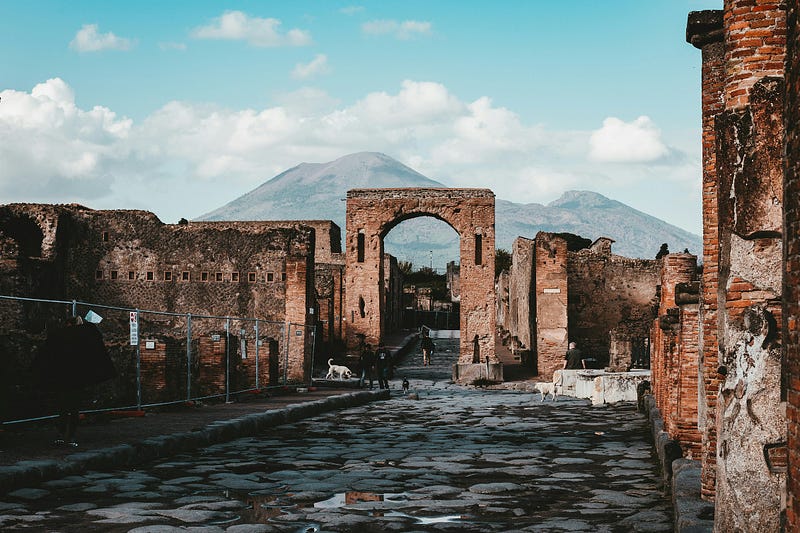
Nestled in the shadow of Mount Vesuvius, Pompeii once thrived as a bustling Roman city. Today, it stands as a poignant symbol of nature’s power and the fragility of human creations.
As I meandered through the stone-paved streets, the remnants of Pompeii offered a rare window into daily Roman life. The city, once bustling with activity, is now a haunting tableau of life interrupted. Shops with counters still display the ghostly imprints of food items, homes stand eerily empty, and graffiti etched on walls reveal the hopes, humor, and concerns of its inhabitants. Each corner of the city, from the grandeur of the public baths to the intimacy of domestic spaces, tells a story of a society rich in culture and complexity.
The Forum, Pompeii’s vibrant center of social, religious, and economic life, provides a striking insight into the city’s communal spirit. Here, amidst the ruins of temples and marketplaces, I could almost hear the echoes of political debates, the fervour of religious rituals, and the hustle and bustle of daily commerce. The still-standing columns and the layout of the space speak volumes about the civic pride and architectural sophistication of Pompeii’s inhabitants.
One of the most compelling aspects of Pompeii is the preservation of the human figures caught in the volcanic eruption. The plaster casts of these unfortunate souls, frozen in their final moments, serve as a powerful reminder of the tragic event. Observing their forms, I was struck by the palpable sense of loss and the suddenness with which life can be extinguished. These casts do more than evoke sympathy; they bridge the millennia, connecting us to the very human experiences of fear, desperation, and the instinct to protect our loved ones.
The House of the Vettii, owned by two former slaves who rose to wealth and prominence, exemplifies the potential for social mobility in Roman society and the richness of Pompeian domestic life. The intricate frescoes that adorn the walls, depicting scenes from mythology and everyday life, reveal the residents’ aspirations, beliefs, and aesthetic sensibilities. This home, like many others in Pompeii, underscores the blend of private ambition and public display that characterized Roman culture.
Amidst the grandeur and tragedy, it was the smaller details that resonated with me the most: the worn thresholds of doorways, the fading paintings, the mosaic floors that still hint at their original vibrancy. These elements speak to the craftsmanship, beauty, and daily rhythms of life in Pompeii, offering a tangible connection to the past.
My visit to the Amphitheatre of Pompeii brought to light the city’s love for entertainment and social gatherings. As I stood in the arena, imagining the roar of the crowd and the spectacle of the games, I was reminded of humanity’s enduring need for communal experiences and storytelling. The amphitheater, as a site of joy and excitement, stands in stark contrast to the quiet desolation that now envelops Pompeii.
Pompeii’s story is one of contrasts: beauty and devastation, life and death, preservation and loss. Walking its streets, one is constantly reminded of the city’s vibrant past and its abrupt end. This juxtaposition invites reflection on the impermanence of human achievements and the enduring power of nature. Yet, even in destruction, Pompeii has achieved a form of immortality, its ruins offering profound insights into the human condition.
As I left Pompeii, the images of frozen time, the silent streets, and the poignant reminders of lives cut short lingered with me. The city, in its silent testimony to the past, encourages us to reflect on our own place within the continuum of history and the fleeting nature of our existence.