
Polyamory: An experiment for spiritual awakening
Can multiple-intimate relationships invoke collective-healing? One woman’s self-experiment to find out.
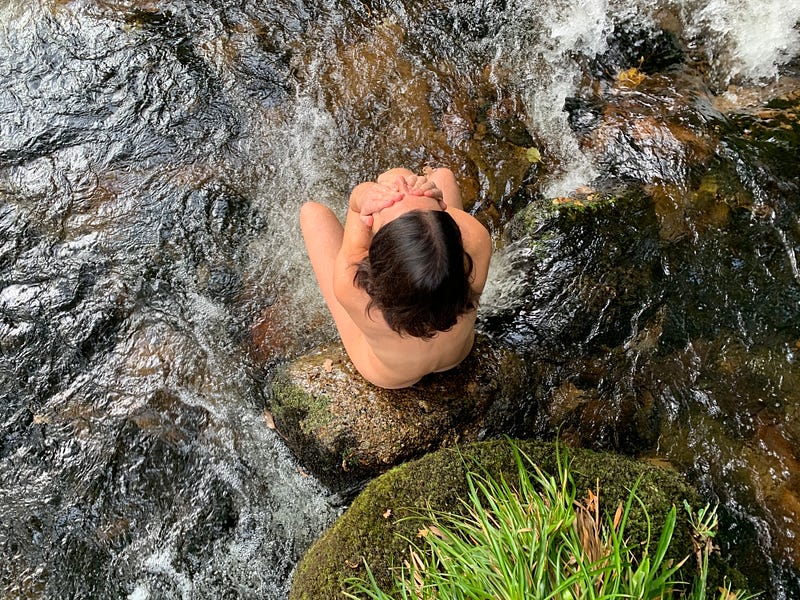
I’m 34, and I’ve slept with 14 men my entire life. I identify strongly with being monogamous. I was in an on-and-off seven-year relationship that resulted in a broken engagement. And now I stand on the edge of a new frontier, cautiously wondering: am I ready for this?
The existing mainstream narrative that we live in is built on the idea of individualism and the nuclear family (two people, kids optional). Any other combinations of “relationships or family” are frown on by society as “esoteric”, “cultish” or “weird”. I know this because that’s what I use to think.
Our modern world revolves around our intuitive human desires for competition and our sense of fear (or scarcity). We have seen this play out in a multitude of ways, from the stock market to industrialised education systems (centred around standardised testing)—Black Friday sales to more recently the lack of toilet paper in a global pandemic. The cost of this is mirrored in the degradation of the physical world around us: resource exploitation, loss of biodiversity, the climate crisis, oppression of more peaceful cultures, abuse of cheap labour and so the list continues… all resulting in more suffering in the world.
So where does my experiment of Polyamory or Ethical Non-Monogamy (ENM) fit into all of this? And why would one traditionally-monogamous woman embark on such a “recipe for disaster” (as my friend Annie puts it)?
Well, I no longer believe that this existing competitive narrative of how we live will forge the best path forward for humankind. It is my spiritual journey to explore alternative ways of living for the betterment of the world.
Polyamory, as I understand it, is the freedom to explore intimate relationships with multiple people.
Of course, the problem with this is that we are designed to feel all kinds of shameful feelings: jealousy, insecurity, clinginess, paranoia, anxiety. As an anxiously attached person, I expect all of these emotions to rear its ugly head. My shadows also include a raft of projections such as being suspicious, wanting to cut and run, selfishly tending to my own needs first, and “acting out” — that is testing partners, picking arguments or creating a fuss.
With a scarcity mindset, I would allow all these scenarios to play out in real life (some of them evidently will). But with an abundance mindset, I’m practising allowing myself to believe that there is enough love to go around.
Love is not a limited resource in this world.
We live in a world where there is enough of everything that can be shared. The flaw of the “tragedy of the commons” is that it assumes mankind is always individualistic. However, when we take collective ownership of things, including our relationships, everyone wins. We become more intentional with our environment, and we become more intentional with each other. We take ownership of our own actions and feelings.
There is mounting evidence that homo sapiens did not evolve to be monogamous. Indeed, we instinctively know that we are the most social species on the planet. Modern polyamorous lifestyles also reflect patterns of indigenous cultures that were more able to live in harmony with the natural world — one with more equal and egalitarian societies. Indeed, the origin of property and families was famously challenged by Friedrich Engels. That isn’t to say monogamy doesn’t work.
The way I see it, the more we interweave ourselves together with our communities, the more accountable we are and the more we strive to become the best person possible.
I call these deliberate experiments and choices I’ve made in my life “ego hacks”. Conscious choices to help me face the shadows I would otherwise keep avoiding. Forcing myself to change and address trauma and wounds… to invoke spiritual healing so that I can learn to live with more love, and less fear.
Once I open my eyes to the various possibilities of living, I realise that I have many interests and needs. Many different people could meet these. Looking back, I can also see that in my old monogamous relationships, I was expecting my partner to be a parent to me and my muse, my fellow traveller, my lover, my biggest supporter and my spiritual explorer. Whew! When these needs were not met, I would sink into a pit of loneliness and resentment wondering “what is wrong with me?”.
Polyamory offers release from the monogamist expectation that one person must meet all of an individual’s needs (sex, emotional support, primary friendship, intellectual stimulation, companionship, social presentation)
So I’m here to challenge myself. I’m learning to drop expectations and ideas of who I am and what I am capable of. I no longer want to be trapped in a fear state believing that I am “not enough”. I no longer want to put people on pedestals as trophies but rather see everyone as who they really are: the most beautiful beings to be dancing in this journey of life with.
I see this experiment as a way of investigating myself and the relations I have with everyone in my community (not just the sexual ones). To nurture a safe environment so that we can be the truest expression of ourselves.
So far it’s been quite the adventure. The gremlins have been lurking, but each time I step into the choice of wanting to be in relation to the people I love, I get to drink from a bottomless well. When I face a shadow and decide I want to step back into the light, I learn that I am enough. I am slowly breaking my own conditioning of wanting to control and predict, of attachment and expectations. I am surrendering to the flow… and all the free love.


