
U.S. Army NCO Creed Analysis
As a U.S. Army Veteran I view Police through the Lens of the NCO Creed.
And they are failing professionalism by this metric.
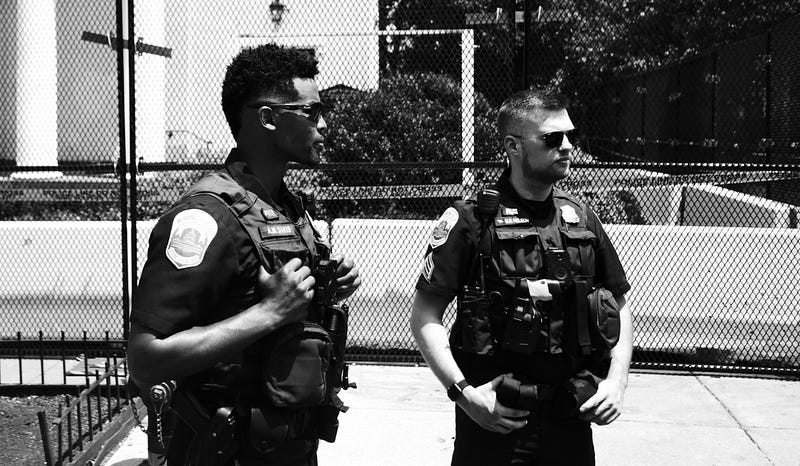
Armed Professional Service
For those who haven’t been following: long story short, I am a retired U.S. Army veteran. I retired as a Soldier, and I’m always going to speak from this perspective.
One of the things I’ve noticed in this Civil Rights era is the complete lack of understanding of what a uniformed professional is. As a retired military professional, seeing police (in America) function with quick tempers, bullying dispositions, and contemptuous attitudes towards the public is categorically baffling. What is even more baffling is seeing members of the public — regular civilians — seem to NOT understand this at all. I’ve seen numerous civilians attempt to argue that a military-professionalism perspective doesn’t matter, despite the fact that cops do in fact borrow more than utility vests from the military. Based on such logic, a police officer — a uniformed professional who has the full capability to KILL regular, ordinary AMERICANS in a matter of seconds with immunity to law — should have no care or concern for the professional group identity that the uniform provides. It’s pretty bizarre to see people put every inch of their credibility behind this flawed, failing argument that cops should and need to be able to act and respond unprofessionally while being a public servant.
I know there is a contingency of people — seemingly always white, especially white men — who WILL pretend they don’t get it and continue to engage in what I call selective stupidity and remain situationally dense on purpose. These people are essentially a white supremacy support element. And yes, black people can do this too (your “Candace Owens defense” is ineffective, but noted).
Perhaps still there’s a disconnect. While many folk pretend to not get it, I believe there’s definitely people who genuinely don’t understand. Maybe there’s a benefit in explaining something.
The Essence of a Non-Commissioned Officer
Having served as a Soldier for twenty years, my criticism of police in action explicitly comes from the perspective lens of an NCO. The best way I can explain this parallel is through the NCO Creed of the U.S. Army. The NCO Creed is not just something you memorize to recite once to get promoted. The NCO Creed is something we as NCOs strive to live by, during and even after the Army.
First, you might not know what an NCO is. An NCO is a Non-Commissioned Officer. Non-Commissioned Officers (NCOs) are a set of leaders in the military that overall serves as the glue that hold the Army together. While commissioned Officers (just called “Officers” here) get the glory, NCOs are the backbone of what the Army is. The NCOs are the ones who train Soldiers, from physical fitness, to combat readiness (i.e., weapons and tactics training), to specialization training (i.e., quartermaster, military police, military intelligence, signal corps, engineer corps). NCOs even take care of secondary and tertiary aspects of a Soldier’s life, such as their financial situation and emotional health. In movies they will typically give everyone Officer ranks, but give those “Officers” NCO duties and personalities which may obfuscate things to the public. Trust me when I tell you that NCOs are the ones who are the identity of the Army.
While I can speak on the rank system and how both military and police have Sergeants, Captains, and Lieutenants with analog professional responsibility and accountability, I prefer today to interpret the first part of the NCO Creed as to how police should function in society. Why only the first paragraph when there’s actually three? The out of the three, the first paragraph is the most introspective. The first paragraph is designed to engage in self-reflection, which points to the Army’s strategy in building a military professional — from the inside out. The second and third paragraph is the speaks toward the Soldiers one leads, and the Officers who commands; no need to engage in critical analysis there.
The First Paragraph of the NCO Creed, Critically Analyzed
No one is more professional than I. I am a Non-commissioned Officer, a leader of Soldiers.
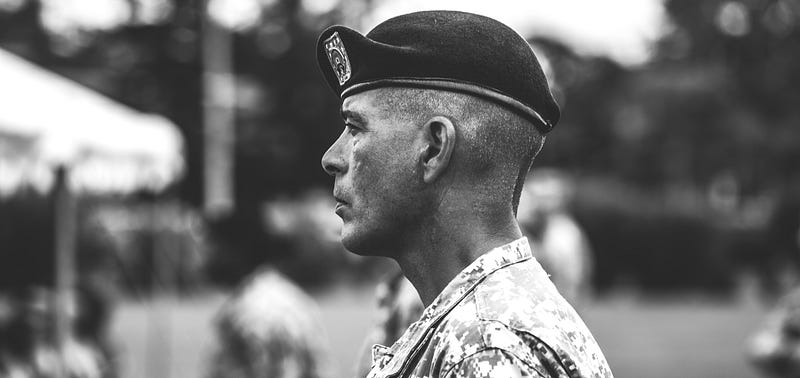
As a Soldier becoming an NCO, and being one, this initial statement means so much. No one is more professional than I. When you memorize this creed, this is the first part you get. This part is so important, it’s often cited as a stand-alone sentence.
Sure, there’s diversity of skill and capability in the Army. Sure, someone will run faster than you. Sure, someone will do more push-ups than you. Someone will shoot better than you. But no one is more professional than you, however. The fact that the U.S. Army attempts to get everyone on board with a uniformed professional presence, matters plenty. This opening statement produces a mass of leaders who pride themselves in always being professional. In so doing, EVERYONE is a professional first. I can probably write a whole article on this phrase alone. In fact, I kinda did.
This opening statement is how I view cops, and everyone should, especially cops themselves. Hell, anytime I see any uniformed professional, I see this phrase for them. Police? No one is more professional than I. Emergency medical personnel? No one is more professional than I. The list goes on.
Police NEED to view themselves as professionals first. If you want all this military-grade gear, all these sniper rifles, grenade launchers, Infantry-Fighting Vehicles, you need to want that mentality of professionalism too. People see the uniform and already thinks this first. Why not match it?
As a Non-commissioned Officer, I realize that I am a member of a time honored corps, which is known as “The Backbone of the Army”.
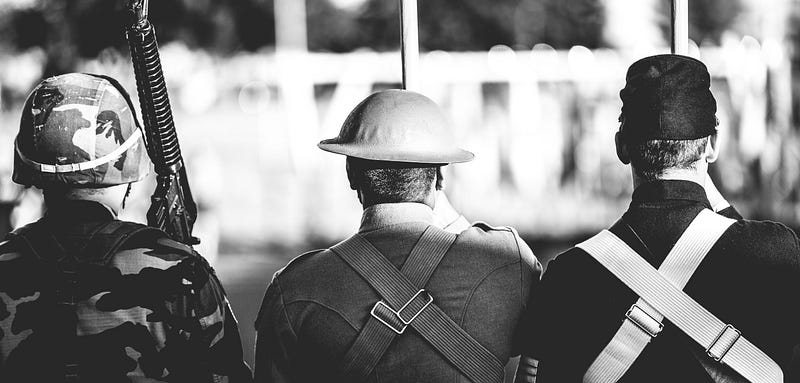
Here, the NCO Creed attempts to push the person into understanding that the uniformed profession doesn’t exist just now, but beyond time.
You in your uniform, represent not just the present, but also the past and more importantly, the future. If you misrepresent the NCO Corps in the present, that effects how NCOs are viewed in the future. What you do today, can bring tomorrow to ruin. Time matters. History matters. Your conduct and behavior today, matters.
This line, points the professional in the direction of research, perhaps gaining what I call historical competency. You need to know things beyond your time. Knowing the past (accurately) buttresses pride in the uniform even more.
I am proud of the Corps of noncommissioned officers and will at all times conduct myself so as to bring credit upon the Corps, the military service and my country regardless of the situation in which I find myself.

Pride, will come up a lot in this assessment.
This position of pride is protected NOT by looking outward by committing state-sanctioned violence and racial terrorism upon those who provide valid criticism (and there is valid criticism of military and police), but with looking inward with self-discipline and moral courage to self-police each other without the public needing to air your unchecked dysfunction and lack of accountability.
So from there, this is telling the world about your pride in your uniform and how you will always and I mean ALWAYS conduct yourself in a manner that brings credit — brings credit — to the uniform. Regardless of the situation.
This. Means. So. Much.
In the way credit is used here, understand that there’s a such thing as discredit. If you pledge to always bring credit upon the Corps or uniformed profession, then there is a such thing as bringing discredit to the uniformed service. A LOT of people think, or argue, that this isn’t a thing. It is very possible to bring discredit upon your uniformed service. When civilians defend police when they do decidedly dishonorable things, I’m wondering what type of pommel horse facilitates this level of mental gymnastics. I will never understand why anyone would want police that do dishonorable things that would in any other case dishonor one’s uniform. Pretending dishonorable conduct isn’t dishonorable doesn’t change the fact that dishonorable conduct stains the uniform.
Regardless of the situation in which I find myself seems to point to a professional accountability where the person is infinitely responsible no matter what is going on. I had a young Soldier attempt to argue for example, that George Floyd is “partially responsible” for his own death. As an armed professional of 20 years, knowing the essence of what an NCO is, his argument is invalid due to the fact that the UNIFORMED PROFESSIONAL should live the “regardless of the situation in which I find myself” mentality… regardless of the situation.
The regardless of the situation part also points to the fact that the uniformed professional is ALWAYS responsible and will be held accountable for his/her actions because that person is ALWAYS in control. This is what it means to be a uniformed professional. You, are always in control. You always exercise self-discipline. You can’t afford to not control yourself at all times.
I will not use my grade or position to attain pleasure, profit, or personal safety.
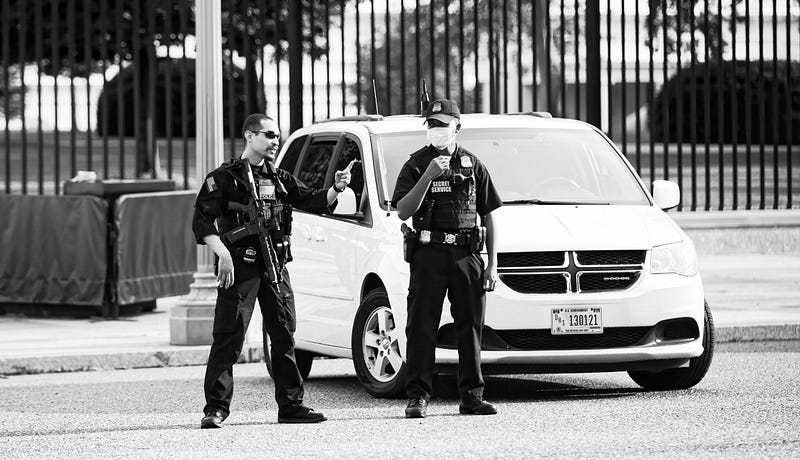
Another large gem. Spider-Man said it best: with great power comes great responsibility. I’d add that accountability facilitates responsibility.
While grade is tied to rank which is internal to the person’s unit, position can be analog to the place police occupy in society. Police overwhelmingly are placed above the regular, common man in America. Police by way of being a uniformed service are placed in a position in society that automatically pulls the utmost measure of trust from the public.
This public trust is unwaveringly given even when police are terminally wrong. Most of the public simply don’t want to believe police can be wrong, or bad, or criminal. Due to this fact, cops can get away with lies, theft and even murder. Police have more leeway for flaw, error and dysfunction than actual Soldiers do in the middle of a war zone. Due to this fact, not using their position to attain pleasure, profit and personal safety is necessary in order to usher genuine respect for the profession from others.
If the lines of the Army NCO Creed were rules and guidelines (and many Soldiers interpret them as such), then crossing this line is precisely the reason why there is a Civil Rights struggle taking place right now. Amber Guyger. Daniel Holtzclaw. Derek Chauvin. Timothy Loehmann. The list goes on. Each time a police officer unjustly murders a person in cold blood, they don’t call an ambulance; they call their Fraternal Order of Police, or their police union team. Police, frequently use their position to attain personal safety to evade consequences for their negligent or malicious actions. This is the reason why riots occur. If anything, police need this principle badly.
Overall
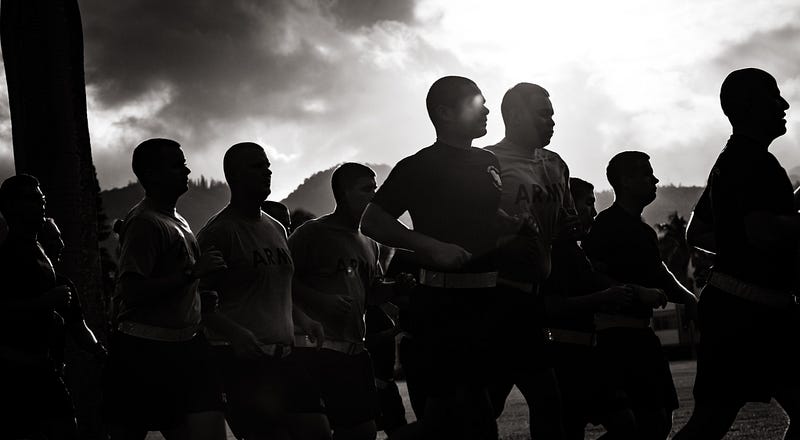
For the most part, the American public has high regard for military professionals. This is because the military seeks to inculcate a great measure of values concerning honor, integrity and moral courage among its ranks. Maybe if police institutions around the United States had something similar, there would be less terminally criminal police brutalizing civilians, murdering them, lynching them. There would be less police acting as bullies towards the public. There would be less police ignoring the Constitutional Rights of the public. The Constitutional Rights of the public should be just is valued and protected by police as International Humanitarian Law is in warfare.
The bigger takeaway here is the fact that it doesn’t even matter if cops literally have honorable values they instill in their force, like the military does. The bigger issue is that these values are principles are automatically assumed upon police. Is that a crime though? You are a uniformed professional in a profession of arms. If you want the respect parallel to military professionals or higher, you better have the self-discipline to match what you are aiming for.