
Police Brutality During COVID19 Continues Unabated
Police harassing people of color for public gatherings while allowing armed white folks to parade around state capitols is just the tip of the iceberg.
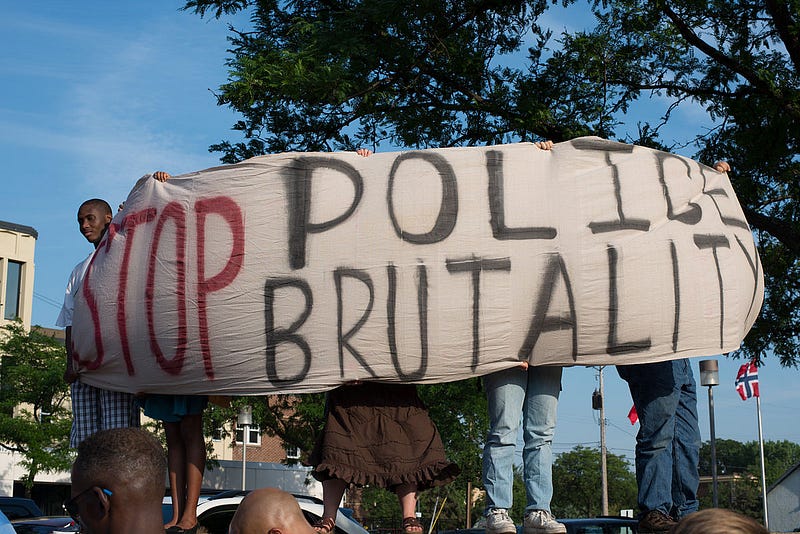
After witnessing militias and hate groups gather at statehouses all over the country, many Americans are talking about the obvious white privilege of being able to act out, while armed, without repercussions. What is not being discussed, however, are the mounting cases of police brutality that continue unabated, most notably, in major metropolitan areas.
People of color aren’t just disproportionately affected by the virus, they are also under attack by the selective enforcement of city ordinances by police.
Recently, the United Nations (UN) expressed concerns about police brutality and the violation of fundamental rights in various countries in Asia, Africa, and Latin America. They did not, however, address incidents occurring in the United States. Here, in America, there have been numerous cases of minorities being brutalized by police “under the guise of exceptional or emergency measures.”
From a Black 14 year-old-boy being brutally assaulted by a police officer in Rancho Cordova, California to a Latino man being shot and killed by multiple officers while on his knees in Houston, Texas to an Austin, Texas police officer shooting an unarmed Latino as he drove away, these are just a three of the more recent incidents to occur. Many are happening every day.
What’s not new, is the general disregard of these incidents. Most Americans typically overlook police brutality because they either don’t believe it’s an issue that warrants discussion or they believe the problem is being overblown. Some will even argue that minorities are not more likely to die at the hands of police, displaying a level of willful simplicity that allows them to be dismissive despite the statistics.
What this particular group refuses to address is nuance. Whether the topic of discussion is police brutality, systemic racism, or the inequities of American society, understanding the subtleties of any issue makes all the difference in the world. The problem lies with those who can’t be bothered to listen to people of color. By failing to acknowledge the unique aspects of these issues, it allows them to refuse to recognize the race issues that exist in America.
This type of purposeful refusal is a key driver in perpetuating the systemic intolerance that exists today. What they won’t deny is that COVID-19 is killing minorities at a much higher rate than white folks. In fact, that little statistical nugget is the driving force behind the reopen rallies we’re seeing all over the country. They know who stands to suffer the most — not them.
COVID-19 Is Making the Problem Worse
Prior to the coronavirus chaos, Americans seemed to have a fairly in-depth conversation about Michael Bloomberg’s stop-and-frisk policy and how it was used disproportionately to harass and ultimately jail Blacks and Latinos for trivial charges, i.e. victimless crimes. With Joe Biden now the presumptive nominee for the Democratic Party, there seems to be some — albeit very little — focus on the 1994 Crime Bill which had a much larger chilling effect on communities of color.
Now, with various different city ordinances put in place all over the country — requiring masks in public places, social distancing, and gathering restrictions — it’s apparent that the enforcement of those policies is again impacting communities of color more. Law enforcement has been handed yet another tool to circumvent the rights of people of color and they’re content to use it.
It’s worth noting that American law-enforcement officers enjoy broad protections via union contracts giving officers an unfair advantage over the legal system. Of the many underlying reasons for the lack of prosecution of police officers, union contracts are largely responsible because they offer a level of camouflage that I often refer to as the Blue Privilege.
Oftentimes an officer who is involved in a police brutality case will have had prior incidents that went unpunished or allowed them to continue their careers elsewhere — in large part because of the protections afforded to them via their contracts. This lack of accountability opens the door for corruption and misconduct — as it would in any other profession where citizens’ lives aren’t at stake. When cops do it, however, families have their lives destroyed either by incarceration or death.
And yet, officers are rarely held to account.
Americans are already keenly aware of how systemic prejudice in law enforcement and the criminal justice system dictates how laws are enforced. It’s a discussion the nation has been having for decades. Those who deny that truth at this point are doing so by choice. Based on this alone, it shouldn’t surprise anyone to see an escalation in the level of violence in cases where assaults by police are occurring, both during an arrest and at the hands of jailers.
We also have cases where former law enforcement officers who never paid a consequence for their actions are killing Black people and getting away with it even in retirement. Although calls for law enforcement reform continue to grow, those demands are coming mostly from communities of color and are therefore widely disregarded in a country where the majority of the population isn’t willing to understand the plight of poor people and people of color.
Ignoring the problem isn’t a solution no matter how much you overlook it.
Past Due: Law Enforcement Reform
America is a nation that is willingly watching its police brutally attack people of color for violating trivial ordinances. Meanwhile, white folks run around armed, unmasked, screaming in cops’ faces, and lounging in crowded parks unbothered. The disparities in law enforcement have never been clearer and the evidence to back the case up has never been so abundant.
Especially since the outbreak of COVID-19.
While public outcry centers around racial bias training and de-escalation training, police seem to know precisely how to decrease tensions on a scene when a suspect is a white person (even if that suspect is armed). However, when one of the largest police training organizations allowed former Police Chief, Joel F. Shults to defend the racism found on police officers’ social media posts last year, Americans should be asking much broader questions.
This is no more about training than it is about the institutional biases that run rampant in police departments and throughout an officer’s professional life. Shults entered law enforcement prior to training becoming a requirement for cops. In his second year on the force, he became a trainer after it was deemed a necessity for police officers.
It’s also worth noting that PoliceOne pushes the false “war on cops” narrative about as hard as police unions do. It’s because of these false narratives that we never see any law enforcement reform. PoliceOne also asserts that de-escalation techniques go too far and restrict officers from properly performing their duties. PoliceOne doesn’t just train cops, they also sell tactical gear, guns, and anything law enforcement related.
These false narratives being used by various police groups are obvious propaganda designed to deflect away from the messaging of Black Lives Matter and other police reform groups which are backed by statistical data. The fight here is against trainers who had full careers in law enforcement, got too comfortable doing as they pleased, and are now protecting the culture by teaching that reform ideas are personal attacks on prospective police officers.
The bottom line is as simple as a quick look at the statistics. Those numbers hold the truth of what is happening on America’s streets. The first step is acknowledging them so that we can begin to move forward towards real tangible change. Change that will offer citizens and police officers alike better protection as they interact with the public.
Addressing these issues, vetting police recruits, and ridding the system of cultural and racial biases would assuredly provide a safer, more efficient policing apparatus for every American.
Arturo is an anti-racist political nerd who started his career in writing after suffering a stroke at the age of 40. He is an upcoming author, journalist, advocate for social justice, and a married father of three young men. He is a regular contributor to Latino Rebels. If you’d like to learn more about the issues covered here, see the links below or follow him on Twitter, Facebook, and Instagram.


