
Police Authorities in Your Country Are Using AI Surveillance Systems
Law enforcement in at least 52 countries are using artificial intelligence technologies
Police forces around the world are using AI to track and identify citizens. This is a controversial area of AI usage, and many judicial and legal landscapes are currently adapting to new AI technologies. Many police forces are experimenting with facial recognition technologies. These technologies are used to automatically identify people who have been suspected of committing a crime, but can also be abused to track citizens.
An example of its usage can be seen in Washington County, USA. If officers at their police department have a photo of a suspect — perhaps obtained from a security camera — they can use the AI to run the photo against their database and find matches within seconds. When done manually, this process could instead take weeks, or even longer. The technology is similar to the tech used by Facebook to automatically tag your friends in photos or the way iPhone smartphones can be unlocked by simply looking into their cameras.
Law enforcements in at least 52 countries […] are using AI technologies for surveillance purposes.
There are many worries around police usage of AI systems. Besides basic privacy concerns, discrimination is a major issue, as AI is being trained on falsified data. Due to a disproportionate targeting of minorities and manipulated, police data has been systematically skewed. Police have even manipulated data, or downright falsified it, to bring down crime statistics or to meet arrestment quotas (including many cases of police officers planting drugs on innocents). And now, AI algorithms are being trained on this rather terrifying data.
The usage of AI surveillance among police authorities is increasing around the world. While many may have heard of the Chinese government’s usage of AI to track its population, the reality is that many more countries are using it — they’re simply quieter about it. Law enforcement in at least 52 countries, out of 176 surveyed, are using AI technologies for surveillance purposes.
In the United States of America, up to one in four police departments can use facial recognition AI, and is often used for routine errands. Its usage varies a lot from area to area. In Orlando, Florida, police tried using facial recognition AI, but ditched the technology, citing technical issues. Another US police department, New Orleans, lied about using it. The police department claimed that they weren’t using facial recognition, yet emails revealed that the police weren’t telling the truth. Some states or cities in the US have banned AI recognition technologies. The state of California, for example, has banned the usage of facial recognition in body cameras. San Francisco, Oakland, and Somerville have banned the technology altogether.
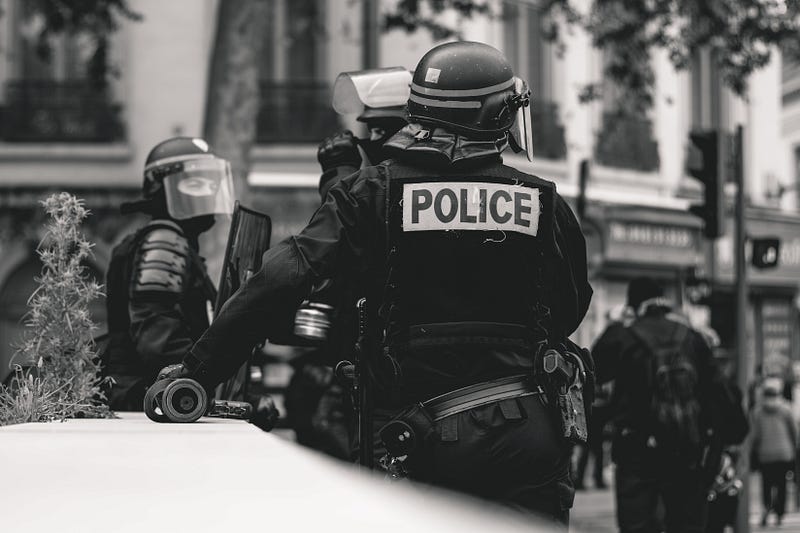
Dutch police are using AI to catch drivers on their phones — as is Australian police. French police are using AI to track its citizens in an effort to detect unusual movements and formations of crowds. In Hong Kong, where wild protests are occurring at the time of writing, police are also using AI to identify protesters. Facial recognition has also been approved for police usage in countries such as the United Kingdom and Sweden, both of which use AI solutions to identify suspects.
There is a wide range of companies offering AI services to police authorities. Chinese giant Huawei is one such example. Huawei gifted a surveillance system to France — who went on to use it for surveillance purposes — and it is possible that they have gifted systems to other police forces as well. Yet the American powerhouse Amazon — one of the largest corporations in the world — stands out. As Amazon has slowly been turning into a surveillance company, so too has it started to focus on offering surveillance services to the police.
Amazon’s controversial facial recognition software, called Rekognition, is being marketed towards police forces. The technology allows for mass surveillance of citizens. In a late 2018 viral open letter that was posted here on Medium, an anonymous Amazon employee urged the company to stop selling facial recognition tech to the police. In the letter, the employee explained that 450 Amazon employees had signed a letter to Amazon CEO Jeff Bezos and other top executives, pleading them to seize selling surveillance technologies. They argued that the harm caused by technology could be difficult to undo. “If we want to lead, we need to make a choice between people and profits. We can sell dangerous surveillance systems to police or we can stand up for what’s right,” the anonymous employee wrote.
Yet Amazon is determined to stay on course. They are even going as far as to write their own laws to present to lawmakers, which naturally is an effort to boost sales, however, Amazon does appear determined to pitch responsible legislature: “It’s a perfect example of something that has really positive uses, so you don’t want to put the brakes on it[,] but, at the same time, there’s also potential for abuses of that kind of technology, so you do want regulations,” the Amazon CEO argued.
Police have even manipulated data, or downright falsified it, to bring down crime statistics or to meet arrestment quotas.
According to a 2019 poll, 56% of the US population reportedly trust law enforcement to use facial recognition responsibly. Then again, it’s very likely that the potential negative outcomes haven’t been properly communicated to the population at large, so the results may be taken with a grain of salt. For perspective, a similar poll was made in the UK, in which 2,000 people were asked whether they agree with the police using facial recognition technology to identify suspects. Two-thirds of Britons said they were against the usage of such AI by the police. Even UK police officers themselves have raised concerns about using AI recognition technologies. UK police officers are worried about data bias and amplified prejudices, as officers often found themselves disagreeing with the algorithms.
AI surveillance systems are being increasingly adopted by police forces around the world. As the technology can make the police more efficient in catching criminals, many argue that the upsides outweigh the downsides, discrimination or otherwise. Suspects may be identified quicker, though crimes can turn into self-fulfilling prophecies, as overreliance on or misuse of the technology can cause innocents to suffer.
What is your stance?


