
Polar Opposites
How Barbie, an Easy Bake Oven & flipping the bird cemented a friendship

I don’t remember the first time I met Peggy, but I’d say I was probably in first grade. She was a grade behind me in school and lived three houses down from me. We met because we had to wait at the same bus stop.
Our neighborhood consisted of five houses. The Kindts lived next door to me; their family had four girls who my parents frequently employed as my babysitters. The Bryants lived to the right of my house, a boy and a girl. The boy child was wild, and I stayed away from him after he cracked me over the head with a shovel. Mr. Nelson lived on the other side of the Kindts. He and his wife were elderly and cranky. Peggy lived on the other side of the Nelsons. She had two high school-aged brothers and an older sister. In my family, it was just my little sister and me. I guess you might say that Peggy and I became friends because of proximity.
Blonde and blue-eyed, she wore her yellow hair down to her shoulders in two ponytails fastened low enough so that they fit under the baseball cap she always wore. She was short, so her blue jeans were always rolled up and cuffed. She had a wardrobe of t-shirts, flannel shirts, and polo shirts. The only time I saw Peggy in a dress was when she wore her turquoise cowgirl outfit with the white fringe.
She learned how to climb her brothers’ tree house and hang upside down over the edge of it. I climbed with her but was too worried that I’d fall on my head to hang upside down with her. She played softball. I took piano lessons. She took horse riding lessons. I scripted and put on sidewalk plays and musicals and charged our adult neighbors a quarter to watch. Despite these differences, we bonded over Barbie and her Betty Crocker Easy Bake Oven.
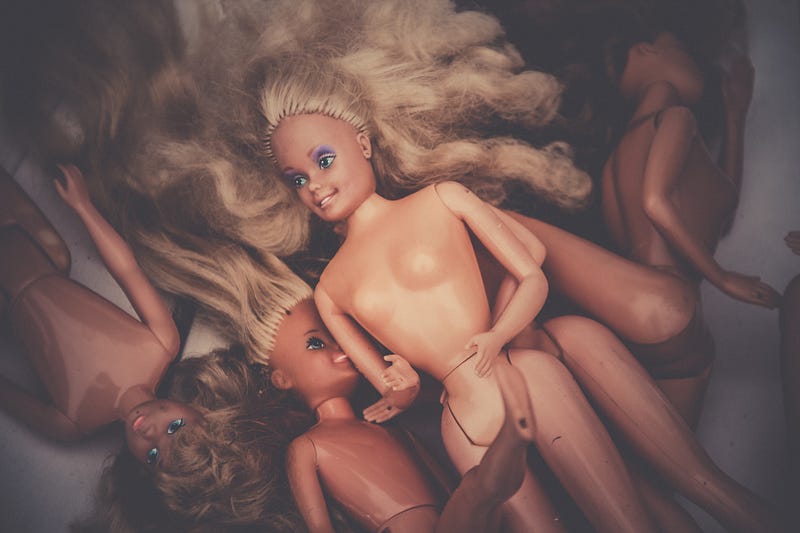
We always played at her house, and each play date started the same way. We whipped up a batch of brownies from the tiny Betty Crocker boxes and hovered anxiously, waiting for the little lightbulb to do its job. After we scarfed them down, we played Barbie dolls and horses. I wasn’t allowed to have Barbie dolls because my mom was convinced that their provocative figures taught young girls unrealistic body norms.
But at Peggy’s house, Barbie ran a horse dude ranch and spent hours combing out horses’ manes and wearing her high heels to hook her feet in the stirrups. She rearranged the corral fencing and became an expert horse trainer. There were no Barbie Dream Houses or Ken dolls in sight. At Peggy’s house, Barbie was a self-sufficient horse rancher.
Even though she was younger, Peggy was worldly. Being the oldest child in my family, I didn’t have older siblings who eroded my innocence with bathroom jokes. No one taught me cuss words. I didn’t overhear my parents grilling older siblings about their dating life and pot usage. Peggy knew where her sister hid her cigarettes. She knew that her mom was worried that her sister was having intercourse with her deadbeat boyfriend.
“What’s intercourse?” I asked.
“S-E-X!”
“What’s sex?”
“Don’t you know anything? It’s when the guy lays on top of the girl and wiggles his thing.”
“Ewwww, gross.”
“I know, but it must feel good, because it’s why people get married. My brother, Jay, is gonna get married.”
We sat on the top bunk bed together and silently contemplated the sex lives of her older siblings. Finally, I started to get down from the bunk.
“I gotta pee,” I announced.
“Tracy pooped the bed!”
“I did not!”
“Don’t listen to her, mom, she’s lying!”

Growing up in a small town on Lake Huron meant that hot summers were made tolerable with trips to the beach. Peggy and I sometimes coordinated our parental assaults.
“Pleeeeeeeeeaase mom! Can’t you take us to the beach?”
“We could have a picnic. Maybe Peggy’s mom can go with us, and then you’d have a friend, too.”
On one particular hot summer day, after waiting fifteen minutes for one of the Kindt girls to get off the party line with her boyfriend, and then after numerous phone calls to coordinate who was driving, who was bringing pop and snacks, and what beach floaties we were going to bring, the plans were set. We loaded up our station wagon with beach towels, Coppertone tanning lotion, a blow up beach ball and two floating rafts, and a cooler full of ice and glass bottles of Pepsi. Peggy and I crawled into the very back of the station wagon. We were finally on our way to the beach.
As my mom drove the five miles into town, Earth, Wind & Fire blared over the radio. The windows were open, and Peggy and I boogied in the back sticking our hands out of the windows to let them surf on the wind. Peggy pointed to the car that was following us.
“Hey, watch this,” she whispered.
She extended both of her hands, tucked her fingers into upward facing fists and extended her middle fingers.
“A double-gun salute!” she cried.
I had no idea what the gesture meant, but what the heck? I copied her and flipped my middle fingers up at the driver following our car. Andy Gibb’s song “Shadow Dancing” played on the radio, and we danced our middle fingers in rhythm to the beat.
“Andy Gibb is sooooo cute,” I yelled over the music.
Peggy rolled her eyes and sang over top of the radio, “You picked a fine time to leave me, Lucilllllllleeeeeee. Country music is better than any Andy Gibb song.”
Our middle fingers danced in tandem, performing John Travolta disco moves. Peggy grabbed one of the deflated rafts and began blowing it up, middle fingers still extended. She made a face and crossed her eyes as if the act of inflating the raft was going to pop her eyeballs out of her head. I grabbed the other raft and did the same thing, middle fingers still extended.

My mom moved through an intersection, when the car behind us surged alongside of us, as if he were passing us. But he wasn’t. He honked his horn and motioned for my mother to pull over. She turned down the radio and leaned out her open window.
“Is there something wrong?” she asked.
“Well, yes Ma’am, there is. Your children have been shafting me for the last half mile.”
“Oh, crap,” Peggy whispered.
Peggy’s mom whipped around in her seat and glared at us. I could see my mom look at me over the top of her sunglasses in the rearview mirror. Oblivious to the fact that I was making an offensive gesture, I think I mouthed the word, “What?”
“Thank you, sir, for letting us know. I am so sorry. This won’t happen again.”
Peggy’s mom reached over and turned the radio off as the man drove away. Then, they both turned around and stared at us. My mom’s sunglasses perched on the tip of her nose, and her eyes burned with unspoken anger. She made a U-turn and turned the car toward home.
My mouth went dry. I wasn’t sure what giving the middle finger meant, but I now knew it was a big deal. My mom was a yeller when she was mad. The only thing worse than her yelling was when she went quiet. It was July, but I swear it felt like the windows of the car were icing over.
Peggy squished the air out of the raft she had been blowing up. It ruptured the frosty silence, “FRAAAAAAPPPPPPP.”
“I didn’t fart!” she yelled out.
“Shut up,” I furiously whispered and slapped her on the arm.
Her mom turned around and pointed her index finger at Peggy.
“That’s enough out of you,” her mom scolded.
“Well, I didn’t.”
We rode the rest of the way home in silence. We dropped Peggy and her mom off. My stomach flip-flopped at the thought of what was going to happen when we got home. The car charged down our long driveway. My mom slammed it into gear and opened the back door to heave the cooler out onto the lawn. I watched as she dumped the ice out onto the pavement and carried the Pepsi bottles, beaded in cooler sweat, into the house.
Next, she grabbed the sandwiches and the bag of potato chips and marched them into the house. And finally on the third trip, she placed her hand on my back and propelled me into the house. I stood on the apple green linoleum floor and stared at my bare feet.
“What were you thinking?” she demanded.
“I don’t even know what it meant.”
“So if Peggy told you to jump of a cliff, you’d do it?”
I hung my head. I didn’t dare look at her, but I thought to myself —no, of course not, I’m not that dumb.
“Why would you do that if you didn’t know what it meant?”
I shrugged, eyes riveted to the floor.
“It means to threaten someone in a sexual way. Do you know what that means?”
There was that word again. S-E-X.
“It means that the guy lays on top and wiggles his thing?”
My mom stared down at me. Her hand flew up to cover her mouth. Finally, she manage to choke out, “Go to your room.” I obeyed. I spent the day in my room, reading Nancy Drew books and waiting for my dad to get home from work. Was she going to tell him? What was he going to do to me?
Dinner time was uneventful. She didn’t tell him.
At bed time, she came into my room and kissed me good night.
“Do me a favor,” she whispered, “next time, don’t just follow for the sake of following, especially when you don’t know what something means. Think for yourself, Tracy.”
I nodded in the dark and breathed a sigh of relief. I was going to live another day.
Peggy and I maintained our friendship for years. Long after the days of the Barbie dude ranch and Easy Bake Oven, we began to drift apart. In high school, she hung out with the FFA (Future Farmers of America) and 4H crowds. I was involved in everything but those two groups. When I won first runner-up in the Junior Miss Scholarship Pageant, she sent me flowers. Sometimes in the cafeteria, I’d see her leaning against the windows wearing her new Espirit leggings and shaker knit sweater. Her blonde hair was teased into an impressive 1980s style. She had discovered Aqua Net. Her baseball cap was long gone, but every guy around her wore either camouflage or a Don’s Tractor Supply hat. I’d wave to her, and she’d wave back.
After college, I attended her wedding with my fiancé. And then, we lost touch. I’d heard that her husband died a few years after they’d married, and my heart ached for her.
My friendship with Peggy taught me so much. I learned about sex, drugs and rock-n-roll (country music, really). I learned how to cuss like a sailor. But I also learned to value and appreciate people who were different than me. I learned to listen when someone talked about their passions that had nothing to do with my own interests. I learned what it means to be supported by a friend who doesn’t “get” my world, but shows up anyway. And, I learned when to follow and when to lead.
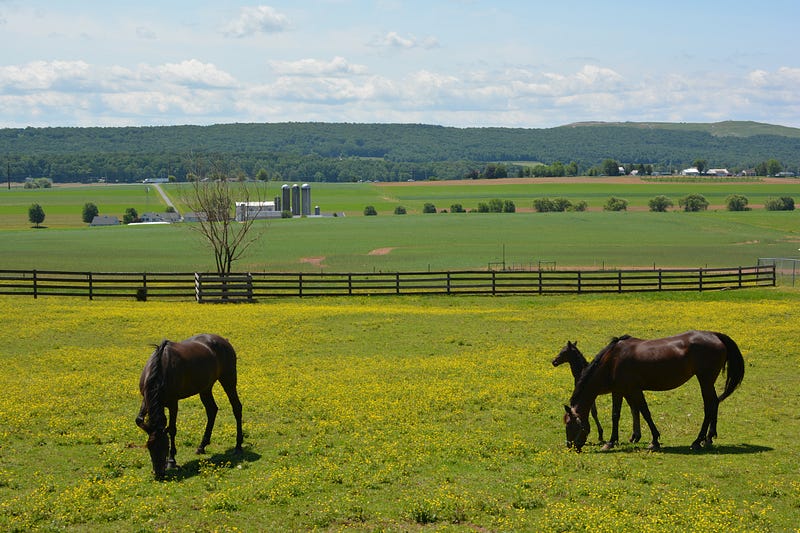
I imagine her somewhere, owning her own horse farm, hooking her high-heeled cowboy boots in the stirrups, and riding off into the sunset with her yellow Barbie hair dancing in the breeze. It’s my wish for her.
Hey there! Thanks for stopping by to read. I’m a career teacher who recognized on my 50th birthday that time is short. That, and putting a new 30-year roof on my home and realizing that I’ll be about 80 when it wears out, is what is propelling me forward in my freelance writing dream. I’m glad you stopped by to read.
If you’re interested in reading more goodies like this, consider subscribing via email so you’ll get a notification every time I publish.
You can read more memoir writing like this, HERE.
Tracy


