
Poetry
A Country Written on Air
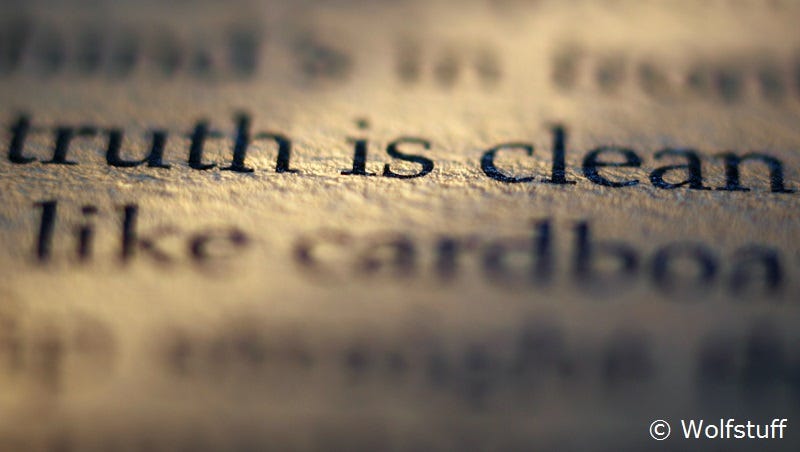
Light ephemeral a poem is a country written upon air
Jorge Luis Borges once said that a poem is the (attempted — it does not always succeed) bridge between language and music, that the poem tries to accomplish what music often does — pure, wordless communication; poems are words that reach the music beneath / above / behind the heard music; the same music that pulses beneath / above / behind the words of the poem.
As if recognizing this, in the mid-1960s, as a fumbling, stumbling, Beatles-loving and hair styled teenager, I seized upon poetry as the truth, Truth, TRUTH.
Had I read much poetry at this point?
— No.
Had I written much, or any, poetry at this point?
— No.
What, then, percolated Poetry to the top of my pot of purpose?
— Romance with a good helping of intuition.
Yes, in a less-than twenty-twenty hindsight, I see it as a romantic though nonetheless holding water intuition.
Barbro’s friend Inger asked me if I had heard of Charles Baudelaire, the hashish-smoking French genius poet that she said I in some ways reminded her of. Or, had I heard of the crazy child-genius Arthur Rimbaud.
Although I had heard of neither, they both, especially Baudelaire, struck and fed a hungry nerve and there and then formed the romantic bond between me and poetry. Again, just romantic intuition; but I decided that whatever I was looking for (not even defined as truth, Truth, TRUTH at the time, not yet) Baudelaire knew; Rimbaud knew; poets knew, had known all along and would always know.
Again, by what evidence?
— None.
Again, what truth, Truth, TRUTH?
— Not a clue.
But there it was, my holy grail, my shining star, my goal: my star-lit night Orion: Poetry.
I found and bought (for more money than I could afford) the Complete Works of both Baudelaire and Rimbaud in French, in two beautifully bound books printed on thin, almost translucent scritta (Bible) paper.
Could I read any of these poems?
— No.
Did I understand anything in these books?
— No.
Still, I carried them with me as poetic emblems to prove how poetic I was, how much I knew, how true, True, TRUE I was.
Even at this point, did I read other poets, other than Baudelaire and Rimbaud, whom I didn’t, since I couldn’t, read?
— No.
What on earth then made me cling to Poetry as the path?
— Not a clue.
Late one night / Early one morning I saw Baudelaire’s eyes. They were two glowing embers hovering in the air above my face, that then began to descend upon me, to soon find and rest on and merge with my eyes while whispering that this was who I was: I was Charles Baudelaire, the French spirit reborn in northern Sweden as clue-less poet, and it was now time for me to wake up.
Did I know that I was Charles Baudelaire?
— No.
Any proof at all that I was Charles Baudelaire, reincarnated?
— None.
Still, I clung this notion to my chest and pressed it into my heart to the point where I was going to France, the south of France specifically, to a small village called Saint André some miles north if Nice, where my cook-friend André (who owned a small diner on the eastern side of the Maria Square, not far from where I lived) said I could find myself a small cabin for about a thousand dollars. I would love it there. Sounded perfect.
Yes, I was going there to be a poet.
Was this a dream?
— No.
Some vague fantasy?
— Yes, of course; but also no.
I really meant to go there. I had even bought a (one-way) bus ticket from Stockholm to Paris (for June, or was it July 1968).
Of course, I spoke no or very little French. I had no thousand dollars to buy my Saint André cabin with. I knew no one in France. But I told myself that I knew I had been Baudelaire in an earlier life and I had to go to Saint André to be (to be, not necessarily to live as, work as, or write as, but to be) a poet.
Did I have any doubts?
— None.
Did I make it to Paris?
— Nope.
The 1968 Sorbonne student revolution of that summer made the bus company cancel my ticket and refund me my money. Paris was deemed too dangerous a place to head a bus into at that time.
And still, and still, poetry was my life line: my path to truth, Truth, TRUTH?
— Yes, absolutely.
In the fifty-odd years since then, have I come to appreciate poetry, to see it for what it is?
— Yes, I have.
What poems or what poets in particular?
— Ah, that’s a good question.
To be absolutely honest, I believe my first actual poetic experience (like a mini-epiphany seeing / experiencing what poetry can do) was after several listenings to Joni Mitchell’s “Harry’s House / Centerpiece” finally to hear / see for the first time the amazing simile of: “A helicopter lands on the Pan Am roof / Like a dragonfly on a tomb” — yes, I believe that was the first time the muscle of poetry actually flexed me. I had by this time lived in New York City for a baker’s year and the image was vivid, perfect, beautiful: the tomb, the dragonfly, the Pan Am roof, the helicopter. I shook my head in wonder.
So that’s what poetry is all about.
Joni Mitchell has remained one of my favorite poets ever since. She owns and shares the magic.
Denise Levertov, walking among the ankles of forest elders (in my very neck of the woods — pun intended), owned and shared the magic.
And her good friend (though I haven’t a clue whether they ever met) Mary Oliver walking her dog among the thousand labeled flowers and spilling life wherever she treads is perhaps entirely made from magic — which she shares, generously.
And for a while I thought I understood (as in loved) Shelley, I even wrote him an elegy, but I don’t think that anymore.
And I no longer think that poetry exists only to excavate and unearth TRUTH, but often as not also to illuminate the many littler truths, as what is really there, or could just as likely be there if you really looked (with good enough eyes or imagination).
I have come to know that poems are indeed rooms or fields or countries written upon air; and I’ve come to realize that it takes the eye of air to enter them or grace them or make them your home.
© Wolfstuff