
Poems and Novels
In Service of Story
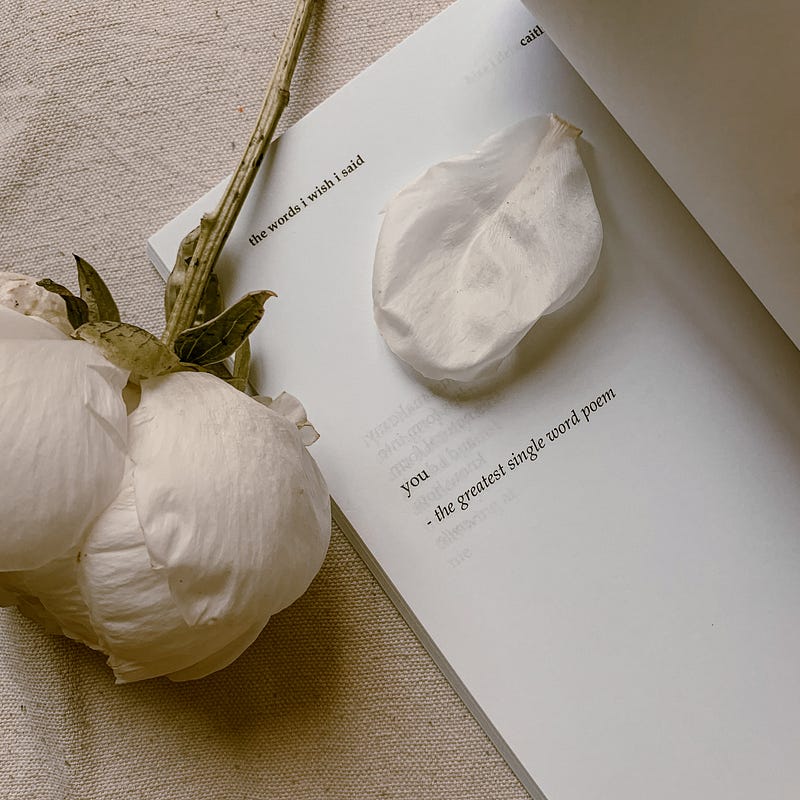
A poem is a novel with acres of space
Many novels say nothing. Some poems say a lot. Most poems say more than the run-of-the-mill entertainment read — no matter how high the pressed-into-service reviewers’ (or fellow writers’) praises. Of course, this is always seen through the eyes of the reader.
The point is that even a short poem can say as much as, or more than even a very long novel; can carry more spiritual weight as it were. Few words, lots of space between them makes for a book-sized poem.
One such poem — one of my long-time favorites — is by William Butler Yeats, Aedh Wishes for the Cloths of Heaven. It says more (and more beautifully) than most books I’ve read:
Had I the heavens’ embroidered cloths, Enwrought with golden and silver light, The blue and the dim and the dark cloths Of night and light and the half light, I would spread the cloths under your feet: But I, being poor, have only my dreams; I have spread my dreams under your feet; Tread softly because you tread on my dreams.
But then there are the books by Nadeem Aslam, written in some of the most beautiful English I have read, and in, say, Map for Lost Lovers, there are single pages that say almost as much as Yeats’ poem above. Then again, Aslam is an exceptional writer — a lyrical poet who happens to paint in prose.
What makes one poet write poetry and another write novels? (Yes, I consider the true novelist a poet as well). Perhaps he or she has adjudicated one or the other as the better means to convey the story — and all decisions made by the writer should serve the story.
A novelist, says John Gardner in one of his inspired (and inspiring) books, is like a marathon runner, the short story writer a sprinter, though he stays mum, track-and-field-metaphor-wise, when it comes to poets — but I’d venture that they’re more like pole vaulters than anything.
Some poems glow so unmistakably with the light they convey that anyone sitting down in peace and quiet to read and absorb cannot help but understand — thus: read, absorb, understand, put the book down, close eyes, and marvel at the experience.
Some stories, though brief at the core, still require a whole spider’s web of tributary causes and events to bring that kernel to tellable life, and those stories become novels — or very, very long poems (which I am not a fan of to tell you the truth — if a story takes fifty poem pages to tell, my advice: write a novel, or a long short story).
As for story length, my view is that a story is as long as it needs to be in order to carry and fully convey its meaning, and not a word longer (or shorter).
When it comes to few words, I have found that some stanzas say more than most novels. This, by Thomas Traherne is an example:
You never enjoy the world aright, till the Sea itself floweth in your veins, till you are clothed with the heavens, and crowned with the stars.
William Blake is another amazing poet-mystic who cay say the most amazing (and, to my thinking, true) things in few words, such as: “If a thing loves, it is infinite.”
Some days I want to submerge myself in prose, and few submerge me as well as John Crowley — as does he with his wonderful Crow novel: Ka: Dar Oakley in the Ruin of Ymr. (Just noticed this: Crow-ley).
For me, another great submerger is John Le Carré, who is so much more than a genre (spy thrillers) writer. He writes as well as any one I have come across, and I’ve come across a bunch.
Some days I want to melt into a single page of poetry, and then I often turn to Mary Oliver, to Denise Levertov, to Christina Rossetti.
And some days, like today, I just want to write something, anything, myself.
© Wolfstuff


