Pleasure and Virtue
Eudaimonia: an exploration. — A Literary Impulse & Paper Poetry Collaboration Prompt
There is this three thousand or so words story I have been working on for about a year now. There are sections not even me, the author, wants to read. So dry are those sections it needs major fixes to work. What kind of person would make any other soul read that kind of work?
Any excuse is valid to avoid working on it.
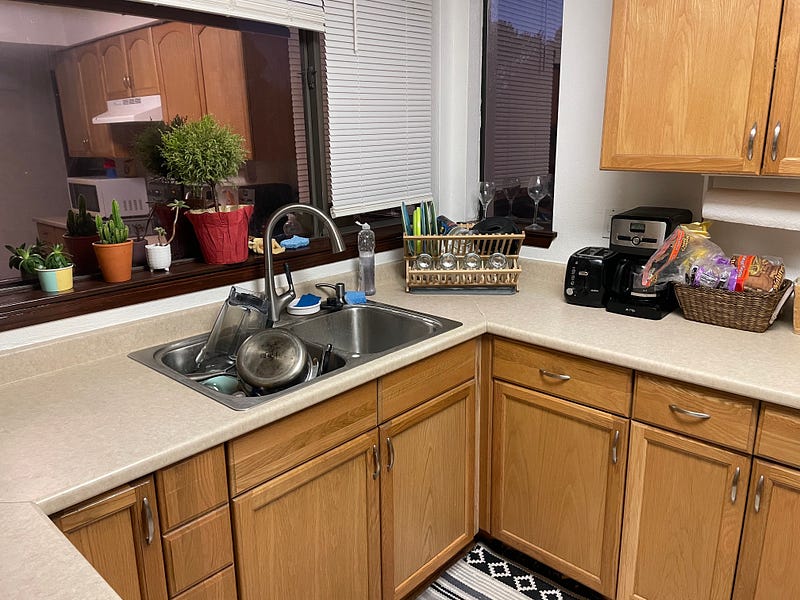
Then, there is the kitchen, the ever-growing pile of dishes, needing constant attention. I need to wash them if I do not want them to take over the kitchen and the house. Yes, I do the dishes. I do not consider myself a virtuous person. It is a matter of self-preservation.
I don’t know about you, but I am certain there is a conspiracy of dirty dishes ready to take over the world.
Sort of Cloudy with a Chance of Meatballs with the characters of The Beauty and the Beast. But the dishes are mean, and they transform into ugly little monsters with mouths filthy as the monster from Alien attacking humanity in packs like the velociraptors at Jurassic Park.
So no, I am not helping my family. I am helping the world.
Dirty dishes are just waiting to achieve a critical mass necessary to take over our planet. The only thing preventing our end is the fact the Earth spins, and it is likely, there is always someone doing dishes at any given time on this planet we call home to avoid the take over of dirty dishes with filthy mouths ready to eat us all.
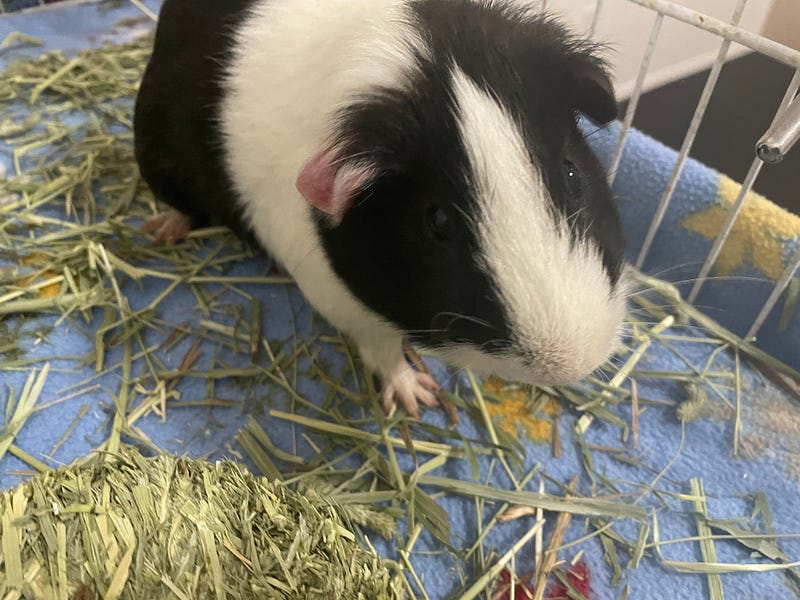
Then there are the guinea pigs.
If you have children and they ever give you the option between guinea pigs or a new iPhone for Christmas, make the trip to Cupertino, kidnap an Apple engineer and make sure they give you the new iPhone 13 or whatever is next. Giving your children a new phone (regardless of how old they are) will spare you from having the only perpetual poop-producing living-machine in the world. These cute little animals popularized on YouTube videos and Tick-Tock have the dubious privilege of peeing and popping almost constantly.
Eudaimonia refers to a sort of happiness associated with virtue more than with pleasure.
According to the philosopher Julia Annas (Annas, 1998), both virtue and happiness seem to be intimately intermingled. That one cannot be present without the other.
The usual assumption of a virtuous character is that a person is virtuous by doing the right thing. Like when someone is honest, compassionate, or courageous.
The question arises then about what are the motivations for such actions.
Does someone who acts in a compassionate way exhibit a virtuous trait if they do it out of duty and not because of careful consideration of the morally superior aspect of exhibiting virtuosity versus not doing so?
According to philosophers, it is not sufficient for a person to exhibit a trait such as virtuosity, but a person must do so deliberately.
A clear example is, a person goes to the store, and has the opportunity of stealing candy. The virtuous person doesn’t do it because they understand the wrongness of stealing, not because of the possibility of being caught.
As we can see, the idea of virtue it’s tied to morality.
Was Robin Hood virtuous when he stole from tyrants to give to the poor?
What was the perspective of the poor? Robin Hood is robbing in the name of the poor, but the poor did not ask him to steal on their behalf.
When Robin Hood is ransacking the wealthy, we can assume they didn’t think of him as a virtuous man. Nevertheless, it seems that popular culture seems to glorify his character. Is this because of an understanding of the moral wrongness of tyrants? Maybe it is because they are exploiting the poor? And they lead a life of pleasure and decadence with ill-gains?
In this sense, not pleasure nor luxury are in themselves the origins of happiness.
If anything, it should be brought to our attention that pleasure and luxury aim to provide comfort to the body, but they fail to provide comfort or well-being for the soul.
A warm bed provides comfort. A meal satiates bodily needs.
Julia Annas, talking about Socrates, reminds us that a pleasurable life in itself is not sufficient for happiness. If this is the case, a person living a life full of pleasure would then find himself/herself lacking nothing. But humans need both: Pleasure and reason.
In thinking about this topic, we can ask ourselves what is in pleasurable activities that bring happiness. Is the satisfaction of a bodily need? Is it altruism, doing something for others?
Julia Annas argues that “humans need a life made up in some way of both pleasure and reason” (Annas, 1998). And if the aim is to find happiness, could we argue here about the need to find pleasure in our daily activities?
On the interconnectedness between body and soul: What good would be to lead a life fool of pleasures when we do not enjoy the activities leading to them?
The meal without the cooking?
The warmth of the bed without making it?
The orgasm without the flirtation?
As I keep on contemplating on my daily chores, I wonder: if there is a sort of meditative pleasure I achieve while doing the dishes. Or if I get some form of satisfaction at knowing the guinea pigs and I will have a clean environment where to live. The otherworldliness I experience while chiseling the parts of the story I’m working on, regardless of how long it takes to do it, how difficult it is to find the right image or word.
And in this way, I come to ponder, are pleasure and happiness found in the self dedicating its life to the activities that sustain both its physical and spiritual life? Is happiness found in the self dedicating itself to the pleasure found in performing these actions?
Reference:
Annas, Julia. (1998). Virtue and Eudaimonism. Social Philosophy & Policy. 15 (01). Doi: 10.1017/S0265052500003058
©Pablo Pereyra 2021. Thank you for reading.
Special Thanks to James G Brennan for inviting me to participate. To Rahul S., Priyanka Srivastava, Somsubhra Banerjee, Editorial Literary Impulse Team, and Suntonu Bhadra at Paper Poetry for this prompt.
I’m inviting the following writers to participate: Gurpreet Dhariwal, Trisha Traughber, Adam, Diabetic Cyborg, Jonah Lightwhale, Sydney J. Shipp.