
Please Spare Me Your “But it’s a Dry Heat”
You say that like it’s a good thing — that’s literally how it kills you.
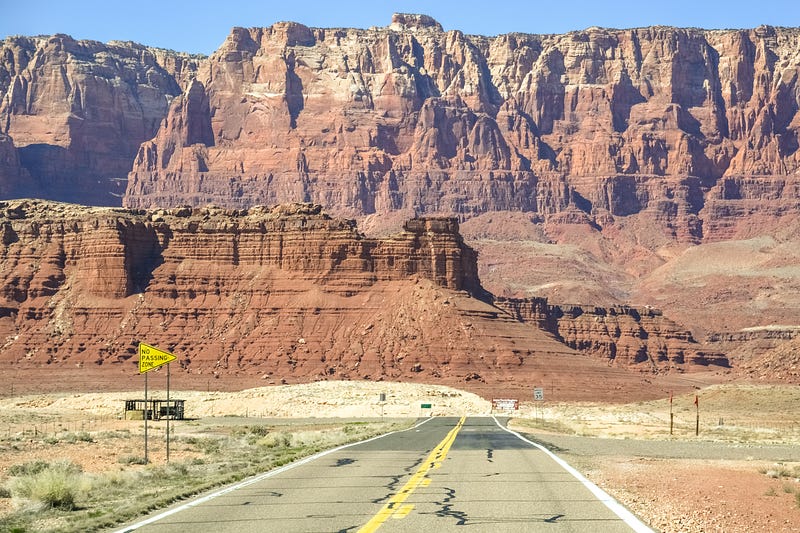
As part of my soul-crushing 9 to 5, I regularly speak with people all over the country. There’s inevitable small talk — I try to avoid it, but this is America, you’d think we invented it. At some point, there’s a discussion about the weather and, since we’re all in different locales, this verbal transaction can take a while.
When it comes to my turn, I rarely get beyond telling them where I’m located (in the Sonoran Desert) before they dismiss our weather down here with a succinct, “but it’s a dry heat”.
I’ve been hearing some variation of this since I was a child. It has always bothered me. Especially when I get it from Floridians. They say it like they’ve won a contest — our heat is worse, we win!
Just no.
Firstly, this isn’t a competition. And if it was a competition, it’s of that rare and beautiful variety that you actually want to lose.
When I encountered the “dry heat” comments as a child, I was usually watching my grandfather chatting with strangers. After they would finish and we would walk away together, he would shake his head and tell me those are the kind of people that die here. He would shrug, they don’t take our heat seriously.
What is Dry Heat?
“Dry heat” occurs when the outdoor temperature reaches a certain point (typically 90° or above) and the humidity remains low (30–40% or less).
I’m told by the older members of my family that “but it’s a dry heat” used to be spoken and received as a warning about the inherent dangers as they are as insidious and quicksilver as a coiled rattlesnake.
Perspectives shift over time and generations disagree on fundamental concepts as a matter of course. The mentality around the desert heat in the latter decades of the 20th century and continuing even now is reckless.
It’s said as though being dry renders the heat inert and harmless when the opposite is true.
What’s the Difference?
The reason dry heat has gotten this reputation is its effect on the body, specifically the body’s natural cooling system.
One of the primary ways your body cools itself is via sweat. The act of sweating itself isn’t what cools the body. Your body heat is the fuel used to evaporate the sweat; turning it from a liquid state into a gaseous one is what actually cools the body down by releasing that heat energy.
Dry air surrounding the body facilitates this process so that in drier climes the body is able to cool itself more efficiently.
At higher temperatures, the air can hold more water further accelerating the rate at which evaporation occurs.
This means that in places like the American Southwest where temperatures in excess of 100° are standard throughout the summer months (as well as some parts of what other regions refer to as “spring” or “fall”) and the average humidity remains steadily in the arid range the body can cool itself very rapidly. But the process for doing so dangerously depletes the body of water.
In hot, humid regions the body can struggle to cool itself down because the evaporation process is hampered. This can cause serious heat-related illness, but it does not deplete the body of fluid.
Does the difference really matter?
Heat is the #1 weather-related cause of death in the US.
As climate change continues to reshape our world this is only going to get worse. Especially for the most vulnerable populations among us.
In Florida, where the heat is notorious for staying constantly wet, the University of Florida analyzed data collected by Florida Vital Statistics to identify heat-related fatalities occurring within the state between 2010 and 2020. Over the decade studied, 215 deaths were attributed to environmental heat.
In Arizona, where the heat is generally very dry, the state’s department of health services tracks and reports heat-caused & heat-related deaths. Over a similar 10-year period (2011–2021), there were 1,636 heat-caused deaths in Arizona and 2,797 heat-related deaths.
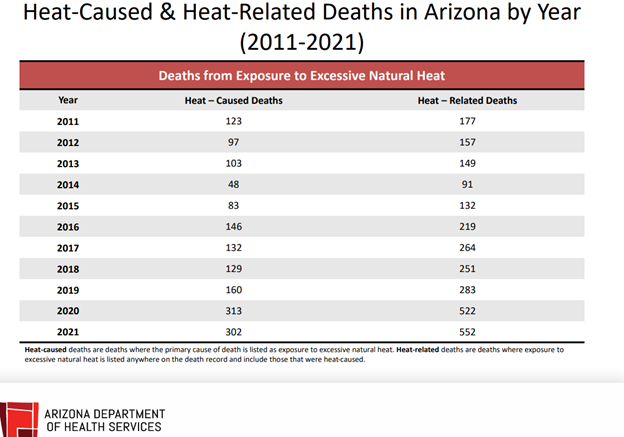
“Heat-caused deaths where the primary cause of death is listed as exposure to excessive natural heat. Heat-related deaths are deaths where exposure to excessive heat is listed anywhere on the death record and include those that were heat-caused.” — Arizona Department of Health Services
What to watch out for:
Now, I am not a medical professional but I was born and raised here — I would consider myself intimately familiar with the intricate nuances of a life spent in nature’s oven.
These are signs I was taught to look for as a child, hiking the desert mountains with my family:
Muscle cramps — this is one of the earliest signs that the heat has sunk it’s claws into your body a little too deeply. Most newbies to the desert dismiss this early sign as being caused by the physical activity they’re engaged in (like hiking) usually because they’re unaware this is an early sign of heat stroke. “It’s just a cramp in my calf. I’m fine. I’ll walk it off.” No, you’ll drop dead.
After heat cramps comes heat exhaustion which can include:
Dizziness, lightheadedness, or a disconnected sensation, crankiness, confusion or disorientation, head and/or body ache, fast heart rate, panting, paleness, trembling and weakness, thirst, heavy sweating, nausea and/or vomiting, and fainting.
If successful intervention to restore the body’s thermal balance isn’t achieved heatstroke may occur. This can include all the symptoms of heat exhaustion as well as:
Elevated body temperature (over 104°), dry skin (your body is so depleted of fluid it no longer has any to shed to cool itself), rapid, shallow breathing, delirium or hallucinations, fluttery or weak pulse, and seizures.
What to do?
Seek cool shelter immediately. Indoors, in a climate controlled environment ideally. If that’s not possible, seek shade. In dry climate the temperature difference between shade and direct sunlight is stark and this can be the difference between life and death.
Again, not a medical professional here, just a desert rat but I was taught to cool the body as much as possible while avoiding shocking the system. In other words, don’t immediately put someone with heat exhaustion into a bathtub with ice. Instead, place wet cloths on the body and fan the person (or put them in front of an electric fan if there’s one handy) as this mimics the body’s natural cooling system. Remove excessive or unnecessary clothing. Drink water slowly. If you do not observe the speed instruction for rehydration there will be vomit and possibly other more serious consequences.
Depending on the severity of the heat sickness and your ability to cool the affected person, you may need to call for help.
It’s imperative you not ignore the early warning signs. Do not dismiss the “dry heat” or its effects.
My family encourages anyone who’s experienced heat-related sickness to avoid going out (in the heat/direct sunlight) for the remainder of the day at the very least while pathologically hydrating your body. Take several days if needed (this will depend on how accustomed you are to the heat, how severe the heat sickness was and other factors). When it comes to desert heat, erring on the side of caution is my golden rule.
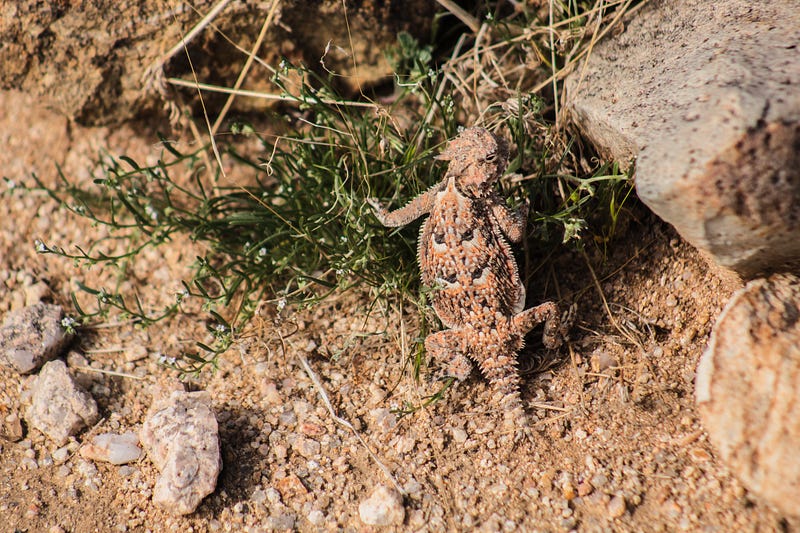
The desert can be a beautifully mysterious place. If you’re interested in any of its many aspects feel free to leave questions in the comments. We’d love to have you for a visit. Just beware the dangers. (Not the horny toads, they’re nice.)
Not yet a medium member? Sign up with my referral link to get unlimited access to stories like this one. The cost is the same for you ($5 per month) and I will earn a small commission.


