
Medium
Please Expand Monetization Globally
It’s past time for writers everywhere to be able to earn
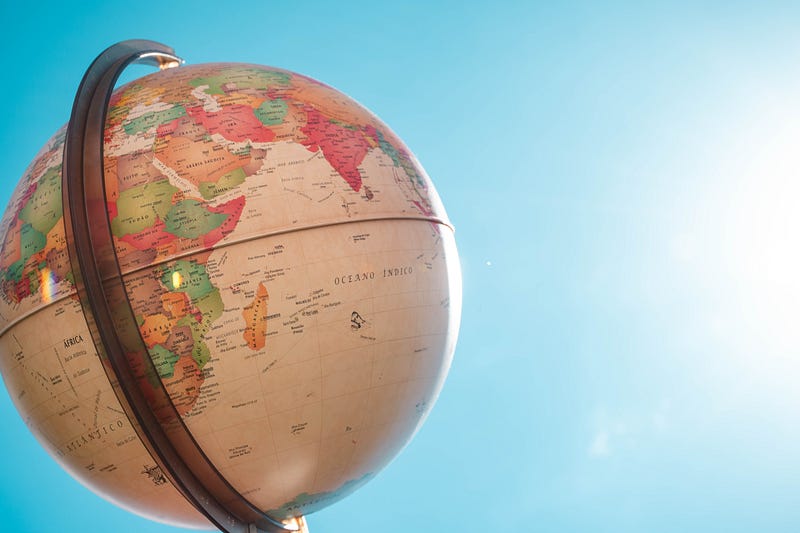
Why is monetization reserved for so very few of us? I regularly read excellent work from friends I have made on Medium who come from Africa, South America, Asia, and the Middle East. But few of them live in countries that are considered eligible for the Medium Partner Program, meaning that they remain unrewarded for their work. Many of them are producing great work, informing us on what is happening in their part of the world, helping to cast light on situations that many of us know little or nothing about.
One of the things I like about this platform is how very democratic it can be, but this creates a selective hierarchy based on the accident of location. This only helps to perpetuate the global power dynamic that is biased against the Global South. I don’t think that this is what Medium represents, nor do I think that this is the desire of those running it. It certainly is not to their benefit as it will ultimately mean the stagnation of the platform.
Only 33 countries are eligible for monetization — some of the offshore territories of these countries are not eligible. But according to the Stripe website, it works in some form in 46 nations. Some of our friends in Brazil and India are producing great work — not necessarily in English — that sits comfortably alongside any other on here. Or our friends in Malaysia. Why should they be excluded? Is the system not yet ready?
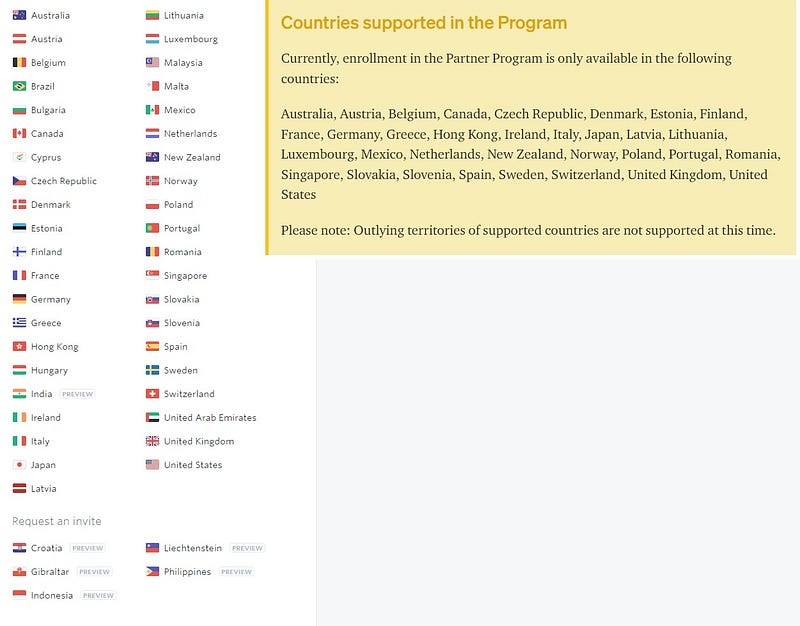
Stripe access alone is not the problem. Without thinking too deeply, even beyond the Stripe list, we are missing massive nations who have had their writers share their work with us en masse. It’s great and cool that this is an outlet for writers in Nigeria, or Argentina, or Korea, where they can reach a global audience of dedicated readers and writers, of thinkers — arguably a more thoughtful and more engaged audience than the average newspaper or website can reach. But is it fair? Equitable? Just? It almost seems like number padding.
Because it doesn’t have to be just Stripe — a company which makes suggestions on its website for using Atlas as a way to get around not being ina Stripe eligible nation. Other internet cash sharing and sending businesses do exist. Even if Medium used one in a nation with an explicit notice that if and when Stripe was launched there, it would expect people to change to Stripe to continue monetization. Something like that would surely be manageable? If there was at least a schedule shared talking of how Medium planned to incorporating more, it might seem like Medium cared about Colombia or South Africa.
Because, otherwise, if you aren’t in the right part of the lucky 33, Medium is just a blog site. And while there is nothing wrong with a blog site, I believe that Medium aspires to be more. It is for so many of us already. But I wouldn’t have the same experience if I was in a country that felt excluded from full participation.
I am no technical wizard, but I am willing to listen to them, as I can happily and willingly accept thought through and reasoned arguments why we are not there yet, and particularly if they are accompanied by “and here is how we will get there.” Because, surely, they must know this is a problem. And surely they are working on it. I think we all appreciate that universal access won’t be immediate and it won’t be straightforward, but there should at least be a timeframe by now. And if there is, why not share that with us?
Be our hero Ev Williams. Be the popular one. At least give us a time frame in the next month or two.
This piece is one of a few I plan to write over the next few months, based on this piece I wrote at the beginning of the year. Medium is a pretty good platform, but like any it has its flaws. The things that need changing are not fireworks for claps, but things like these.


