
Please, Don’t Touch My Child’s Hair
Black and mixed-race children aren’t pets, so please don’t stroke their hair.
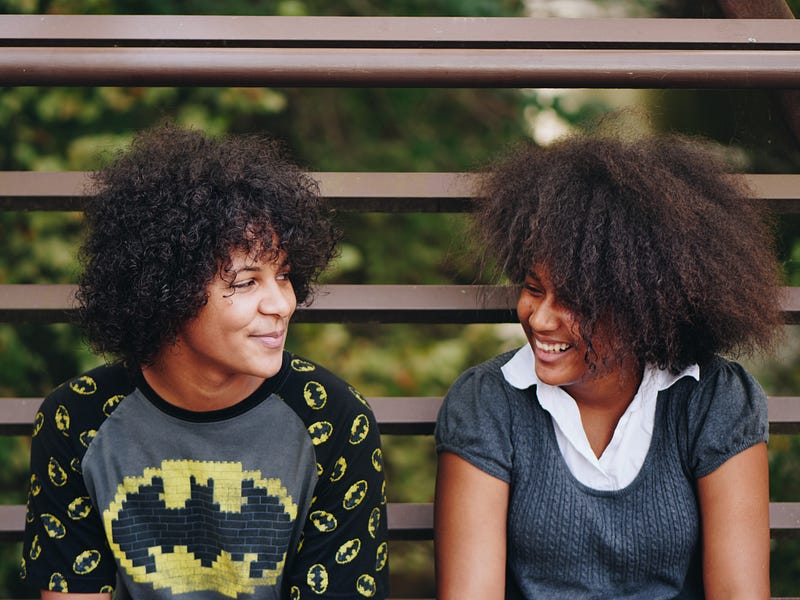
When my mixed-race children were younger, I often came across people who wanted to stroke their hair. More often than not, they didn’t even ask for my consent.
I’d be in a cashier line at the grocery store, at an amusement park, or at the doctor’s office, and a white hand would suddenly dart out of nowhere to pet my young child’s hair.
I was always quite astonished by the sheer audacity, the fact that a complete stranger assumed that they could in all impunity just touch my children without mine or their permission.
It was as though my children were creatures in a petting zoo where everyone had permission to stroke at will.
But it’s fluffy
I would hear: “That hair seems so nice and fluffy like a cloud, I just want to touch it, just a little,” or “I’ve never touched a black person’s hair, can I?”
At times I was so taken by surprise or the hand was already in my son or daughter’s hair before I could even protest.
I wondered why white people felt the need to do this — and I asked myself what they would feel like if the tables were turned.
Just don’t do it
I think one thing needs to be made abundantly clear — no matter how burning the itch to stroke a black or mixed-race person’s hair, please resist the urge, do not do it!
When a white person touches my hair without asking for my consent, I feel extremely uncomfortable. I feel objectified and violated.
You see hair is a personal and intimate part of me, it is mine, not for others to touch or think they can appropriate. Having perfect strangers touch and play around with my hair is a no-no.
A little bit of history
Black hair like black people has gone through its own struggle with white supremacy and racism.
Mainstream narratives have often portrayed black hair as nappy, wiry, and ugly. Simply put, not as fine, delicate, and beautiful like white hair.
You don’t even have to look far to see examples of this. Just a few weeks ago, Unilever's hair product brand TREsseme was forced to remove two ads from the South African market. In them, they claimed that black hair was frizzy and dull while blond hair was fine, flat, and normal.
Forced hairstyles
When the colonialists occupied Africa, they forced black women to cut their hair short or put them into braids or cornrows. Black hair was seen to be shameful and ugly and one had to hide it to conform to white society. These forced hairstyles served to enforce the domination of white colonialists over black Africans.
In the US in the 50s and 60s, African-Americans chemically straightened their hair to conform to the standards of white people. Today, black people the world over purchase mega quantities of human hair extensions to lengthen their hair to also conform to white society.
Black hair trauma
So yes, black hair has had its fair share of trauma. It doesn’t need to be objectified by white people any longer. It needs to be left alone.
White people can admire my or my children’s elaborate hairstyles from a comfortable distance, but shouldn’t invade our personal spaces with the urge to touch and mentally appropriate our hair.
Thanks for reading my perspective.